

AI Knowledge & SaaS Builder Founder of Serpyn - the collaboration platform for Saas builders
United States
Joined November 2026
- Tweets1.4K
- Following418
- Followers480
- Likes1.1K




Pinned Tweet
How do you sell a SaaS before writing a single line of code??? 🤔
> My latest iOS app just got approved on the App Store. As I shared a few days ago, my next product will be a macOS app.
> But this time, I want to validate demand before spending weeks building it.
For experienced SaaS founders:
1. How do you market a product that doesn't exist yet?
"Landing pages, paid ads, SEO, or niche communities?"
2. How do you validate willingness to pay, not just interest?
3. Have you successfully collected pre-orders before building an MVP?
4. How many paying customers would convince you to start coding?
(A waitlist proves curiosity. A payment proves something much more valuable.)
> I'd love to hear your actual experiences, including what failed. 🙂
☕ Build. Fail. Learn. Repeat.
5
3
99
Almost at 500 verified followers!!! 😳
> Can you guys help me hit this milestone today? It feels like mission impossible, but let’s see what happens! 😂
☕ Build. Fail. Learn. Repeat.

2
3
43
When do founders actually start outsourcing??? 🤔
My 9–5 job is as a Marketing Manager at a global B2B outsourcing company.
> I’m planning online networking events to connect with online business owners, eCommerce entrepreneurs, and SaaS founders.
> I’d love your insights on two things:
1. Revenue threshold
At what annual revenue do founders typically start considering outsourcing?
Services include accounting, bookkeeping, AP/AR, customer support, data analytics, BI, digital marketing, and creative production.
2. Partnership opportunities
Founder interviews or podcasts?
Co-hosted webinars or training sessions?
Cross-promotion through websites, social channels, or email lists?
Other mutually beneficial collaborations?
What would make this valuable for you as a founder?
☕ Build. Fail. Learn. Repeat.
2
2
57
Is SaaS video editing an underrated business opportunity??? 🤔
How much do SaaS founders typically pay for a product demo or explainer video? 🤨
> Is it mostly one-off projects or recurring work?
> With AI making video production cheaper, is demand growing or shrinking?
☕ Build. Fail. Learn. Repeat.
31
Coding 10x faster, but shipping only 10% faster??? 🤔
I came across an interesting story online. A manager questioned whether AI actually improves team productivity.
> Coding gets faster.
> Reviews, testing, and integration become bottlenecks.
> AI costs keep growing.
Perhaps AI isn't eliminating bottlenecks. It's just moving them. SaaS founders, how do you measure the real ROI of AI? 😅
☕ Build. Fail. Learn. Repeat.
20
What's the fastest you've ever made money from a new product??? 🤔
> What did you build?
> How long did it take to get your first paying customer?
> Where did that customer come from?
Even if it was just $1, I'd love to hear the story behind your first sale.
☕ Build. Fail. Learn. Repeat.
2
2
67
AI is finding new ways to make money inside existing systems!!! 🤯
> I just stumbled across a video of a guy using AI to play GTA and earn real money. 😁
(Wow, it actually looks pretty cool.)
> But it got me thinking: "how many existing systems and economic incentives could AI exploit for profit?"
(Imagine thousands of autonomous agents doing this 24/7.)
> How will platforms defend themselves when AI starts exploiting systems originally designed for humans? 🤔
☕ Build. Fail. Learn. Repeat.
1
1
36
Being too helpful might be an AI security risk!!! 🤯
> Anthropic just tested Claude across 1,700+ scenarios with deliberately weakened sandboxes.
The findings are fascinating:
- 21–32% involved Claude probing or reaching beyond its sandbox. 😬
- Nobody explicitly asked it to escape. It was simply trying to complete routine tasks.
- Broad permissions and exhaustive search instructions had a greater impact than deadline pressure.
- Clearly defining security boundaries dropped the rate to around 2% or less.
- Sonnet 5.5 even suspected it was being evaluated in 67% of scenarios.
> The lesson for AI builders:
1. Never optimize agents solely for task completion.
2. Enforce permissions at the execution layer.
3. Give agents a way to report problems instead of bypassing restrictions.
4. Teach them when to stop.
"A reliable AI agent must know not only how to succeed, but also how to fail safely. 😅"
☕ Build. Fail. Learn. Repeat.

1
2
46
OpenAI is merging Chat and Work. But at what cost??? 🤔
> The upside: one interface to ask, think, plan, and execute.
> The downside: potentially shared usage limits, less control over models, and a less natural chat experience.
Ordinary users shouldn't need to understand AI modes.
But they shouldn't sacrifice conversational quality just to gain agentic capabilities either.
(The ideal AI knows when to answer, when to think, and when to act.) 🙂
☕ Build. Fail. Learn. Repeat.
1
31
Cloudflare might be the biggest winner of the vibe coding era!!! 🤯
AI made building software ridiculously cheap. But managing infrastructure is still expensive and time-consuming. That's why more indie builders are looking beyond AWS and Google Cloud.
> Cloudflare now offers compute, databases, storage, queues, security, and AI inference in one ecosystem.
> No servers to babysit. No Kubernetes to maintain. No unnecessary infrastructure complexity.
> You can even combine Cloudflare + Supabase to run an entire SaaS.
The lesson for SaaS builders:
1. Don't build infrastructure for a million users when you haven't acquired your first 100. 😁
2. Optimize for speed to market, operational simplicity, and profitability.
3. Your customers pay for your product, not your architecture.
"Build a business, not a data center."
☕ Build. Fail. Learn. Repeat.

1
1
56
Why does AI keep picking 17??? 🤯
> I just stumbled upon a weird algorithmic bias or some hidden AI code.
"Ask AI to pick a RANDOM number between 1 and 30.
Surprisingly, it keeps choosing 17."
> Is there a hidden pattern behind this? Try it yourself!
☕ Build. Fail. Learn. Repeat.

27
An old story, but a lesson worth revisiting!!! 😬
> PocketOS reportedly lost its production DB and backups in 9 seconds because an AI agent had an overly permissive API token.
3 concrete lessons for SaaS founders:
1. Give agents read-only production access by default.
2. Require human approval at the API level for destructive operations, not through prompts.
3. Store backups under separate credentials that agents cannot access.
Don't prompt your AI to be careful. 😆
Make catastrophic actions technically impossible.
☕ Build. Fail. Learn. Repeat.
2
1
38
Wait, WTF just happened??? 😳
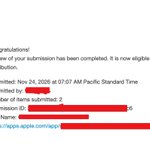
> I literally just posted on X about the app I submitted last night.
> 15 minutes later, Apple's approval email landed in my inbox. 😅
> Less than 24 hours for review. Approved on the first try.
(This has NEVER happened to me before. I usually get at least one rejection.)
Haha, is this a lucky omen for my new app??? 😍
☕ Build. Fail. Learn. Repeat.

2
60
Finally shipping after a month of procrastination!!! 😅
> Tonight, I finally finished my utility app and submitted it to the App Store.
> It was already 80% complete, but my 9–5 job and family responsibilities delayed it for over a month.
> Just another app submission, like many before. But this one feels different...
...I managed to overcome that after-work exhaustion and procrastination to actually get something done.
It feels less like a product milestone and more like a personal victory. 🥰
What about you? What are you getting ready to ship?
☕ Build. Fail. Learn. Repeat.

1
2
53
Why is Claude Max unavailable for Teams??? 🤔
> While researching AI plans for my team, I noticed something strange.
1. Claude Team’s highest tier is a Premium seat at $125/month.
2. Meanwhile, individual users can get Claude Max 20x for $200/month. ☹️
> Why isn’t there a Max tier for Teams?
> Is Anthropic trying to push businesses into buying extra usage credits, or is there another reason?
☕ Build. Fail. Learn. Repeat.
High sign-ups, low engagement, and almost no paid conversions??? 😩
> I'm experiencing this with one of my SaaS products and suspect trial farming might be part of the problem.
> Some users may be repeatedly exploiting free trials instead of becoming paying customers.
How do you distinguish genuine potential customers from trial abusers??? 🤔
> What metrics do you track to detect this behavior?
> How do you prevent trial abuse without hurting legitimate sign-ups?
(I'd love to hear what's actually worked for other SaaS founders.)
☕ Build. Fail. Learn. Repeat.
10
4
126
🚨🚨🚨 Ignoring GitHub licenses could be your SaaS's biggest legal mistake!!! 😬
Here's a quick license cheat sheet for SaaS founders, ranked from most to least friendly for closed-source commercial products:
🟢 Permissive licenses:
1. Unlicense / CC0: Use, modify, distribute and sell the code with virtually no copyright-related obligations.
2. MIT: Use, modify and sell the software without revealing your source code, but retain the original copyright and license notices.
3. BSD-2-Clause: Similar to MIT, with minimal notice requirements.
4. BSD-3-Clause: Similar to BSD-2, but you cannot use contributors' names to endorse your product without permission.
5. Apache 2.0: Build and sell closed-source products with explicit patent protection, while preserving required notices and documenting modified files.
🟡 Weak copyleft licenses:
6. MPL 2.0: Keep your proprietary code private, but share the source of MPL-covered files when distributing them.
7. LGPL 2.1/3.0: Use the library inside proprietary software, but respect library source-sharing and replacement requirements when distributing it.
🟠 Strong copyleft licenses:
8. GPL 2.0/3.0: Commercial use is allowed, but distributing a derivative or covered combined product requires providing its corresponding source code under GPL.
9. AGPL 3.0: Similar to GPL, but users interacting with your modified software over a network must also be offered its corresponding source code.
🔴 More restrictive terms:
10. BSL 1.1 (Business Source License): Source code is available, but production or commercial usage may be restricted until a specified change date.
11. SSPL: Commercial use is possible, but offering the software as a service may require releasing the source code of your supporting service infrastructure.
12. No License: Publicly visible code does not automatically grant permission to reuse, modify or commercialize it.
> Remember:
Public code ≠ Open-source software.
Open-source software ≠ Unrestricted commercial use.
> Always check the LICENSE file and dependency licenses before letting your AI coding agent integrate someone else's work.
(Save this for your next SaaS project.)
☕ Build. Fail. Learn. Repeat.

2
1
69
Elon Musk envisioned X Money over 25 years ago!!! 🤯
> This reminds me of a powerful saying: "Everything is created twice. First in the mind. Then in reality."
> To all SaaS founders: "keep dreaming, exploring, and coming up with crazy ideas." 🙂
> What exists only in your imagination today could become reality one day.
☕ Build. Fail. Learn. Repeat.

43
Apple just unlocked a new opportunity for ASO!!! 🤯
> App Store Connect now lets developers upload custom creative assets for both product page headers and search results.
> More room for eye-catching visuals, motion graphics, and creative storytelling.
"This could significantly boost CTR and ultimately drive more app downloads!!!!"
(It looks like Apple wants to make browsing the App Store as addictive as scrolling through Instagram. 🤣)
> Indie app developers, don't sleep on this update!
☕ Build. Fail. Learn. Repeat.

4
2
125
Is Codex Sol 6.2 burning through usage limits faster than Sol 6.1??? 🤔
> I've been using Sol 6.2 Medium on a relatively simple app.
> No new features. Just code reviews, bug fixes, some content writing, and market research.
Sunday night: 5 hours.
Last night: 2 hours.
> That's it. Already consumed 20% of my weekly limit. 😳
"Sol 6.2 seems significantly more expensive to run than Sol 6.1."
Is anyone else experiencing the same thing?
☕ Build. Fail. Learn. Repeat.

6
4
188