

Retired Nurse Manager. Comhaltas volunteer at every level. Carer. Passionate about justice, equality and human rights. Set dance for fun.
Dublin
Joined November 2010
- Tweets40K
- Following1.7K
- Followers1.5K
- Likes148K







Mary Whelan retweeted

The state of Micheal Martin, lambasting the Russians for looting the natural resources of certain African countries and indicates Irish troops would be deployed to such countries after the Dismantlement of the Triple Lock .
These are all colonies of France, which has been looting the same resources for centuries.
Why should Irish troops be placed in harm's way to defend French colonial interests.
Have a listen to Giorgio here, she's ferocious.
#DefendTheTripleLock
Mary Whelan retweeted
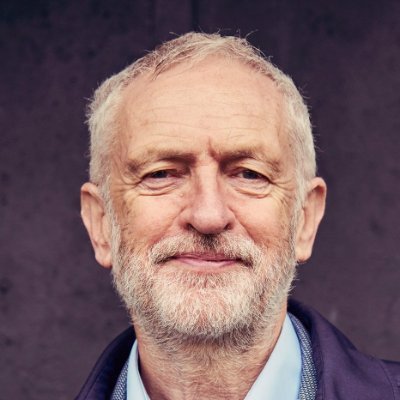
Britain must end all arms sales, all military cooperation, and all forms of support that assist Israel’s occupation of Palestine.
Mary Whelan retweeted

Pádraig Pearse
10 Samhain 1879 - 3 Bealtaine 1916
"Tír gan teanga tír gan anam."


Mary Whelan retweeted

Today in 1798, Theobald Wolfe Tone stood before a court martial at the Royal Barracks in Dublin and made an iconic speech, in the uniform of a French officer, that would echo through history. Outside, the cursed rebellion of that summer lay it tatters, its other leaders hanged or shot or driven into exile.
Tone had been taken a month earlier at Buncrana, after the French flagship Hoche was battered into surrender off Lough Swilly. Sir George Hill, a Trinity man who'd known him from ages before, recognised Tone among the French officers. Tone had spent years in Paris persuading the Directory to back an Irish republic. His vision was simple and dangerous. Replace the labels of Protestant, Catholic and Dissenter with the common name of Irish.
In the dock he didn’t deny the charge of treason, telling the court that from his earliest youth he'd seen the connection with England as the curse of the Irish nation, and that while it lasted the country could never be free or happy.
His one request was to be shot as a soldier rather than hanged like a felon. Cornwallis refused him. So on the night before the execution Wolfe Tone cut his own throat with a penknife.
John Philpot Curran, famous barrister and a friend of Tone's, went to the Court of King's Bench and argued that a military tribunal had no right to try a civilian while the civil courts were open. The judge, Lord Kilwarden, granted a writ of habeas corpus ordering Tone's execution delayed, but the army ignored it.
The self inflicted wound did not kill him quickly. Tone lingered in agony for about a week, and the story goes he joked to the prison surgeon that he was a bad anatomist. He died on 19 November, aged 35.
He's buried in the churchyard at Bodenstown, Co. Kildare, a place of pilgrimage ever since. Pearse delivered a famous oration there in 1913, and his dream that the people of this island should govern it themselves, united not by creed but by a shared home and a shared future, will one day come true.


Mary Whelan retweeted
Launch day is finally here! Ep 1 is out. Join me as I share my language journey, the self-consciousness of first speaking publicly, & the challenges & rewards of learning Irish-which has changed my life.
Listen on Spotify & major platforms. Link in profile & comments.
❤️#Gaeilge

Mary Whelan retweeted
Rest in peace Johnny McEvoy (1945 to 2026) McEvoy was born in Banagher, Co. Offaly, on the banks of the Shannon, and was singing from the age of four. The family moved to Dublin when he was six, his father a bus driver, and he grew up in Inchicore. He wanted to be a commercial artist, studied in Rathmines and landed a job in an advertising agency, to his parents' delight.
At night he sang folk with his pal Mick Crotty as the Ramblers Two, in the pubs and hotels of the great Irish folk boom. In 1966 he made the call his parents didn't want. He was on £8 a week in advertising and could earn the same in one night as a solo singer, so he quit. His first single went nowhere.
He filled out the visa forms for America, where his sister was waiting in Kansas, while singing in Maureen Potter's show at the Gaiety. Then his manager Tom Costello talked him into one last go at home. Billed as The Rambler, he recorded Muirsheen Durkin, an old emigrant ballad about a man chasing gold in California. A song about leaving that kept him here.
It held the top spot for three weeks. The Boston Burglar followed in 1967, then Nora in 1968. For a few giddy years he was chased down O'Connell Street by adoring fans, guitar under his oxter, one of Ireland's first real pop stars. He played Carnegie Hall, and even said he was more confused than ever because things were going too well.
When the Ballrooms of Romance ruled, a solo folk singer was only allowed 45 minutes between the dancing. So in 1970 he did what many did and formed a show band. If you can't beat them, join them. The hits kept coming, he had his own RTÉ series, and he graced the cover of Spotlight magazine more than any other solo act of the era.
The songs he wrote himself may be his truest legacy. Long Before Your Time, the first single he recorded that he had written himself, went to number one in 1976, his fourth chart topper. Michael followed, and so did The Planter's Daughter, a love song for his beloved wife Odette, whom he met in 1967 and married in 1970. She passed away in 2013 and he sang her song for the rest of his life.
In the 1990s he was ahead of his time trying to break the stigma around men's mental health, speaking openly on national television about his depression. He worked across six decades and was still filling venues this year. His music often filled our gaff and car growing up. Thanks for the memories sir.
Ar dheis Dé go raibh a anam.


Mary Whelan retweeted

As Simon Harris attacks the 1% of people unemployed.
Let's look at homeless figures since FG are in power:
2011: 3,258 (749 kids)
2026: 17,885 (5830 kids)
A 400% INCREASE overall - a 678% INCREASE for kids.
The audacity to attack the lowest as you've governed over this.
Mary Whelan retweeted

One of the two children who were critically injured in an arson attack on their home in Waterford city last month, in which four other members of their family were killed, has died in hospital
rte.ie/news/munster/2026/110…


Mary Whelan retweeted

'The Third funeral of Frank Stagg'
November 5th 1977
The final wish of Óglach Frank Stagg was fulfilled, his body was exhumed from a 'Free State enforced grave' and reburied in the Republican plot alongside fellow comrade Michael Gaughan.
(Leigue Cemetery Ballina)

Mary Whelan retweeted
Disgraceful

The government is considering avoiding the committee stage and bringing the Defence Bill legislative change for the controversial triple lock direct to the floor of the Dáil as a row with the opposition deepens, The Journal has learned.
jrnl.ie/7216304t

Mary Whelan retweeted

RTE news: Galway university 'fake news' expert claims fake doctorate
rte.ie/news/primetime/2026/1…

Mary Whelan retweeted

Staff at RTÉ's Donnybrook campus have been evacuated this following a bomb threat.
It’s understood a message sent to the broadcaster claimed to be from the same group that was behind the threats to planes across Europe this week. jrnl.ie/7217607

Mary Whelan retweeted

RTÉ News: Galway university 'fake news' expert claims fake doctorate rte.ie/news/primetime/2026/1…
Mary Whelan retweeted

The discovery of 17 bombs, two detonators and five stun guns in Belfast’s Shankill area has exposed the continuing threat posed by unionist paramilitarism and the violent far-right, as well as the refusal of unionist politicians and media to address the issue. republican-news.org/current/…

Mary Whelan retweeted
RTs appreciated
This device used by a 4 year old (the kids only way of communicating) was stolen from a car on Temple St yesterday.
It's called a Tobii Dynavox Eye Gaze.
The family is distraught and it's of no use to anyone else.
It may have been dumped in the city centre.


Mary Whelan retweeted
DUBLINTIMEMACHINE: Undergound public toilets were a surprisingly vibrant part of Dublin life for ages. Most ordinary citizens lacked an indoor flush lavatory and people spent huge amounts of their time communiting about the city, so municipal engineers and the public health committee responded.
In May 1899 the minutes of the Dublin Corporation show the decision to build “underground conveniences at Parkgate Street and Sherrard Street respectively to meet a long-felt want”. What we got were some elegant little subterranean jacks blocks.
More were built in the late Victorian / Edwardian era, for example at the junction of Kevin Street Upper and New Street South, a freestanding underground public-convenience block was constructed c. 1900, with granite plinth, wrought-iron railings, cast-iron vent shaft and tiled stairwell.
The choice of underground placement had practical as well as aesthetic reasons. Obviously in busy city centre locations above ground space was a premium, but they also allowed for easier hiding of the plumbing and hygine tech of the day and also even the sight and smell of a public WC offended Victorian sensibilities of decency. In their heyday these subterranean public conveniences formed a significant civic infrastructure. One source notes that by the 1950s and early 1960s there were “about seventy” public toilets in Dublin. At one stage the city employed up to 400 attendants to service them, thats a massive industry and community of its own.
Some of the best known were the College Street / Westmoreland Street traffic island. Originally behind the statue of Thomas Moore, it stood for about a century before closing in the 1990s due to anti-social problems like drug use, prostitution, and vandalism. It even featured in Ulysses in Lestrygonians" episode in a double entendre on Moores "The Meeting of the Waters". It was demolished in April 2016 to allow the Luas Cross City works.
Another was Kevin Street Upper / New Street South. This Victorian underground block still stands, listed as a protected structure. Plans are occasionally floated to redevelop it into a café or tearoom while preserving the historic fabric. There were other jacks in Harold’s Cross Park, Mountjoy Square, Sherrard Street, Berkeley Road and Burgh Quay.
Use of those toilets reveals the gender and social values of the time. Many of the early conveniences were male only, and women's facilities were fewer, then less prominent or added later reflecting the prevailing patriarchal urban planning. The pay-to-use model also generated revenue for council budgets, a 1899 report estimated cost of a new facility at £750 and anticipated success in it paying for itself easily.
From the 1970s indoor plumbing became ubiquitous and restaurants/bars/shopping centres provided internal toilets. Plus operating costs were rising for staff, maintenance, cleaning and security. One 2025 report says: “In the 1970s there were more than 60 staffed public toilets in Dublin, but by the 1990s the number had been reduced to nine.”
By the 1980s and 1990s many became sites of drug injection, prostitution and general unsafe conditions. The council decided they were public nuisances.” Undertabibly health & safety concerns for council staff cleaning contaminated toilets and managing disorder and the resultant liability risks led to closures.
So whats the story with the centuries of us gaybos (and the married men who francied them) hooking up in them, I hear some of you cry? Well the DTM will be getting our wellies and marigolds on and paying a visit to the dangerous and delightful world of "cottaging" in pre-21st century Dublin soon. Because believe me that world of rough romance and vice is well worthy of its own trip!

Mary Whelan retweeted
Chomh cinnte is a thagann an geimhreadh i ndiaidh an fhómhair, tagann an Éigse i ndiaidh an Oireachtais!
Coimeádaigí súil amach do phóstaer na bliana seo agus don chlár iomlán a bheidh á fhógairt againn i rith na seachtaine! 🎶
