

„Don’t fall asleep in your enemy’s dream“
Moving up
Joined March 2022
- Tweets37.8K
- Following231
- Followers390
- Likes152K




„Mariam Dagga, the Palestinian war correspondent who was killed at the age of 33 in Gaza in an Israeli strike, has posthumously won the prestigious Rory Peck prize for freelance video journalists, the organisers announced on Wednesday.“
theguardian.com/media/2026/n…

29
K. Disha retweeted

Die Schriftstellerin Eva Menasse über die Ausgrenzung jüdischer israelkritischer Stimmen. Den Link zum ganzen Podcast-Gespräch findet ihr hier: nahostnahdran.simplecast.com…
oder als Videocast hier:
youtu.be/setHZ9x6hsg?si=NwUK…
K. Disha retweeted

Dr. Alina Margolis-Edelman, one of the founders of Médecins du Monde, stayed in my apartment during the war in El Salvador when she worked in the refugee camps. Alina, who was in the Warsaw ghetto, was married to Dr. Marek Edelman, a deputy commander of the Warsaw Ghetto Uprising. She and Marek saw in the Palestinians the plight of the ghetto fighters.
Alina and Marek remained in Poland after the war. They were outspoken critics of Israel’s dispossession of the Palestinians. They supported the Palestinian struggle, including armed resistance. Needless to say, while Israel mounted a relentless campaign to appropriate the ghetto uprising and the Holocaust in defense of the Zionist project, the uprising’s last surviving commander was persona non grata in the Jewish state.
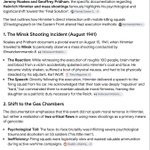
Benjamin Moser’s “Anti-Zionism: A Jewish History” rips back a veil on the sordid origins of Zionism, its repugnant ideology and its belief that any crime — no matter how heinous — is justified by its quest to build an ethnonationalist state in historic Palestine.
Moser implodes the fatuous claim that Zionism is intertwined with Jewish belief, writing that Zionism was a “new religion, fundamentally opposed to Judaism.” He celebrates those Jews who stood — or stand — unequivocally with the oppressed. And he details the savage campaign waged by Zionists to silence critics. He seeks to illuminate “a hidden side of the Jewish intellectual and moral legacy.”
The dream of a “Jewish homeland” in Palestine is rooted in Biblical myth and the erasure of historical truths. It was propagated in fin-de-siècle Austria by Theodor Herzl, a journalist and undistinguished playwright who at one point proposed that antisemitism would be solved by a mass conversion of millions of Jews in the Austro-Hungarian Empire, to Catholicism, in an elaborate ceremony presided over by the Pope.
Zionism, Moser notes, redefined “Judaism into a secular, nationalist identity by stripping it of its religious core. From the beginning, Zionism was aggressively secular. Its ideological antecedents were not in Judaism but in Christian eschatology and Romantic nationalism: in the very kind of chauvinism and jingoism that the Jews had forsworn. It embraced a definition of the Jews as a ‘race’ that, the rabbis noticed, was the same definition the antisemites used.”
I was aware of Moser’s erudition and talent as a writer from his biography of Susan Sontag, who I knew, and which won the Pulitzer Prize. What I was not aware of was his moral courage. He knew that writing this book, especially as a Jew, would see him excoriated by the cabal of liberal Zionists who run interference for Israel in publications such as The New York Times, The New Yorker and The Atlantic. He exiled himself from the club, much like the 12 anti-Zionists he profiles in the book. His critics, as is always the case when Zionists feel under threat, accuse him of things he did not write and beliefs he does not hold.
Yet, despite what he knew would be the inevitable onslaught, Moser refuses to flinch. Consistency, he writes, “was never a hallmark of Zionism. Its hallmark, from the very beginning, was opportunism, and a willingness to exploit Jewish fears and tragedies.”
If there is one constant in Zionism, which Moser traces from its inception to the present, it is that anyone who does not kneel before the Zionist Moloch becomes its victim. Jews are not spared, including one of the earliest opponents of Zionism, Jacob Israël de Haan.
De Haan was a Dutch Jewish writer, poet, journalist, lawyer and an ardent Zionist when he moved to Jerusalem in 1919. He quickly soured on the settler-colonial project when he saw how Zionist colonists abused the indigenous Palestinians, along with the Palestinian rabbis and Orthodox believers who saw Zionism as blasphemous.
In an 1878 census by the Ottoman Empire, before the first major wave of Zionist immigration, Jews made up about 3 percent of the population of Palestine. Jews in Palestine saw themselves as Palestinian Jews, “just as their neighbors considered themselves as Palestinian Muslims or Palestinian Christians.” Following two waves of Zionist immigration to Palestine between 1882 and 1914, that figure rose to an estimated 9 percent in 1917, the year of the Balfour Declaration, which committed the British to establishing a “national home for the Jewish people in Palestine.”
De Haan became one of Zionism’s most vociferous and influential critics. He was assassinated by the Haganah, a Jewish paramilitary organization, as he exited a synagogue in Jerusalem on June 30, 1924. True to form, Zionists blamed the killing on Arab Palestinians.
Read my full column, 'Zionism Unmasked', on Substack at the link below.

K. Disha retweeted
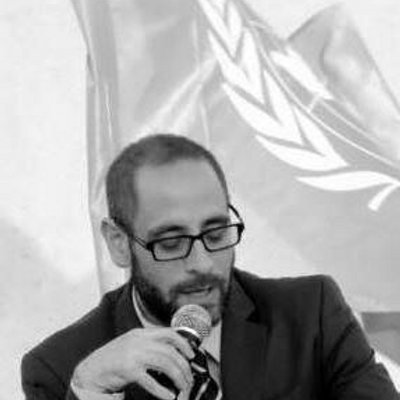
A blanket costs $6 outside Gaza, $71 within it. The price of surviving winter has become a measure of Israel’s failure to discharge its obligations as the occupying Power, and the abysmal failure of the Board of Peace to offer relief in its place.
The Fourth Geneva Convention, as affirmed by the International Court of Justice in 2024 and 2025, requires Israel to ensure the provision of essentials for civilian survival, including clothing, bedding and shelter, and to facilitate impartial humanitarian relief by all the means at its disposal.
These are obligations, not concessions. The suffering wrought by winter may be foreseeable. That wrought by the denial of relief is preventable, unlawful and engages Israel's responsibility for grave breaches of IHL.

Israeli restrictions mean the cost for an average family to survive the winter can exceed USD 6,000, according to data collected by the Palestine Shelter Cluster.
nrc.no/news/2026/gaza-basic-…

K. Disha retweeted

Das „Mückenprotokoll“ – oder: Wer nutzt hier eigentlich wirklich menschliche Schutzschilde?! 👇
• Schon der Trailer zur neuen Recherche von Zman Emet im öffentlich-rechtlichen israelischen Fernsehen (Kan 11, Ausstrahlung geplant für Mittwoch) schlägt wie eine Bombe ein: Israelische Soldaten schildern vor laufender Kamera, wie palästinensische Zivilisten systematisch vor den Truppen in verminte Häuser und Tunnel geschickt wurden!
• Jahrelang hieß es bei jedem zerbombten Wohnhaus, Schule oder Krankenhaus reflexartig „Menschliche Schutzschilde!“ – während die eigene Armee genau dieses Kriegsverbrechen (Art. 28 Genfer Konvention) unter dem zynischen Namen „Mückenprotokoll“ (Mosquito Protocol) selbst anwandte!
• Und wie die Whistleblower im Trailer vorhersagten: Beschimpft und als „Verräter“ gejagt werden nicht die Verantwortlichen – sondern Politiker wie Finanzminister Smotrich fordern bereits, die Sendung am Mittwoch noch zu verbieten!

تحقيق مهم للغاية ..
في إعلان نشرته القناة 11 عن تحقيق مهم للغاية سيُبث اليوم، يتناول استخدام الجيش الإسرائيلي للفلسطينيين كدروع بشرية في قطاع غزة، ضمن ما يُعرف داخل الجيش الإسرائيلي بـ "بروتوكول البعوضة".
وقال الجنود الذين أُخفيت هوياتهم إنهم سيُوصفون بعد نشر التحقيق بـ "أعداء إسرائيل وخونتها"، وأنه لا بدّ من سجنهم.
K. Disha retweeted
Bitte gerne kurz teilen & liken, bevor es vom Algorithmus wieder nach hinten geschoben wird: 👇
Morgen Abend (Mittwoch) strahlt das israelische Staatsfernsehen (Kan 11 / Zman Emet) eine brisante Recherche über das sogenannte „Mückenprotokoll“ aus – und schon der Trailer löst in Israel heftige Zensurforderungen aus!
Darin berichten aktive israelische Soldaten vor der Kamera, wie Zivilisten vor den Truppen in Häuser und Tunnel geschickt wurden – während Politiker wie Finanzminister Smotrich bereits versuchen, die Ausstrahlung noch verbieten zu lassen.
Alle Hintergründe, den Link zum Thread sowie das unfreiwillige Geständnis eines Gaza-Soldaten findet ihr direkt im ersten Kommentar darunter!
K. Disha retweeted
South Lebanon |
IDF soldiers from the Hashmonaim Brigade watching the Catholic [@orderofmalta] medical center after setting it on fire in the town of Yaroun.

K. Disha retweeted
Das schreiben keine „Israel-Hasser“, sondern die renommiertesten israelischen Menschenrechtsorganisationen und die UNO selbst (B'Tselem, Yesh Din, Peace Now, UNOCHA): 👇
• 498+ dokumentierte Übergriffe in 156 Gemeinden allein in dieser Olivenernte – fast 9 pro Tag, mit über 120 bis 150 verletzten Palästinensern (darunter Frauen, Alte und Kinder) sowie 4 Getöteten, darunter Ali Hasan al-Bizari (44) beim Olivenpflücken auf seinem eigenen Land.
• Selbst internationale Helfer, Journalisten und Diplomaten wurden brutal angegriffen:
Eine US-Fotografin der Washington Post wurde bei Abu Falah mit Eisenstangen schwer verletzt, im christlichen Dorf Taybeh attackierten maskierte Siedler europäische Diplomaten aus Belgien, Frankreich und Polen sowie den französischen Bürgermeister Bernard Baudoux – und verhaftet wurden nicht die gewalttätigen Siedler, sondern israelische Aktivisten, Rabbiner und Ex-IDF-Veteranen (u. a. von Breaking the Silence), die Seite an Seite mit den palästinensischen Bauern standen!
• 88.300 Dunam Olivenhaine (+30 %) per Militärorder für die eigenen Bauern abgeriegelt, damit Siedler sie übernehmen können..

The 2026 olive harvest season is drawing to an end in the West Bank. Israeli forces and settlers have assaulted, injured and even killed Palestinian farmers trying to reach their land. Harvesting now risks lives, forcing Palestinians to choose between safety and their land and crops.
From 27 September to 21 November 2026, Israeli NGO Yesh Din documented more than 498 olive harvest-related incidents in 156 Palestinian communities – an average of at least 8.7 incidents a day. These included assaults on farmers, crop theft, damage to trees and property, and denial of access to farmland.
In some cases, soldiers backed settler militias or joined the assaults. In early October, Ali Hasan al-Bizari, 44, was shot and killed by Israeli forces while picking olives on his land near Burqah, in Nablus District. B'Tselem’s investigation found that soldiers, Border Police officers and settlers were present at the scene. According to the military, the shooter was a member of the Israeli forces.
Meanwhile, Israel restricts access to olive groves through checkpoints, roadblocks, military orders and the “coordination system” requiring Palestinians to seek military approval to access their farmland. According to Peace Now, beforethe 2026 harvest, access to some 88,300 dunams of olive groves required prior coordination – about 30% more than in 2025. This allows settlers to expand their presence and effectively take over Palestinian land.
Olive farming provides a vital source of income and a financial safety net for tens of thousands of Palestinian families. Yet the annual harvest is more than an economic issue: it is a tradition handed down through generations, connecting families and communities to their land. By preventing the harvest, Israel is harming Palestinian culture, family life and community life, ties to the land, and the continuation of tradition by the next generation.
The violence, checkpoints, damage to livelihoods, dismantling of community life and takeover of land are not isolated incidents: they are part of a system working to tear apart the ability of Palestinians to exist as a collective.
That is how Israel's Elimination Project works.
btselem.org/settler_violence…
K. Disha retweeted

Israel bombed another @WCKitchen truck today carrying hundreds of pre-packaged meals. A WCK logbook of deliveries crusted in blood. Destroyed meals. Three men incinerated in their truck. Who will stop the maniac Israel? How? When? The Palestinian people need protection.
K. Disha retweeted

For a child with type 1 diabetes, insulin is not simply a medication. It is what keeps that child alive.
Without it, a child can develop diabetic ketoacidosis (DKA), a life-threatening condition that requires immediate treatment in an intensive care unit (ICU). Treatment depends on administering insulin and correcting electrolyte imbalances. Without urgent intervention, the patient may die.
In medical school, we study this condition repeatedly. It is almost impossible to get through our medical exams without being asked about it.
But there is one question no medical school in the world teaches us how to answer:
How do you save a child suffering from diabetic ketoacidosis when you have no insulin?
We were never taught the answer, not because scientists overlooked this possibility, but because medicine itself never imagined a world in which people with diabetes would be left without insulin or hospitals would have no access to the very medicine needed to save their lives.
But Israel apparently has a different idea.
In Gaza, there are approximately *250 children with type 1 diabetes* who need insulin pens every single day to stay alive.
For months, Israel has prevented insulin pens from entering Gaza. It has even prevented the test strips needed to monitor blood sugar levels from entering.
I want you to understand what this actually means.
We are not talking about a medication that can wait or a treatment that can be replaced with something else.
We are talking about children whose lives literally depend on receiving insulin every day.
Imagine being the mother or father of a child with diabetes. You know that your child’s life depends on a small injection. You know that this medicine is available in pharmacies all over the world. Yet you cannot obtain it because the Israeli government refuses to allow it into Gaza.
Imagine knowing that your child could die, not because their disease is incurable, but because someone has decided to deny them a treatment that already exists.
This condemns 250 children to a slow death.
And perhaps the most painful part of this story is that we are not dealing with a disease that has defeated medical science or a treatment that doctors have yet to discover.
We know exactly what these children need. We know how to save their lives. And we know precisely what will happen to their bodies if they are deprived of insulin.
But no amount of medical knowledge or experience can save a child when the medicine needed to keep them alive is deliberately kept out of reach.
These children are not asking for anything extraordinary. Simply to stay alive, they need a medicine for which there is no alternative.
And I cannot understand how we have reached a point where the survival of children suffering from a treatable disease has become something that can be controlled, restricted, or used as a means of exerting pressure during a war.
These are children. Some are still too young to understand what is happening around them. Their only concerns should be going to school, playing with their friends, and growing up like children anywhere else in the world.
Instead, their parents are left wondering whether they will have enough insulin to keep their children alive tomorrow.
There is no political objective, no military justification, and no circumstance that can make it acceptable to deny a child life-saving medicine.
Children’s right to life is unconditional. It does not depend on where they were born, who governs their country, or what is happening in the war around them.
No child should ever be made to suffer or die as a means of punishing or pressuring anyone else. Not under any circumstances.
And that is what makes this so horrifying.
We are not watching children die because their disease cannot be treated. We are watching children face death because they are being denied a medicine that could save them.
These 250 children have an unquestionable right to live. And no government, no army, and no one in this world has the right to take that away from them by denying them insulin.
#SaveChildren
K. Disha retweeted

There are no words that can truly capture the weight of this scene A little girl whose childhood has barely begun, lying in a hospital bed with both feet and one hand gone, after being targeted in an Israeli attack. Her gaze says everything that the languages of this world have failed to express 🤍
Here, all words fall silent, and only the image remains as a witness
They stole her ability to walk from beneath that white blanket, but her eyes continue to tell a story that brings the heavens to tears and shames the world's silence🕊️
Please keep her in your prayers, and share this image so that her voice is not forgotten

K. Disha retweeted

במדינת ישראל חוטפים אנשים באמצע הרחוב, מעלימים אותם במרתפי השב"כ, מונעים מהם לפגוש עורך דין ואפילו המשפחה שלהם לא יודעת למה ובמה מאשימים אותם. זה הסיפור של מהדי תונסי מירושלים, פעיל שלום, פעיל בעומדים ביחד, ואיש חמוד ומקסים. וזה הסיפור של אלפים נוספים. מדינת משטרה.

זה מהדי תונסי, סטודנט לסוציולוגיה וקרימינולוגיה באוניברסיטה העברית. פעיל בעומדים ביחד ובעוד מעגלים של אקטיביזם ישראלי-פלסטיני. ביום ראשון שעבר בבוקר הוא נעלם בין המעונות לאוניברסיטה, רק למחרת בערב התברר שהוא נעצר בהליך מנהלי והשבכ מבקש להותיר אותו בכלא במעצר מנהלי לשישה חודשים.
כתבה:
haaretz.co.il/news/politics/…


K. Disha retweeted

Read the full testimonies here >
phr.org.il/en/torture-of-med…

K. Disha retweeted

Kristin Helberg: "Deutschland ist gefangen in einer selbstverschuldeten Psychose erstarrt in Selbsttäuschung, unfähig zum faktenbasierten Gespräch über Israel, korrumpiert von Machtinteressen, geschichtsvergessen und ohne völkerrechtlichen Kompass."
instagram.com/p/DfrWFb5kUY7/…


K. Disha retweeted

Gaza se enfrenta a una tragedia inimaginable. Nada justifica que las personas de Gaza paguen un precio tan alto e injusto. En medio de la devastación, Richard Gere se une a UNRWA. Apoyar a UNRWA es proteger vidas y defender la humanidad. Por favor
bit.ly/3L8XqIu
K. Disha retweeted
Was die israelische Zeitung Haaretz hier offenlegt, zerlegt jedes Märchen von der angeblichen „Flut an Hilfsgütern“:
• Nur 48 % der im Waffenstillstand vereinbarten Lkw-Menge wurden überhaupt durchgelassen (75.000 statt 154.700 Lkw).
• 65 % der Waren müssen direkt in Israel gekauft werden – oft teure Snacks, Süßigkeiten und Ware kurz vor dem Verfallsdatum, während IDF-Angehörige (darunter sogar der angeklagte Bruder des Shin-Bet-Chefs) mit Schmuggel Millionen verdienten.
Und selbst diese 48 % sind noch zu hoch gegriffen: Denn an der Grenze „erfasst“ heißt noch lange nicht bei den Menschen ausgeliefert – und genau die überlebenswichtigen „Dual-Use“-Güter (Zeltstangen, Wasserfilter, Generatoren, medizinische Geräte) werden weiter systematisch blockiert.
Was diesen Krieg zudem von fast jedem anderen Konflikt unterscheidet – unabhängig von allem politischen Hintergrund:
Vollständige Einkesselung:
In anderen Ländern können Menschen in weitläufigere Regionen oder über Grenzen fliehen – in Gaza sitzen über zwei Millionen Menschen auf engstem Raum fest, ohne jeden Fluchtweg.
Ohne Geld kein Überleben:
Weil Felder, Wasserwerke und Infrastruktur zerstört sind, hängt alles an Lieferungen von außen – wer sich den korrupten Schwarzmarkt nicht leisten kann, hat nichts.
Ausgesperrte Weltöffentlichkeit:
Anders als in anderen Kriegsgebieten dürfen unabhängige internationale Journalisten nicht frei ins Land, während Hilfsorganisationen massiv behindert werden und Bomben selbst vor Zelten und Kliniken nicht haltmachen.
Genau diese völlige Ausweglosigkeit macht das Leid vor Ort so unfassbar. 🕊️
كشفت صحيفة "هآرتس" أن 65% من المساعدات التي دخلت إلى قطاع غزة منذ شهر مارس الماضي تم شراؤها من إسرائيل، وتُقدَّر بـ 49,000 شاحنة، بالإضافة إلى 13,500 شاحنة من مصر، و7,000 شاحنة وصلت إلى قبرص ثم انتقلت إلى ميناء أسدود قبل دخولها غزة، و3,000 شاحنة من الأردن، و2,500 شاحنة من الضفة الغربية.
وتنتفع إسرائيل مادياً من شراء هذه المساعدات وارتفاع أسعارها، كما تتقاضى أموالاً هائلة على كل شاحنة كرسوم لوجستية، يتخللها انتفاع للضباط والجنود عبر عمليات تهريب للهواتف والسجائر وغيرها، كان أحد المتورطين فيها شقيق رئيس جهاز "الشاباك" الحالي.
كما كشفت الصحيفة أن اتفاق وقف إطلاق النار كان ينص على دخول 18,200 شاحنة شهرياً، إلا أنه منذ مارس وحتى يومنا هذا دخلت 75,000 شاحنة بدلاً من 154,700 شاحنة متفق عليها؛ أي أن ما دخل يمثل 48% فقط. وفي الشهرين الأخيرين، انخفض معدل الشاحنات الشهرية بشكل حاد مقارنة بالشهور السابقة.
وللعلم، تضع إسرائيل شروطاً على دخول المساعدات عبر المنظمات الإنسانية والدولية، من ضمنها إلزامها بشراء المواد الغذائية من إسرائيل. فغزة تُعدّ سوقاً استهلاكياً يضم مليوني إنسان طالما وجدت إسرائيل نفسها تحت ضغط دولي لإدخال المساعدات، وكثير من هذه المواد مضر بالصحة؛ كالمشروبات الغازية والسكريات الشيبس، إضافة إلى بعض المنتجات التي يقترب انتهاء تاريخ صلاحيتها، فتتخلص الشركات الإسرائيلية منها في غزة بربح عالٍ بدلاً من بيعها داخلياً بتخفيضات مرتفعة وإتلاف ما يتبقى.
وفي الوقت ذاته، تحافظ إسرائيل على معدل منخفض لدخول الشاحنات، بالمخالفة للاتفاق، حتى تُبقي غزة في دائرة الاستهلاك اليومي؛ مما يعني إحداث مجاعة سريعة متى أرادت، وضمان رفع الأسعار بما يُثقل كاهل الأهالي ويُفيد الشركات الإسرائيلية، فضلاً عن تشكيل ضغط نفسي وجسدي مستمر على سكان القطاع.


K. Disha retweeted
Laut übereinstimmenden Berichten von BBC, Al Jazeera und dem Palästinensischen Roten Halbmond wird hier aus einem Hinterhalt ein 14-jähriger Junge (Moataz Daghlas) mit scharfer Munition erschossen, weil Soldaten die bloße Absicht vermutet haben, einen Stein zu werfen.
Zwei weitere Jugendliche wurden verletzt, Sanitäter blockiert und festgenommen, und die Leiche des Kindes wird von den Behörden einbehalten.
Erst schießen, gar nicht mehr fragen – und einen 14-Jährigen auf Verdacht als „Terroristen“ abstempeln.
Wer glaubt, dass so Sicherheit entsteht, versteht nichts vom Menschen: Wenn Menschen seit Generationen unter Besatzung und ständiger Todesangst leben, wird aus dieser Angst unweigerlich Verachtung und Hass geboren – und dieser Hass gebiert immer wieder neuen Widerstand.

הלילה, במהלך פעילות מבצעית יזומה של כוחות צה"ל לסיכול זריקות אבנים ואירועי טרור בפאתי הכפר בורקא שבחטיבת שומרון, זיהו הכוחות מספר מחבלים שהתכוונו לזרוק אבנים לעבר כביש מהיר בו נוסעים רכבים ישראלים. זאת, במרחב בו יידו אבנים לעבר רכבים ישראלים בעת האחרונה.
הכוחות הגיבו בירי לעברם להסרת סכנה, זוהו פגיעות