

Bioinformatics Scientist @BallHort #USAIDfellow #Rstats. Ph.D. from @PhytophthoraLab. Alumni @OregonState @UF #firstgen from🇳🇵
Greater Chicago area
Joined July 2011
- Tweets462
- Following597
- Followers592
- Likes1.6K





Abstract done for #PAG32. If you are interested working in ornamental industry, come find me at the trees and shrubs session on day1.
Our Petunia hybrida genome paper is now on @biorxivpreprint. This was a collaborative project between @BallHort @Ball_Helix and Plant & Food research group of New Zealand.
biorxiv.org/content/10.1101/…
Shankar K Shakya Ph.D. retweeted

The 10 types of clustering that all data scientists need to know. Let's dive in:
1. K-Means Clustering: This is a centroid-based algorithm, where the goal is to minimize the sum of distances between points and their respective cluster centroid.
2. Hierarchical Clustering: This method creates a tree of clusters. It is subdivided into Agglomerative (bottom-up approach) and Divisive (top-down approach).
3. DBSCAN (Density-Based Spatial Clustering of Applications with Noise): This algorithm defines clusters as areas of high density separated by areas of low density.
4. Mean Shift Clustering: It is a centroid-based algorithm, which updates candidates for centroids to be the mean of points within a given region.
5. Gaussian Mixture Models (GMM): This method uses a probabilistic model to represent the presence of subpopulations within an overall population without requiring to assign each data point to a cluster.
6. Spectral Clustering: It uses the eigenvalues of a similarity matrix to reduce dimensionality before applying a clustering algorithm, typically K-means.
7. OPTICS (Ordering Points To Identify the Clustering Structure): Similar to DBSCAN, but creates a reachability plot to determine clustering structure.
8. Affinity Propagation: It sends messages between pairs of samples until a set of exemplars and corresponding clusters gradually emerges.
9. BIRCH (Balanced Iterative Reducing and Clustering using Hierarchies): Designed for large datasets, it incrementally and dynamically clusters incoming multi-dimensional metric data points.
10. CURE (Clustering Using Representatives): It identifies clusters by shrinking each cluster to a certain number of representative points rather than the centroid.
There you have it- my top 10 types of clustering every data scientist needs to know.
The next problem you'll face is how to apply them to data science to business.
I'd like to help.
I’ve spent 100 hours consolidating my learnings into a free 5-day course, How to Solve Business Problems with Data Science. It comes with:
300+ lines of R and Python code
5 bonus trainings
2 systematic frameworks
1 complete roadmap to avoid mistakes and start solving business problems with data science, TODAY.
👉 Here it is for free: learn.business-science.io/fr…

Shankar K Shakya Ph.D. retweeted

FLAIR2: Detecting haplotype-specific transcript variation in long reads genomebiology.biomedcentral.…

Shankar K Shakya Ph.D. retweeted

Two papers in @Nature present a new genome editing technique that enables the insertion, inversion and deletion of long DNA sequences at user-specified genome positions. The approach may provide an easier method of genome editing.
go.nature.com/3RGkI8M
go.nature.com/3RHBvIs

ALT This is figure 1 from the paper from Patrick Hsu and colleagues, which shows that IS110 mobile genetic elements express a ncRNA that is bound by its encoded recombinase.
Shankar K Shakya Ph.D. retweeted

Generalized linear mixed models (GLMMs) are critically important for the analysis of non-normal data. Check out our recent review article to learn more.
frontiersin.org/journals/hor…


Attending summer institute of statistical genetics at @KendedaBuilding @GeorgiaTech this week. Any twitter friends around here!!!
Shankar K Shakya Ph.D. retweeted

Krisp: A Python package to aid in the design of CRISPR and amplification-based diagnostic assays from WGS data journals.plos.org/ploscompbi… 🧬🖥️ github.com/grunwaldlab/krisp 🐍 pypi.org/project/krisp/

Shankar K Shakya Ph.D. retweeted

We are excited to announce cleaner nucleotide (nt) and protein (nr) BLAST databases with more accurate results! We now use NCBI quality assurance tools to systematically remove misleading sequences. Learn more: ow.ly/CEk950RlpoM #NCBICGR

ALT Lines of letters, ATGC, in the background with a hand pointing at lines and squares. Text says: Cleaner BLAST Databases
HiFi assembler folks, if you have tons of raw fasta (total 700Gb) files as input but limited by the RAM whats the path you have taken to perform an assembly. Asking for a friend.
Shankar K Shakya Ph.D. retweeted
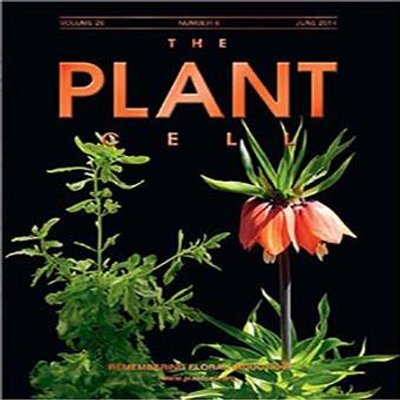
REVIEW: Reflections on the ABC model of flower development (John L Bowman, Edwige Moyroud) buff.ly/3OIDlHM @ASPB #PlantSci


Shankar K Shakya Ph.D. retweeted

Want to learn about the latest updates we've made to enhance the options available when you're using the custom annotation option in the Variant Effect Predictor?
Read more in our latest blog post:
👉 ensembl.info/2024/01/26/cool…
#genomics #bioinformatics #VEP 🧬

ALT Screenshot from the Ensembl Variant Effect Predictor (VEP) documentation showing the 'custom annotation' options.
Shankar K Shakya Ph.D. retweeted
BCFtools/liftover: bcftools plugin to convert genetic variants across genome assemblies academic.oup.com/bioinformat… 🧬🖥️ github.com/freeseek/score?ta…

Shankar K Shakya Ph.D. retweeted

🧑💻 Happy to announce that sandbox.bio v2 has been released! Same bioinformatics tutorials, but now powered by Linux running in your browser.
Stay tuned, we'll be adding lots more tutorials this year.

Shankar K Shakya Ph.D. retweeted

I don't understant how people still use t.test(), aov(), wilcox.test() and kruskal.test() in 2023 & put them into R books, when there is ggbetweenstats() available from {ggstatsplot} package? It's time to move on! R progressed!
indrajeetpatil.github.io/ggs…
#rstats #rstudio #r4ds
Shankar K Shakya Ph.D. retweeted
cgMSI: pathogen detection within species from nanopore metagenomic sequencing data bmcbioinformatics.biomedcent…

Shankar K Shakya Ph.D. retweeted

🔬 Exciting news! We've just created a list of bioinformatics conferences, filling a gap that's been missing for years. It's a handy resource for planning your 2024 conference schedule. Check it out here: lskatz.github.io/posts/2023/… 🗓️ #Bioinformatics #ConferenceList

Shankar K Shakya Ph.D. retweeted

The Ball Helix Bioengineering team is looking for a dedicated and passionate Bioengineering Scientist to work with our team in developing innovative products for the ornamental industry. Join our team and help us continue to #ColorTheWorld! 🌻🌹🌸🪻linkedin.com/jobs/view/37191…