
Grain farmer in West Australian Wheatbelt
Yealering
Joined June 2013
- Tweets1K
- Following448
- Followers1.1K
- Likes2.4K






Shane Hill retweeted

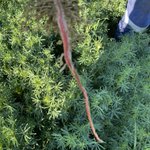
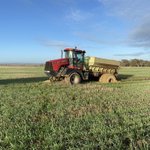
The use of glyphosate makes farming far more sustainable than organic farming. Anti-glyphosate and genetic engineering campaigners that attack the herbicide are not only rejecting science, they are promoting outdated farming methods that exacerbate global warming. They are anti-liberals.
Glyphosate may be the most consequential environmental advance in modern agriculture, and its critics routinely ignore why: Paired with genetically engineered herbicide-tolerant crops, it has helped farmers dramatically reduce plowing and adopt conservation tillage and no-till farming on a massive scale.
Why does that matter? Plowing tears up soil, accelerates erosion, burns diesel, disrupts soil ecosystems and can release stored carbon. No-till farming leaves the soil largely undisturbed, helping conserve moisture, protect soil structure and reduce fuel consumption.
A 2026 meta-analysis synthesizing 69 previous meta-analyses found that conservation tillage reduced greenhouse gas emissions by 5%, increased soil carbon sequestration by 21% and reduced soil erosion by 12%, while maintaining comparable yields.
A 2025 study estimated that glyphosate's contribution to conservation tillage produces a net global climate benefit of 32-45 million metric tons of CO2-equivalent annually. The scale of the environmental benefit is enormous.
Here's the irony: Organic farming, routinely marketed as the environmentally superior alternative,relies on mechanical weed control 50 years out of date. It’s like riding a horse in the age of automobiles.
Some organic farmers do practice reduced tillage, but eliminating synthetic herbicides makes continuous no-till impossible. Tillage remains a central weed-management tool in organic farming.
That means more soil disturbance, often more tractor passes, greater erosion risk and potentially more carbon loss.
Organic farming has genuine environmental advantages in limited circumstances, but the notion that avoiding synthetic herbicides automatically makes it more sustainable is scientifically indefensible.
Glyphosate isn't environmentally perfect. Herbicide resistance, biodiversity impacts and other trade-offs require management. But its contribution to conservation tillage is substantial.
The environmental question isn't whether a chemical is synthetic. It's what happens to the land when farmers use it - or stop using it. Judged by its role in reducing plowing, erosion, diesel consumption and soil disturbance, glyphosate is an extraordinarily valuable tool for sustainable agriculture.
The uncomfortable truth for anti-glyphosate activists and ideologues, and the tort industry whores who bankroll them, is that eliminating it could make farming less environmentally sustainable, not more.
Shane Hill retweeted

Share this message to the Prime Minister. @AlboMP
If you won’t use the powers you already have — don’t ask for more.
Australians have had enough.
Shane Hill retweeted

I worked for 20 years in "Big Ag" so you don’t have to. This is what they don’t want you to know:
Farmers don’t have time for conspiracy theories.
Romanticize farming all you want, but without modern tools, you’d starve.
GM crops aren't frankenfood.
They cut pesticide use, resist drought, and improve yields, all while passing some of the strictest safety checks in science.
They are the least unknown crops.
Your food is safe. Period.
Pesticides are tested more rigorously than most medicines.
Farming isn’t killing the planet.
Modern farming uses less land, less water, and fewer inputs than ever before. Innovation is the solution, not the problem.
Organic farming still use pesticides. Some are more toxic and less effective than synthetic alternatives, meaning higher doses are needed.
If you really care about feeding the world and protecting the planet, focus on facts, not fear.
My name is Simon and my goal is to make people smarter, not angrier.
Drop a “Hi” in the comments and let me know if you have any questions about Ag!

Shane Hill retweeted

More excellent work from @DAFFgov's Live Sheep Export transition team.
They seem to think that wethers are used for breeding. Wethers are castrated male sheep.
This is why we are fighting. There is no hope for WA sheep industry without a change in government.
#KeepTheSheep

Shane Hill retweeted
Is glyphosate a dangerously high toxic agricultural chemical. In his 2017 study “Long-term trends in the intensity and relative toxicity of herbicide use,” Andrew Kniss analyzed herbicide usage and associated toxicities over a 25-year period. The study found that Glyphosate, in particular, accounted for a significant portion of herbicide applications—26% in maize, 43% in soybean, and 45% in cotton. However, due to its relatively low chronic toxicity, glyphosate contributed minimally to the chronic toxicity hazard in these crops: 0.1% in maize, 0.3% in soybean, and 3.5% in cotton.
The 2017 study provides a comprehensive analysis of the toxicity of herbicides used in U.S. agriculture over a 25-year period. since the introduction of GM crops in the mid 1990s. The study specifically ranks glyphosate’s toxicity relative to other herbicides and finds that it is one of the least toxic herbicides available.
Key Findings and Statistics:
1.Acute Toxicity Ranking:
•Glyphosate was found to have lower acute toxicity to humans than 94% of all herbicides analyzed in the study.
•It was also less acutely toxic than many common household substances, including vinegar and table salt.
2.Chronic Toxicity Ranking:
•Glyphosate exhibited lower chronic toxicity than 90% of all herbicides, making it one of the safest options for long-term exposure.
3.Usage vs. Toxicity Contribution:
•While glyphosate accounted for a significant percentage of herbicide use (26% in maize, 43% in soybean, and 45% in cotton), it contributed minimally to chronic toxicity hazards:
•0.1% of chronic toxicity risk in maize
•0.3% in soybean
•3.5% in cotton
4.Comparison to Organic and Alternative Herbicides:
•Many organic pesticides (such as acetic acid, copper-based fungicides, and rotenone) exhibit significantly higher acute and chronic toxicity compared to glyphosate.
•Some natural pesticides, including botanical insecticides, have lower LD₅₀ (lethal dose) values, meaning they are more toxic than glyphosate when considering their effects on human health and non-human animals.
Shane Hill retweeted
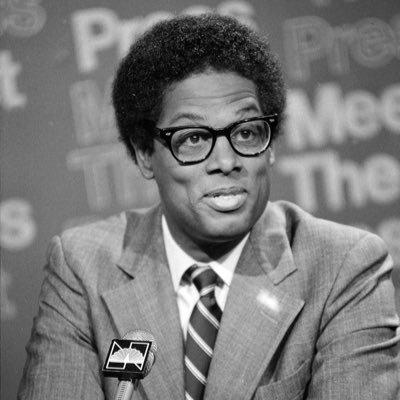
Quote from the book Barbarians Inside the Gates and Other Controversial Essays:
"Much of what is called 'public service' is make-work for people who have degrees but lack the skills that would get them the kind of money and importance they feel entitled to in the marketplace."
Shane Hill retweeted

Taking away such a key part of the job seems a bit ridiculous, doesn’t it?
Read our CEO’s recent @stockjournal column about the review of paraquat/diquat and the need to heed the lessons from Sri Lanka

Shane Hill retweeted

The ABC’s reporting has misrepresented the APVMA’s position, and the current scientific consensus. We have requested that the ABC issue a correction to clarify these points.
apvma.gov.au/news-and-public…


It's so disappointing that @ABCaustralia @abcnews is getting sucked into the #FakeNews space.
It's never been more important for #OurABC to adhere strongly to its charter.
If you can't trust our public broadcaster, you can't trust anyone.

Shane Hill retweeted

This is not scaremongering- it’s the reality of life without the tools to do No-Till farming well. This is not a future I want for my kids. Soil is our most precious resource.

The future of farming without the strategic use of Paraquat.Glyphosate resistance rye grass that can’t be controlled with registered options. Cultivation comes next and then ⬇️ gross margins, poor soil health, water logging and dust storms. Big picture thinking needed 💭 @APVMA


Shane Hill retweeted
Good work Martin. In an Australian rain based dry land cropping system nothing is a critical as stored soil moisture. Removing access to Paraquat poses a huge risk to our ability to store moisture in a sustainable way.

Shane Hill retweeted

This is the ALP improving animal welfare. Killing off markets for sheep meaning they’re shot on farm instead of used as food.


Shane Hill retweeted

Highly recommended, especially for any non farmers interested in carbon reduction.
In one minute, everything you ever wondered about agricultural emissions explained.

Shane Hill retweeted

I've written a blog about the horrific abuse of not only farmers, but people who provide services to #ausag and how the #sheep live ex ban will hurt us all.
Thanks @annbritton @steven_bolt4 @logue_phil & @NicolleJenkins for sharing.
Read it here: tinyurl.com/t6a5rbd7


Shane Hill retweeted

It'll be interesting to see if this makes it into mainstream media theconversation.com/why-aust…
@LizJack38115324 @livestock_the

