

Tactical breakdowns. Transfer logic. Tech that actually matters.
London England
Joined February 2026
- Tweets2.3K
- Following45
- Followers46
- Likes188



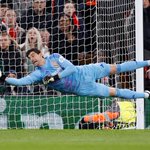


Shock Carabao Cup exit to League Two Fleetwood on penalties hurts tonight, but it could be a blessing in disguise.
Fewer midweek fixtures give Arteta’s squad more recovery time while defending the Premier League title and pushing deep in the Champions League (and FA Cup).
If the Gunners are lifting the league and the big European trophy in May, no one will care about this night. Prioritise the real prizes.
Anthropic has filed for its IPO. Ticker: ANT. Trading could start as soon as mid November.
The noise is the valuation. Headlines say $2 trillion and a record raise, but those are reported figures. The filing itself does not state them.
The signal is what the prospectus forces into the open.
$16.3 billion of revenue in the first half, against $1.1 billion a year earlier. An $80.7 billion net loss, about $72 billion of which is an accounting charge on convertible notes. More than $600 billion in compute commitments. Roughly a fifth of revenue from two customers.
This is not just one company’s offering. It is the first time public markets get to price a frontier AI lab on its actual economics, and every AI company will be measured against the result.
What it means for the rest of the sector:
Suppliers get a scorecard. Those commitments are multi year revenue for Google, Amazon, Microsoft and Broadcom, so the IPO tests whether that demand holds.
OpenAI gets a benchmark. It has pushed its own listing to next year, so it now watches how Anthropic is received first.
Everyone else gets scrutiny. Compute costs, customer concentration and safety risk will be questioned every quarter.
Fast revenue is not the same as durable economics. The market is about to decide which one it is paying for.
Signal > Noise.

Apple’s new iPad mini starts at $699.
In 2024 it was $499. That is $200 more in one generation, and $100 of it arrived in June alone. The increase is significant, and it is easy to call it greed.
Mostly, it isn’t. Memory and chip costs have risen across the industry, and Apple has raised prices on much of its line this year. The OLED panel adds cost on top of that. The increase was necessary, even if the base storage is still 128GB at a higher price.
The compromise is the display. You get 8.5 inches of OLED and an A20 Pro, but the refresh rate is still 60Hz. There is no 120Hz ProMotion. At $699, that is the first thing every reviewer will test.
It also won’t compete directly with the iPhone Duo. The Duo starts at $1,999, close to three times the price. Different budget, different buyer. The mini is the cheaper way into a bigger Apple screen, not an alternative to a foldable.
Signal > Noise.
Your broadband speed test result and your actual broadband experience are measuring different things. Speed tests measure peak throughput on a direct connection to a test server.
They do not measure:
• Latency (ping) — the delay before data starts moving, which determines how responsive gaming, video calls, and web browsing feel.
• Jitter — variation in latency, which causes buffering and call quality drops.
• Wi-Fi overhead between your router and your device.
You can have 500Mbps down and a terrible gaming experience because your ping is 60ms with 40ms jitter on a congested network.
The number your ISP quotes is marketing. The experience depends on infrastructure you can't see.
The transfer fee is what a club pays to start the story. The wage, the contract length and the clauses are what it pays to finish it.
Read the full breakdown below.
Which deadline day signing looked like a bargain and wasn’t?

7 things to do before you sell, trade in, or give away an old phone. Most people skip half of these.
1. Factory reset is not enough on its own on Android. Encrypt the device first, then factory reset. Encryption scrambles the data before the wipe, making recovery by data extraction tools significantly harder.
2. Sign out of every account manually before resetting. Google, Apple ID, Samsung account. A device still linked to your account can be tracked and creates account recovery complications.
3. Remove the SIM. This is obvious and people still forget it. The SIM contains your number, contacts, and network authentication data.
4. Remove any SD card if present. These are not wiped by a factory reset.
5. Check for saved passwords in your browser. Chrome and Safari sync across devices, but any locally stored passwords that didn't sync are lost after the wipe.
6. Screenshot or note your app list if you want to restore it on a new device. You cannot recover purchased app history on Android after a Google account change.
7. Check for offline downloads music, podcasts, maps, offline documents. These don't sync to cloud automatically and are gone after the wipe.
Selling a phone takes 10 minutes of preparation. Most people spend 30 minutes regretting skipping it.
Signal > Noise.
Top four all win. One result lower down that does not fit the table.
• Man City at Aston Villa — City’s perfect start continues. Villa have not kept the midfield distances tight enough against sides that progress through the thirds. City take it.
• Arsenal vs Everton — Arsenal control the final third and change the profile of the attack. Everton are organised but short of the tools to sustain the block. Arsenal win.
• Brighton at Liverpool — Brighton’s chance creation and the way they attack the spaces behind a high line make this their game for long periods. They get the points at Anfield.
• Chelsea vs Spurs — Spurs have been easy to open in midfield. Chelsea’s recent form and the home structure are enough. Chelsea win.
Surprise: Coventry beat Fulham. Both are short of points and Fulham have been open on the road. Coventry only need one of the second balls or transitions to land. Home win.
The rest of the weekend is the mid-table scrap. The top four take care of their own.
Free VPNs are almost never free.
The business model of a VPN is routing your internet traffic through their servers. That gives them visibility into everything you do online.
A paid VPN sells you privacy. A free VPN sells your data to fund the servers.
This has been documented repeatedly. Several "free" VPNs have been caught selling browsing data to advertisers and, in some cases, to data brokers.
If privacy is why you want a VPN, a free one is the worst possible choice.
Mullvad at £4.50/month. ProtonVPN free tier has no data logging and is legitimately trustworthy for basic use.
Everything else in the free tier is a risk you should price in.
Laptop stands cost £15 and will improve your posture, reduce neck strain, and make working from home noticeably more comfortable.
Most people sit hunched over a flat laptop on a desk because it came out of the box that way.
The screen should be at eye level. Your neck should be neutral. Your keyboard should be separate.
A stand, a £20 wireless keyboard, and a mouse is a £55 upgrade that changes your daily working experience more than a new laptop costing ten times that.
The return on investment here is not close.
Zonal marking at set pieces is technically correct and psychologically difficult.
In theory, zones are more efficient. Players defend an area, not a person. No one gets dragged out of position. The structure holds.
In practice, a runner arriving at pace into your zone is harder to deal with than a player you have been tracking throughout the game. The accountability is diffused. Nobody's man scored.
The clubs that execute zonal marking well train it obsessively and have specific accountability structures for breakdowns.
The clubs that do it badly use it as a concept without the preparation to make it work.
Zonal marking doesn't fail because it's wrong. It fails because it's harder than it looks.
Bayern Munich 2-2 Arsenal a proper Champions League classic at the Allianz.
Eze opened the scoring early (Odegaard assist), Davies equalised brilliantly from a Kane pass, Kane then converted a penalty to put Bayern ahead, and Rice smashed home a late equaliser (Gyökeres assist) to rescue a point for the Gunners.
Both sides played with real quality, intensity and attacking threat in a fiercely contested game. No clear winner on the pitch, two top teams trading blows and showing exactly why they’re among the favourites to go deep.
This result underlines it: Arsenal and Bayern both look ready for the knockout rounds.
#UCL #BayernArsenal #ChampionsLeague
The real shift in high-end mobile chips is not one more incremental GPU or CPU upgrade.
It is the move to large unified-memory superchips that treat local AI, graphics, and general compute as the same problem.
NVIDIA’s RTX Spark (N1X) is the clearest example right now. It pairs a 20-core Grace Arm CPU (co-designed with MediaTek) with a Blackwell GPU that has up to 6,144 CUDA cores, linked by NVLink-C2C, and up to 128 GB of unified LPDDR5X memory. NVIDIA rates it at up to 1 petaflop of FP4 AI performance. Laptops started shipping this month from around $2,599. The practical result is a thin Windows machine that can run large local models, use the full CUDA stack, and play games at 1440p with DLSS 5—without a discrete GPU sitting on a narrow PCIe link.
Apple has been in this category for years with its M-series (unified memory, strong efficiency, tight software integration). AMD has already responded with its Ryzen AI Max / Gorgon Halo parts, which go up to 192 GB of unified memory and stay on x86 so existing software runs natively. That extra memory capacity is real leverage for bigger models.
The gap AMD still has to close is the software and developer stack. CUDA has a multi-year head start for AI work; ROCm is improving but is not at the same density of tools and optimizations yet. Graphics features (DLSS, Reflex, broad game support) are also deeper on NVIDIA’s side. Matching the memory and raw GPU scale is necessary but not sufficient—AMD needs a comparable software ecosystem and consistent high-end laptop designs if it wants to stay competitive once these unified-memory machines become the default premium tier.
First-generation hardware is always the most tempting and the least proven on long-term software support and real-world efficiency. The second wave (better thermals, more optimized drivers, broader native app support) will show which of these approaches actually sticks.

Apple’s late October event could matter more than the iPhone launch did.
Reportedly landing October 27 to 28: a redesigned 14 and 16 inch MacBook Pro with an OLED touchscreen, Dynamic Island and a lighter chassis. Alongside it, an M6 14 inch MacBook Pro, an M6 iMac and an OLED iPad mini.
The signal: Apple resisted a touchscreen Mac for over a decade. Now it is reportedly putting one on the top of the Pro line, not on a side product. That tells you where it thinks professional work is heading.
The noise: touch itself. A screen you can tap is a feature. A Mac built around touch is a platform shift. The real test is whether macOS changes to suit it or whether touch is bolted on.
The detail almost nobody is leading with: the redesigned flagship is reportedly on M5 Pro and M5 Max, while the cheaper 14 inch gets M6. The most expensive laptop in the lineup could launch on older silicon than the base model.
New display, new design, new input method, and pricing is unknown. First generation hardware is where Pro buyers should be most careful and are often most tempted.
Would you pay a premium for the first touchscreen MacBook Pro, or wait for the second generation?

The M5 Pro/Max on the redesigned flagship while the base 14-inch gets M6 is the loudest tell here.
Apple is treating the touchscreen redesign as the headline, not the silicon. That only makes sense if they believe the new form factor (OLED + Dynamic Island + lighter chassis + touch) is the actual product shift, and the chip is secondary for this cycle.
The real risk for Pro buyers isn’t whether touch works, it’s whether macOS is meaningfully rewritten around it or just gains a few new gestures and a thicker bezel. First-gen input method changes on the Mac have a long history of being half-measures (Touch Bar, Force Touch trackpads that stayed niche).
I’d wait. The second generation will tell us if this is a real platform move or just the most expensive way to get a better screen.
The Premier League's biggest competitive advantage over every other league is not money.
It is pace.
The average speed of play, transition speed, and physical intensity in the PL is measurably higher than La Liga, Serie A, and Ligue 1. The Bundesliga is the closest comparison.
This is why technically elite players from other leagues sometimes struggle immediately. Their decision-making speed was calibrated to a different tempo.
It is also why PL teams lose Champions League finals at a disproportionate rate, by knockout stages, the pace advantage narrows and the technically superior continental sides exploit it.
The league's strength is also the ceiling on European success.
Football is the most democratic sport in the world and the least democratically governed.
Billions of people are emotionally invested in clubs they will never influence. They fund the product through tickets, shirts, and broadcast subscriptions. Their loyalty is the asset. Their voice is not.
This is not nostalgia for a simpler era. Every era of football has had money at the centre of it.
But there is a structural difference between clubs that treat supporters as a constituency and clubs that treat them as a consumption unit.
The ones that get this right build something durable. The ones that don't are eventually left with a brand, a stadium, and diminishing emotional investment in the product.
The game belongs to the people who care about it. The governance structure hasn't caught up yet.
Forest create plenty of chances in games but they just cannot finish them off when it matters. Arsenal on the other hand barely concede goals and have one of the tightest defences in the league right now. If the Gunners can grab an early goal at the City Ground it should open the floodgates and leave Forest chasing the game. Arsenal have the quality and organisation to control this one and they should come away with all three points.
#NFOARS #AFC #PremierLeague
What elite coaches actually do in training that most fans never see.
1. Shadow play — the team moves through their shape against no opposition, drilling the positional choreography until it is automatic. This is where systems live. Not on a tactics board.
2. Defined press triggers practised in isolation. The trigger itself goalkeeper receiving under pressure, a bad touch by the centre-back is rehearsed until the team's response is synchronised, not reactive.
3. Set piece rehearsal under fatigue. Not fresh legs in a training ground. The routine is practiced at the end of session when concentration is degraded, because that's when it's executed in games.
4. Transition drills. Going from defending to attacking and back again, repeatedly, in sequences. The space between phases is where goals happen. The best coaches close that space in training.
5. Video review of individual decisions, not just team shape. The best coaches show a player the three moments in the last game where their positioning created a problem and the three moments where it solved one.
The game is not won on the pitch. It's won in the 22 hours before kickoff.
Signal > Noise.
Premier League Matchweek 7 Predictions 🔥
Comfortable wins incoming for the big teams this weekend.
•Man City 3-0 Ipswich — Perfect start continues at the Etihad. Haaland keeps scoring.
•Nott’m Forest 0-2 Arsenal — Second-placed Gunners should control this one.
•Brentford 1-3 Liverpool — Not the easiest trip, but the Reds get it done.
•Everton 1-2 Chelsea — Tight on paper, but Chelsea have enough quality to take the points.
•Leeds 1-2 Man Utd — United finally start turning things around.
•Spurs 2-1 Coventry — First win of the season for Tottenham.
The rest of the weekend should be more competitive in the midtable scrap, but the big boys get the job done.
#PremierLeague #EPL #MW7
iPhone Duo pre-orders sold out almost immediately. That is the marketing and the reputation working exactly as designed.
Apple used the September event to turn a category that has been available for years into an Apple shaped product. The passport form, the continuous aspect ratio across both screens, the nano texture inner display, the titanium frame, and the claim that it is the thinnest iPhone when open. None of that is new technology. It is a specific aesthetic and a specific set of trade offs, presented as the version that finally feels finished. The people who buy two thousand dollar phones for the form are not waiting for a review. They already know what they are buying. Pre orders opened and the initial allocation disappeared within minutes. Launch day units went first. The rest of the early stock followed. That is not mass market demand. It is the audience Apple built the product for acting immediately.
The supply side is constrained. Reports ahead of launch put early production in the low hundreds of units per day, with a full year target around six million. A sell out against that number is not the same as selling out a normal iPhone. It is still the cleanest signal Apple could have wanted. The event created the story. The product’s style matched the story. The people who care about that story ordered before the day had properly started. The reputation did the rest. For a first foldable, that is the outcome the marketing was built to produce.