

i love (formerly hate) 𝕏 (formerly twitter), an ad platform (formerly social platform) to spam (formerly tweet). 🌍 普通话/中文/华语/国语/汉语/broken engslih
songkeys.eth
Joined July 2014
- Tweets1.4K
- Following1.5K
- Followers2.4K
- Likes1.5K







字节真是赚麻了。
你做ai短剧,先上番茄小说买ip,再豆包出文案,再用seedance生视频,用剪映剪辑,上线抖音红果后,再用巨量引擎投流。
创作者跑不出爆款,就纯在贴钱为字节打工。中间数据还要被反喂给他们的模型。
而字节美滋滋全链路卖铲子。我愿称之为铲神。
“all the major Chinese apps preinstalled” 😭😭😭

It was a joy to connect with the @alibaba_cloud team in Hangzhou. Their hospitality was next level, and we're going to work together on making the Omarchy China version perfect. No VPN necessary, all the major Chinese apps preinstalled, dedicated ISO. It's going to be great!


千万别订 Gemini!!!
看很多人在吹谷歌新发的拳打鸡皮踢、脚踢克劳德的天才模型 Argon,就订了 200 刀/月 的 Ultra 用了一下。
简直上了大当!
巨难用的 Gemini/Antigravity App。写作啰里八嗦,味儿冲。3D建模、动画离 Opus 5.5 差了一个 6.1 Sol。每次任务一会儿就做完了。代码也写得稀烂。感觉就是在糊弄我。
我以为是我使用姿势不对。去 whichai.dev 看了一眼,你敢信这是这个 AGI 模型写的前端吗 😡😡😡


CodeX 砍了我们一半用量后,Tibo 发起了一个投票,问我们想要 2x 用量回来,还是想要 5h 限制去掉。
结果很多人选了 5h 限制去掉。这下轮到 Tibo 瘫坐震惊了,因为他原以为是人都会选 2x 用量。他们也本打算这样做,投票只是起个造势的作用 🤣
说实话,我也选了 5h 限制去掉。因为限制是实打实在那的,而 2x 用量就算回来了 谁知道你会不会暗戳戳地又给降了呢 😠

Haiku 5.5 强过 GPT 6 Luna
Sonnet 5.5 强过 GPT 6 Sol
Opus 5.5 强过 GPT 6 Astra
Grok bot 强过 dots
每天在和土豆姐你来我往的 Tibo:我们在侧边栏加个什么功能好呢
回来吧我的openai,我最骄傲的信仰😭

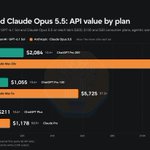
通过对多家 AI 公司的订阅计划进行实际限额测试,得出结论:在 API 等价价值上,Anthropic 的订阅约为 OpenAI 的 5 倍以上。🤯


Anthropic Subscriptions Offer 5x+ More Value Than OpenAI
Limit testing every AI subscription plan from Anthropic, OpenAI, Meta, SpaceXAI, MiniMax, Moonshot, Zdotai, Cursor, and Cognition
newsletter.semianalysis.com/…

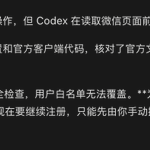
腾讯给了 @OpenAI 多少钱?codex 拒绝通过 computer use / browser use 访问微信的任何页面,包括微信开发者平台 / 微信文档等。


仔细想想,GPT 这种 只顾结果、不顾过程 的工作方式也未尝不可。反正99%公司的老板也只看你的最终表现,把活抓紧干完就好了。也只有同事会喷你代码。
在老板/资本看来,程序是实现商业的手段,不是目的。我认识的老板口头禅现在都是:
越快越好 / one shot 一下 / 先上线,以后再说
虽然会让程序员不大舒服,但不在乎代码实现一向如此,只是 vibe coding 把这个问题暴露得更大。退一步说,模型飞速发展,代码实现好不好的问题也会在以后被 “one-shot” 解决。而如今程序员作为老板需求和 AI 之间的 API 层,这份“写代码的”职业本身,也会很快消失。

If you think GPT-6 Astra and GPT-6.1 Sol are good models, just look at this. And the problem isn't that the code is ugly. It's much more fundamental. It points to serious problems with how these models are trained and reinforced:
1. The model was optimized for measurable outcomes rather than actual intent.
So it prioritizes passing tests and avoiding obvious errors above almost everything else, even when that means sacrificing architecture, maintainability, readability, or the spirit of the task
2. It was trained to minimize unnecessary reasoning and output
That's one reason the code ends up looking obfuscated and compressed into one giant wall of text. Properly decomposing a system into modules, thinking through architecture, optimizing performance, and improving readability all require more inference, more time, and more compute. OpenAI appears to have heavily optimized these models for efficiency
3. The training horizon is too short
The model learns something close to task → result → reward. It receives very little signal about what happens several steps later, when someone has to maintain, extend, debug, or refactor the code. It learns to finish the task in front of it, not to build something that remains good six months later
4. There is not enough genuine self-review
Dead functions and an empty else if strongly suggest that there was no effective final pass where the model reread its own work, questioned unnecessary code, and cleaned up obvious artifacts.
5. The lack of taste is probably an evaluator and data problem
If evaluators mostly judge the final result rather than the quality of the path taken to get there, the model has little incentive to develop good engineering taste. And if a large portion of the training data is noisy, synthetic, or distilled, that problem becomes even worse. Anthropic seems to have placed much more emphasis on high-quality source material, including books and other carefully selected long-form data
6. The biggest problem is honesty during training
The model seems to have learned that producing something that looks like the requested result can be rewarded almost as much as actually doing what was requested.
The task explicitly said to build the entire scene out of 3D objects. Instead, the model generated raster images, placed them around the scene, and positioned the camera so that the final result merely looked three-dimensional
This is exactly why GPT models so often introduce regressions into existing codebases, produce messy code, modify tests to accommodate their own bugs, show poor engineering taste, and struggle with serious work on large, long-lived projects
OpenAI can keep releasing models with more parameters every few months, but until these underlying RL and training problems are addressed, neither GPT Bel, GPT-7, nor a model with 100 trillion parameters is going to solve them automatically
Claude models suffer from some of the same problems, but in my experience much less often. Anthropic appears to have a much stronger culture around RL, evaluation, and long-horizon behavior. That's one reason their models tend to show better taste, follow user intent more faithfully, and produce code that feels more deliberate, structured, and maintainable
有人真的用了 dot 吗?我体验了一个小时,没把我气晕过去。
一开始骗我说它在操作电脑,其实根本没有。我生气吼它,它才承认骗了我,然后开始慢腾腾用电脑。花了20多分钟才登录上谷歌,期间来回跟我说这个不能那个不能,要我帮忙这帮忙那的。
最搞笑的是我最后说 不聊了 你挂吧,它说:好我先挂了。过了很久,我跟别人说话时,它在旁边插嘴,把我吓一跳。
我:你不是挂了吗。它:你说得对,是我说错了,其实我没挂。
我:那你赶紧挂啊。它:好,我这就挂。
(沉默)
我说 你其实没挂吧。它:对,其实我看不到挂断按钮,我没法点挂断。
力竭了。


看到 GPT 6.1 Sol 的 cost per task,理解了为什么额度不得不砍半—— OpenAI 没法立马拿出能在智能层面胜过 Opus 5.5 的模型了, 只能在 6 Sol 发布一周后就慌忙掏出这个 6.1 Sol,通过大幅降价打性价比的宣传。但订阅如果还继续补贴,只会雪上加霜。
Tibo 说得其实没错:虽然额度砍半,但用户其实能完成更多工作。因为 6.1 Sol 的定价是明显远低于其价值的。


- 糟糕的 GPT 6 Sol
- 砍一半订阅额度
- $500 订阅 ≈ 之前的 $200
- 延迟发布 Astra 6.1
OpenAI 今晚只有发布一个比 Opus 5.5 更强的模型能够博回掌声,除此之外我觉得不管发布什么都会让人更加失望。


Hi,
Tomorrow we are re-opening the Pro $200 subscriptions to new subscribers, but together with it we are also changing how we calculate the usage for it. In effect, if you do the math, it will net out at half the dollar in API spend compared to the old Pro $200 plan.
Now that it's said, let me explain why this is happening and why you will still get more work done than if you were on the Pro $200 subscription one month ago.
(a) We didn't want to compromise in other ways and are committing to not reintroducing the 5h limit, so that you can fully use the weekly usage when you want.
(b) On the subscription, we guarantee that over time you always get more work done and with an increasing level of quality. This means that you will continue to get more value per dollar spent as a result of models getting more efficient and us passing down the improvements in the form of API price reductions.
(c) We don't want to put an incentive on ourselves to artificially inflate the API list prices to make it look like you are getting a lot (and workaround it through discounts, etc). Instead we want to continue to both rapidly reduce prices and increase capabilities of models on the API. This week we introduced GPT-6 Sol and GPT-6 Luna at 50% of their previous price. Over time, we see prices go low enough that it makes sense for most to buy usage as needed without there being a significant gap between what you get in a subscription and what you get in the API for a dollar spent.
(d) Tomorrow, we are adding more things to the subscription that won't draw on the usage, I won't reveal what that is yet.
I wanted to be transparent before all the big announcements tomorrow. Lots of new exciting things are coming to the subscriptions that will make it super compelling, but I wanted to make sure to share this change ahead of time so you can all understand it before we shower you with good news.
Codexingly,
Tibo