
21, engineering @crustdata (YC F24), prev fellow @protocollabs. @iitroorkee'27. some math, systems. elite taste
library
Joined January 2024
- Tweets2K
- Following1.7K
- Followers3.9K
- Likes3.2K







I must expose myself to a variety of concrete research in the direction I’m looking at before I make a conclusion about what I’m thinking
hasn’t it always been that way
i think i just didn’t take out enough time to think on stuff out of the execution loop hell i might have put myself into
I’m trying to see how much of neuroplasticity i myself have through this
7
268
I believe gatekeeping knowledge has great benefits
but i also believe that access to ‘most’ knowledge is a great thing
but then i also see diluted layers of half knowledge being misinterpreted by masses which causes harm at scale
And then i come back to my initial statement
5
274

Raveesh Gulati retweeted

As I study math more, it becomes undeniable how limited human working memory is.
It's so limited, that the problem space you're able to solve (even with chunking) is trivial. It's so small that you could argue that thinking within the bounds of your mind is so impotent that it might as well be considered not thinking.
Said another way, if you aren't writing, you (practically) aren't thinking.
Which is uncomfortable because then it means that most of the world is unthinking most of the time.
I'm not discounting intuition (fast thinking, perception via the unconscious). I just think that real thinking (the slow kind) is not only undervalued, but we're mostly confused as to how to utilize it (in my opinion, by writing things out).
i think trying to reverse engineer is a better way to learn that by building a lot of stuff
i think its faster for software
2
264


i cant think of anything more humbling and interesting than math
and its not that I’m not good at it
Infact I’ve been great at most math I’ve come across
its just that I left studying math a while ago in order to pursue other interests (like building software, travelling, business, defi, psychology and meeting tons of new people and overthinking )
and I don’t feel great about the fact that I’ve lost touch with math in general
Any math that I’ve used recently hasn’t been any further than calculus 2 or basic algebra
any kind of simulations I’ve done were done with ai doing the math since I was time constrained; stripping away the fun and thrill + intution developed (that came from taking the time to do it manually and gradually)
although I will find time to study discrete math well in the time to come i know for a fact that
all this cs+math like stuff where I use a lot of applied-everything doesn’t make me feel great, infact its a very bad feeling executing things you don’t understand fully
and the only solution is spending more time with things you arent aware of, everything from math to applied sciences
what I’m trying to say is pretty along the lines of
terence tao’s numberphile video
( he explains how incentives for ai labs don’t align with his math research interests and the need to protect research)
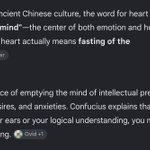
And math socerer’s particular video, thumbnail of which I’m attaching
And there’s a third video
MIT neurosurgeon leaving his job which he spent 9 years working hard for
(incentives on treatments by doctors not being aligned with his goals of truly helping people recover)
I believe all 3 of these videos are related in a way


siri was never useful to me
And I’ve been using apple devices since childhood
I wonder how much engineering time was spent building this @Apple
321
i would argue that even dilutions of each one of these ways give a very close idea of how good a person is

there are only two ways to have perfect information how good a person is:
- work closely with them for weeks while being significantly better than this person at the thing
- person is main founder of a company that did extremely well
everything else is proxies or approximations
1
250