

Pinned Tweet
Out now!

The Grid: The Largest Machine Ever Built - now live in all podcast apps! stepchange.show/grid
The grid powers everything around you. And it is in crisis. We cannot build AI, decarbonize our economy, or deliver affordable electricity if we don’t rebuild. And yet, the largest machine humankind has ever made is a miracle.
For nearly a century, electricity got cheaper every decade and the grid became so reliable that we stopped thinking about it altogether. This machine was not designed; it accumulated through a century and a half of decisions with unforeseen consequences. And now we are demanding that this aging, fragmented system grow faster than it has in generations.
To understand the struggle and opportunity of this moment, we have to understand how the grid came to be. It is an epic story of inventors and electrocutions, of a man who brought power to the masses and then lost everything, of an America that built massive new industries to win wars, of regulatory ambition and regulatory failure, of catastrophic blackouts, and of a trillion-dollar energy transition we are living through right now.
Thank you to @CrusoeAI, our presenting sponsor.
This is the fourth episode of @stepchange_vc where we explore the technologies and systems that have transformed human civilization. Hosted by me and @anayshah.

Stepchange retweeted

Happy Saturday—here I posit that AI data centers are the aluminum smelters of our time.
The aluminum industry used to call processed aluminum “congealed electricity” given the extreme energy intensity. At the height of WWII production aluminum and magnesium processing were nearly *15%* of all US electricity. We’re not even half way there with AI.
If tokens are the next congealed electricity we now have an immense opportunity to use these uniquely measurable and controllable loads to drive grid utilization up and, resultingly, costs down.
From @stepchange_vc live in SF:
Last April in SF we attempted to tell the 140-year history of the electric grid in 45 minutes. Live, with energy analyst @NatBullard
That's a time compression of 1,635,200x!
Going into SF Climate Week, @anayshah and I asked ourselves what the craziest thing we could pull off would be. Instead of another panel, we called up Nat and decided to try to tell the story of the largest machine ever built — from the birth of electricity to the AI power boom — in one live chat.
The amazing team at @GridwareInc offered us their lovely space and happy hour, and a few hundred people packed the room to nerd out with us. Thank you @TimBarat and team for pulling off a special @SFClimateWeek event!
Stepchange retweeted
.@NatBullard called the building of the grid "the coolest industrial story in the history of the universe."
While there are lots of things we need to improve on, it's also worth marveling at what we've built in the last 140 years. It's an absolutely insane accomplishment (and mess) technically, economically, and regulatoraly.
Stepchange retweeted
Last April in SF we attempted to tell the 140-year history of the electric grid in 45 minutes. Live, with energy analyst @NatBullard
That's a time compression of 1,635,200x!
Going into SF Climate Week, @anayshah and I asked ourselves what the craziest thing we could pull off would be. Instead of another panel, we called up Nat and decided to try to tell the story of the largest machine ever built — from the birth of electricity to the AI power boom — in one live chat.
The amazing team at @GridwareInc offered us their lovely space and happy hour, and a few hundred people packed the room to nerd out with us. Thank you @TimBarat and team for pulling off a special @SFClimateWeek event!
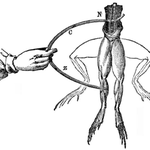
There have been many fierce battles in the history of electricity (AC/DC war, coal vs. gas, etc.), but our favorite is probably the War of the Frog Legs.
In 1780, Prof Galvani in Bologna is dissecting a frog and notices the legs twitch when he touches them with a metal scalpel. He believes that he had discovered "animal electricity," the idea that biological life contained a unique, intrinsic electrical fluid. He runs a series of experiments and publishes De Viribus Electricitatis in Motu Musculari Commentarius.
Europe goes wild for it. If electricity is the animating force of living things, then the dead might be made to move, and be made alive, again. This work inspired Mary Shelley when she wrote Frankenstein decades later.
But up the road in Pavia, a physics professor named Alessandro Volta wasn't convinced. He repeated the experiments and noticed that the legs only twitched when two different metals were in contact with them. Iron and copper? Silver and zinc? Twitch. A single metal on its own? Nothing.
The frog, Volta realized, wasn't a source of electricity. The frog was a very wet, very salty wire and sensor, an extremely sensitive detector of current that was being generated by some external chemical reaction.
In 1794 he goes public with it, and European science splits into camps — the Galvanists versus the Voltaists. It's a genuine, bitter, years-long academic fight. Galvani dies in 1798 still defending his theory.
Volta continues his work to disprove animal electricity. He wants to produce the current himself, with no animal tissue anywhere in the room. So he stacked discs of zinc and copper, separated by cardboard soaked in salt water, and ran a wire from the top to the bottom. The wire warmed. And the flow of current didn't stop, it kept going as long as the metals stayed connected.
That device, called a voltaic pile, was announced to the Royal Society in 1800. It was the world's first true battery.
For the first time you had a steady, controllable current. The discoveries came fast: arc lights (Davy), the link between electricity and magnetism (Ampere), and how to turn motion into current and back (Faraday). For most of the next century voltaic piles were the primary source of electrical power, and they're the scientific ancestor of every battery we have today.
Galvani was wrong. But he was wrong loudly enough, and publicly enough, to provoke someone into building the instrument that unlocked the next hundred years of discovery. We gave Volta the volt. We gave Galvani the galvanic cell, and galvanize.

For the long story of King Coal and his fall:
stepchange.show/coal-part-i

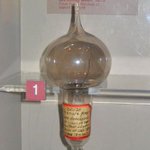
In October 1878, Edison crashed gas stocks in both the US and the UK by announcing a new product he intended to develop.
He didn't have a working bulb. He went straight to the press and proclaimed his vision: the same wire that will bring you light, will also bring you power and heat. "You may cook your food with it." He had seen past illumination to an entire electrical civilization.
The reaction by the gas companies was fury. British Parliament appointed a committee to investigate, and it ruled his dreams "good enough for our transatlantic friends, but unworthy to the attention of practical or scientific men."
Edison didn't care. He incorporated the Edison Electric Light Company and went to build the thing anyway. 14 years later, this company would become General Electric after a wild journey of invention, mergers, and the influence of J.P. Morgan.
For the full story, link in bio.

Stepchange retweeted
We constantly touch magic built on magic on magic.
Some ramblings between me and the machine last night.
teapaw.org/ben8128/status/2078887…

Stepchange retweeted
From Buffett's 2010 Letter:
Unquestionably, some people have become very rich through the use of borrowed money. However, that’s also been a way to get very poor. When leverage works, it magnifies your gains. Your spouse thinks you’re clever, and your neighbors get envious. But leverage is addictive. Once having profited from its wonders, very few people retreat to more conservative practices. And as we all learned in third grade – and some relearned in 2008 – any series of positive numbers, however impressive the numbers may be, evaporates when multiplied by a single zero. History tells us that leverage all too often produces zeroes, even when it is employed by very smart people.
A lesson learned by many, but particularly Samuel Insull when the depression hit.
For the full story: stepchange.show/grid
Stepchange retweeted

We’re a proud presenting sponsor of this episode of @stepchange_vc!
🔌 @ben8128 and @anayshah deliver a must-listen deep dive on the history of the power grid.
At 3:16:32: How vertical integration can help solve the AI demand shock.
🎧 Listen: stepchange.show/grid
#aiinfrastructure
Stepchange retweeted
This is Samuel Insull. He is arguably the most consequential figure in the story of the American grid, and the man behind what we believe is one of the most important business model innovations of the last hundred years.
Before Insull, electricity was a luxury product. He didn't invent the transformer or the light bulb, but he invented the business model of the utility industry. He realized that the key to this business was to spread the high infrastructure costs across as many customers as possible and to think of time as a key tool in generating load.
When he took over Chicago Edison in 1892, its central plant ran at 5.5% percent of capacity. He went hunting for customers whose demand peaked at different hours and assembled a portfolio that kept the plant working through the day and night: a textile mill on the day shift, a streetcar at the commute, a tenement and a vaudeville theater after dark, a hospital around the clock, an ice plant 24/7.
By 1910, his load factor was above 50%, rates had fallen by ninety percent, and the customer base had grown 40x. The same exact flywheel would later be the key Bezos insight for the cloud business and echos to today's AI infra race.
Insull died in a Paris Metro station with $.04 in his pocket and a reputation in shambles.


Stepchange retweeted
The Grid: The Largest Machine Ever Built - now live in all podcast apps! stepchange.show/grid
The grid powers everything around you. And it is in crisis. We cannot build AI, decarbonize our economy, or deliver affordable electricity if we don’t rebuild. And yet, the largest machine humankind has ever made is a miracle.
For nearly a century, electricity got cheaper every decade and the grid became so reliable that we stopped thinking about it altogether. This machine was not designed; it accumulated through a century and a half of decisions with unforeseen consequences. And now we are demanding that this aging, fragmented system grow faster than it has in generations.
To understand the struggle and opportunity of this moment, we have to understand how the grid came to be. It is an epic story of inventors and electrocutions, of a man who brought power to the masses and then lost everything, of an America that built massive new industries to win wars, of regulatory ambition and regulatory failure, of catastrophic blackouts, and of a trillion-dollar energy transition we are living through right now.
Thank you to @CrusoeAI, our presenting sponsor.
This is the fourth episode of @stepchange_vc where we explore the technologies and systems that have transformed human civilization. Hosted by me and @anayshah.