

🇨🇦 | ai for bio | cs phd @berkeley_ai | prev @bighatbio, @mcgillu
Berkeley, California
Joined December 2019
- Tweets65
- Following372
- Followers276
- Likes621


Pinned Tweet
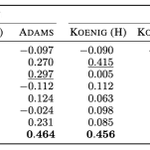
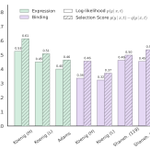
Antibody LMs learn what looks antibody-like, but not how selection turns naive germline antibodies into strong binders.
@aakarshv1 and I are excited to share CoSiNE, a model that learns this germline-to-mature process for variant effect prediction and antibody design. (1/8)
Stephen Lu retweeted

Today, in collaboration with Anthropic, we’re excited to share rapid initial progress towards an antibody treatment for food allergy, which affects over 200 million people worldwide, discovered with the help of Claude.
At Divergence Labs, we believe that AI can unlock the next generation of antibody therapeutics with more effective mechanisms than before. Such mechanisms are urgently needed in food allergy, which involve overcoming one of the tightest affinity protein pairs in immunology, IgE and its receptor FcεRI, on mast cells.
Treatment with Xolair—the only approved antibody for food allergy—sequesters circulating IgE, but mast cells remain sensitized for weeks to months due to the extraordinarily slow dissociation of IgE from FcεRI.
We envision a treatment that actively pulls IgE off of FcεRI, without waiting for natural dissociation. Like picking a lock, this requires the right combination of geometry and force.
Our research team, working with Claude, ideated on mechanisms to accomplish this disruption, and converged on an antibody format with two arms with different functions and epitopes. Within one month, we designed, synthesized, and experimentally confirmed the biophysical function of the two arms, which we are now assembling into full therapeutic formats.
Stephen Lu retweeted

New blog post - Chasing the Karpathy Peak (and Falling Off Slop Cliff): Confessions from Slopaholics Anonymous
My story of becoming a slopaholic, who’s most at risk, and how to avoid it (or recover)
thomasjiralerspong.substack.…

Stephen Lu retweeted

We 'll be hiring very actively at Berkeley!
Assistant/ Associate/ Full Professor – Electrical Engineering & Computer Sciences (Deadline: Dec. 7, 2026 at 11:59 pm Pacific Time). Apply here: aprecruit.berkeley.edu/JPF05…
Assistant Professor – AI for Biology – Electrical Engineering & Computer Sciences and Center for Computational Biology (Deadline: Nov. 9, 2026 at 11:59 pm Pacific Time) Apply here: aprecruit.berkeley.edu/JPF05…
Assistant Professor – Intersection of Statistics and CS – Departments of Electrical Engineering & Computer Sciences and Statistics (Deadline: Nov. 10, 2026 at 11:59 pm Pacific Time). Apply here: aprecruit.berkeley.edu/JPF05…
Assistant/ Associate/ Full Professor – Computational Biomedicine - Center for Computational Biology (Deadline: Nov. 18 2026 at 11:59 pm Pacific Time). Apply here: aprecruit.berkeley.edu/JPF05…
Assistant / Associate Professor – Electronic, Functional, and Quantum Materials – Electrical Engineering & Computer Sciences and Materials Science & Engineering (Deadline: Dec. 7, 2026 at 11:59 pm Pacific Time). Apply here: aprecruit.berkeley.edu/JPF05…
Coming Soon! Assistant/ Associate/ Full Professor - AI and the Physical Sciences -Bakar Institute of Digital Materials for the Planet (BIDMaP) and home department(s) to be determined. (Deadline: Dec. 7, 2026 at 11:59 pm Pacific Time) Apply here: aprecruit.berkeley.edu/JPF05…
Coming Soon! Assistant/ Associate/ Full Professor-in-Residence - Gladstone Institute of Data Science and Biotechnology and home department(s) to be (Deadline: TBD at 11:59 pm Pacific Time) Apply here: aprecruit.berkeley.edu/JPF05…

Stephen Lu retweeted

ʙɪɴᴅᴄʀᴀꜰᴛ2 is out, and we're not waiting for the paper. The full code drops today, free for academic and industry use.
We're releasing it early so you can start designing right now, and bring its full power to the current Adaptyv competition.
github.com/PacesaLab/BindCra…
Stephen Lu retweeted

Why doesn’t OpenAI use an equal amount of the money they spend to prove interesting conjectures in funding PhDs in the mathematical sciences?
That way we will have a next generation of researchers that can understand these results and formulate the next wave of conjectures.
Stephen Lu retweeted

My personal taste but I think this is the blueprint of doing good research (for a few years, before agents doing everything) in AIxbio. @yun_s_song team's work is perennially under-stated but always mixes ambition with strong science.
Research in AIxBio often misses what is already known in biology, and often repackages capabilities that are achievable by much simpler methods as new AI-enabled achievements.
Instead of importing the latest recipe/fad from ML to bio and pretending the outcome is novel (even if it's not), Yun's group *synthesizes* insights from biology with the power of new modeling. It's refreshing.

We are thrilled to share that our GPN-Star manuscript is now published and freely available:
doi.org/10.1038/s41586-026-1…
(1/n)

Stephen Lu retweeted

We are thrilled to share that our GPN-Star manuscript is now published and freely available:
doi.org/10.1038/s41586-026-1…
(1/n)
Stephen Lu retweeted

OpenBind intends to collect 10,000s of protein-ligand structures & affinities. To prioritize what we collect next, we need cofolding models trained on the latest data. Today we're releasing OpenBind-0 and 717 new ligand-bound structures.

Stephen Lu retweeted

i disagree with Dario's medical takes, but i think there's kind of a failure of imagination with the responses to him. there is, i think, an okay steelman for “ai will figure out solutions to a good chunk of diseases” if you believe superintelligence can solve the delivery problem entirely. that is: it will be able to design drugs that target arbitrary places in the body, and nowhere else.
lots of medicine is bottlenecked by this problem!
let’s suppose we had such a machine, which, given a particular biomolecule, tells us which tissues it reaches and nothing else.
with such a machine, you can...
1. cure a fairly large chunk of rare diseases, which are mostly monogenic mutations that are solvable with current genetic-engineering technology, given good-enough delivery vehicles produced by the machine. yes, you won’t undo all the damage caused by a lifetime of disease, but still!
2. put a pretty big dent in—if not outright eliminate—any solid tumor. how? just go all in on radionuclides that, magically, target only cancer cells. the radiation burden eventually kills it without harming the patient (much). nearly-pan-cancer cure; none of the usual “cancer is actually many diseases” nuance needed. you might say that some cancers are a problem because they’re discovered too late, rather than because they’re hard to cure, but solving the delivery problem helps with that too. highly selective PET ligands would let us regularly and non-invasively monitor for small lesions, then treat them with with matched radioligands whenever something suspicious turns up.
3. cure at least some severe autoimmune diseases. we already know that wiping out B-cell lineages via cell therapy can do that, but it’s too toxic to scale. with our magic delivery-solver ai, we could make therapies that remove the particular autoreactive B-cell and plasma-cell populations we dislike, leaving most useful immunity intact. and for some autoimmune conditions, the relevant autoantigens and autoantibodies are well established!
there: three broad classes of diseases that get tidied up with access to a superintelligence that can solve one singular problem. and you probably get more than this too!
of course, much like Dario, i’m doing a little handwaving here myself. truly solving the “delivery problem”—beyond the basic ability of distinguishing one cell from another—involves solving a dozen bundled problems: blood-brain delivery, preventing an immune response, avoiding liver and spleen sequestration, getting through the cell membrane and then escaping the endosome
but i dont know. is it really so unachievable? the delivery problem feels like a pretty legible issue, no secret knowledge of biology required beyond more data collection from the obvious sources + mulling over the results. if we really put our minds to it—and many people are—it seems well within the realm of possibility. it's also not terribly slow to run this through clinical trials; the tech stack for genetic editors, radionuclides, and immune depletion does already kinda exist.
now, i think it's fair to still say solving the delivery problem is somewhere on the spectrum of impossible (too hard to distinguish stuff, the biological knobs just dont exist) to intractable (there actually is secret knowledge about biology we need to uncover before we solve it). im somewhere in these two camps personally, but i wouldn't find it insanely shocking if i turn out to be wrong


Stephen Lu retweeted

Most PDB structures show one frozen conformation. But proteins are not static.
New work from @stephanie_mul at @radialscience's @diffUSEproject reprocessed ~80,000 high-res PDB structures with qFit, recovering hidden conformational heterogeneity. Result: 60,000+ multiconformer models, the largest experimentally-derived ensemble dataset to date. Better fit to the data (lower R-free) in ~90% of cases.
MD-based ensemble predictors are capped by simulation time and force-field accuracy. This dataset pulls real ensemble signal straight out of X-ray/cryo-EM data instead.
Paper, code, data:
thestacks.org/publications/q…


Most structures in the PDB report one set of coordinates. The experimental data behind them, in both X-ray crystallography and cryo-EM, is produced by an ensemble. New work recovers that hidden signal at scale in over 60,000 structures. thestacks.org/publications/q…

Stephen Lu retweeted

Excited to share MarinDNA, a 1B gLM that rivals Evo 2 40B on variant effect prediction while being 2,330x faster.
With @eczech0, we built around a standard Transformer so we could reuse LLM infra and methods while focusing on data curation and scaling.
openathena.ai/blog/marin-dna… 🧵

Stephen Lu retweeted

Property guidance for protein sequence generative models with ProteinGuide nature.com/articles/s41587-0…

Stephen Lu retweeted
It’s getting hard to keep track of all the new open-source cofolding models coming out. To help everyone stay up to date, I'm excited to share cofoldarena.ai, a PDB-synced leaderboard of open models, updated weekly. All predictions are available to view & download! (1/4)
Stephen Lu retweeted

Can't believe this batch of PhD students gets to go to Seoul, Vienna, Singapore, Kyoto, San Diego, Hawaii
while the previous batch visited Gather Town, and the one before that apparently just went to New Orleans multiple times
Stephen Lu retweeted
I am thrilled to share that UC Berkeley and UCSF have launched a joint initiative in Computational Biomedicine!
cdss.berkeley.edu/news/uc-be…
We will soon be recruiting new faculty and postdoctoral fellows. Please repost to help spread the word.

Heading to ICML! ✈️
@aakarshv1 and I will be presenting this work on Thursday during poster session 8. Come say hi at poster #808!

Antibody LMs learn what looks antibody-like, but not how selection turns naive germline antibodies into strong binders.
@aakarshv1 and I are excited to share CoSiNE, a model that learns this germline-to-mature process for variant effect prediction and antibody design. (1/8)
Stephen Lu retweeted

Affinity maturation is how naive antibodies evolve into strong binders, but most antibody LMs ignore it.
@stephenzlu and I built CoSiNE to learn this, beating antibody LMs on VEP and reframing design as guiding evolution, not de novo generation.
Excited to present at ICML!
Antibody LMs learn what looks antibody-like, but not how selection turns naive germline antibodies into strong binders.
@aakarshv1 and I are excited to share CoSiNE, a model that learns this germline-to-mature process for variant effect prediction and antibody design. (1/8)
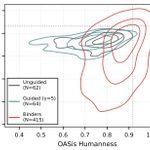
The resulting samples remain structurally plausible and human-like.
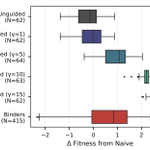
We think this is a promising step toward controllable evolutionary protein design: not just generating sequences de novo, but guiding the processes that produce them. (7/8)

Huge thanks to my coauthors @aakarshv1 , @koheisanno , @jiarlu , @ematsen , @milind_jagota , and @yun_s_song ! We will be presenting at ICML.
Preprint: arxiv.org/abs/2602.18982
Code: github.com/thematrixmaster/c…
Blog: songlab-cal.github.io/cosine
(8/8)