

Non-philosopher. Interested in late modern mathematics and logic. Music designed to do no harm. Fake name has a mostly pragmatic origin. Actual name, ‘Neil’.
California, USA
Joined February 2018
- Tweets5.5K
- Following281
- Followers292
- Likes12.7K








Not generative, but far from neutral. Much of the process is trained. Every pixel traces to real photons, but what counts as texture and what counts as noise is a learned judgment, made to Apple's taste. And it is good taste. Generative can be too.


Whenever someone says 'obviously', be wary. Going beyond theory-relative measurements is a communal, pragmatic concern. There is no scalar metric of progress for RSI independent of external questions. So here we are. A productivity tool exists. Our domains may be expanded.

The real world abounds with recursively self-improving systems, but one in particular deserves attention: Science, modeled as a system (perhaps even as an agent, with goals and resources). If you want to really understand AI RSI, science should be your reference point.
Science is an intelligent system, and it is obviously recursively self-improving:
1. Scientific discoveries unlock new technology that helps build better experimental tools. This is a top driver of progress in nearly all fields.
2. They unlock new conceptual advances (ideas, theories) that help solve more problems.
3. They increase society's economic output, leading to more resources flowing into science.
4. They unlock better faster tooling (e.g. more compute via better chip & networking technology).
As a result, many measures of scientific *input* grow exponentially:
1. Headcount (doubles every ~15 years)
2. Global R&D spending (doubles a bit faster, every ~13 years)
3. Papers and patents (technically this is a measure of headcount)
4. Compute dedicated to science (doubles every ~2 years)
But is scientific progress exponential? Historically, the rate of scientific impact over time has remained roughly constant since the start of the industrial revolution (i.e. scientific progress is *linear*). 1850-1900 was about as dramatic as 1900-1950 or 1950-2000.
1850–1900: Evolution, germ theory & antiseptic surgery, thermodynamics, electromagnetic field equations, the periodic table, pharmaceuticals, electricity, telegraph and telephone, internal combustion engine, skyscrapers, mechanized agriculture...
1900–1950: special and general relativity, quantum mechanics, nuclear fission & atomic energy, antibiotics, genetic theory, electronic computers, information theory, synthetic polymers and plastics, the transistor, aviation...
1950–2000: DNA, genetic engineering, integrated circuits, microprocessors & personal computing, the Internet, crewed spaceflight, moon landing, satellite communications & GPS, standard model of particle physics...
In real terms, like life expectancy, which has increased in a remarkably linear fashion of roughly 3 months per year since 1840, progress is a straight line. This is especially apparent for fields where impact is easy to measure, like biology, medicine, and agriculture.
I first wrote about this phenomenon and its causes in 2012, and a steady stream of research has confirmed it in the years since. Examples include the 2018 paper by Nielsen and Collison, "Science Is Getting Less Bang for Its Buck," and the 2020 economic paper, "Are Ideas Getting Harder to Find?" (In fact, I believe the Nielsen paper stemmed from a conversation I had with him about this exact idea six months earlier)
In short, the primary cause is that research solves the highest-impact, easiest problems first, and every subsequent problem is either harder or lower-impact. Exponentially so. The paper that presented information theory wasn't very hard to write (single author!) but you'd have a hard time ever writing a CS paper that beats it in impact.
This is why science as a system requires exponential resources (input) to produce linear impact (output). It gets exponentially harder over time.
Worth thinking about if you're pondering RSI for AI. I fully believe AI RSI is already happening and will accelerate in the future. But I do not believe this leads to an "intelligence explosion" -- that would fly in the face of everything I know about intelligence and everything I know about recursively self-improving systems.

Tackhead
De La Soul
African Head Charge
The Damned
King Crimson
Smog
Gang Gang Dance
Jah Wobble’s Invaders of the Heart
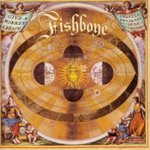
Fishbone
Bad Brains
I potentially have another list… this is today’s.

I’m certain @realjahwobble & @marteeeen remember EFL. EFL were huge PiL fans. After the final EFL gig, the incident was described by NME as a shocking contrast to the infamous 1981 PiL Ritz gig. I understand that the aforementioned members were not present behind the screen.

No. Bad premises make durable rules. "Net neutrality" named a property packet networks never had, so we got "don't differentiate" instead of rules against foreclosure. If "roaming free" becomes the object here, expect the same: wrong thing restricted, real risk untouched.

Does it? @keithfrankish
I’m no Dennettian, but I feel the urge to say no. Maybe it’s not about the stance, but the attitude. How and why do I acknowledge another? Not because I spend my time second guessing their experience of anything, let alone me.

Poet Man

ALT Tim Curry as Poet Man in Lex


William Orbit , Pavane Pour Une Infante Defunte - Ravel:
youtu.be/FSaGfJPGzTI?is=N1gg…
Quaid saying no to the pill doesn't settle anything. Verhoeven called it ambiguous. The somewhat gnostic PKD architecture of hypostases through the levels towards The One is an infinite regress. Take it or don't take, you will find another level of illusion.

My beloved & I once produced a podcast on which Neil deGrasse Tyson explained his theory about why people felt cheated by Pluto being downgraded. He explained the anger using the relevant Disney character. He provided extensive eviden…
Oops, nope!

Just a reminder: Neil deGrasse Tyson is often wrong about history.
fakehistoryhunter.net/2026/0…


Apparently everyone is missing the obvious choice for Odysseus: an actor good at getting to his family or getting to a place of safety under duress. Also capable sensitivity. He once played a different Greek. Rugged.

ALT Gerard Butler was. 300

I for one would be curious were God to tell us what God thinks about The Odyssey, or indeed anything. I feel a bit put out that God shared with Rifkind but won’t pass it on to the rest of us!
(BTW: I do love it when people say we should be true to the words Homer wrote. Wrote.)

Film is akin to opera. In The Birth of Tragedy Nietzsche remains guilty of psychologizing the tragedies. Stravinsky came close to avoiding that in his austere, static staging of Oedipus Rex. Opera otherwise failed to understand the nature of the Greek plays it aped.
This quoted post is unavailable.
W was particularly put out when looking for a countryside retreat to see this fountain. It is not a generalized comment on life. It is a comment on the jewel of Semmering. I would have cracked up had he said it to me.

ALT Fountain in Maria Schutz


SF fandom might be the natural experiment this asks for: supernatural content held fixed, literal belief not required. You get canon-as-scripture, lore-exegesis, pilgrimage, costly signaling. The Supernatural anti-possession tattoo is a form of Henrich’s credibility display.

A 4th July present: Grice’s rules obeyed to the letter! You cannot disagree with a word said here. I, personally, have never been misunderstood when the other person agrees with me.

I’m wondering if this is a joke or an observation. Boomer fridges contain many ancient wonders from my explorations. There are things at the back of the fridge too strange for the Ghostbusters.
.@PhilosopherJoeC I’m not sure Hoyeck was addressing skeptics in his question. You are closer to my position from various references you have offered 🙏🏻. Am I off base in my sense that courage can be an attitude in response to skepticism? Almost necessary?