

Private community for making money on YouTube with AI.
💸 Start Here 👉
Joined June 2025
- Tweets4.1K
- Following1
- Followers8.3K
- Likes1K




Faceless Success retweeted
There is a point where uploading more makes a channel harder to fix
If the topic selection is random, every upload introduces another possible audience
One video attracts people interested in celebrity money
The next attracts people interested in business history
The next attracts people interested in crime
All three might get views but they do not necessarily create the same returning viewer
Then the creator says the channel is broad because broad means more opportunities
What they actually built is three small channels sharing one homepage
Before increasing frequency I would ask one question
Would the same person happily watch the next three videos
If the answer is unclear, volume will give you more data but less direction


The 70 percent rule I would use for channel expansion
70 percent of uploads should serve the audience you already proved
20 percent should move one step beside that audience
10 percent can test something genuinely strange
The exact percentages do not matter
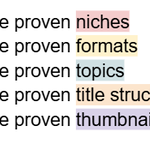
One of the best niche signals is not a viral video
It is a mediocre video surviving bad execution
Weak thumbnail
Average title
Slow opening
Small channel
Still pulling meaningful views
I think people obsess over niche saturation because it gives them a clean excuse
If the niche is saturated, the failure was outside their control
But many crowded niches still contain empty positions
Everyone explains the same beginner problem
Nobody serves advanced viewers
Everyone tells stories about famous people
Nobody covers the decisions behind ordinary outcomes
Everyone uses one hour documentaries
Nobody makes the concise version for viewers who want the answer quickly
Everyone competes on topic
Nobody competes on evidence, clarity, or point of view
I would map what the niche repeats before deciding there is no room left
Crowded does not mean complete
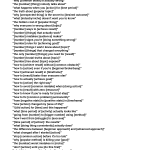
20 youtube title formats built around a strange business decision
1. why [company] deliberately loses money on [product]
2. why [company] refuses to sell [product]
3. how [company] makes more money by selling less
4. why [company] killed its most popular product
5. the [$amount] decision [company] still regrets
6. why [company] gives away [product] for free
7. how [company] makes money from its biggest problem
8. why [company] keeps thousands of products unsold
9. why [company] spends millions to prevent [outcome]
10. the strange reason [company] rejected [opportunity]
11. why [company] intentionally makes [process] difficult
12. how [company] profits when customers leave
13. why [company] abandoned its most profitable market
14. the decision that made [company] impossible to compete with
15. why [company] charges more for an inferior product
16. how [company] turned a failure into its biggest advantage
17. why [company] refuses to expand
18. the gamble that nearly bankrupted [company]
19. why [company] sells [product] below cost
20. how one unpopular decision saved [company]
why short thumbnail text beats long text most of the time
at feed size, anything past about four words stops being read and starts being ignored. the text has to land in a glance next to a dozen other thumbnails competing for the same second of attention.
if the thumbnail needs a full sentence to make sense, the idea behind it probably isn't sharp enough yet.
There is a point where uploading more makes a channel harder to fix
If the topic selection is random, every upload introduces another possible audience
One video attracts people interested in celebrity money
The next attracts people interested in business history
The next attracts people interested in crime
All three might get views but they do not necessarily create the same returning viewer
Then the creator says the channel is broad because broad means more opportunities
What they actually built is three small channels sharing one homepage
Before increasing frequency I would ask one question
Would the same person happily watch the next three videos
If the answer is unclear, volume will give you more data but less direction
I would not start a second channel because the first one had a viral video
I would start it when the first channel has a repeatable decision system
Can someone on the team explain why a topic gets approved
Can they show what makes a title acceptable
Can the editor identify the moments that need visual proof
Can the thumbnail designer produce options without being spoon fed every composition
Can you tell after five uploads whether the failure came from the topic, packaging, or content
If none of that exists, the second channel does not create leverage
It creates a second pile of decisions waiting for you every morning
The first channel should teach you how to build the machine
The second channel should prove the machine can travel
One title can contain a good topic and still kill the video
Imagine the video is about a town that became rich from one mine and collapsed when it closed
The History of a Forgotten Mining Town
accurate but emotionally empty
The Town That Got Rich for 12 Years
now there is a rise and an implied fall
Everyone Left This Town After the Mine Closed
now the consequence is visible
The Mine Made Them Rich Then Trapped Them There
now there is a contradiction
The research did not change
The video did not change
Only the question created inside the viewer changed
This is why I do not judge titles by how clearly they summarize the script
I judge them by whether the missing information feels valuable enough to click for
A title is not a label placed on finished content
It decides which version of the story the viewer believes they are about to receive
how to decide whether an outlier deserves a sequel
did related old videos rise
did viewers click the end screen
did comments ask the next question
did the title tension work beyond the famous subject
can the sequel serve the same person
the strongest proof of a niche is several imperfect channels winning differently
one through documentaries
one through tutorials
one through comparisons
one in another language
that tells me the demand belongs to the audience
Faceless Success retweeted

I love this question and I’d like to address this in detail.
First of all, what I share publicly is nowhere near the limit of what we’re doing internally.
I already have much more advanced workflows and editing styles running on my own channels, and we’re using them to produce videos at scale.
But there’s a bigger philosophy behind why I share all of this.
I genuinely believe there is NO ceiling to how good or how cheap AI-generated videos can get.
What looks like insane editing today might be considered completely ordinary literally two weeks from now.
AI is advancing so quickly that trying to protect one particular workflow as some permanent competitive advantage makes very little sense to me.
I’d rather keep building, experimenting, and staying ahead of the curve.
And that’s exactly what my paid community, Faceless Success, is built around.
I don’t believe in gatekeeping knowledge or selling people access to some black-box tool that stops working the moment they stop paying me.
Inside my community, I share the actual workflows, source code, tutorials, and systems I develop.
My students learn how everything works, how to build it themselves, and most importantly, they get to OWN what they build.
No recurring software fees to me just to keep their editing systems running. No dependency on my infrastructure. No losing access to their workflows if they cancel their membership.
That’s something I strongly believe in.
And from a business perspective, the model is pretty straightforward.
If I consistently stay on top of the latest AI developments, build increasingly powerful workflows, and teach my students how to implement them, they’ll have a reason to keep paying me for the NEW knowledge and systems I introduce.
Not because I’ve locked them into some tool they can’t live without.
I’m monetizing the same expertise in two different ways:
I make money USING these systems to produce content on my own YouTube channels.
And I make money TEACHING others how to build and own those same kinds of systems.
My students benefit from everything I discover, and I benefit from having another recurring revenue stream alongside my channels.
It’s a win-win.
The way I see it, my competitive advantage isn’t any single workflow or piece of code.
It’s my ability to continuously build something better.
And as long as AI keeps advancing, there will always be something new to experiment with, improve, and teach.
That’s why I’m comfortable sharing everything I know.
I don’t need my students to depend on me forever. I need to keep providing enough value that they WANT to stick around.
And regarding your point about hooks, I agree that unnecessarily long intros can kill retention. But I think a hook should be judged by how well it holds attention rather than an arbitrary 30-second cutoff.
I hope I was able to make my points clear ❤️


