

At the intersection of product and technology. Blog: https://teapaw.org/t.co/cHzC4Ahfv7.
Atlanta, GA
Joined December 2008
- Tweets6.2K
- Following69
- Followers629
- Likes797





@lissijean is the book still launching this yea? Looking forward! productoperations.com

1
+1. Go further, use these components but also explore is this the right problem to solve? How well do I know the problem space. We PMs are adept in writing about what we perceive the needs are — not necessary the 'actual' unmet needs that a user/customer is craving to solve.

In B2B, everyone talks about how you should be clear on “what problem you are solving”.
To make this work in practice, split this question into 3 components:
- Buyer problem
- Champion motivation
- User problem
This format forces rigor, creates clarity, and gets you buy-in.
A/B testing — often thought-about but poorly executed. How often have you heard: "we should do an A/B testing and find out." And, how often did you follow through?

Lots of temptation to end of your A/B tests early.
Check out this image. 99% probability winner! We're killing it! Evangelize the insights to the team!
The only problem is that this is actually an A/A test (variations identical). Don't end tests when the tool tells you.

Product strategy: avoid these 6 pitfalls while defining it suryas.org/blog/avoid-these-…


Well, after five years. There are many more enemies: competitors, password-sharers, etc.
Lifecycle of a business. Crest and trough — find a new wave or perish.

Psychology of pricing and techniques. For e-commerce, here's a reference guide. nickkolenda.com/psychologica…


No doubt, customer focus is essential. However, you have to do more work than taking the customer's asks at face value. The actual need is several layers deep down.
Fall in love with the problem space.
Mistaking a team sport to an individual one.
"Look, man, I specifically chose software development career to make sure I NEVER have to work with other people!" Translates to,
"I chose to put a cap on my success, and hindering the organization goals by doing that."
Exit door =>

I am having serious difficulties trying to get some software devs to try working in a team. The push-back I'm getting goes like this: "Look, man, I specifically chose software development career to make sure I NEVER have to work with other people!"
What to do, what to do?
1
What is the problem that I'm attempting to solve? It's a simple yet profound question.
Ask yourself how much time you're spending defining and refining the problem.
"I'm doing this because it is in my OKRs." It's a wrong explanation; try again.
Profitable — great! What is the "quality" of profit? Is it sustainable?
Blockbuster's profits were predominantly from the late fees.
That business model busted when Netflix offered no late fee.
Product-led growth organizations still need a Sales team.
Unfortunately, there's a myth around no Sales personnel.
Do not underestimate the power of direct conversations with the customers (enterprise, specifically).
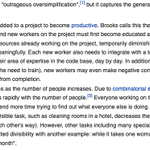
Brooks Law: "Adding human resources to a late software development project makes it later." (via Wikipedia)

Treat your business plan as a hypothesis than a set-and-forget plan. A hypothesis-driven mindset drives you to gather facts to prove or disprove the idea — respect uncertainty.
An excellent case study 👇
linkedin.com/pulse/latest-fl…

Surya Suravarapu retweeted
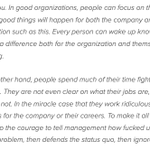
1) Recognizing that every individual and team is different, 2) Not carrying the previous conditioning forward ... looking at every opportunity as a new day.
This works in the reverse too — not bringing your old playbooks and applying it blindly with your new team.
If you already read it, no problem, read it again (that's what I did). There are so many thoughtful takeaways here on B2B sales. Thanks, @stevesi.
blog.learningbyshipping.com/…

3