

Decoding biology to end disease
Joined December 2021
- Tweets72
- Following164
- Followers155
- Likes132




AI is changing biology at an incredible pace, but we’ve been thinking about a different question: what kinds of biological data will create lasting value over the next decade? Sasha Levy, who leads Experimental Platforms (Innovation) for @syntenyAI, wrote a short essay arguing that the biggest opportunities may not lie in the crowded center of today’s datasets, but at the frontier where molecular design meets functional biology
syntenylabs.substack.com/p/t…
Conventional AI drug design optimises for a single property like binding affinity, but a successful programme must satisfy several competing objectives at once, such as a TCR hitting a target while avoiding the wildtype peptide and dangerous cross-reactivities. Lewis Cornwall explains how we reframe this as conditional generation: sampling from a distribution that combines a learnt receptor prior with conditional terms reflecting our design constraints.
syntenylabs.substack.com/p/c…
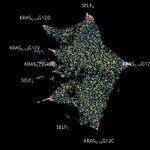
Hear from our scientists who argue that KRAS targeting has the best claim to becoming the backbone for precision oncology, analogous to PD-1 inhibitors, not because KRAS is “one drug for everyone,” but because KRAS is the most universal molecular anchor around which scalable, multi-tissue precision strategies can be developed.
syntenylabs.substack.com/p/k…
Autoimmune diseases are still largely treated with blunt instruments - broad immunosuppressants that dampen the entire immune system and expose otherwise healthy patients to long-term infection and malignancy risks. A new class of therapies that we are developing at @syntenyAI built around T cell receptor (TCR) biology works to change that paradigm.
TCR-based T cell engagers (TCR-TCEs) can recognize peptide-HLA complexes derived from intracellular proteins, enabling them to selectively target the specific immune clones driving disease rather than suppressing immunity globally. Instead of blocking cytokine pathways everywhere, these therapies aim to intervene at the informational root of autoimmunity.
Recent advances in structural immunology, single-cell TCR sequencing, immunopeptidomics, and predictive modeling are rapidly mapping the TCR–peptide–HLA landscape. Yet this system is profoundly complex: small changes in peptide sequence, HLA allele, or TCR CDR loops can drastically alter binding and immune activation. That combinatorial biology makes TCR therapeutics one of the hardest, and most exciting, frontiers in AI-driven drug discovery.
@syntenyAI 's twin AI and lab platforms, MANIFOLD and MYRIAD, are tackling this challenge by learning the high-dimensional rules governing immune recognition and enabling the design of precise TCR-based therapeutics. We expect profound implications: for autoimmune patients, many of them young and otherwise healthy, precision TCR therapies could eliminate pathogenic immune clones while preserving protective immunity, enabling durable remission without lifelong systemic immunosuppression. Read more about how we are enabling the next evolution of autoimmune treatment beyond immune modulation: precision immunology.
open.substack.com/pub/synten…
Training frontier AI on large scale purpose-built biological datasets is the largest tool we have to model the natural laws of biology and our core focus at Synteny. Handling high diversity, multidimensional, heterogeneously-generated experimental data, and processing it for AI model training is a resounding challenge. This occurs across so many areas of biology and experimental data: differential gene expression, CRISPR screens, enrichment-based assays and many more. Traditionally, bioinformaticians might pre-process the data (threshold, normalise, average etc), imposing certain decisions before the models ever see the data. At Synteny, we want to avoid imposing such explicit assumptions on the behaviour of the data. Instead, we show how we learn a direct calibration function as we train our deep learning model ARLO to estimate affinity measurements. Read about our approach:
syntenylabs.substack.com/p/s…
AI-designed T cell receptors demand more than powerful models - they demand a data platform built for scale, precision, and autonomy. Here’s how we’re rethinking biological data infrastructure to unlock reliable, agentic AI for next-generation TCR therapeutics. Read our latest from Neil Dalchau and James Day
open.substack.com/pub/synten…
synteny.ai retweeted

At @syntenyAI, we view this approach as a local optimum, and we dare to challenge it.
syntenylabs.substack.com/p/b…
How do we make programmable biology a reality: why we at @syntenyAI ❤️ TCRs
syntenylabs.substack.com/p/a…
Expensive, slow, and unscalable, affinity measurement has long been a bottleneck in TCR bispecific discovery. At @syntenyAI , we've built ARLO, a deep learning model powered by our Data Foundry, to estimate TCR–pMHC binding affinity directly. By replacing costly SPR experiments with AI-powered inference, ARLO enables rational and scalable optimisation of therapeutic TCRs. Read more from our AI research scientist Lewis Cornwall:
syntenylabs.substack.com/p/u…
Our co-founder @jrblundell writes how @syntenyAI’s data foundry generates large-scale, high-fidelity data to train AI models for molecular recognition

At @syntenyAI we believe that TCR-antigen recognition is the one of the most important challenges in science today.
To tackle it we're building the Synteny Data Foundry: a platform for generating large-scale, high-fidelity TCR–pMHC interactions 👇
syntenylabs.substack.com/p/b…

Structure or sequence – how should we represent proteins? This question has long challenged SOTA protein property prediction. Read our new post to get our take and meet Boltz-2-PPI, a minimal adaptation of Boltz for predicting protein–protein affinity 🧬👇
open.substack.com/pub/synten…
Our work highlights that current learnt structural representations of proteins may be less adaptable to predicting properties of protein complexes than their sequence-based counterparts.

1
1
51

Our Head of AI, Aaron Sim, discusses conditional sampling in diffusion models and the consequences for protein design
open.substack.com/pub/synten…
Interested in AI + bio for TCR design? Come meet our team at #NeurIPS2024 next week

Off to #NeurIPS2024 next week where we are presenting our approach to diffusion sampling for generalised protein inpainting problems such as floating motif scaffolding and sequence editing. Drop by the AIDrugX Workshop or drop me a message if you're interested! @syntenyAI

252
Hear from our co-founder @jrblundell on leveraging longitudinal blood samples to develop methods for early cancer detection. Exciting work🙌

Cancer signs could be spotted years before symptoms, says new research institute theguardian.com/science/2024…
@jrblundell @RFitzgerald_lab @harveerdev @Matt_Hoare20 in conversation with @ObserverUK

1
308

Synteny will be presenting a poster at the #GenBio workshop at #neurips2023 in New Orleans on December 16th. If you are attending and interested in hearing about our generative AI to design precision immunotherapies, please reach out to our Head of AI, Aaron Sim.

1
2
369
Synteny is counting down to #JPM2024 and we are currently scheduling partner meetings. If you're interested in learning about our platform to generate large-scale TCR-antigen data and generative AI to design precision immunotherapies, please reach out to our CEO [email protected]
