





Tech Leonardo Davinci retweeted

果然有人做了SpaceX和 Anthropic 敲钟时刻的对比视频了!
SpaceX 敲钟:
像是一个星辰大海探索者故事的开端。
Anthropic 敲钟:
像是敲响了人类的丧钟。
Tech Leonardo Davinci retweeted

🚨BREAKING: Asia's stock market ERASED over $1,100,000,000,000 today, with 12 of 13 major indexes falling.
🇹🇼 Taiwan (TAIEX) −6.23%
🇹🇭 Thailand (SET) −1.62%
🇲🇾 Malaysia (KLCI) −0.78%
🇮🇳 India (Nifty 50) +1.05%
🇯🇵 Japan (Nikkei 225) −5.06%
🇵🇭 Philippines (PSEi) −4.15%
🇻🇳 Vietnam (VN-Index) −1.16%
🇰🇷 South Korea (KOSPI) −5.21%
🇭🇰 Hong Kong (Hang Seng) −1.89%
🇸🇬 Singapore (Straits Times) −2.11%
🇮🇩 Indonesia (Jakarta Composite) −1.50%
🇨🇳 Mainland China (Shanghai Composite) −1.23%
🇨🇳 Mainland China (Shenzhen Component) −3.09%



Tech Leonardo Davinci retweeted

🤖 How Anthropic Makes Money.
Compute consumes 58 cents of every dollar of revenue.
• Q3 Revenue: $17.0B (+47% Q/Q).
• Compute costs: $9.9B (+77% Q/Q).
• Operating loss: $567M.
$ANT starts trading today. 📊

Tech Leonardo Davinci retweeted
JUST IN: Grand Theft Auto VI (GTA 6) surpasses an estimated $1,500,000,000 in revenue two days before its official release.


Tech Leonardo Davinci retweeted
$NVDA NVIDIA Q3 FY27 (Oct. quarter).
• Revenue +103% Y/Y to $115.8B ($7.1B beat).
• Operating margin 67% (+4pp Y/Y).
• Non-GAAP EPS $2.68 ($0.21 beat).
Q4 FY27 guidance:
• Revenue $130.0B ($5.1B beat).


Tech Leonardo Davinci retweeted

NVIDIA $NVDA Q3’27 EARNINGS HIGHLIGHTS
🔹 Revenue: $115.8B (Est. $109.3B) 🟢; +103% YoY
🔹 Adj. EPS: $2.68 (Est. $2.47) 🟢; +111% YoY
🔹 Data Center: $107.6B (Est. $101.9B) 🟢; +110% YoY
🔹 Adj Gross Margin: 74.9% (Est. 74%) 🟢; +140 bps YoY
Q4 Guide:
🔹 Revenue: $130.0B +/- 3% (Est. $124.4B) 🟢
🔹 Adj Gross Margin: 71.0%-72.0% (Est. 71.7%) 🟡
🔹 Adj OpEx: ~$10.7B
Segment Revenue:
🔹 Edge Computing: $8.2B (Est. $7.5B) 🟢; +42% YoY
Capital Return:
🔹 Shareholder Returns: $28.1B in Q3
🔹 Buyback Authorization: Increased by $150B; no expiration
🔹 Remaining Authorization: ~$227.3B
Key Updates:
🔹 FY27 GAAP & Non-GAAP Tax Rate: 16%-18%; excludes discrete items and material tax-environment changes
Announcements:
🔹 Vera Rubin NVL72: Shipped; fastest product ramp in company history
Comments:
🔸 “Vera Rubin is off to an explosive start, our roadmap is on track and our ambition has never been greater.”

Tech Leonardo Davinci retweeted
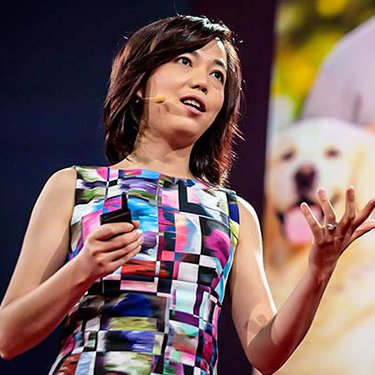
AI is a civilizational technology! There are tremendous opportunities and responsibilities for all of us at this moment in history. I'm deeply grateful and excited to lead the @theworldlabs team to join @AMD to embark on a new beginning, to advance science, develop technologies, and ultimately make a positive impact to the world! 😍🚀

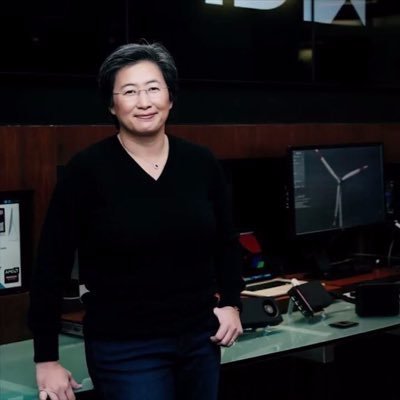
Queen of Chips, @LisaSu 🤝 Godmother of AI, @drfeifei
A picture is worth a thousand words and these 📸 from Lisa Su’s visit to San Francisco is giving us all the feels. We are so excited to officially welcome the @theworldlabs team to AMD!


Tech Leonardo Davinci retweeted
Nvidia released Vera Rubin's first MLPerf benchmark results:
> $NVDA led all 7 AI training benchmarks
> Up to 2x faster AI training per GPU vs. GB300
> Over 10x more agentic AI throughput/watt on Kimi K3
>
> 4x GPUs delivered nearly 4x faster training on DeepSeek-V3, scaling from 256 to 1,024 GPUs with 97% efficiency.
*Provisional


Tech Leonardo Davinci retweeted
Semiconductor research firm SemiAnalysis has sharply LOWERED its global AI accelerator capital expenditure forecasts, with cuts of up to 41%:
2027: $770B → $627B (-19%)
2028: $1.054T → $758B (-28%)
2029: $1.352T → $796B (-41%)
2030: $1.531T → $923B (-40%)
That's a $608 billion reduction in its 2030 forecast alone.
SemiAnalysis also cut its cumulative 2026-2030 accelerator silicon shipment area forecast by 17%, with Nvidia accounting for 66% of that reduction.
Its 2028 HBM shipment forecast was lowered from 9.0 to 6.4 exabytes, a 30% reduction, while projected 2030 AI accelerator power demand fell from 122.8 GW to 80.7 GW, down 34%.
The firm cited slowing revenue growth at frontier AI labs, tighter capital markets, and lower assumptions for future chip and memory pricing.
Importantly, even after these cuts, SemiAnalysis still expects annual AI accelerator spending to more than double from $392 billion in 2026 to $923 billion by 2030.



Tech Leonardo Davinci retweeted
JUST IN: 🇺🇸 President Trump says he would not mind Jensen Huang being reinstated as Nvidia $NVDA CEO.


Tech Leonardo Davinci retweeted
$NVDA ANNOUNCES QUANTUM COMPUTING BREAKTHROUGH
Nvidia says its new CUDA-Q algorithm delivers up to 13,000x faster decoding for quantum error-correction research, reducing one computation from 12 weeks to just 45 minutes.
Alongside the breakthrough, Nvidia announced a collaboration with $IBM and Fermilab to develop a modular quantum-classical computing platform.
The project will connect Nvidia DGX B200 systems with IBM quantum computers, including those powered by its Nighthawk processor, to help researchers develop error-correction methods, explore scientific applications and investigate how multiple quantum processors can operate together.
Nvidia is also expanding Slurm to allow quantum processors to be scheduled alongside CPUs and GPUs within existing supercomputing environments.
Separately, IBM and RIKEN used Nvidia-powered systems to model molecular complexes containing up to 12,635 atoms, more than 40x the previous quantum-classical benchmark. The research is a finalist for the 2026 Gordon Bell Prize.
Together, these developments aim to accelerate progress toward practical, fault-tolerant quantum computing.

Tech Leonardo Davinci retweeted
Ming-Chi Kuo says OpenAI and Anthropic orders extend Google’s TPU shipment visibility through 2029:
2027: 8M-9M
2028: 14M-15M
2029: 16M-18M
He estimates ~12M units for OpenAI and ~14M for Anthropic across 2028-29, even as many expect AI capex to peak in 2028.

Google TPU update: New OpenAI and Anthropic orders extend shipment visibility to 2029; v10 lineup overhauled (now Quillfish); MediaTek and Broadcom lead as the top suppliers to watch
Key takeaways from my latest industry survey and research conclusions:
1. Order visibility and shipment plans:
Strong new orders from OpenAI and Anthropic have extended Google TPU shipment visibility to 2029, ahead of Nvidia GPUs and other AI ASICs (mostly 4Q27–2Q28).
(1) From 2028, v9 will become the mainstay of Google’s own compute buildout, so v8-series orders (8t / 8i or their design variants) can be viewed as coming from OpenAI and Anthropic.
(2) Combined 2028–2029 demand: about 12M units for OpenAI (8t, designed by MediaTek) and about 14M for Anthropic (8i, designed by Broadcom), with both growing year over year. OpenAI buys outright, while Anthropic uses a mix of leasing and outright purchases.
(3) Given supply chain constraints, more reasonable TPU shipment estimates for 2027–2029 are 8–9M, 14–15M, and 16–18M units, respectively. The market broadly expects AI capex to peak in 2028, yet this plan shows TPU shipments still growing in 2029, driven by direct orders from AI service leaders OpenAI and Anthropic.
2. v10 lineup and supply chain changes:
v10 has changed from Icefish and Merope / Bladerunner to Quillfish, with mass production expected in 2029. MediaTek has won the design service order.
(1) Icefish is now v11, with mass production expected in 2030 and the design service order also going to MediaTek. Merope has lower visibility: no supplier has been chosen, and it may be canceled.
(2) MediaTek will be the sole supplier for v9 (Humufish & Triggerfish) and v10 (Quillfish), accounting for about 45–50%, 50–55%, and 55–60% of total TPU supply in 2027–2029, respectively. TPU’s contribution to its revenue and profit should rise each year.
(3) From v9 onward, all new TPUs use Intel’s EMIB-T advanced packaging. Given limited initial production capacity, the v8 series should remain the bulk of TPU shipments through 2029. v8 is expected to be the main source of TPU profit growth for MediaTek and Broadcom over the next few years, thanks to significant accumulated learning-curve benefits and the fact that both handle procurement of key components and materials.
3. Market attention and supplier outlook:
Recent events should raise and sustain market attention on Google TPU, with key design service providers MediaTek and Broadcom likely to be the supply chain’s top focus.
(1) Uncertainty over Nvidia’s CEO succession helps Google in discussing post-2028 long-term plans with customers. OpenAI and Anthropic are both key TPU customers, so their IPOs should also raise and sustain attention on TPU, and MediaTek and Broadcom are the suppliers the market most readily associates with it.
(2) MediaTek is clearly the biggest TPU winner of the next few years. Its position as sole design supplier from v9 onward, together with a supply share that rises each year alongside TPU shipments, will expand its TPU revenue. The high-margin 8t series, with shipment visibility through 2029, is a key profit source.
(3) Because Broadcom leads the 8i design, its gross margin is even higher than the 8t’s, supporting Broadcom’s profit growth. Note, however, that Broadcom’s focus over the next few years will be non-TPU XPU and AI networking chip orders, with non-TPU revenue expected to surpass TPU revenue as early as 2027.
Tech Leonardo Davinci retweeted
🇺🇸 BREAKING: After the Nvidia scandal, Congress moves to pass 4 bills, one letting it BLOCK chip sales to China that Trump approved.
That means lawmakers could stop chip deals with China even after the White House signs off.
Both parties back the bills, which could ride on a must-pass defense bill Trump is unlikely to veto.
"Washington is not ready to move on," Beacon Research analyst Owen Tedford told the FT.
Separately, the WSJ says Alice Huang's former firm, Megaspeed, arranged nearly $12 BILLION of Nvidia chips for companies in China.
Lawmakers now want Commerce Secretary Howard Lutnick to explain how Nvidia was allowed to sell chips to Megaspeed.


Tech Leonardo Davinci retweeted

The official countdown has begun. GTA 6 is imminent. bit.ly/4sKm0kE

ALT 6 Days Until GTA 6