

Crypto Researcher on All Chains | L1, L2, L3 & Coin Expert.. building @Velvet_Capital
enjoy research? ⏎ Highlights
Joined June 2009
- Tweets39K
- Following2.1K
- Followers51.1K
- Likes96.4K




Pinned Tweet
When some top chads post their portfolio, some people ask questions "what are they doing, that I'm not doing?"
It's diversification mate!
Many people flock to overpriced crypto assets, overlooking the vast landscape of innovative projects emerging.
While diversification can improve risk-adjusted returns through metrics like the Sharpe ratio, its benefits go deeper.
In a dynamic market like crypto, it's crucial to gain exposure to the diverse applications and other crypto sectors.
Think of returns like a power law distribution. A few investments deliver exceptional results, while many yield lower or negative returns. This is similar to venture capital, where success hinges on identifying a few breakout startups.
Diversification in crypto serves the same purpose, it increases your chances of capturing the "runner" that'll propel your portfolio upwards.
In the last 24h, AI tokens surged +15% outperforming other crypto sector. This is because Nvidia is close to becoming World’s Most Valuable Company.
If you had spread your investment into AI tokens also, your portfolio would've added gains despite this week's bloodbath.
➭ 𝗕𝗲𝘆𝗼𝗻𝗱 𝘁𝗵𝗲 𝗧𝗼𝗽 𝟭𝟬: 𝗔 𝗕𝗿𝗼𝗮𝗱𝗲𝗿 𝗖𝗿𝘆𝗽𝘁𝗼 𝗨𝗻𝗶𝘃𝗲𝗿𝘀𝗲
A portfolio concentrated solely on the top 10 cryptocurrencies by market cap might seem diversified, but it only captures a limited scope.
These are primarily Layer 1 blockchain protocols. While these tokens may appear less risky, they miss the wave of innovation happening across the crypto landscape.
Expanding your portfolio to include the other top crypto sector paints a more dynamic picture. This encompasses:
• AI: $ARKM, $GRT, $BOTTO, $DEAI, $KAI
• RWA: $PENDLE, $OM, $LNDX, $TRADE, $PRCL, $SOIL
• Layer 2: $ARB, $OP, $STRK, $METIS, $MANTA
• DePIN: $OPSEC, $FIL, $AIOZ, $IOTX, $GPU
• GameFi: $PIXEL, $APE, $SAND, $NAKA, $KARRAT, $MYRIA
The crypto market's rapid evolution necessitates an active approach to portfolio management. Diversification isn't simply buying more assets.
It's about taking a long-term view and strategically allocating your investments across different sectors and project sizes to capitalize on diverse potential outcomes.
RWA Market Cap Expected to Reach $16 Trillion in 2030. DYOR and find your best RWA project pick, buy and HODL!
✍️ 𝗖𝗼𝗻𝗰𝗹𝘂𝘀𝗶𝗼𝗻
Think of diversification not as weakening your portfolio, but as giving it more firepower. It increases your chances of capturing the winners while managing risk.
In essence, diversification gives you more opportunities for success, for less.

THEDEFIPLUG retweeted
A prediction market can have millions of dollars in liquidity and still depend on the quality of a single piece of offchain information.
I think the economics of verifying that information are becoming increasingly attractive.
Consider the latest figures from Cournot Protocol as of November 19:
➤ $1.41B in notional market value influenced
➤ 25,106 resolutions
➤ 99.80% reported resolution accuracy
➤ Under 8 minutes in median resolution time
Cournot recently partnered with @primus_labs to introduce verifiable web evidence into its reasoning infrastructure.
Imagine a prediction market with $10M at stake on whether the Federal Reserve cuts interest rates at its next meeting.
Once the decision is announced, someone has to establish what happened.
But there are several questions to consider:
1. Did the information come directly from the Federal Reserve?
2. Was the information retrieved at the appropriate time?
4. Was the original data manipulated?
5. Does the announcement satisfy the market’s resolution criteria?
Primus uses zkTLS to cryptographically verify the authenticity of web data. Cournot then interprets that evidence against the market’s rules to produce an auditable judgment.
Of course, proving that information came from a particular website doesn’t necessarily prove that the information itself is correct.
But it gives participants a much better foundation for examining and disputing a decision.
What I particularly like about this partnership is that the commercial applications extend well beyond prediction markets.
Private credit, insurance and trade finance are all industries where substantial amounts of capital change hands based on information originating outside a blockchain.
As more of these financial activities move onchain, I suspect there will be considerable demand for infrastructure that can authenticate the information determining who gets paid.
There is a lot of money to be made facilitating bets.
There might also be a very profitable business in establishing who actually won.

A prediction market can have millions of dollars in liquidity and still depend on the quality of a single piece of offchain information.
I think the economics of verifying that information are becoming increasingly attractive.
Consider the latest figures from Cournot Protocol as of November 19:
➤ $1.41B in notional market value influenced
➤ 25,106 resolutions
➤ 99.80% reported resolution accuracy
➤ Under 8 minutes in median resolution time
Cournot recently partnered with @primus_labs to introduce verifiable web evidence into its reasoning infrastructure.
Imagine a prediction market with $10M at stake on whether the Federal Reserve cuts interest rates at its next meeting.
Once the decision is announced, someone has to establish what happened.
But there are several questions to consider:
1. Did the information come directly from the Federal Reserve?
2. Was the information retrieved at the appropriate time?
4. Was the original data manipulated?
5. Does the announcement satisfy the market’s resolution criteria?
Primus uses zkTLS to cryptographically verify the authenticity of web data. Cournot then interprets that evidence against the market’s rules to produce an auditable judgment.
Of course, proving that information came from a particular website doesn’t necessarily prove that the information itself is correct.
But it gives participants a much better foundation for examining and disputing a decision.
What I particularly like about this partnership is that the commercial applications extend well beyond prediction markets.
Private credit, insurance and trade finance are all industries where substantial amounts of capital change hands based on information originating outside a blockchain.
As more of these financial activities move onchain, I suspect there will be considerable demand for infrastructure that can authenticate the information determining who gets paid.
There is a lot of money to be made facilitating bets.
There might also be a very profitable business in establishing who actually won.
THEDEFIPLUG retweeted
The next $100B of onchain credit probably doesn’t come from traders borrowing more stablecoins against ETH.
It comes from financing actual economic activity.
That’s the shift I’m interested in.
For most of DeFi’s life, credit growth has been dominated by crypto-native demand:
➤ Leveraged trading
➤ Looping
➤ Yield farming
➤ Basis trades
➤ Treasury management inside crypto itself
That was good enough to build the first generation of lending markets.
It is probably not enough to build the next one.
———
If onchain credit is going to become materially larger, I think the next wave of borrowing demand has to come from outside the closed loop of crypto speculators lending to crypto speculators.
The more interesting borrower categories are:
➤ Securities-backed loans
➤ Commodity financing
➤ Mortgage credit
➤ Corporate working capital
➤ Consumer lending
➤ Trade finance
➤ Institutional fund financing
This is why the recent direction of the market matters.
Jupiter is proposing a tokenized equity lending market.
Injective is highlighting growth in tokenized assets.
Those developments are important not because they instantly create a $100B market, but because they point toward a very different kind of borrower.
Not a trader trying to lever a volatile token.
➤ A business trying to finance inventory.
➤ A fund trying to borrow against securities.
➤ A lender trying to fund consumer credit.
➤ A company trying to smooth working capital.
That is a much larger addressable market.
The research question is straightforward:
Which DeFi infrastructure is actually positioned to intermediate that demand?
The obvious candidates are Aave, Morpho, Maple, Kamino, Jupiter Lend and Centrifuge.
But they are not all competing for the same opportunity.
➤ @Aave and @Morpho look increasingly relevant for large-scale collateralized lending.
➤ @Maplefinance is already closer to the institutional credit trade.
➤ @Kamino has shown how fast product-market fit can develop when real collateral demand emerges in a strong ecosystem.
➤ Jupiter Lend could become a very interesting bridge between tokenized equities and borrow demand.
➤ @Centrifuge has spent years pushing credit and real-world asset infrastructure in a direction the broader market may finally be ready to appreciate.
The big idea is that onchain credit becomes much more interesting when the borrower is financing something that exists outside crypto.
That changes the ceiling.
ETH-backed leverage is reflexive.
Real economic borrowing is expansive.
One mostly recycles existing crypto collateral.
The other can pull entirely new credit demand onchain.
That doesn’t mean this transition happens smoothly.
➤ Legal structure matters.
➤ Collateral enforcement matters.
➤ Identity matters.
➤ Underwriting matters.
➤ Liquidity matters.
And most importantly, tokenized assets need to become financeable, not merely tradable.
A tokenized stock is interesting.
A tokenized stock that can be borrowed against at scale is a business.
That is the difference.
———
So when I ask where the next $100B of onchain credit comes from, I’m not making a forecast.
I’m describing the research direction.
If DeFi wants to become a serious credit system, it probably has to lend less to people chasing coins and more to businesses financing reality.

The next $100B of onchain credit probably doesn’t come from traders borrowing more stablecoins against ETH.
It comes from financing actual economic activity.
That’s the shift I’m interested in.
For most of DeFi’s life, credit growth has been dominated by crypto-native demand:
➤ Leveraged trading
➤ Looping
➤ Yield farming
➤ Basis trades
➤ Treasury management inside crypto itself
That was good enough to build the first generation of lending markets.
It is probably not enough to build the next one.
———
If onchain credit is going to become materially larger, I think the next wave of borrowing demand has to come from outside the closed loop of crypto speculators lending to crypto speculators.
The more interesting borrower categories are:
➤ Securities-backed loans
➤ Commodity financing
➤ Mortgage credit
➤ Corporate working capital
➤ Consumer lending
➤ Trade finance
➤ Institutional fund financing
This is why the recent direction of the market matters.
Jupiter is proposing a tokenized equity lending market.
Injective is highlighting growth in tokenized assets.
Those developments are important not because they instantly create a $100B market, but because they point toward a very different kind of borrower.
Not a trader trying to lever a volatile token.
➤ A business trying to finance inventory.
➤ A fund trying to borrow against securities.
➤ A lender trying to fund consumer credit.
➤ A company trying to smooth working capital.
That is a much larger addressable market.
The research question is straightforward:
Which DeFi infrastructure is actually positioned to intermediate that demand?
The obvious candidates are Aave, Morpho, Maple, Kamino, Jupiter Lend and Centrifuge.
But they are not all competing for the same opportunity.
➤ @Aave and @Morpho look increasingly relevant for large-scale collateralized lending.
➤ @Maplefinance is already closer to the institutional credit trade.
➤ @Kamino has shown how fast product-market fit can develop when real collateral demand emerges in a strong ecosystem.
➤ Jupiter Lend could become a very interesting bridge between tokenized equities and borrow demand.
➤ @Centrifuge has spent years pushing credit and real-world asset infrastructure in a direction the broader market may finally be ready to appreciate.
The big idea is that onchain credit becomes much more interesting when the borrower is financing something that exists outside crypto.
That changes the ceiling.
ETH-backed leverage is reflexive.
Real economic borrowing is expansive.
One mostly recycles existing crypto collateral.
The other can pull entirely new credit demand onchain.
That doesn’t mean this transition happens smoothly.
➤ Legal structure matters.
➤ Collateral enforcement matters.
➤ Identity matters.
➤ Underwriting matters.
➤ Liquidity matters.
And most importantly, tokenized assets need to become financeable, not merely tradable.
A tokenized stock is interesting.
A tokenized stock that can be borrowed against at scale is a business.
That is the difference.
———
So when I ask where the next $100B of onchain credit comes from, I’m not making a forecast.
I’m describing the research direction.
If DeFi wants to become a serious credit system, it probably has to lend less to people chasing coins and more to businesses financing reality.
THEDEFIPLUG retweeted
One feature of @primus_labs social-payment infrastructure I hadn’t fully appreciated is the treatment of unclaimed funds.
Ordinary crypto transfers are generally irreversible once they’ve settled.
But what happens when you’re sending funds to a social identity rather than directly to a wallet?
Primus documents a different payment structure.
1/ The sender allocates tokens to a supported online identity.
2/ The recipient authenticates control of that identity.
3/ The recipient claims the allocated funds through a wallet.
4/ If the funds remain unclaimed for 30 days, the documented fund-contract version allows the sender to initiate a refund.
That fourth step changes the payment experience.
Imagine a project allocating $5,000 across 100 community contributors.
If 20 contributors never claim their $50 payments, the project could potentially recover $1,000 after the applicable claim period.
Compare that with sending funds directly to inactive wallet addresses.
The project may have no way of recovering those transfers.
Of course, this isn’t equivalent to reversing a payment that somebody has already claimed.
And the exact recovery conditions need to be checked against the deployed product version.
But I think the mechanism has a particularly strong application in community distributions and creator compensation.
Projects often need to pay people identified by their contributions on different internet platforms.
Collecting wallet addresses manually adds another layer of coordination.
Primus provides a way to associate those payments with existing identities while introducing a defined claim process.
The appeal isn’t simply making crypto payments easier to initiate.
It’s making certain forms of payment distribution easier to manage afterward.

THEDEFIPLUG retweeted
The AI bull market is creating an enormous headache for crypto.
Anthropic is preparing to raise over $80B this week.
> IPO pricing: Nov 18
> Trading debut: Nov 19
> Price range: $70–$78
> Strategic private investment: $26B
> Estimated net proceeds: $84.6B
Where does the marginal dollar come from?
If institutional investors want exposure to Anthropic and are already fully invested, they have to sell something else.
That doesn’t necessarily mean Bitcoin, but crypto is competing for the same capital.
I want AI stocks and my shitcoins to go up together.
For that to happen sustainably, we need more fiat credit creation.
Both casinos need more money at the tables.


THEDEFIPLUG retweeted

1/ As the industry matures, the next winners in RWA are those capable of transforming them into accessible, liquid & capital-efficient financial primitives.
Ofc asset availability is the foundation, and with ~1.55k tokenised assets @Mantle_Official has already made a strong headstart on that front.
But the next frontier lies in distribution, composability, & financialisation.
And throughout 2026, Mantle has quietly positioned itself as an under-appreciated beneficiary of this transition.
Particularly through its CeFi x DeFi convergence strategy, where its close relationship w/ @Bybit_Official provides a distribution advantage that few other ecosystems can replicate.
As we approach EOY here’s a throwback to Mantle's 2026 progress & why I believe it's uniquely positioned to capitalise on the next RWA phase 🧵


Monday blues aren't that blue after all.
Tokenized assets on Mantle just set a new all-time high at 1,555, up 85% since August, per @blockworksres.
More assets, fewer borders, for anyone, anywhere.
THEDEFIPLUG retweeted

The Infrastructure Behind the Growing Onchain Economy
Onchain markets are expanding beyond simple token transfers into a broader financial ecosystem involving trading, lending, tokenised assets and automated financial operations.
This growth is creating demand for infrastructure that supports economic modelling, token distribution, liquidity formation and ongoing financial management.
Behind this development is an emerging ecosystem of platforms addressing different stages of building and operating onchain economies.
Here’s how the infrastructure works, which projects are contributing and where the ecosystem is heading.
—
● Understanding the Onchain Infrastructure Stack
Onchain economies depend on four interconnected layers:
* Economic design and validation: Modelling token supply, incentives and economic behaviour.
* Token creation and distribution: Issuing assets, fundraising and managing allocations.
* Liquidity and market formation: Establishing trading markets and price discovery.
* Financial operations: Managing treasuries, vesting, governance and ecosystem incentives.
—
● Economic Design and Simulation
Every token economy begins with decisions around supply, allocations, vesting, emissions and incentives.
@machinationsIo provides economic modelling and simulation tools for testing token flows and incentive structures.
@TokenomicsCOM provides tokenomics design and advisory services.
Tecommons approaches economic design through systems engineering and sustainable cryptoeconomic mechanisms.
@KenomicAI is developing infrastructure connecting economic design and validation with token deployment and ongoing management.
These platforms help teams evaluate economic structures before introducing them into live markets.
—
● Token Creation and Distribution
Once an economic model is established, projects need mechanisms to issue assets, raise capital and distribute tokens.
@FjordFoundry provides token sale infrastructure, including Liquidity Bootstrapping Pools. @Pumpfun uses bonding curves for token launches and price discovery, while @MetaDAOProjec applies futarchy to connect prediction markets with governance decisions.
@hedgeyFinance provides programmable token vesting, investor lockups and scheduled distributions.
These mechanisms influence token allocation, circulating supply and the timing of unlocks, all of which can affect market behaviour after launch.
—
● Liquidity and Market Formation
Token distribution creates ownership, but liquidity enables assets to trade.
@Uniswap provides automated market-making infrastructure through liquidity pools and concentrated liquidity.
@RaydiumProtocol supports trading and liquidity across Solana, while @MeteoraAG offers different liquidity pool mechanisms. @AerodromeFi serves the Base ecosystem, and @Balancer supports configurable liquidity pools with different asset weights.
Liquidity depth and token unlock schedules influence trading efficiency and market stability.
—
● Treasury Management and Onchain Operations
Projects also need infrastructure to manage treasury assets, contributor payments, grants and governance.
@Safe provides smart accounts and multisignature controls for shared assets. @0xCoinshift offers treasury management tools, while Tally and @AragonProject provide governance and organisational infrastructure.
@HedgeyFinance also supports ongoing vesting and token distributions.
These platforms help organisations coordinate financial operations through programmable approvals and execution.
—
● How the Infrastructure Layers Connect.
The interaction between these layers creates a continuous economic cycle.
Economic design → Validation → Token distribution → Liquidity formation → Financial operations → Ecosystem growth
As more projects move onchain, demand for infrastructure grows across the entire lifecycle of digital assets.
However, unsustainable incentives, concentrated ownership, fragmented liquidity and weak treasury controls can undermine this growth.
—
● What Could Shape the Next Phase of Onchain Infrastructure?
The opportunity extends beyond token launches to the infrastructure supporting entire digital economies.
Several factors will influence its development:
* Economic sustainability: Maintaining participation without excessive token emissions.
* Liquidity fragmentation: Accessing sufficient market depth across chains.
* Security: Protecting smart contracts and treasury operations.
* Interoperability: Connecting different infrastructure providers.
* Adoption: Moving from product availability to real-world usage.
Ultimately, the next phase of onchain development will depend on how effectively these systems connect economic design, asset distribution, liquidity and financial management.
The infrastructure supporting digital economies could become just as important as the applications built on top of them.

One feature of @primus_labs social-payment infrastructure I hadn’t fully appreciated is the treatment of unclaimed funds.
Ordinary crypto transfers are generally irreversible once they’ve settled.
But what happens when you’re sending funds to a social identity rather than directly to a wallet?
Primus documents a different payment structure.
1/ The sender allocates tokens to a supported online identity.
2/ The recipient authenticates control of that identity.
3/ The recipient claims the allocated funds through a wallet.
4/ If the funds remain unclaimed for 30 days, the documented fund-contract version allows the sender to initiate a refund.
That fourth step changes the payment experience.
Imagine a project allocating $5,000 across 100 community contributors.
If 20 contributors never claim their $50 payments, the project could potentially recover $1,000 after the applicable claim period.
Compare that with sending funds directly to inactive wallet addresses.
The project may have no way of recovering those transfers.
Of course, this isn’t equivalent to reversing a payment that somebody has already claimed.
And the exact recovery conditions need to be checked against the deployed product version.
But I think the mechanism has a particularly strong application in community distributions and creator compensation.
Projects often need to pay people identified by their contributions on different internet platforms.
Collecting wallet addresses manually adds another layer of coordination.
Primus provides a way to associate those payments with existing identities while introducing a defined claim process.
The appeal isn’t simply making crypto payments easier to initiate.
It’s making certain forms of payment distribution easier to manage afterward.
The AI bull market is creating an enormous headache for crypto.
Anthropic is preparing to raise over $80B this week.
> IPO pricing: Nov 18
> Trading debut: Nov 19
> Price range: $70–$78
> Strategic private investment: $26B
> Estimated net proceeds: $84.6B
Where does the marginal dollar come from?
If institutional investors want exposure to Anthropic and are already fully invested, they have to sell something else.
That doesn’t necessarily mean Bitcoin, but crypto is competing for the same capital.
I want AI stocks and my shitcoins to go up together.
For that to happen sustainably, we need more fiat credit creation.
Both casinos need more money at the tables.
THEDEFIPLUG retweeted

Modern life can feel like being in a sci-fi story—all that is missing is the aliens. They probably won’t appear in 2027. Here are ten other things to watch out for bit.ly/3UCxXw9
Illustration: Cleon Peterson

THEDEFIPLUG retweeted
Its obvious how the the competitive landscape of crypto neobanking is gradually shifting from user acquisition towards user retention + stickiness.
@ether_fi's Cash product is a pretty good example of this.
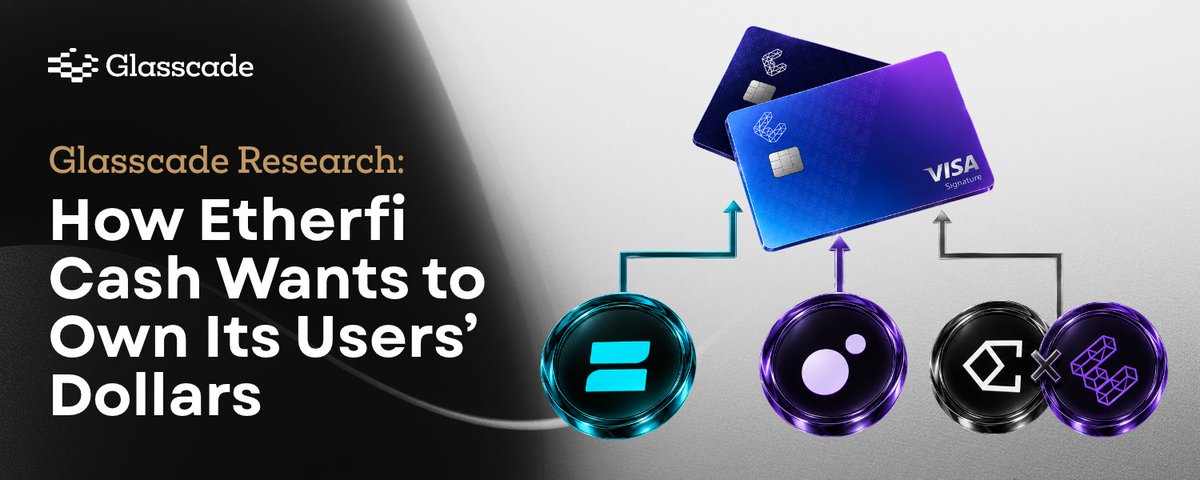
As highlighted by @glasscade_xyz, Etherfi Cash has surpassed $1B in cumulative card spending, w/ 12.6M+ transactions across 199 countries.
But what caught my attention wasn't necessarily the headline volume, it was the underlying growth dynamics.
Between April <> October:
🔹 Active addresses grew 67.5%
🔹 Transactions per address increased 31.5%
🔹 Average transaction size declined slightly by 2%
In other words, growth hasn't simply been driven by users making larger purchases, but by more people using the card more frequently.
And IMO, frequency of usage is one of the more encouraging early indicators of product stickiness.
Ofc, perks like cashback, rewards + promotional incentives are fantastic magnets for onboarding users.
But these are relatively easy for competitors to replicate, and incentives alone rarely create lasting loyalty.
The real challenge is getting users to stay even when the incentives become less attractive.
And that ultimately comes down to less tangible factors particularly trust, reliability, convenience + the overall user experience.
Does the card work consistently? Is funding seamless? Can users confidently keep meaningful balances in the app? Does the product keep pace w/ changing consumer expectations, security standards + regulatory requirements?
These might sound like basic considerations, but they're precisely what separates a promotional spending product from something users genuinely depend on.
This is also why Etherfi's recent moves are particularly interesting.
1. The @zealwallet acquisition creates another avenue for onboarding existing crypto card users.
2. The @moonpay integration aims to simplify funding + reduce friction between traditional banking rails and onchain balances.
3. Etherfi USD, built through Ethena Whitelabel could eventually make holding funds within the ecosystem more economically productive for the platform.
Individually, these are useful product developments.
Collectively, they point towards a much bigger ambition in making Etherfi a place where users don't just spend money, but actually keep + manage it.
And that's where I think the real competitive moat begins to form.
Because once a financial product becomes embedded in someone's everyday habits, switching becomes less about chasing an extra percentage point of cashback and more about whether the alternative is worth disrupting an experience they already trust.
Ofc transaction frequency alone doesn't prove long-term retention, and the impact of these new integrations remains to be seen.
But the direction is encouraging.
Perks attract users, while product experience builds habits, and trust keeps them around.
IMO, the winners of crypto neobanking won't necessarily be those offering the most generous incentives, but those that can consistently deliver a financial experience people are comfortable relying on every day.
That's a much harder moat to replicate.
Feel free to take a read at this research article for more in-depth insights 👇


THEDEFIPLUG retweeted
Crypto venture funding hasn’t disappeared. But the money is becoming extremely concentrated.
Over the 30 days ending November 12, approximately $1.84B was raised across 63 crypto funding rounds, according to DefiLlama.
Here’s the surprising part:
Kalshi alone raised $1B, accounting for roughly 54% of the total.
So I wouldn’t interpret the headline as a broad recovery in crypto venture funding.
The more revealing question is where the remaining capital is going.
Looking through the recent deals, three categories stand out.
1. Regulated trading and real-world assets
Some of the more notable raises:
> Kalshi: $1B at a $40B valuation
> Index Industries: $50M seed
> Alta: $47.5M Series A
> Uranium Digital: $16.5M Series A
> Marble: $11M seed
These companies are approaching financial infrastructure from different directions.
Kalshi is expanding from prediction markets into a broader derivatives exchange.
Index Industries is developing a tradable benchmark for U.S. residential property prices.
Uranium Digital wants to modernize physical uranium trading and settlement using blockchain-based ownership records.
Alta is building institutional blockchain infrastructure around privacy, compliance, and financial transactions.
What’s notable is that these businesses aren’t simply trying to bring existing assets onchain.
They’re trying to build the infrastructure through which those assets can be traded, financed, and settled.
The potential revenue opportunities are in execution, financing, data, and asset servicing.
2. Institutional insurance and risk transfer
Soter Insure also expanded its Series B financing, bringing in SC Ventures and SBI alongside investors including Galaxy, Coinbase Ventures, Franklin Templeton, and Brevan Howard Digital.
The latest investment amount wasn’t disclosed.
But I find this category particularly compelling.
As institutions increase their exposure to digital assets, they also need protection against theft, smart contract failures, validator slashing, and operational losses.
Insurance is one of the less discussed parts of institutional crypto adoption.
Yet it could become an important business as more capital moves onchain.
The companies underwriting these risks may have a different economic profile from the protocols generating the activity.
3. AI agents and commercial infrastructure
DECA Labs raised $12M to develop infrastructure for agent-led software commercialization.
Marble is also building financing products for AI compute operators alongside its institutional trading business.
Different approaches, but both are targeting commercial activities that require capital, distribution, and financial infrastructure.
I think that’s a more concrete investment direction than assuming every AI agent needs its own token.
What This Means?
The $1.84B headline looks impressive, but the concentration is important.
One company absorbed more than half the disclosed funding, and the remaining deals span very different businesses.
There are still L1 and infrastructure raises, so this isn’t a complete abandonment of traditional crypto sectors.
But the selection of projects suggests investors are increasingly interested in businesses that can earn fees from financial activity rather than relying entirely on token appreciation.
For 2027, I’d pay particular attention to three potential revenue pools:
Trading and settlement infrastructure, institutional risk underwriting, and financing for new asset classes.
None of these raises guarantees that the businesses will succeed.
And private-market valuations don’t automatically translate into returns for publicly traded tokens.
Still, I find the direction of capital allocation revealing.
Crypto investors are funding more of the businesses that make financial markets function, not just the assets traded inside them.

THEDEFIPLUG retweeted
Even after the recent market selloff, millions are still flowing into stablecoin yield markets.
Some pools are offering 6–9% APY while pulling in fresh capital.
8 from DeFiLlama’s top 50 by 7d net inflows:
1. August $USDC V2 | @Monad
8.95% APY | +$4.35M inflows
7.57% base + 1.38% rewards
2. @saturn_credit $USDC | @Monad
8.63% APY | +$2.82M inflows
7.74% base + 0.89% rewards
3. @SteakhouseFi $USDG Pro | @Arbitrum
8.81% APY | +$23.93M inflows
3.76% base + 5.05% rewards
4. @SteakhouseFi High Yield $USDC | @Ethereum
7.70% APY | +$4.95M inflows
5. Clearstar cbAssets $USDC | @Base
6.45% APY | +$2.48M inflows
5.02% base + 1.44% rewards
6. @wintermute_t $USDC Select | @Ethereum
6.20% APY | +$3.48M inflows
6.15% base + 0.05% rewards
7. @wintermute_t $USDT Select | @Ethereum
6.16% APY | +$2.58M inflows
8. @0xfluid $USDC | @Ethereum
6.05% APY | +$7.35M inflows
Personally like the August and Saturn setups here, both showing over 7.5% base yield without needing much from incentives.
Wintermute $USDC at 6.15% base also looks pretty decent for parking stables.
Pretty good options for anyone sitting in cash waiting for the market to recover.

Crypto venture funding hasn’t disappeared. But the money is becoming extremely concentrated.
Over the 30 days ending November 12, approximately $1.84B was raised across 63 crypto funding rounds, according to DefiLlama.
Here’s the surprising part:
Kalshi alone raised $1B, accounting for roughly 54% of the total.
So I wouldn’t interpret the headline as a broad recovery in crypto venture funding.
The more revealing question is where the remaining capital is going.
Looking through the recent deals, three categories stand out.
1. Regulated trading and real-world assets
Some of the more notable raises:
> Kalshi: $1B at a $40B valuation
> Index Industries: $50M seed
> Alta: $47.5M Series A
> Uranium Digital: $16.5M Series A
> Marble: $11M seed
These companies are approaching financial infrastructure from different directions.
Kalshi is expanding from prediction markets into a broader derivatives exchange.
Index Industries is developing a tradable benchmark for U.S. residential property prices.
Uranium Digital wants to modernize physical uranium trading and settlement using blockchain-based ownership records.
Alta is building institutional blockchain infrastructure around privacy, compliance, and financial transactions.
What’s notable is that these businesses aren’t simply trying to bring existing assets onchain.
They’re trying to build the infrastructure through which those assets can be traded, financed, and settled.
The potential revenue opportunities are in execution, financing, data, and asset servicing.
2. Institutional insurance and risk transfer
Soter Insure also expanded its Series B financing, bringing in SC Ventures and SBI alongside investors including Galaxy, Coinbase Ventures, Franklin Templeton, and Brevan Howard Digital.
The latest investment amount wasn’t disclosed.
But I find this category particularly compelling.
As institutions increase their exposure to digital assets, they also need protection against theft, smart contract failures, validator slashing, and operational losses.
Insurance is one of the less discussed parts of institutional crypto adoption.
Yet it could become an important business as more capital moves onchain.
The companies underwriting these risks may have a different economic profile from the protocols generating the activity.
3. AI agents and commercial infrastructure
DECA Labs raised $12M to develop infrastructure for agent-led software commercialization.
Marble is also building financing products for AI compute operators alongside its institutional trading business.
Different approaches, but both are targeting commercial activities that require capital, distribution, and financial infrastructure.
I think that’s a more concrete investment direction than assuming every AI agent needs its own token.
What This Means?
The $1.84B headline looks impressive, but the concentration is important.
One company absorbed more than half the disclosed funding, and the remaining deals span very different businesses.
There are still L1 and infrastructure raises, so this isn’t a complete abandonment of traditional crypto sectors.
But the selection of projects suggests investors are increasingly interested in businesses that can earn fees from financial activity rather than relying entirely on token appreciation.
For 2027, I’d pay particular attention to three potential revenue pools:
Trading and settlement infrastructure, institutional risk underwriting, and financing for new asset classes.
None of these raises guarantees that the businesses will succeed.
And private-market valuations don’t automatically translate into returns for publicly traded tokens.
Still, I find the direction of capital allocation revealing.
Crypto investors are funding more of the businesses that make financial markets function, not just the assets traded inside them.
THEDEFIPLUG retweeted
➥ RNT Protocol: Making Real Estate Work as DeFi Collateral
Imagine an investor holding $10,000 worth of tokenized real estate who suddenly needs $4,000 for a business opportunity.
Selling the investment would mean giving up exposure to the property. But what if that investor could access liquidity without selling?
This is the problem @rntprotocol is addressing through RNT Lend, a Polygon based lending market that allows holders of eligible real estate security tokens to borrow stablecoins against their investments.
—
How It Works in Practice
Consider the investor with $10,000 in eligible real estate security tokens.
Instead of selling, they can deposit those tokens into RNT Lend as collateral and borrow USDT or USDC.
Under the protocol’s 75% maximum loan to value ratio, the collateral could support borrowing of up to $7,500, subject to available liquidity and the applicable lending conditions.
In this example, borrowing $4,000 would represent a 40% loan to value ratio.
The investor gets access to liquidity while retaining exposure to the underlying property investment. However, the collateral remains at risk if the loan becomes undercollateralized.
—
Where Does the Liquidity Come From?
RNT Lend connects two groups through its lending pools:
▸ Borrowers: Deposit eligible real estate security tokens as collateral and borrow USDT or USDC.
▸ Liquidity providers: Supply stablecoins to the lending pools and earn interest from borrowers.
▸ Smart contracts: Handle borrowing, variable interest rates and collateral liquidation using Aave V3-based infrastructure.
Interest paid by borrowers flows to liquidity suppliers, with rates changing according to pool utilization.
—
What the Numbers Reveal
RNT Lend’s dashboard currently reports:
▸ Total market size: $31.17M
▸ Total value locked: $21.58M
▸ Total borrowed: $9.59M
These figures show an active lending market connecting tokenized real estate collateral with stablecoin liquidity.
—
What This Changes for Real Estate
Traditional real estate investments can be difficult to use when immediate liquidity is needed.
RNT Lend introduces another option by allowing eligible property-backed tokens to participate in DeFi lending.
Instead of treating tokenized real estate purely as a representation of property ownership, the protocol gives those assets a role within an onchain credit market.
There are still risks to consider, including collateral valuation, smart contract vulnerabilities, borrowing costs and liquidation if collateral requirements are breached.
But the broader development is clear: tokenized real estate can serve a purpose beyond ownership representation.
RNT Protocol is connecting property backed investments with onchain liquidity, bringing real world assets into the lending side of DeFi.
Explore the lending market: lend.rnt.finance


RNT Protocol Is Connecting Real Estate With DeFi Lending
Real estate has traditionally been difficult to use as collateral for accessing immediate liquidity. Tokenization is beginning to change this by allowing property-backed investment assets to participate in blockchain-based financial markets.
@rntprotocol is applying this model through RNT Lend, a Polygon based lending market that allows holders of eligible real estate security tokens to borrow stablecoins against their assets.
Built on Aave V3 technology and approved through Aave governance, the platform combines established DeFi lending infrastructure with real world asset collateral.
RNT Lend reports a total market size exceeding $30M, connecting tokenized property investments with stablecoin liquidity.
—
How RNT Lend Connects Property With Liquidity
The model connects real estate investors seeking liquidity with users supplying stablecoins.
▸ Real estate investors: Holders of eligible property security tokens can deposit them as collateral to borrow USDT or USDC without necessarily selling their underlying investments.
▸ Liquidity providers: Stablecoin suppliers provide capital to the lending pools and earn interest generated by borrowers.
Using Aave V3 lending technology, RNT Lend incorporates established borrowing, interest rate and liquidation mechanisms while bringing tokenized real estate into its collateral structure.
—
The Economics Behind RNT Lend
The platform’s lending model creates a direct relationship between borrowing demand and supplier returns.
Borrowers pay interest on outstanding loans, while suppliers earn a share of that interest. On Polygon, interest accrues with every block, approximately every few seconds.
RNT Lend’s dashboard has displayed the following supply APYs:
▸ USDT: 10.76% APY
▸ USDC: 10.92% APY
These are variable rates that fluctuate with pool utilization and borrowing demand, rather than guaranteed returns.
The platform’s reported market size exceeds $30M, with supplied liquidity and outstanding borrowing representing separate measures of activity.
—
What Could Shape Its Growth?
The development of property-backed lending will depend on three important factors:
▸ Collateral reliability: Accurate property valuations and sound liquidation mechanisms are essential to managing lending risk.
▸ Borrowing demand: Consistent demand determines how effectively supplied stablecoins are utilized and how much interest suppliers can earn.
▸ Liquidity: Suppliers need sufficient available liquidity, while borrowers need access to capital when required.
Although Aave V3 provides established lending infrastructure, smart contract, collateral and liquidity risks remain.
RNT Protocol demonstrates how tokenized real estate can move beyond digital ownership representation and become useful within decentralized financial markets.
By allowing property-backed assets to support stablecoin borrowing, RNT Lend connects real world investments with onchain credit while creating an interest-generating opportunity for liquidity suppliers.
Its longer term development will depend on sustained borrowing activity, reliable collateral management and the ability to maintain liquidity as the market grows.

Even after the recent market selloff, millions are still flowing into stablecoin yield markets.
Some pools are offering 6–9% APY while pulling in fresh capital.
8 from DeFiLlama’s top 50 by 7d net inflows:
1. August $USDC V2 | @Monad
8.95% APY | +$4.35M inflows
7.57% base + 1.38% rewards
2. @saturn_credit $USDC | @Monad
8.63% APY | +$2.82M inflows
7.74% base + 0.89% rewards
3. @SteakhouseFi $USDG Pro | @Arbitrum
8.81% APY | +$23.93M inflows
3.76% base + 5.05% rewards
4. @SteakhouseFi High Yield $USDC | @Ethereum
7.70% APY | +$4.95M inflows
5. Clearstar cbAssets $USDC | @Base
6.45% APY | +$2.48M inflows
5.02% base + 1.44% rewards
6. @wintermute_t $USDC Select | @Ethereum
6.20% APY | +$3.48M inflows
6.15% base + 0.05% rewards
7. @wintermute_t $USDT Select | @Ethereum
6.16% APY | +$2.58M inflows
8. @0xfluid $USDC | @Ethereum
6.05% APY | +$7.35M inflows
Personally like the August and Saturn setups here, both showing over 7.5% base yield without needing much from incentives.
Wintermute $USDC at 6.15% base also looks pretty decent for parking stables.
Pretty good options for anyone sitting in cash waiting for the market to recover.
THEDEFIPLUG retweeted
A stablecoin issuer could launch a cryptographically verifiable reserve dashboard in under 7 days, without building the infrastructure itself.
That’s the business model @primus_labs is introducing through its managed Proof-of-Reserves (PoR) product.
Essentially, turning cryptographic verification into a recurring B2B subscription service.
Primus’s public PoR documentation describes:
➤ Integration targeted at under 7 days
➤ 7 days of free dashboard publishing
➤ A dedicated public reserve dashboard
➤ Monthly subscription pricing after the trial
➤ Managed verification and ongoing maintenance
So instead of a stablecoin issuer having to assemble its own cryptographic reporting infrastructure, Primus offers the reporting workflow as a service.
● What the Issuer Is Actually Buying
Reserve reporting involves more than generating a proof.
An issuer holding assets across onchain protocols and centralized exchanges needs to retrieve financial records, authenticate the information, calculate its backing and publish results that outside parties can independently check.
That also means maintaining the reporting pipeline when exchange interfaces change, verification fails or new reserve sources are added.
Primus packages several of these responsibilities together.
➤ zkTLS authenticates external financial records
➤ Protected computation and proving infrastructure process the relevant reserve information
➤ The dashboard publishes verifiable results
➤ Ongoing maintenance supports repeated reporting
The issuer still has to establish that the records are complete and that the underlying assets genuinely support its liabilities.
Cryptography doesn’t replace financial auditing.
● Why The Customer Keeps Paying
A free publishing period gives an issuer an opportunity to evaluate the reporting product before committing to a recurring subscription.
That’s different from selling a developer SDK and waiting for someone to build an application around it.
The product has a clearer customer journey:
Integration → Dashboard Deployment → Free Publishing → Paid Subscription → Ongoing Reporting
And reserve verification is naturally recurring.
An issuer doesn’t need to prove its backing only once. It needs to keep publishing updated evidence as balances, positions and liabilities change.
That creates a reason to retain the service beyond the initial integration.
● From Task Fees To Recurring Revenue
Primus already has a usage-based verification model where individual proof requests generate task fees.
Managed PoR introduces another potential revenue source.
One business depends heavily on verification volume.
The other can depend on the number of paying institutions, subscription pricing and customer retention.
Consider an illustrative example:
➤ 10 issuers paying $500/month = $60K annual revenue
➤ 25 issuers paying $1,000/month = $300K annual revenue
➤ 50 issuers paying $2,000/month = $1.2M annual revenue
These aren’t Primus’s disclosed prices, contracts or revenue forecasts.
They show why even a relatively small institutional customer base could produce a different revenue profile from low-priced individual verification tasks.
Of course, gross subscription revenue isn’t profit.
Exchange connectivity, proof generation, infrastructure monitoring and customer support all introduce ongoing costs.
● Verification Becomes A Subscription
Primus is turning cryptographic verification into a recurring financial service.
By packaging reserve reporting as a managed subscription, it creates a second potential revenue stream alongside zkTLS fees, built around ongoing institutional demand.

A stablecoin issuer could launch a cryptographically verifiable reserve dashboard in under 7 days, without building the infrastructure itself.
That’s the business model @primus_labs is introducing through its managed Proof-of-Reserves (PoR) product.
Essentially, turning cryptographic verification into a recurring B2B subscription service.
Primus’s public PoR documentation describes:
➤ Integration targeted at under 7 days
➤ 7 days of free dashboard publishing
➤ A dedicated public reserve dashboard
➤ Monthly subscription pricing after the trial
➤ Managed verification and ongoing maintenance
So instead of a stablecoin issuer having to assemble its own cryptographic reporting infrastructure, Primus offers the reporting workflow as a service.
● What the Issuer Is Actually Buying
Reserve reporting involves more than generating a proof.
An issuer holding assets across onchain protocols and centralized exchanges needs to retrieve financial records, authenticate the information, calculate its backing and publish results that outside parties can independently check.
That also means maintaining the reporting pipeline when exchange interfaces change, verification fails or new reserve sources are added.
Primus packages several of these responsibilities together.
➤ zkTLS authenticates external financial records
➤ Protected computation and proving infrastructure process the relevant reserve information
➤ The dashboard publishes verifiable results
➤ Ongoing maintenance supports repeated reporting
The issuer still has to establish that the records are complete and that the underlying assets genuinely support its liabilities.
Cryptography doesn’t replace financial auditing.
● Why The Customer Keeps Paying
A free publishing period gives an issuer an opportunity to evaluate the reporting product before committing to a recurring subscription.
That’s different from selling a developer SDK and waiting for someone to build an application around it.
The product has a clearer customer journey:
Integration → Dashboard Deployment → Free Publishing → Paid Subscription → Ongoing Reporting
And reserve verification is naturally recurring.
An issuer doesn’t need to prove its backing only once. It needs to keep publishing updated evidence as balances, positions and liabilities change.
That creates a reason to retain the service beyond the initial integration.
● From Task Fees To Recurring Revenue
Primus already has a usage-based verification model where individual proof requests generate task fees.
Managed PoR introduces another potential revenue source.
One business depends heavily on verification volume.
The other can depend on the number of paying institutions, subscription pricing and customer retention.
Consider an illustrative example:
➤ 10 issuers paying $500/month = $60K annual revenue
➤ 25 issuers paying $1,000/month = $300K annual revenue
➤ 50 issuers paying $2,000/month = $1.2M annual revenue
These aren’t Primus’s disclosed prices, contracts or revenue forecasts.
They show why even a relatively small institutional customer base could produce a different revenue profile from low-priced individual verification tasks.
Of course, gross subscription revenue isn’t profit.
Exchange connectivity, proof generation, infrastructure monitoring and customer support all introduce ongoing costs.
● Verification Becomes A Subscription
Primus is turning cryptographic verification into a recurring financial service.
By packaging reserve reporting as a managed subscription, it creates a second potential revenue stream alongside zkTLS fees, built around ongoing institutional demand.
THEDEFIPLUG retweeted
550K+ holders, $45B+ in trading volume, and over $1B in AUM.
But the growth behind xStocks tells two different stories.
In September, @xStocksFi reported:
➤ 200K+ holders
➤ $40B+ cumulative volume
By October 28:
➤ 550K+ holders
➤ $45B+ cumulative volume
These are reported milestones, not exact growth figures. Still, the contrast is striking.
Holder adoption is expanding rapidly, but cumulative trading volume hasn’t increased at a comparable pace.
Now Payward has added 200+ UK and European equities, including Germany’s DAX 40, expanding distribution even further.
The question is whether xStocks is attracting active traders or a growing base of investors holding smaller positions.
Wallet counts alone can’t answer that. Neither can cumulative volume.
Monthly active holders, median position sizes and turnover per active wallet would tell us much more.
$45B in cumulative trading volume demonstrates substantial activity.
But the next test for tokenized equities is how much capital stays invested and how frequently those holders return to trade.
