

Chicago thru and thru
Joined March 2011
- Tweets32.6K
- Following6.9K
- Followers1.6K
- Likes27.9K






Pinned Tweet
Gregory Davis Kunkel
A Life and Personality Unlike Any Other
October 22, 1957
September 1, 2026
Rest in Peace Kunks.
My Memorial To Kunks
Today we lost Greg “Kunks” Kunkel—a great caddymaster, golfer, sports fan, mentor, friend, husband, father, grandfather, and one of the truly good men in this world.
For those of us who came up as caddies, Kunks was never just the man assigning loops or managing the caddie yard. He was part coach, part guardian, part teacher, part friend, and often the person looking out for the kid who needed someone in his corner. For 35 years, he understood that caddying was about much more than carrying a bag, reading a putt, finding a ball, or keeping pace. It was about responsibility, trust, work, respect, humor, and learning how to walk alongside other people.
A caddie learns to be present: to pay attention, to offer steady encouragement, to help someone through the rough, to celebrate the good shots, and to keep walking after the bad ones. Kunks lived that lesson. He guided generations of caddies and golfers not from a distance, but alongside them—on fairways, in caddie yards, through difficult moments, and across decades of friendship.
In the short, immortal, and haunting words Ram Dass said, “We’re all just walking each other home.” For those of us who knew Kunks through golf and caddying, those words feel especially true today. A caddie walks beside another person—sometimes quietly, sometimes with advice, sometimes with a laugh at exactly the right time—but always helping carry a little of the weight. Kunks did that for so many people. He made the walk lighter. He made people feel seen. He made them believe they belonged.
He was a Hall of Fame caddymaster, but his greatest legacy is not a title or a plaque. It is the countless people he mentored, defended, encouraged, and loved. It is in the friendships that began in the caddie yard and lasted a lifetime. It is in every young caddie who learned to work harder, carry themselves better, and look out for the next person because Kunks showed them how.
The golf course can be a place of competition, beauty, frustration, humility, and joy. Kunks understood all of it. He loved the game, loved the people around it, and brought his extraordinary strength, character, and spirit to every part of his life.
Today, we mourn the loss of our friend. But we also give thanks for having walked with him. The fairways may feel quieter, the caddie yard a little emptier, and the walk a little harder without him. Yet his voice, his laughter, his toughness, his loyalty, and his generosity will remain with all of us.
Kunks, thank you for the lessons, the loops, the walks, the rounds, the stories, and the friendship. Thank you for carrying so much for so many. We will carry you with us now.
And until we meet again, we will keep walking each other home.

EZK retweeted

On this day in 1977 — October 29 — ABC unleashed one of the weirdest and most delightfully eerie Dr. Seuss specials ever: Halloween Is Grinch Night. Exactly 49 years ago today, the Grinch left Christmas behind and went full Halloween mode.
Written by Dr. Seuss himself and directed by Gerard Baldwin (DePatie-Freleng Enterprises), this 26-minute animated special is a darker, spookier companion to the 1966 Christmas classic. With Boris Karloff gone, Hans Conried took over as the voice of the Grinch and narrator, while Thurl Ravenscroft returned to sing. The music and songs came from Sesame Street composer Joe Raposo, giving the whole thing that unmistakable late-’70s children’s TV energy mixed with genuine unease.
The story kicks off when a sour-sweet wind blows through Whoville, signaling that Grinch Night has arrived. The Grinch loads up his Paraphernalia Wagon full of horrors and heads down Mount Crumpet to terrorize the Whos. Most of the town locks down, but a young Who named Eucariah (with astigmatism and zero fear) ends up in the Grinch’s path and has to stall him long enough for the wind to die down. What follows is a surreal, nightmare-fuel “spooks tour” filled with creepy creatures, oddball songs, and a Max who looks even more miserable than usual.
It won the Emmy for Outstanding Children’s Program the next year and got a few more ABC airings through 1980 before largely vanishing from regular rotation (though it popped up later on the Disney Channel and Cartoon Network). For years it lived on as bootleg VHS tapes and later home video releases under titles like It’s Grinch Night and Grinch Night.
Who else grew up catching this one (or discovering it years later on tape)? Favorite moment — the Paraphernalia Wagon, the spooks tour, Max’s inner monologue, or just the general “this is way weirder than the Christmas special” vibe? Drop it below. 🎃🍂
#HalloweenIsGrinchNight #TheGrinch #70sTV #VintageHalloween #DrSeuss #MonsterKids #RetroHalloween #Nostalgia


EZK retweeted

Francisco d'Anconia's speech on money in Atlas Shrugged is the most economically literate passage in twentieth-century fiction.
The speech runs about 2,000 words in the novel. Francisco delivers it at a party, surrounded by parasites who just declared money the root of all evil. He corrects them with surgical precision. Money is not the root of evil. It is the tool that makes voluntary exchange possible, the ledger of honest production, the only mechanism by which you trade your mind's output for someone else's.
The core claim is this: money requires production. You cannot print your way to wealth any more than you can vote yourself a harvest. Every dollar bill in your wallet represents a claim on someone's actual labor, actual material, actual time. The moment a government prints currency without corresponding production, it dilutes every existing claim. It robs you quietly, without a gun visible in the room.
Francisco puts it cleanly: "Money is a tool of exchange, which can't exist unless there are goods produced and men able to produce them." That sentence alone dismantles three centuries of mercantilist confusion. Wealth is production. Currency is merely the signal that coordinates its exchange.
The speech also destroys the "love of money is greed" cliché. Francisco distinguishes between those who earn money through trade and those who acquire it through force or fraud. A man who builds a railroad and charges willing passengers operates on an entirely different moral plane from a lobbyist who gets a competitor regulated out of existence. Rand drew that line in 1957. Washington D.C. has spent the intervening 69 years blurring it.
What the speech predicts is decay. When a society starts treating producers as servants of non-producers, capital goes quiet. Factories don't get built. Entrepreneurs stop announcing their plans. You see this in every hyperinflationary episode, from Weimar Germany in 1923 to Zimbabwe in 2008 to Argentina today, still fighting inflation. Production retreats when the rewards of production get expropriated.
Read the speech slowly. Exchange requires two parties who each gain something. Force produces one winner and one loser, and eventually the loser stops playing. The whole global economic order rests on which model you choose to enforce.

EZK retweeted

A classic chart to counter the wisdom of crowds idea. US Americans are absolutely clueless about how common things are. They think over a quarter of Americans are Native Americans, one in five Americans is transgender, over a quarter of the population are Muslim, one in five households earn over half a million dollars. The right answer to all of these questions is 1%. They build their worldview on totally incorrect assumptions towards reality. Data literacy matters.

EZK retweeted

One man in this painting is looking at you.
Not at the body. Not at the grieving women. At you.
He’s bent under the weight of a corpse, both arms locked around the dead man’s knees, the vein in his leg swollen from the strain. And he’s turned his head to look straight out of the canvas.
His name is Nicodemus.
And the last time we saw him, he was hiding.
John 3:1–2. There was a man of the Pharisees, named Nicodemus, a ruler of the Jews: The same came to Jesus by night.
By night.
A member of the ruling council. A teacher of Israel. He wanted to talk to Jesus, but he didn’t want anyone to see him do it. So he came after dark.
And that night, Jesus told him things He hadn’t told anyone else yet.
Ye must be born again.
For God so loved the world, that he gave his only begotten Son.
And this is John 3:14. As Moses lifted up the serpent in the wilderness, even so must the Son of man be lifted up.
Lifted up. On a pole. Like the bronze serpent.
Nicodemus was the first person in the gospel of John Jesus ever told about the cross. In a private conversation. At night. Three years early.
He went home. He didn’t follow. He kept his seat on the council.
Once, when the council was plotting against Jesus, he spoke up carefully. John 7:51. Doth our law judge any man, before it hear him? They mocked him for it. He went quiet.
Then came Friday.
Jesus was lifted up, exactly as He’d told him. And everyone who’d followed Him in daylight ran. Peter denied Him. The disciples scattered.
And the secret believer stopped being a secret.
John 19:39. And there came also Nicodemus, which at the first came to Jesus by night, and brought a mixture of myrrh and aloes, about a hundred pound weight.
John reminds you who he was, right at the moment he stopped being that man. The one who came by night.
He walked to Pilate’s execution ground in daylight, carrying a king’s burial - enough spice to bury a monarch. With Joseph of Arimathea, another man who’d been a disciple secretly, for fear.
The bold ones fled. The cowards showed up.
And Caravaggio put that man’s eyes on you.
Now look at what he’s standing on.
A massive stone slab. And its corner doesn’t stay inside the painting. It juts out, sharp, heavy, diagonal, straight toward the viewer, past the edge of the frame, into your space.
This painting hung over an altar in a church in Rome. The people kneeling in that chapel looked up and saw the body of Christ being lowered toward them, onto a stone that seemed to stick right out of the wall above the altar they were kneeling at.
He’s being handed to you.
And Caravaggio made it the corner of the stone on purpose.
Psalm 118:22. The stone which the builders refused is become the head stone of the corner.
Jesus quoted that about Himself. The rejected stone. The cornerstone.
And Peter later spelled out what a cornerstone does to people. 1 Peter 2:7–8. To believers, it’s precious. To the disobedient, it’s a stone of stumbling, and a rock of offence.
The same corner either holds up your whole life or you trip over it.
Caravaggio pointed it right at your shins.
Look at the rest. The dead man’s arm hangs down, fingers just touching the stone. The white shroud spills over the edge like an altar cloth. Behind them, three women. His mother bent with grief, one weeping into a cloth, one throwing her arms up to heaven.
And under the slab, a dark gap. The tomb.
One more detail. The man who founded that chapel, Piero Vittrice, died before the painting was finished, and he was buried in the crypt underneath the altar. A dead man in the ground below, and above him, Caravaggio’s body of Christ going down into the grave first.
Every body goes into the ground. Only one came back out to open the way for the rest.
The painting itself didn’t stay put either. Napoleon’s armies carried it off to Paris in 1797 and hung it in his museum. It came home to Rome after his empire collapsed. Empires took the painting. None of them could keep it.
Now back to Nicodemus. Back to his eyes.
Some of you have been coming by night.
You believe, or you think you do. You’ve read the words. You’ve had private conversations with God at two in the morning that nobody knows about. But in daylight, at work, at the family table, with your friends, in your feed, you keep your seat on the council. You say the careful thing. Does our law judge any man?
You’ve been a secret disciple for years.
Nicodemus’s faith became visible at the worst possible moment. When it cost the most. When Jesus looked like a failure. When there was nothing left to gain from being associated with Him except the body and the shame.
That’s when he showed up. With his arms full.
And that’s why he’s the one Caravaggio let look at you.
He’s not asking whether you know the right things. He knew all the right things. He heard John 3:16 first.
He’s asking whether you’re still coming by night.
The corner of the stone is pointed at you.
Build on it.
Or keep walking past it in the dark.

EZK retweeted

Adam Carolla says it took 10 DAYS before he heard about the concealed carry dad who ran into his daughters’ elementary school and took down the shooter.
He thought about it, and he knows exactly why it didn’t get more airtime.
“IT F*CKS UP EVERY THEME THEY HAVE ABOUT GUN OWNERSHIP.”
CAROLLA: “That was the first time I’ve ever seen a picture of this guy [Kaylub Giamanco], heard him talk.”
“He says, ‘I didn’t save enough kids, and I’m sorry to the parents of the kids who I couldn’t save.’ And now he can’t sleep at night because he can still hear the screams of the children begging for their lives.”
This man should be a household name. A national hero.
But as Carolla explains, his story wrecks the picture of gun owners the media wants in your head.
“The theme of the dad who wanted to protect his kids ... and put an end to this school shooter is NOT a theme they like.”
“MSNBC, CNN, LA Times, THEY HATE THIS STORY.”
Daniel Penny, meanwhile?
CAROLLA: “That guy is everywhere because they love the theme of a blonde-haired guy choking out a black guy.”
When a story doesn’t fit the narrative, you never hear about it. When it does, it’s all you hear about.
EZK retweeted

Sal Frelick is playing in the World Series for the Milwaukee Brewers.
Some of his best friends in the world are people with intellectual and developmental disabilities, and he has been showing up for them since high school.
Here is how he describes them.
"I really do think they're angels."
Here is the whole thing.
Frelick grew up in Lexington, Massachusetts. In high school he was already friends with a lot of the students with intellectual and developmental disabilities. Not as a project. Just friends in the hallway.
Then someone told him about Best Buddies, a nonprofit that pairs students with people with intellectual and developmental disabilities.
"I had just been friends with these kids in the hallways, so I was like, 'Sounds fun.'"
He joined. He went to their events. He went to their prom.
One of the friends he made back then is still one of his best friends today. Every offseason, back home near Boston, they go out to dinner.
His hometown runs a Unified Basketball league, where athletes with and without disabilities play on the same team. Frelick shows up to the big end of season event and brings shoes and sweatshirts for the players.
Then the Brewers made him a big leaguer, and he moved to Milwaukee. He said something felt off.
"When I was out here, it was almost like something was missing from my life in that aspect."
So he sent a message on Instagram to the local Best Buddies chapter and asked how he could help.
He started going to their events. Their Friendship Walk drew more than 1,000 people.
One of the chapter directors said this about him.
"He has a huge heart and compassion for the community we serve."
Then he found Inclusion Coffee Company in Hartland, Wisconsin, a shop where most of the staff are people with disabilities.
The owner explained why she opened it.
"My idea was to give our friends with disabilities a place to work after high school."
Frelick came in one Saturday morning before a game. Anybody could come get a coffee and take a picture with him. The money went to Best Buddies and the staff.
The owner asked fans for one thing. No autographs, please. Just come in, buy a coffee from the staff, and take a picture.
Here is the honest part. This was not a huge foundation or a million dollar check. It was an hour on a Saturday, a lot of dinners, and a lot of showing up.
But that is exactly the point, and he will tell you so himself.
"If you're around people with special needs or they're in the same environment as you, go up and talk to them."
Tonight he has a chance to win a World Series. Win or lose, he has already been showing up where it counts.
For more stories like this, follow us on any platform @thesportsontap

EZK retweeted

49 years ago tonight. DeKalb, Illinois.
Phil steps up to the mic after Roses and says it plain:
“I just want y’all to know out there, this is the happiest day of my life.”
Then the band went straight into Let It Grow. Same, Phil. Same.
#GratefulDead 10/29/77 ⚡️💀🌹
EZK retweeted

Nearing peak fall color at Indiana University right now.
No wonder College Gameday chose Bloomington this week.
Showalter Fountain is going to be an all-time Gameday backdrop on the most beautiful campus in the country.


EZK retweeted

Why does every single elected Democrat and Democrat candidate for office have a Muslim handler?
Am I the only person who has realized this?
It’s very bizarre. The Democrat Party has been taken over by Muslims.
Very alarming! Vote Republican.

Watch as Illinois Governor JB Pritzker @JBPritzker dances like a total idiot next to a woman wearing a hijab.
Remember, Pritzker is one of the wealthiest and most powerful elected Democrats in office today.
This further proves the Democrat party has sold out to Islam.
EZK retweeted

Victor Davis Hanson: It's Disgusting What Elissa Slotkin Did
It was Barack Obama who paid Christopher Steele to compound and collate an entire fake dossier that Donald Trump was communicating with Vladimir Putin.
It was the Biden administration who, just three days after Donald Trump said he was going to run for office again, brought into the White House Nathan Wade, an obscure Fani Willis boyfriend who was a prosecutor meant to go after Trump in the Fulton County indictment.
Now, Elissa Slotkin is hunting down young people who want to help a president that they agree with as if they are the conspirators.
“She’s an idiot. She has no memory of all that.”
Watch the FULL episode with @VDHanson here: youtu.be/YsC8YckQ4ho?si=Vy4S…
EZK retweeted

Here’s a link to the full recording of the Rainbow Body set on @interntarchive
archive.org/details/rainbow-…?

EZK retweeted
I’m super interested if our boys have an another unique & interesting stage/light show for us this tour.
@goosetheband
See ya in MKE
Again

EZK retweeted
If you look closely at the forearm of Michelangelo’s Moses, you’ll find a tiny muscle that only tightens when you lift your little finger, and since Moses has his little finger raised, Michelangelo carved that muscle tensed beneath the marble...
He poured that extraordinary knowledge of the human body into a statue carved between 1513 and 1515 for one of the most ambitious projects of his life: the tomb of Pope Julius II.
The horns on his head, which surprise almost everyone who sees them, come from the Latin Bible of the time. In the Book of Exodus, the Hebrew word describing Moses’ face as he came down from the mountain with the Ten Commandments is usually translated today as “shining,” but it is related to the Hebrew word for “horn,” and Saint Jerome’s Latin translation rendered the passage as “his face was horned.” By Michelangelo’s time, artists across Europe had been showing Moses with horns for centuries, and he followed that long tradition.
Today Moses sits in the church of San Pietro in Vincoli in Rome, looking so alive that it’s easy to forget he’s made of stone. Michelangelo seems to have felt the same way: according to a famous story, when he finished the statue, he was so proud of how real it looked that he struck it on the knee with his hammer and shouted, “Why don’t you speak?”
I’ve stood in front of him, and I can tell you that in person it really does feel as if he might answer at any moment…

EZK retweeted

Bessent cooks Obama after dining at the Cheesecake Factory: "This is the man who built the museum that looks like Darth Vader’s tomb... I had a great meal, and I would tell the Martha's Vineyard set to give it a try." 😭


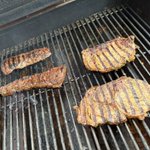
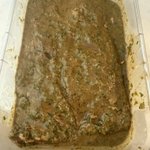
Black Garlic Carne Asada Marinade
For about 2 lbs of skirt or flank steak:
•6 black garlic cloves
•4 fresh garlic cloves
•½ cup orange juice
•¼ cup lime juice
•¼ cup neutral oil
•2 Tbsp soy sauce, or 1 Tbsp Worcestershire
•1 jalapeño or 1 chipotle in adobo
•½ cup cilantro, stems included
•1 tsp cumin
•1 tsp ancho chili powder
•1 tsp Mexican oregano
•1½ tsp kosher salt
•½ tsp black pepper
Method
1.Blend everything until smooth. Blending matters here because black garlic is sticky and won’t mix in evenly by hand.
2.Coat the steak and refrigerate it for 4–8 hours. Don’t go past 12 hours, or the citrus will make the meat mushy.
3.Wipe off the extra marinade and pat the steak fairly dry. The sugars in black garlic burn quickly.
4.Grill over high heat, about 3–4 minutes per side for medium-rare. Rest it 5 minutes, then slice thinly against the grain.

