

Independent mind working on mobile growth. Not Ex-GAFAM. https://xitter.cf/t.co/1E2rrQMVq9
🌴
Joined November 2009
- Tweets38.1K
- Following4.3K
- Followers18K
- Likes47.6K




Pinned Tweet
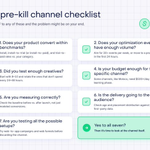
Marketing 101: I've had this awesome "features vs benefits" pix from @UserOnboard pinned since 2017.
Here's my additional 2cents:


Thomasbcn retweeted

Tomorrow: Sub Club Live from New York , with a studio audience.
@drbarnard hosts in person with @AnadaLakra (BoldVoice). In the room, taking turns in the hot seat: @thomasbcn, Ashley Black, Julian Pscheid and more of the App Growth Annual workshop hosts.
12 p.m. ET / 9 a.m. PT / 6 p.m. CEST
Watch on YouTube: youtube.com/watch?v=Ft1AQVxO…
Set your reminder: luma.com/vqf5d6sa


Thomasbcn retweeted

App growth insights, great convos, tacos, and drinks (in your desired order)…
Growth Gems & Screw-ups event kicks off in less than 3 hours.
Excited to hang out!
luma.com/gzu9pr1d
Huge thanks to @RevenueCat and @NewYorkAppWeek
#NewYorkAppWeek

Thomasbcn retweeted

💎 6:30 PM — Growth Gems & Screw-Ups @sylvainww
Your best growth win? Useful.
Your most expensive mistake? Maybe even more useful.
Hosted by Growth Gems + @RevenueCat. Tacos included. 🌮
Waitlist: luma.com/gzu9pr1d
Thomasbcn retweeted
Very excited for tonight's "Growth Gems & Screw-ups" events as part of @NewYorkAppWeek!
Tacos, drinks, growth insights and conversations (in no particular order).
See you there!
luma.com/gzu9pr1d
#NewYorkAppWeek
🤖 Made with AI
Thomasbcn retweeted

There's a reason Apple's cracking down on exploitative apps. That same reason has you finding a small army of testers to use your app for 14 days before you can ship to the Google Play store
And it might not be what you think it is

Thomasbcn retweeted

How can a company get its website linked in chatbot results? A worthwhile Saturday morning coffee read from researchers at the University of Toronto attempts to clarify that.
GEO (generative engine optimization) is an emerging field of marketing that aims to improve product discovery by nudging chatbots to mention specific products, brands, or services. From what I've seen, the techniques employed borrow heavily from the Search Engine Optimization (SEO) playbook: focus content on keywords, provide structured and machine-readable product / services data, include summaries and FAQs, etc. I've always been skeptical of this approach to improving organic discovery because a) it is reactive to model ("algorithm") changes and b) it strips companies of direct control over discoverability.
A new paper titled 'What Drives AI Citations? Content, Retrieval and Model Knowledge in Generative Engine Optimization (GEO)' seeks to quantify the role of models' existing knowledge of brands as well as the relevance and structural elements of webpage content in citation in answers from chatbots.
What it finds is that content relevance is associated with more citations, while various popular GEO content formatting and structural influence tactics show no reliable citation benefit (note that the scope of the paper is websites). The authors prompted several models through their APIs (OpenAI's GPT-5.4 nano, Google's Gemini 3.1 Flash Lite, and Perplexity's Sonar), with web search enabled, with commercially oriented questions about US home internet providers and niche B2B software once per day over the course of 90 days and recorded the responses.
Among other things, they find:
Common GEO features show no reliable citation benefit within websites. FAQs, summary boxes, author information, and structured data appear beneficial when comparing *different* websites, but those associations disappear when comparing pages on the same website. They find that these features are concentrated on websites that are more likely to be cited generally, but their presence is not significantly associated with higher citation frequency within the same website.
The model's existing knowledge of a brand shapes the searches it conducts in anwsering a question, and retrieval in those searches is strongly predictive of citation. For OpenAI, how often pages appear in results returned by its search tool, and how highly they appear, explains substantially more variation in citation counts within websites than the measured page characteristics: 32% versus 2.8%. So the model is more likely to search for brands that it already recommends without searching, and those search results strongly predict citation.
Paper linked below.

Anyone in EU under 50-55 still believing they will get a full pension is delusional.
UBI is the only way
It wont go without collateral
All alternatives are worse
Postponing: the worst
Capping, an inevitable starter
immigration, the obvious obe
Boomers aint gonna like either


NY app week 20/10
Choose between:
-superwall sauce
-scaled UA operators Q&A
-Unify
-Oversubscribed
-Women art café
-Paddle's paddle games
-AI workshop
-2 early dinners
-Appy hour
-A heli tour🤯
...and Hooli trying to use their luxurious office to lure to a UAC sales pitch 🤷♂️
Thomasbcn retweeted

glad you asked it's very interesting actually...
1. in general events convert lower than screenshots, but for existing users there are no screenshots, so a primary goal is to run events to make up for that/show events instead
2. there are specifics to when events show in search (as you mention they sometimes show for apps you don't have too), here's the breakdown:
- existing user: event always shows
- lapsed user (delated app): usually shows, especially Major Update events
- new user: event rarely shows in search results (but more so lately)
3. however, despite new users sometimes seeing events, your traffic will still mostly be App opens/Redownloads... therefore, we've actually made it a standard to run them for all users at ASOgency—it adds color to your product page for new users that end up there (making up for any new users that may see it in search and potentially convert lower)
4. to sum it up.. events are an engagement+brand defense tool, meaning, if you have a lot of users/big brand you should have an always-ON strategy, for smaller apps.. special occasions is enough
5. additionally, you may want to run events to send in featuring nominations, and potentially get shown in Apps-tab as a personalized recommendation.
that's all that comes to mind🤔


Thomasbcn retweeted

I know Apple new leadership is putting a lot of focus on the App Store, and the company seems more open to listening to developers. Here are a few ideas I’d love to see:
1. Gradual app rollouts
When you have a lot of users, releasing a buggy update can be very costly. It would be great to roll out new builds to a small percentage of users first, then gradually increase the rollout. And, of course, have the option to quickly roll back an update if something goes wrong.
2. Search query analytics
It would be great to see which search terms lead users to download your app. Apple already has this data. Sharing it with developers would help us better understand our audience, improve ASO, and build products that better match what users are looking for.
3. A warning system for developer accounts
How about a yellow card system before closing developer accounts? Everyone should have a chance to fix an honest mistake, as long as it’s not a serious or intentional violation. Give developers a warning and time to fix the issue. If it happens again, then take stronger action, up to account termination.
Sometimes, a warning and a chance to fix things can make all the difference.
@johnternus 👋
Thomasbcn retweeted

This is the least surprising graph in the world if you understand how gradient descent works.

"Let the game begin"
growthgems.co/growth-expert-…
Game up gang
@matejlancaric @BrabergFelix @philgcarter @andy_carvell
