







Planning a pregnancy while taking a GLP-1 like Wegovy, Ozempic, Zepbound or Mounjaro? In October, the American College of Obstetricians and Gynecologists (ACOG) issued guidance on it, and it reaches more people than you might think: as many as 1 in 300 women are exposed to one of these medicines before pregnancy.
What ACOG advises:
• Trying to conceive: talk to your prescriber before you start trying. ACOG suggests considering stopping the GLP-1 1–2 months ahead (the Wegovy label says at least 2 months).
• During pregnancy: avoid GLP-1s. If you find out you're pregnant while taking one, stop it and let your prescriber know.
• Breastfeeding: a shared decision with your clinician. Avoid oral GLP-1s, don't use one while nursing a baby born preterm or during the first 28 days after birth, and keep an eye on the baby's weight gain.
Human data on these medicines in pregnancy is still limited, which is why the advice leans cautious. If you take a GLP-1 for diabetes, make a plan with your prescriber before stopping, because blood sugar control matters in pregnancy too.
#GLP1 #Pregnancy

34
Which weight-loss medicine works best? A network meta-analysis in BMJ Medicine pooled 58 randomized trials of 24,214 adults with overweight or obesity and no diabetes.
Average weight loss beyond placebo:
• Retatrutide: 22.1% (not approved, only available in clinical trials)
• Tirzepatide (Zepbound): 19.3%
• CagriSema (semaglutide plus cagrilintide): 17.3% (not approved, FDA decision expected by end of 2026)
• Semaglutide 2.4 mg (Wegovy): 11.7%
• Liraglutide 3 mg (Saxenda): 5.1%
Dose and time matter:
• Semaglutide at around 1 mg weekly averaged 7.7%, vs 11.7% at the full 2.4 mg dose.
• Trials that ran longer showed more weight loss, about 0.4 points more for every extra 12 weeks. That's an exploratory finding.
Read it carefully:
• Most of these are indirect comparisons through placebo, not head-to-head, and several ranges overlap.
• Retatrutide had higher dropout rates (low-certainty evidence).
• The best option is the one you can tolerate and stay on, at a dose you set with your prescriber.
#GLP1 #WeightLoss

4
2
61
The "research peptide" you buy online may come from the same company that sells fentanyl ingredients.
That's the finding of a TRM Labs analysis of crypto payments, reported by the Wall Street Journal:
• TRM identified 150+ Chinese chemical makers that take crypto. About 75% list both fentanyl precursors and peptides, including weight-loss GLP-1s, on their websites. TRM calls that a lower bound.
• Crypto payments to sellers offering both rose from $28.2M in 2023 to $37.3M in 2025, up about 32%.
• Among payments that can be traced to a country, the US is the biggest source.
• One example: Anhui Rencheng, charged by the Justice Department in 2023 with conspiring to make and distribute fentanyl, listed semaglutide and melanotan II, a tanning peptide, as of September.
What the data doesn't show: TRM can't tell which payments were for peptides and which were for fentanyl ingredients.
The health side: semaglutide, tirzepatide and retatrutide sold "for research" or "not for human consumption" are unapproved drugs. FDA hasn't reviewed them for safety, quality or what's actually in the vial. Retatrutide isn't approved for any use and is only available in clinical trials.
If you use a GLP-1, get it prescribed and filled at a state-licensed pharmacy.
More on gray-market peptides:
#Peptides #GLP1 teapaw.org/tphillips115/status/21…


Pharmacies still can’t legally compound peptides like BPC-157. FDA has sent a proposed policy that could temporarily allow some of them to the White House for review, but it isn’t in effect, and nobody knows yet which peptides it covers.
Until it’s final:
1. Peptides sold online as “research only” aren’t checked for purity, dose or sterility.
2. An FDA advisory panel reviewed BPC-157 and others in July, but that didn’t change what pharmacies can make.
3. If a clinic or website says these are “now approved,” that’s not true.
Talk to your doctor before you inject anything. #Peptides #BPC157

45
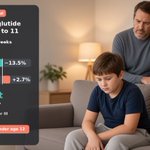
Weight-loss shots for kids as young as 6: the STEP Young trial is now published in the New England Journal of Medicine.
167 children ages 6 to under 12 with obesity (more than 85% with severe obesity) got weekly semaglutide, the active ingredient in Wegovy, or a placebo. Doses topped out at 1.7 or 2.4 mg depending on body weight. Both groups also got diet and activity counseling.
At 68 weeks, counting every child whether or not they stayed on treatment:
• BMI: down 13.5% with semaglutide vs up 2.7% with placebo
• 79% moved down at least one BMI category vs 23% on placebo
• 38% were no longer in the obesity range vs 2% on placebo
At 2 years, the gap held: BMI down 9.4% vs up 8.4% on placebo.
You may see a bigger number, 17.4%, in headlines. That's Novo's estimate if every child had stayed on treatment as planned.
Side effects: stomach and digestive problems were the most common and happened more often with semaglutide. One child stopped because of them.
What it doesn't mean yet: Wegovy is not FDA-approved for children under 12. It's approved for ages 12 and up. Novo Nordisk funded the trial. Questions about a child's weight start with their pediatrician.
#GLP1 #ChildhoodObesity


Measles is endemic in the US again.
An independent commission of the Pan American Health Organization (PAHO) voted to revoke the country's measles-elimination status, according to sources who spoke with NBC News. The virus has spread nonstop for more than a year. PAHO is expected to announce the decision Tuesday. The US first earned elimination in 2000.
Where things stand:
• More than 5,400 US cases this year, more than double last year and the most since 1991.
• 10 deaths reported by state health departments, including at least 4 babies too young to be vaccinated.
• 92% of kindergarteners had their MMR in 2025–26, down from 95% in 2019–20. About 95% is the level needed to stop outbreaks.
• Florida has reported 163 cases as of Nov 7, vs an average of about 3.5 a year from 2000 to 2025.
Check your records:
• Most adults born in 1957 or later without proof of immunity need 1 MMR dose.
• International travelers, healthcare workers and college students need 2.
• Kids get 2 doses, at 12–15 months and 4–6 years.
• Planning a pregnancy? Get MMR before, not during, and wait 28 days before trying to conceive.
Not sure what you've had? Your doctor, pharmacy or state immunization registry can look it up.
#Measles #MMR

It's official: PAHO announced today that the US has lost its measles-elimination status, 26 years after earning it in 2000. Mexico and Bolivia lost theirs too.
• 7,700+ cases and 13 deaths across 2025–26
• Florida: 163 cases as of Nov 7, vs 90 total from 2000 to 2025
• CDC says it has provided about $100M to state and local health departments since August, and HHS Secretary RFK Jr. and CDC Director Schwartz continue to recommend MMR vaccination
Getting elimination back means stopping the ongoing spread. The best protection is still two MMR doses for kids and checking your own records.
#Measles
15
Stopping a GLP-1? Here's what new data shows about the weight.
A large Mayo Clinic study abstract followed 45,017 adults who stopped semaglutide or tirzepatide:
• About half the lost weight came back in roughly 5 to 6 months (about 6.0 months after semaglutide, 4.8 months after tirzepatide).
• Overall, people regained 74% (semaglutide) and 69% (tirzepatide) of what they had lost.
• People who had lost 20% or more were still down 13% to 16% two years later.
• Losing more weight and staying on the drug longer were linked to slower regain.
A separate Cleveland Clinic analysis found people who stayed on the same GLP-1 were down 10.9% at two years, vs 4.0% for those who stopped.
Caveats: both studies are observational, so they show patterns, not cause and effect. The Mayo data is an abstract that hasn't been peer-reviewed yet, and its lead author co-founded a company that sells a GLP-1 response test.
The takeaway: weight often comes back faster than people expect after stopping, but it doesn't always all come back. Thinking about stopping or switching? Plan any change with your prescriber.
#GLP1 #WeightLoss

7
Very high triglycerides can mean more than a concerning lab result. They can trigger acute pancreatitis—a painful inflammation of the pancreas that can require hospitalization.
Newly published results offer hope for another treatment option, but there’s an important distinction between what’s approved and what’s still being studied.
Plozasiran, sold as Redemplo, is already FDA-approved alongside diet to lower triglycerides in adults with familial chylomicronemia syndrome (FCS), a rare disorder. It’s an injection every three months.
The newer SHASTA-3 and SHASTA-4 trials studied a broader group: 757 adults with severely elevated triglycerides.
After 12 months, 91–93% of people receiving plozasiran had triglycerides below 500 mg/dL, compared with about half receiving placebo.
The pooled analysis also found fewer acute pancreatitis events—about 1 versus 5 per 100 patient-years. That’s encouraging, but the total number of events was small, and longer follow-up matters.
There are trade-offs, too. Worsening blood-sugar control was reported in about 14% receiving plozasiran versus 9% receiving placebo.
The key distinction: these results do NOT mean FDA approval for the broader severe-triglyceride population. Its approved use remains adults with FCS.
If your triglycerides remain very high, ask your care team about your pancreatitis risk and the treatment options available for your situation. Don’t stop your current treatment based on a study headline.
#HeartHealth #Triglycerides

5
The right dose, not always the highest dose.
REDEFINE 9 is the first Phase 3 trial testing CagriSema at lower doses, and the results were presented this weekend at ObesityWeek.
CagriSema pairs cagrilintide, a long-acting amylin analog, with semaglutide, the GLP-1 in Wegovy. It isn't FDA-approved yet.
What the trial found at 68 weeks, in adults with overweight or obesity and no diabetes, if everyone stayed on treatment:
• 1.0/1.0 mg dose: 21.0% average weight loss
• 1.7/1.7 mg dose: 20.7%
• Placebo: 2.0%
For reference, the full 2.4/2.4 mg dose gave about 22.7% in a separate trial, REDEFINE 1, measured the same way. It wasn't a head-to-head comparison.
Counting everyone, including people who stopped or missed doses, loss was 18.6% on 1.0 mg and 19.4% on 1.7 mg, vs 4.6% on placebo.
Why it matters: if CagriSema is approved, prescribers may have more dosing options to fit each person's response and tolerability.
If you're on any GLP-1 now, your dose is set with your prescriber. Don't change it on your own.
#GLP1 #CagriSema

5
Nearly half of GLP-1 users changed how they took their medicine, and most of it came down to cost and supply.
A new CDC report (MMWR, Nov 12) surveyed US adults in July–August 2025:
• About 1 in 10 adults used a GLP-1 in the past year, and about 1 in 5 of them used a compounded version
• 44% changed how they took it. The most common change was skipping doses (28%)
• Among those who changed, the top reasons were cost (38%) and trouble getting it (36%)
Who did it most:
• Ages 18–39: 54%, vs 30% at 65 and older
• Compounded users: 62%, vs 36% of others
Why it matters:
• Skipping or spacing out doses can bring nausea and other side effects back when you restart, and a long gap may mean going back to a lower dose
• Compounded versions aren't FDA-approved, and FDA doesn't review them for safety or quality before they're sold
If cost or supply is the problem:
• Talk with your prescriber before changing anything. Ask about a different dose, a different drug or a covered alternative
• Ask your pharmacy to check your coverage, prior authorization and manufacturer savings programs
• Don't split, stretch or skip doses on your own
Keep in mind: this was a self-reported survey from mid-2025, and prices and supply may have changed since.
Source: cdc.gov/mmwr/volumes/75/wr/m…
#GLP1 #CDC

3
The US has reportedly lost its measles elimination status.
The Washington Post, WSJ and CNN report that the regional commission of PAHO, the Pan American Health Organization, found measles has now spread continuously in the US for at least 12 months. That's the line that defines elimination. PAHO hasn't announced it yet.
How we got here:
• The chain of spread that began in West Texas in January 2025 never broke. It kept moving from state to state.
• More than 5,400 US cases this year, the most since 1991.
• States have reported 10 measles-associated deaths, and at least 4 were babies too young for the vaccine.
• Kindergarten MMR coverage has slipped from 95% to 92%.
Florida isn't on the sidelines. The state averaged about 3.5 cases a year from 2000 to 2025. As of Nov 7 it has 163 this year, per state data.
What you can do:
• Two MMR doses are about 97% effective against measles.
• Adults born in 1957 or later without proof of immunity should get at least one dose.
• In some high-case areas, health departments now recommend an early dose for babies 6 to 11 months old. Ask your pediatrician.
• Planning to travel or have a new baby at home? Check your records now.
Not sure you're protected? Check your vaccine records or ask your doctor.
#Measles #Vaccines

1
One shot, and liver fat was still down 36 weeks later. Promising early research for fatty liver disease, but not proof that liver damage reverses.
The study was published in the New England Journal of Medicine and involved 40 adults with obesity and metabolic dysfunction-associated steatotic liver disease (MASLD), often called fatty liver disease. 30 got a single injection of an experimental small interfering RNA (siRNA) that turns down CIDEB, a liver gene involved in storing fat. 10 got placebo.
What it found:
• At 36 weeks, MRI-measured liver fat was down 58–80% relative to baseline across the four dose groups, and the drop was similar at every dose.
• 27 of 29 treated people with a week-36 scan had more than a 30% drop.
• Most treated people got their liver fat below 5% at some point between weeks 12 and 36.
• Liver enzymes (ALT) came down too.
Safety so far:
• Side effects were about as common as on placebo (87% vs 90%), and most were mild or moderate.
• One person had a serious high blood sugar event, which investigators judged unrelated to the drug.
• There was no nausea or vomiting, no deaths, and no one stopped treatment because of side effects.
What it doesn't tell us:
• Most participants had no liver scarring or raised liver enzymes at the start, so we don't know how it works in more advanced disease.
• The study was too small to prove the drug works. Only 30 people got it, so rare or long-term risks are still unknown.
• Less liver fat doesn't by itself mean less scarring, less cirrhosis or longer life. Those outcomes haven't been tested.
• It's investigational and not FDA-approved.
The genetics behind it are intriguing: people born with CIDEB variants that switch the gene off tend to have less liver disease. Now larger trials need to show real-world benefit.
#LiverHealth #ClinicalTrials
Source: NEJM, A Liver-Targeted CIDEB siRNA in Adults with MASLD (Nov 2026): nejm.org/doi/full/10.1056/NE…

4
A personalized mRNA vaccine for melanoma just passed a major test. Here's what it showed, and what we still don't know.
The phase 3 INTerpath-001 trial, published Nov 11 in the New England Journal of Medicine, tested intismeran autogene (Moderna and Merck) plus Keytruda against Keytruda alone in 1,137 people whose stage IIB–IV melanoma had been surgically removed.
How it works: each vaccine is built from the patient's own tumor. It trains the immune system to recognize mutations unique to that cancer, and Keytruda helps keep those immune cells working.
What the trial found:
• At 2 years, 82.2% on the combination were alive without the cancer coming back, vs 70.0% on Keytruda alone.
• For the first 6 months, the two groups looked the same. After that, the risk of recurrence was cut by more than half (hazard ratio 0.42).
• Spread to distant organs was also less common: 88.5% vs 80.2% were free of distant spread at 2 years.
What it doesn't tell us yet:
• Overall survival data are still immature, so we don't know yet whether it helps people live longer.
• Serious (grade 3 or higher) side effects were somewhat more common: 23.6% vs 20.3%.
• There were 8 deaths from side effects in the vaccine group (1.1%). None were attributed to the vaccine, and 5 happened before any vaccine was given.
• It's investigational and not FDA-approved. It was tested after melanoma surgery, not as prevention.
Some researchers see this as a step toward vaccines that could someday help prevent cancer. That's still a research question. For now, this is a promising add-on treatment to watch.
#Melanoma #CancerVaccine
Source: NEJM, INTerpath-001 (Nov 11, 2026): nejm.org/doi/full/10.1056/NE…

17
Same weight loss. Very different strength.
A new randomized trial in Nature Medicine (T-REx) gave 120 adults aged 50–70 tirzepatide (Zepbound) for 40 weeks. Half also did supervised strength training 3 times a week.
What happened:
• Weight loss was about the same: 22.3 kg (49 lb) with lifting vs 22.6 kg (50 lb) on the drug alone
• Fat loss was the same
• Lean mass lost (which includes more than muscle): 3.57 kg (7.9 lb) with lifting vs 4.67 kg (10.3 lb) on the drug alone
• Strength fell 6–9% in the drug-only group and rose 10–18% in the lifting group
The drug drove the weight loss. The lifting decided whether people ended up stronger or weaker.
Keep in mind:
• One center in Australia
• 120 adults aged 50–70, no one with diabetes
• 40 weeks, so longer-term results aren't known
• Lilly supplied the drug but didn't fund or run the trial; some authors have Lilly ties
If you're on a GLP-1:
• Ask your prescriber whether strength training is safe for you, and start where you are
• Aim for resistance work a few times a week (bands, machines and body weight all count)
• Track function, not just the scale: grip strength, how many chair stands you can do in 30 seconds, and walking speed
• If any of those slip, bring it up at your next visit
Why lean mass isn't the whole story: teapaw.org/tphillips115/status/21…
Source: nature.com/articles/s41591-0…
#GLP1 #Tirzepatide

When a weight-loss study reports “lean mass lost,” that does not mean the same amount of skeletal muscle was lost.
That distinction matters in the retatrutide discussion—but it shouldn’t be used to wave away concerns about muscle, strength or nutrition.
A DXA body-composition scan separates fat, bone mineral and lean soft tissue. That lean category includes muscle, but also organs and water. A change in the measurement doesn’t tell us exactly how much muscle was lost or whether someone became weaker.
There IS retatrutide body-composition research: a smaller, 36-week phase 2 substudy in adults with type 2 diabetes found reductions in both fat and lean mass. The authors described the proportion of lean-mass loss relative to weight loss as similar to other obesity treatments.
That isn’t proof that muscle is fully preserved. It also isn’t proof that retatrutide causes unusually severe muscle loss. The substudy was small, and many enrolled participants did not complete both scans.
Keep it separate from TRIUMPH-1, the larger 80-week obesity trial. The TRIUMPH-1 report did not report body-composition or strength results. That does not establish whether those measures were collected.
Participants stopping because they felt they had lost enough—or too much—weight is not documentation that they stopped because of muscle wasting.
The practical goal should be better health and function, not simply the lowest number on the scale. Ask your care team about adequate nutrition, an appropriate protein intake, resistance exercise suited to your abilities, and monitoring strength and daily function.
Those are care-planning considerations—not a muscle-preservation strategy proven by TRIUMPH-1.
Retatrutide remains investigational. We need better long-term evidence on body composition and function, not a confident muscle-loss percentage pulled from a headline.
#Retatrutide #MuscleHealth
thelancet.com/journals/landi…
nejm.org/doi/10.1056/NEJMoa2…

4
3
876
Retatrutide vs. Ozempic, head to head: about 20% weight loss vs. 9.4% at 80 weeks in adults with type 2 diabetes.
Sounds like a clear winner. But those are company-reported results, not yet peer-reviewed. The comparison was with Ozempic 2 mg, not Wegovy's obesity dose. More people stopped retatrutide because of side effects. And it's still not FDA-approved.
What the comparisons really show, and what's still unknown:
#GLP1 #Retatrutide

2
40
Can a weight-loss shot ease knee arthritis pain? Two phase 3 trials say it may.
Retatrutide, Lilly's experimental weekly injection that acts on three hormone pathways (GIP, GLP-1 and glucagon), was tested in adults with obesity and painful knee osteoarthritis. The results were published in the New England Journal of Medicine and presented this week at the ACR Convergence meeting in Orlando.
What the trials found:
• In TRIUMPH-4 (445 adults without diabetes, 68 weeks), knee pain on a 0–10 scale fell 3.96 points on the 9 mg dose and 3.74 on 12 mg, vs 2.12 on placebo.
• At week 68, 63–70% of people on retatrutide had at least half their knee pain gone, vs 38% on placebo.
• Weight fell about 20–24%, vs under 5% on placebo.
What it doesn't tell us yet:
• Retatrutide is still investigational and not FDA-approved.
• Serious side effects were more common than on placebo, and stomach-related side effects like nausea led the list.
• We don't know whether it protects the joint or slows damage. The trials measured pain, not cartilage.
• Nobody who needed a knee replacement was enrolled.
For now, the proven basics still apply: weight management, strengthening and physical therapy, and talking with your doctor about pain relievers that are safe with your other medicines.
#Osteoarthritis #GLP1
Source: NEJM, Retatrutide Once Weekly in Adults with Knee Osteoarthritis Pain and Obesity (Nov 2026): nejm.org/doi/full/10.1056/NE…

FDA just approved the first drug in a new class of blood thinners: Sunharbo (asundexian), a factor XIa inhibitor from Bayer. Here's who it's for, and who it isn't.
Who it's for:
• Adults who've had a recent mild-to-moderate ischemic stroke that didn't come from a heart clot (non-cardioembolic), or a high-risk TIA ("mini-stroke")
• It's taken with antiplatelet therapy, like aspirin, to help prevent another stroke
What the trial showed (OCEANIC-STROKE, 12,327 adults):
• Repeat ischemic stroke: 6.2% vs 8.4% on placebo, about a 26% relative reduction
• Overall major bleeding was similar to placebo
Who it isn't for, or needs extra caution:
• NOT for AFib. It isn't a replacement for the blood thinners used for atrial fibrillation.
• People over 75 had more bleeding, and bleeding risk was higher in the first 90 days
• More GI bleeding was seen
• Not recommended with moderate or severe liver impairment
• Some medicines, like carbamazepine, can interfere with it, so make sure your prescriber and pharmacy know everything you take
• Held for at least 24 hours before planned surgery
If you've had a stroke or TIA, ask your care team whether it fits your situation. Don't switch or stop a blood thinner on your own.
Source: FDA, Nov 9, 2026
fda.gov/news-events/press-an…
#Stroke #FDA

FDA update for anyone taking a GLP-1 medicine: a new eye warning is being added to the labels.
Today (Nov 9), the FDA announced that every GLP-1 label, from exenatide and Victoza to Ozempic, Wegovy, Mounjaro, Zepbound and Foundayo, will now list NAION in its Warnings and Precautions section. NAION (nonarteritic anterior ischemic optic neuropathy) happens when blood flow to the optic nerve drops, and it can cause sudden vision loss.
What the numbers show:
• Across 126 randomized trials, NAION occurred at 6.4 cases per 100,000 person-years on a GLP-1 vs 3.8 on placebo or other diabetes medicines.
• For context, the usual rate in adults over 50 is about 2.3 to 10.2 per 100,000 per year.
• The FDA calls it a "potential increased risk." The absolute risk is very small, it's a standard label warning (not a boxed warning), and FDA hasn't found how these drugs would cause it. Many NAION risk factors, like diabetes, high blood pressure, sleep apnea, smoking and kidney disease, are common in people who take these medicines.
Symptoms to know:
• Sudden, painless vision loss in one eye, often noticed on waking
• Blurry or missing patches, blind spots, or colors that look faded
If this happens, contact your clinician right away.
What to do:
• Don't stop your GLP-1 on your own. If NAION happens, your prescriber will help decide whether to continue.
• If you've had NAION before, your risk of it happening again is higher, including in the other eye, so bring it up with your prescriber.
Source: FDA Drug Safety Communication, Nov 9, 2026
fda.gov/drugs/drug-safety-co…
#GLP1 #FDA
