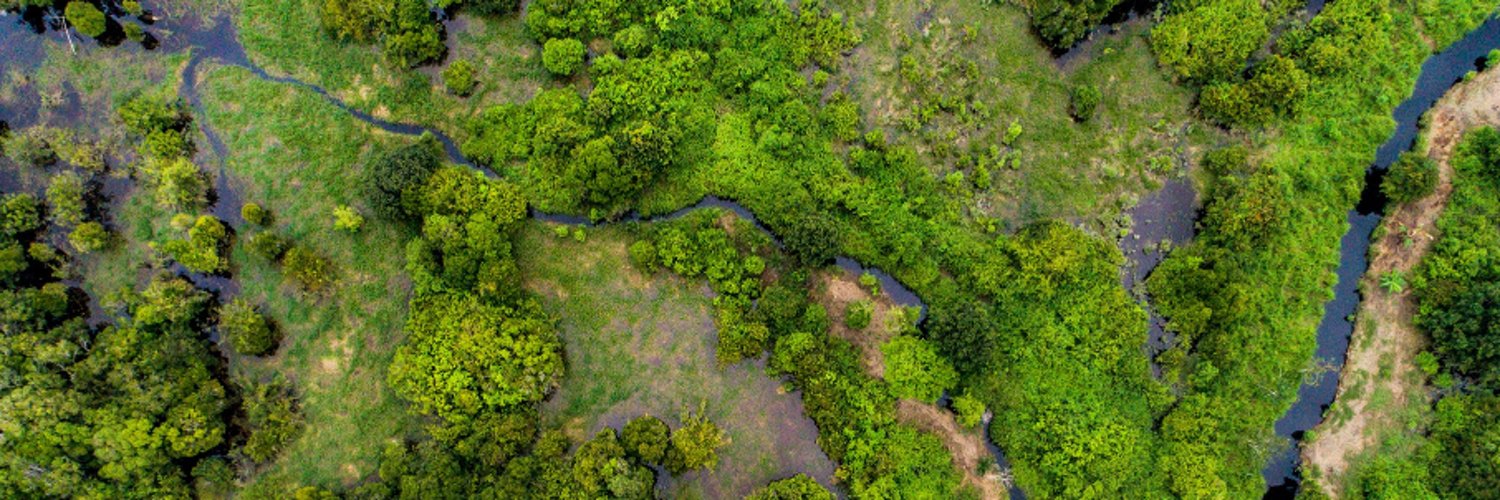

ITPC works to provide sound information and other tools for the sustainable management of tropical peatlands to policy makers, practitioners and communities.
Bogor, Jawa Barat
Joined October 2018
- Tweets1.4K
- Following126
- Followers826
- Likes316







Area under restoration is not the same as ecological recovery. CBD Target 2 calls for at least 30% of degraded ecosystems to be under effective restoration by 2030. For peatlands, progress must also be assessed on the ground. Read more: cbd.int/gbf/targets/2
Drained forest and oil-palm sites in Sumatra released more CO₂ through peat-soil respiration than the primary forest sites studied. But soil respiration alone cannot tell us the ecosystem's overall carbon balance. Read more: doi.org/10.1016/j.geoderma.2…

Indonesia invited all GPI member states, international organizations, research institutions, the private sector, and development partners to participate in the Peatland Forest Forum, set to be held in Indonesia in October 2026.
en.antaranews.com/news/42111…

Comprehensive quantification of carbon dynamics across the disturbance sequence—from peat swamp forests to drained and fire-impacted peatlands—remains a critical knowledge gap.
nature.com/articles/s41467-0…

Indonesia @kemenhut_ri remains committed to strengthening international collaboration and accelerating action for the conservation, restoration and sustainable management of forest peatlands worldwide.
#PeatlandsMatter

The ITPC delegation presented Indonesia's latest achievements in peatland science, policy, practice, and finance, drawing on case studies from across the country's peatland landscapes.
#PeatlandsMatter

ITPC Delegation participates in @UNEP Global Peatlands Initiative (GPI) Fourth Meeting of the Partners to advance South-South and Triangular Cooperation.
#PeatlandsMatter

Through its programs and partnerships, ITPC seeks to position tropical peatlands as a critical nature-based solution for global environmental challenges.
#ProtectOurPeatlands #worldpeatlandsday

International Tropical Peatlands Center retweeted

Penyimpan karbon raksasa itu bernama lahan gambut.
Meski hanya mencakup sekitar 3% dari total daratan di Bumi, ekosistem ini memainkan peran penting dalam mitigasi perubahan iklim, keanekaragaman hayati, serta mendukung penghidupan masyarakat.
#WorldPeatlandsDay @tropeatlands
International Tropical Peatlands Center retweeted

The Global Wetland Outlook (GWO) 2025 was released in June 2025 — and it’s the most powerful snapshot yet of the state of the world’s wetlands.
Drawing from the report, prepared with input from the Scientific and Technical Review Panel of the Convention on Wetlands (STRP) and international partners, this landmark report reveals where wetlands stand today, why they matter more than ever, and what it will take to secure their future.
So, exactly how much progress are we really making on wetland restoration? Well, the GWO report reveals some facts that are both urgent and encouraging:
- 74% of countries report being engaged in wetland restoration
- 66% have set national restoration targets
- 70%+ have identified priority sites
- Yet fewer than 10% have implemented restoration at the scale needed since COP13
The message is clear: restoration is happening — but not fast enough, and not everywhere.
Want to explore the full picture? Dive deeper into the Global Wetland Outlook 2025 on our website.
global-wetland-outlook.ramsa…

Celebrate a joyful and blessed Eid al-Fitr with the ITPC Twibbon!
✨ How to use:
1️⃣ Choose your link:
Horizontal / group photos: twibify.com/s/twibbon-itpc-e…
Vertical / solo photos: twibify.com/s/twibbon-itpc-e…
2️⃣ Upload your photo
3️⃣ Download & share with family and friends
This study integrates 55 radiocarbon dates and Bayesian modeling to reconstruct peat initiation and carbon accumulation in Kalimantan, revealing late Pleistocene inland formation and declining mid-Holocene coastal carbon rates.
nature.com/articles/s41598-0…
Scientists studying Africa’s largest blackwater lakes found that much of the carbon dioxide released comes not from recent plant life, but from peat stored for thousands of years.
sciencedaily.com/releases/20…
Researchers at @ETH_en have discovered for the first time that large blackwater lakes in the central Congo Basin’s extensive peatlands are releasing ancient carbon.
phys.org/news/2026-02-peatla…
International Tropical Peatlands Center retweeted

Over the past 10 years there’s been a slow but stubborn rise in the rate of forest loss, including primary forests, in the Congo Basin.
@Enabel_Belgium @fonaredd @Tropenbos @EU_Commission @unredd @UNEP @WBG_Climate @SwedeninDRCongo @Allemagne_RDC
blog.globalforestwatch.org/f…

📒Mapping area of habitat for inland wetland species.
There was insufficient knowledge on the distribution of inland wetlands and freshwater biodiversity to develop AOH mapping methods specifically tailored to inland wetlands.
▶️ bit.ly/4b9kUHG
Open letter: Brazil at a crossroads—Protecting peatlands is essential for post-COP30 climate leadership.
Read more here: cifor-icraf.org/publications…
Riau Provincial Govt supported by @FAOIndonesia hosted a sub-national dialogue to advance its peatland greenhouse gas (GHG) calculation as well as MRV in reducing emissions from deforestation and forest degradation (REDD+).
bit.ly/4aG1VTO

The second iteration of ASEAN Peatland Management Strategy (APMS) for 2023-2030 represents a significant step forward in addressing the haze issue.
forestsnews.org/90047/as-sou…

The study found century-old carbon in water from peat plantations. Methane was lower relative to CO2 than in natural peatlands. Careful carbon monitoring is key to assessing climate impacts.
Read more: bit.ly/4bZ8p2p
