

Senior AI FDE @ Google engineering & jokes | making fun of agi while it's still allowed
Poland, Warsaw
Joined May 2015
- Tweets4.7K
- Following21
- Followers587
- Likes1.5K





Pinned Tweet
What comes after AGI?
A nice essay with such a title was published by Tim Genewein from DeepMind.
(Clearly - ASI, but let’s talk about intermediate steps.)
Of course, the article is super insightful, though more about how the future might look and which processes (especially in AI development) are bringing us to that future.
I can’t say that it’s some kind of practical guide, but it definitely reads as an inspirational manual towards "where my attention should be if I want to contribute to a brighter future".
The most interesting part of the article to me was about pathways from AGI to ASI. In the essay there are 4 of them:
1. Scaling models and data (utilizing scaling laws)
2. Technological paradigm shifts (which will allow us to get closer to theoretical upper limit of intelligence)
3. Improving agent coordination (the idea is that this one by itself can also have emergent properties)
4. Recursive self-improvement (RSI -> basically when these metal folks are able to improve themselves)
And here are some numbers/predictions from the essay:
- 10x per year growth factor for AI improvement
- in 10 years we’ll be able to run billions of agents by paying the same spending value as we spend on 1 agent today
- the quantitative leap in scale and speed by itself can narrow down the gap from AGI to ASI
Also, Tim provided an interesting list of ways which benefit digital intelligence in advancing faster:
1. processing speed
2. working memory
3. AI can run anywhere and upgrade fast (in the essay it’s called "Substrate independence")
4. AI can be copied with the same state to another machine etc. ("Lossless replication")
5. high bandwidth of knowledge sharing
Adding link to essay and related paper in the comment.
Including images similar to ones in the essay, but changed via AI (but you can check original diagrams in the original essay).


1
1
71
Just found out that you can get Harward's certificate from their famous CS50 course.
(Link in the reply)
Of course it's not a formal degree, but I think can be a nice thing to boost your Linkedin profile.
Also, I think the courses they offer are nice if you wanted to cover some basic Computer Science topic in which you didn't feel confident.
1
2
52
I think we must invent anti-slop frameworks for AI coding.
I have been doing Spec-Driven Development quite intensively for the last couple of weeks.
All the current advice and approaches are good, but I'm still not super happy with the results:
- it's actually quite tiresome to read all the AI replies.
- I'm still not happy with the outcome (stuff works, but c'mon, the docs are too long and the wording is weird).
So I anticipate new frameworks coming that will somehow force us to read every token of LLM output and make us more responsible for every token we provide as input.
Something like anti-slop frameworks.
I mean, they should be anti-slop by design, not have it as their only focus.
I haven't yet thought about how these new approaches could be implemented, so if anyone has any ideas, I'd be glad to discuss them.
2
5
100
So it's actually alphabetical order!

Google released 4 new model families:
argon, carbon, hydrogen, neon.
I was thinking there might be a relationship between element's atomic number and model's cognitive strength
->
So I'll have a map in my head: bigger number -> stronger model (but maybe slower), but no.

6
193
Google released 4 new model families:
argon, carbon, hydrogen, neon.
I was thinking there might be a relationship between element's atomic number and model's cognitive strength
->
So I'll have a map in my head: bigger number -> stronger model (but maybe slower), but no.
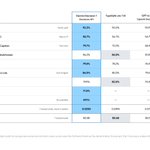
I'm a bit tired to think which AI (LLM) to use and when, so I created a Grok automation which every morning sends to me a table like this.
And if it's still not clear for me, I ask which AI harness is the most efficient in terms of spend per unit of intelligence


3
8
304
It’s possible to save about 80% of the cost on inference these days if you choose an LLM wisely.
I'm trying to monitor my systems' spend on AI tokens, and this morning I pulled up a comparison table. Western frontier models still lead on some agentic/coding suites, but the cost curve from Google and Chinese labs is aggressive.
Is the real competitive edge shifting from raw capability to "good enough + radically cheaper inference"?

2
5
194
So yeah, Spec-Driven Development (SDD) is a shiny new phrase we use these days to look cool.
But at the end of the day, we don't have to make things complicated.
Spec-Driven Development is just "write a good spec, don't write code, and the agent should handle it well".
And honestly, no one knows how to do it the right way (though a lot of people claim they do!).
Still, there are some attempts to come up with an industry standard for making SDD defined, clear, and more thought-through.
One of the attempts I like the most is the Elephant-Goldfish Model.
First of all, the name is cool.
Second, it's backed by Google and widely used there. And these folks know what they're doing.
Of course, it all comes wrapped in a backstory, where "Elephant is a big context" and "Goldfish is a reviewer with minimal context". But at the end of the day, it's just a well-defined framework that allows you to work with AI and your codebase in a stable and predictable way, which is actually what we all want!
So here's how it works:
- It's available as a plugin, which is a set of skills (link in the reply).
- Inside that plugin you'll find the essential skills. The main ones are: brainstorm, draft, and review.
- These skills are similar to grill-me, but more specific, and they have a defined structure for output docs, which makes them more predictable.
- You use these skills to create design docs.
- If you follow the steps in the docs correctly, at the end of the process you will have enough docs for your AI to implement the solution with minimal hallucinations.
I'd encourage everyone to give it a try. The industry is actually very secretive these days about how people work, and trying new things is a solid way to stay open and adaptable.
1
4
146
Which code to check, after AI generated 15,000 new lines of code and you are (reasonably!) lazy and don't want to spend the whole evening looking into that slop?
Yeah, It’s usually a big question - AI claimed that it's done and that everything is working. But c'mon, it generated so much code!
First of all, let’s be honest: we’ve gotten too lazy to check the full source code. Even if it’s only 500 lines of changes, it’s “not today, I’ll look into it later” (never).
But still, duty calls. We feel like we need to check something in our code, because we are responsible for it!
So in this AI-generated slop, where should we look if we have suuuuper limited attention and almost no desire, but we still want to do our due diligence on our code?
I had a good conversation about this topic with a colleague at work today, and the idea that I was pushing is that the parts which connect things are the most fragile:
- Third-party API integrations
- Connectors
- Module integrators
Software engineers even came up with load testing to deal with this!
So yeah, there are a lot of things we can look at, but with a limited attention span, look at the integrators!
2
5
291
Harvard's free course on AI safety
Super interesting and also relevant to the current days questions about AI safety.
(Links in the reply)

2
7
282
Here is a tweet where I explain what Hill Climbing for AI agents (or workflows) is
(and how to apply it).
My team and I often struggle with how to react to the latest metrics we get when evaluating our AI agents.
Our workflow is usually to write proper evaluators, which allow us to understand the health of the system.
One week we make our changes, measure the results, and all metrics are up, so we are happy.
But the following week we apply other changes, and some metrics get better while others get worse.
Of course, our intuition tells us that we just need to tweak the prompts, maybe modify some tool instructions, or add newer skills, and any of it might help.
Unfortunately, that's not always the case.
Best practices in the industry are not very clear at the moment (at least to me), but as I understand it, "Hill Climbing" is a new practice that emerged to solve this issue.
How it works:
1. You create your golden dataset.
2. You choose your metrics (groundedness, relevance, whatever you think is cool and fancy).
3. You run your evals and get your scores.
4. You use methods to improve your prompts (e.g., GEPA).
5. You run the metrics again.
6. Now you are either happy, so you stop improving the system and start using it, or you are not happy and want to fight day and night for the quality of your agent, in which case you go back to step 4.
That's it. Yes, it looks very similar to backpropagation in classic ML, but the thing is that parameter optimization techniques (such as the mentioned GEPA) are less precise.

Since I'm trying to have a diverse portfolio of projects, I always need more compute.
And it can be expensive, so once in a month I'm asking AI to prepare for me a list of up-to-date free compute resources.
Below is a collection of free resources you can actually use right now (Nov 2026):
1 - Kaggle (Free GPU), 30 GPU hours/week on 2× T4
2 - Google Colab Free → T4 when available
3 - Oracle Cloud Always Free → 2 Arm OCPU + 12 GB RAM
4 - Google Cloud → 1 e2-micro + serverless
Other solid free tiers
• Cloudflare Workers (100k req/day)
• Lightning AI + Modal credits
• HF ZeroGPU (short demos)
(I'm posting the links below in the reply)
4
6
192
NVIDIA just published a paper titled "You don't need long context".
Maybe it's an inside joke:
it's okay if the new CEO doesn't have 33 years of company knowledge 😅
P.S. Good luck to any CEO!

5
148
Malware creators are now running at full speed with AI (e.g. abliterated models).
we can also write patches to quickly fix these issues, but a 0-day is always a 0-day.
I hope Sarah Connor is already knocked up
🤖 Made with AI
1
3
212
Remember hype about Jev (system 1 LLMs) a few weeks ago?
Google just launched the Gemini Decisions API.
It scores up to 1,000 yes/no, multiple-choice, or rubric questions in a single pass over text, images, audio, video, or PDFs - returning calibrated probabilities with zero output tokens billed.
$0.10/M input tokens, ~150–250ms latency.
Built for agent routing, policy checks, and fast decisions instead of generating text.

1
1
84

Jensen Huang’s story with a spy is so cool.
I bet if he writes a book about it he will sell like at least million copies.
1 usd from a book and he’s a millionaire!
2
5
127
For LLMs' recursive self-improvement, it's crucial to choose proper metrics.
Here is a glimpse into some metrics that are used by AI labs.
(Though it's not as crucial as having a ton of money to spend on compute.)

1
2
94
Have you heard about Goodhart’s law?
So basically, I was curious what kinds of metrics are being used for RSI of AI (recursive self-improvement).
And as I understand it, there is no single metric which all AI labs are using as a gold standard.
But one of the main things is not to just blindly optimize for one metric (whatever it is - share of AI-written code / productivity uplift / ...).
And that’s where Goodhart’s law comes into play: "When a measure becomes a target, it ceases to be a good measure."
And basically, labs are trying to come up with metrics which are not that easily hackable.
1
3
105


