

Highlighting American patriotism across the nation for the next 250 years. 🇺🇸 Stories of pride, unity & the enduring spirit of 1776–2276 and beyond. #USA250”
Joined November 2024
- Tweets8.5K
- Following2.9K
- Followers1.1K
- Likes33






USA Day 250 retweeted
Rediscovering the Spirit of ‘76: A Reflection on America’s Bicentennial and the Path Back to True Patriotism
In 1976, the United States marked its 200th birthday with a nationwide outpouring of pride, pageantry, and unapologetic love for the country that had endured revolution, civil war, world wars, and recent trials.
The Bicentennial was more than fireworks and parades—it was a healing moment for a nation scarred by Vietnam, Watergate, economic stagflation, and cultural upheaval. Americans came together not to dwell on flaws, but to celebrate the enduring promise of liberty, self-government, and opportunity that defined their exceptional republic.
The Celebrations of 1976: A Unified National Renewal
The Bicentennial was a grassroots and official triumph.
President Gerald Ford traveled from Valley Forge—where he honored George Washington’s Continental Army—to Independence Hall in Philadelphia, signing a declaration reaffirming commitment to the principles of the Declaration of Independence. He then joined celebrations in New York Harbor for Operation Sail, a majestic parade of tall ships from around the world, before watching fireworks over the nation’s capital.
Across the country, millions participated in parades, historical reenactments, wagon trains converging on Valley Forge, and community festivals. The Smithsonian hosted a massive Folklife Festival. Cities lit up with fireworks. Schools, businesses, and families embraced red, white, and blue. Even amid recession and post-Vietnam doubt, the celebrations fostered nostalgia and unity.
As one observer noted, it helped Americans “regain our pride and rediscover our faith.”
It was a friendly moment in spirit: honoring founders, military heritage, constitutional principles, and the American experiment as a force for good in the world.
The focus was on what united us—shared history, symbols like the flag and Liberty Bell, and gratitude for the freedoms hard-won by previous generations.
Patriotism Then vs. Now: A Stark Contrast
Compare that to today.
In 1976, patriotism was mainstream and bipartisan. Flags flew proudly, schools taught unvarnished American history emphasizing heroism and ideals, and national celebrations brought people together across divides. Even after turbulent years, the Bicentennial served as a salve, renewing consensus around the country’s founding virtues.
Today, national pride has plummeted to record lows. Gallup polls show only 58% of Americans express extreme or very high pride in being American—a sharp decline, driven largely by generational and partisan shifts. Younger Americans, particularly Gen Z, are far less likely to feel this pride, often exposed to narratives framing America primarily through lenses of systemic failure rather than achievement.
Celebrations have grown more fragmented and subdued. While local events and some official efforts persist, the unifying national enthusiasm of 1976 feels diluted amid cultural polarization. Patriotism is too often portrayed as outdated, exclusionary, or tied to one political side rather than a shared civic virtue.
Symbols like the flag, once universal emblems of unity, are sometimes contested. Civic education has weakened in many places, replaced by critiques that downplay the extraordinary progress, innovation, and moral arc of the American story—from abolishing slavery to defeating tyranny abroad to creating unmatched prosperity.
The differences run deeper than parties or events. In 1976, despite real problems, Americans largely believed in their country’s goodness and potential. Today, a vocal segment questions the very idea of American exceptionalism.
Conservatives argue this shift stems from decades of institutional changes: revised curricula emphasizing grievance over gratitude, elite cultural disdain for traditional values, family breakdown, and a loss of confidence in America’s founding ideals rooted in Judeo-Christian heritage, individual liberty, and limited government.
🤖 Made with AI

USA Day 250 retweeted

RECAP: @Freedom250GP celebrating 250 years of America
Watch OAN on OAN Live for more updates.


USA Day 250 retweeted
250-Grand Prix

🚨WATCH: OFFICIAL COURSE FOR @Freedom250 GRAND PRIX🚨
190+ MPH down Pennsylvania Avenue — GET READY 🏎️💨
USA Day 250 retweeted
From Cold War Summit to Today’s Iran Crisis: What the Movie “The Brink of War” Teaches Us
A new movie called The Brink of War just hit theaters. It tells the true story of a tense weekend in 1986 when U.S. President Ronald Reagan and Soviet leader Mikhail Gorbachev met in Iceland and almost agreed to get rid of their nuclear weapons. They came incredibly close—then walked away empty-handed.
The film feels surprisingly relevant right now. In 2026, the United States, Israel, and Iran are locked in a real war that keeps starting and stopping. Talks keep breaking down. Ships are threatened in a key oil route. Nuclear issues hang over everything. So is the movie a useful mirror for what’s happening today? Let’s break it down in plain terms.
What Happens in the Movie
In October 1986, Reagan and Gorbachev sat down in a small house in Reykjavik, Iceland. They talked about cutting nuclear missiles in a big way—maybe even eliminating them completely within ten years. Their advisors were nervous. Trust was low. Both men felt huge pressure.
They made real progress. Then everything stalled over one issue: Reagan’s “Star Wars” missile defense plan (officially called the Strategic Defense Initiative). Gorbachev wanted strict limits on it. Reagan refused to give it up. The summit ended without a deal. Still, the talks helped pave the way for later arms-control agreements.
The movie shows two enemies trying hard to step back from the edge. Every word mattered. One disagreement nearly ruined a historic chance at peace.
What’s Happening with Iran Right Now
Since late February 2026, the U.S. and Israel have been fighting Iran in a conflict that has included airstrikes, missile attacks, and drone strikes. A major flashpoint is the Strait of Hormuz—the narrow waterway that carries a huge share of the world’s oil. Iran has restricted or threatened shipping there. The U.S. has pushed back with its own military and naval moves.
There have been temporary deals and pauses in the fighting, including a memorandum of understanding signed in June. Those agreements keep falling apart. Both sides accuse each other of breaking promises. Negotiators (sometimes working through countries like Oman or Pakistan) keep trying to reopen the strait, limit Iran’s nuclear program, ease sanctions, and stop the shooting. Hardliners on both sides make compromise difficult. The fighting flares up, cools down, and flares again.
Nuclear concerns sit at the center, just like in the 1980s. But this is an active war with real damage, not just a theoretical threat.
How the Movie and Today’s Situation Are Alike
Both stories feature bitter rivals who still sit down (or try to) because the alternative is too dangerous. In 1986 it was nuclear annihilation. Today it’s a regional war that could spread, spike oil prices, and drag in more countries.
Trust is the big problem in both cases. Can you believe the other side will keep its word when you don’t like them and their system? The movie hammers this point. Actors and the director have even said the same theme applies to the Iran crisis—trust is hard when the situation keeps shifting.
There’s also the “one big sticking point” problem. In Reykjavik it was the missile defense system. Today it has been control of the Strait of Hormuz, nuclear limits, sanctions, or guarantees against more attacks. Progress happens… then one issue sinks the deal.
Leaders face pressure from their own teams and hardliners. Public statements, military moves, and domestic politics all complicate the talks. In both eras, personal courage to keep talking matters a lot.
Story continues in comments!
🤖 Made with AI

USA Day 250 retweeted
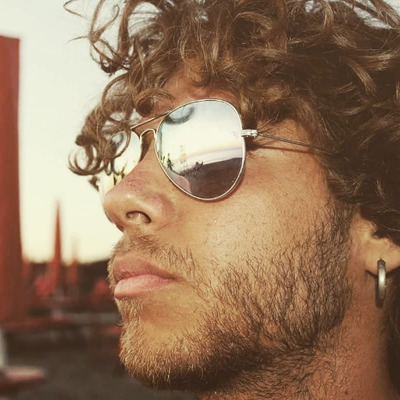
This is a statue of the only man in Troy who saw the trap. He tried to warn everyone, and this is what the gods did to him because of it...
His name was Laocoön, a Trojan priest. When the Greek army vanished and left a giant wooden horse outside the city gates, all of Troy celebrated. Only Laocoön refused to believe it. He warned his people the horse was a trick and, to prove it was hollow, hurled his spear into its side.
In Virgil's telling, he spoke a line that has outlasted almost everything else about Troy: "I fear the Greeks, even when they bring gifts."
He was right. The horse was packed with soldiers, and Troy was hours from destruction.
This sculpture shows what he got for it. Two enormous sea serpents rise out of the sea and coil around him and his young sons, dragging all three down together. The father's whole body is knotted in the struggle, every muscle straining, his face locked in a scream. The gods wanted Troy to fall, and Laocoön was in the way.
The Trojans watched him die in agony and drew exactly the wrong conclusion: they decided the gods were punishing him for attacking a holy gift. So they pulled the horse inside their own walls, and that night, Troy burned...
The statue is called Laocoön and His Sons. It is the work of three Greek sculptors from the island of Rhodes, Agesander, Athenodoros, and Polydorus, and dates to the Hellenistic period, making it well over two thousand years old.
Buried for more than a thousand years, it was dug out of a Roman vineyard in 1506, and Michelangelo rushed across Rome to see it the day it was found.
It has been called the single greatest depiction of human suffering in the history of art, but it endures because of what it is really about: the man who sees the truth, says it out loud, and is destroyed for being right while the crowd watches...
It is one of the oldest patterns there is, and it has never stopped repeating.
There is nothing new under the sun.
USA Day 250 retweeted

TRENDING: People are saying that ABC, CBS, and NBC should lose their broadcast licenses for refusing to air President Trump's national address on election security.
They are calling on the @FCC to yank their licenses.


USA Day 250 retweeted

🚨 HOLY CRAP! President Trump just exposed that 278,000 THOUSAND NON-CITIZENS are registered to vote in federal elections.
Enough. PASS THE SAVE AMERICA ACT, NOW, SENATE GOP
"According to the DHS review, state voter rolls and public records, they identified approximately 278,000 non-citizens who are registered to vote in federal elections. Since Democrat states refuse to share their voter files, the real number is actually much higher than that."
"Yet, even this limited analysis found more than a quarter of a million foreigners illegally registered to vote."
"Put together, these disclosures reveal an election system so broken and so vulnerable that no one can possibly defend it. It is not defensible."
"Hundreds of millions of U.S. voter files are in the hands of foreign governments. Our machines and ballot counting systems are exposed to hacking and manipulation and corruption. China and other countries have been trying to meddle in our elections."
"Evidence of fraud has been buried. Hundreds of thousands of non-citizens and dead people are listed and active on the voter rolls, and yet we still have elections with no voter ID, no proof of citizenship, and tens of millions of ballots floating aimlessly through the mail."
USA Day 250 retweeted
🚨 NOW: President Trump demands the FCC broadcast licenses be REVOKED from the networks like ABC and NBC refusing to air his speech tonight
"Fraud like this should mean a revocation of their licenses!" 🔥
"They use our public multi-billion dollar in value airways for absolutely no money. They pay nothing."
"In a rare move, NBC and ABC fake news have both said that they would not cover this speech. They knew what it was about because of the fact that they don't like the topic because they know how corrupt our system is and they don't want to reveal it. But they and others in the media are part of a plot!"
"They want to continue this fraud for whatever reason. They want to keep it going. They want to protect the radical left."
"They can't have a great country. And that's true. You can't have a great country without free and fair elections."
USA Day 250 retweeted

.@POTUS: To reveal just how vulnerable our elections continue to be, we are releasing the results of a stunning investigation by @DHSgov — which conducted a review of state voter rolls and public records and identified approximately 278,000 non-citizens who are registered to vote in federal elections.
Since Democrat states refuse to share their voter files, the real number is actually much higher than that — yet even this limited analysis found more than 250,000 foreigners illegally registered to vote.
USA Day 250 retweeted

Three-cent stamp honoring General George S. Patton, released in 1953 by the U.S. postal service. 🇺🇸

USA Day 250 retweeted

Senate Fountain operated for the first time #OTD 1932. 🦁🌳


DYK #SenateParks fountain consists of 3 separate components: main basin, lower level basins + reflecting pool? ⛲️ Water is piped underground from the basin to three sculpted bubbler fountains in the terrace's north wall. From there water is again piped to the lower level pool.


USA Day 250 retweeted

THOMAS JEFFERSON: "When once a Republic is corrupted, there is no possibility of remedying any of the growing evils but by removing the corruption & restoring its lost principles."

USA Day 250 retweeted

On July 15, 1916, a small aviation company was incorporated in Seattle that would eventually become one of the world's largest aerospace manufacturers. The business was called Pacific Aero Products, and within a year it would be renamed Boeing: 🧵


USA Day 250 retweeted
ARISTOTLE: "The worst form of inequality is to try to make unequal things equal."

USA Day 250 retweeted

This stone, on loan from @museearmee, was salvaged from the Bastille after revolutionaries stormed the French prison. Three portraits were later engraved in the stone, including the Marquis de Lafayette. #BastilleDay
On view in The Declaration's Journey: bit.ly/3MYjbIm


