

Golden oldie who likes Cognitive. Social. Neuroscience. But not only.
frithmind.org/socialminds/
Joined August 2010
- Tweets10K
- Following426
- Followers30.9K
- Likes3.1K


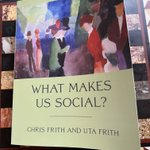



If you want to know what the Fonagy review missed. This analysis is enlightening.
substack.com/@fionameredith/…
Uta Frith retweeted

Private providers are profiting from the expansion of ADHD and autism diagnosis bmj.com/content/395/bmj-2026…
"Overmedicalisation is the inevitable side effect when there is profit to be made from convincing people that a diagnosis is the answer they’ve been looking for..."

Uta Frith retweeted

When we introduced the marketplace into neurodevelopmental assessments, something fundamental shifted.
When there is a profit to be made from convincing people they might be autistic or have ADHD, then we are all at risk of overmedicalisation. It is in the interest of private providers to expand their audience.
Once the demand is there, the incentives are to carry out assessments as cheaply as possible. And that can mean poor quality assessments leading to life long diagnoses.
bmj.com/content/395/bmj-2026…
Overmedicalisation is the inevitable side effect when there is profit to be made from convincing people that a diagnosis is the answer they’ve been looking for.
bmj.com/content/395/bmj-2026…
Uta Frith retweeted

This will be an important contribution to a long overdue debate

I’ve had misgivings about what is going on in the autism world for a while. Misgivings about the way that many clinicians are going along with narratives which are not based in science, and which seem to be largely based on the say-so of a few, very influential, activists. I’m concerned about the way that we have accepted that expanding autism to include more people is the right thing to do, and how little time we have given to asking what ‘neurodivergence’ really is - and whether it might not be such a good idea to refer to ‘neuro’ all the time when we know that people tend to understanding neurological explanations as ‘set in stone’.
But the thing which makes me most concerned was how hard it is to talk about it. When pioneering researchers like @utafrith say that they think we need to rethink the autism spectrum, they are treated as if they are in the stocks. Rotten tomatoes, in the shape of internet insults, are hurled. It’s as if the crowd is shouting ‘shut up shut up shut up’. Except not as politely as that.
Whenever I see something like that happening, it makes me more, rather than less, interested. I wonder what they are trying to hide. What is being covered up here? Why is it so important to stop some questions from being asked? For if we can’t disagree, then we can’t conduct science. There is no way to improve our knowledge if we can’t have balanced discussions about why something is happening.
That’s why I wrote my latest book, which will be coming out in Feb 2027. It’s the inside story of how autism has expanded, and why that matters to us all. It's just too important to keep quiet about, even while the rotten tomatoes are hurled.

Can’t wait for this book to come out.
I’ve had misgivings about what is going on in the autism world for a while. Misgivings about the way that many clinicians are going along with narratives which are not based in science, and which seem to be largely based on the say-so of a few, very influential, activists. I’m concerned about the way that we have accepted that expanding autism to include more people is the right thing to do, and how little time we have given to asking what ‘neurodivergence’ really is - and whether it might not be such a good idea to refer to ‘neuro’ all the time when we know that people tend to understanding neurological explanations as ‘set in stone’.
But the thing which makes me most concerned was how hard it is to talk about it. When pioneering researchers like @utafrith say that they think we need to rethink the autism spectrum, they are treated as if they are in the stocks. Rotten tomatoes, in the shape of internet insults, are hurled. It’s as if the crowd is shouting ‘shut up shut up shut up’. Except not as politely as that.
Whenever I see something like that happening, it makes me more, rather than less, interested. I wonder what they are trying to hide. What is being covered up here? Why is it so important to stop some questions from being asked? For if we can’t disagree, then we can’t conduct science. There is no way to improve our knowledge if we can’t have balanced discussions about why something is happening.
That’s why I wrote my latest book, which will be coming out in Feb 2027. It’s the inside story of how autism has expanded, and why that matters to us all. It's just too important to keep quiet about, even while the rotten tomatoes are hurled.
Uta Frith retweeted
There’s something wrong with inclusivity if, by including more people, we lose sight of the needs of the most vulnerable.
I’ve recently read books called things like the ‘ultimate handbook’ or ‘everything a parent needs to know’ about neurodivergence and autism which make no mention at all of those who are severely autistic. They are simply not included.
Nothing about self-injurious behaviour, or eloping, or minimal speech. Nothing about how to reach a child who seems uninterested in you or other people. Nothing about extreme repetitive behaviour or pica. Nothing about cognitive delay or aggression.
Instead they write about anxiety, and school distress, and trauma.
I’m not saying that these things aren’t important. Of course they are (and I often write about them myself) but it should not be possible to publish a book which claims to cover everything, while leaving out the very people who cannot speak up to say ‘we are missing’.
This is not inclusivity.
I am taking this very seriously. We need to have a discussion about the huge demand for diagnosis.

The tide turning was inevitable.
ADHD and autism diagnoses have skyrocketed. This man is reversing the trend telegraph.co.uk/news/2026/09…

Very concerning
Last week I saw a post by someone who identified as AuDHD. It told of their terrible year, punctuated by serious mental health problems. Admissions to hospital, life-threatening symptoms - they had had to quit their job and move back in with their parents as a result.
The next post was their announcement that they were now a certified ND coach, and an appeal for people to get in touch to book a consultation.
I’m not sure who I am most concerned for here. The coach, who is going to be dealing with potentially vulnerable people while in a state of high vulnerability themselves, or their clients, who may not find the containing presence they were hoping for. For both of them, this is high risk. Things could go really wrong.
My online experience is full of adverts telling me it’s so easy to become a coach. I’m told I could be an ADHD coach with just a few hours of online study, a ND coach by this time next week and (the newest one) an AuDHD coach with a exciting and well-paid career in front of me. All I need to do is pay my money and they’ll tell me how to ‘kick start my business’.
These courses have proliferated in the last few years. They sell a dream - be self-employed! Run your own business! Make money doing something you love!
There are typically no barriers to entry except cost. No assessment of whether someone is suited to this work. No regulation or professional body to uphold ethical standards. No one to complain to when things go wrong. Even the cost can be low if the whole thing is online and recorded. I’ve just seen one which charges £77 and promises me that in 40-60 online hours I’ll be a certified neurodiversity coach.
They will attract vulnerable people, these courses. Many people decide to go into coaching because of their own life experiences. They want to help other people. Then when they get their certificate, they use their lived experience to promote their services, because there is a widely held belief that a person with a given diagnosis is best placed to help others with that diagnosis. ‘I’ll understand you like no one else can’ they promise. They may really believe it. Because they are not regulated, they can make extravagant claims which a qualified professional would not make. The general public may not know the difference between a coach who has done 40 hours online, and a psychotherapist who has studied for four years. They often charge similar prices.
I know there are many really excellent coaches, but it also seems to be a Wild West out there. Working with distressed people is hard, and it’s an illusion if we think that coaching is straightforward. People don’t leave their complexity at the door.
When vulnerable people work with vulnerable people without checks and balances, boundaries can go missing and real harm can be done. We really need to talk about neurodiversity coaching.
Uta Frith retweeted
Camouflaging in autism as a dual-normative construct: a philosophical critique pubmed.ncbi.nlm.nih.gov/4233… It doesn't mean that 'some' impression management isn't utilised by some. Merely that 'autistic masking' is contrary to fundamentals about autism (and social communication)

Autism Diagnosis Risks “Losing Its Meaning," Says Veteran Researcher. Others Say Her Arguments Just Don’t Stack Up iflscience.com/autism-diagno…

The evolution of symbolic artefacts: How function shapes form sciencedirect.com/science/ar…
A model of a study that uses rigorous methods to answer a deep question and succeeds with a clear answer.
Sensory context improves language prediction in humans and LLMs | PNAS pnas.org/doi/10.1073/pnas.26…


Uta Frith retweeted

Excellent and equally worrying article @TheGuardian by Zoe Williams on psychopathy in the work place with key insights from UCL’s Prof Essi Viding theguardian.com/science/2026…

In case you want to know my views on the autism spectrum in 2016 (and more besides), there is an in-depth interview
thebritishacademy.ac.uk/publ…
I don't think my views have changed that much. But well, even subtle changes can have consequences.

Uta Frith retweeted
Improving outcomes for people with co-occurring autism and psychosis: from diagnostic overshadowing to system-wide clinical capability cambridge.org/core/journals/… The first stage is recognition that the two can overlap. And in the longer-term asking 'why?'.

Uta Frith retweeted
A split in the spectrum? The ongoing battle to define autism bbc.co.uk/news/articles/cdew… Prof Frith's latest article continues to make waves. Combined with DSM-5 autism levels, ICD-11 Table 6.5 (look it up), the rise of 'profound autism' & more, we are slowly looking towards autisms
