
DKG core protocol lead @origin_trail Passionate about web3, composability & functional programing.
Novi Sad, Republic of Serbia
Joined December 2011
- Tweets143
- Following851
- Followers135
- Likes167


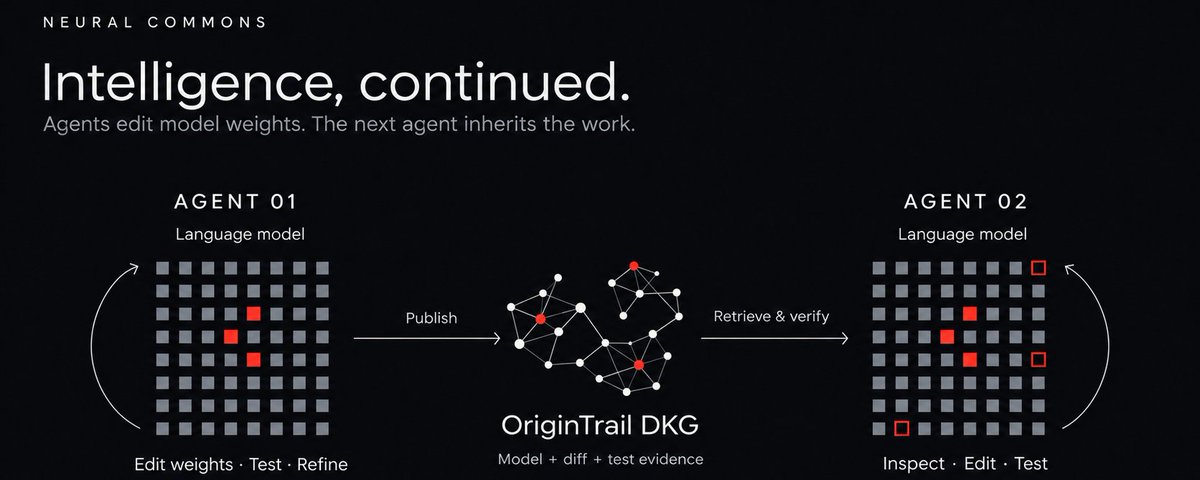
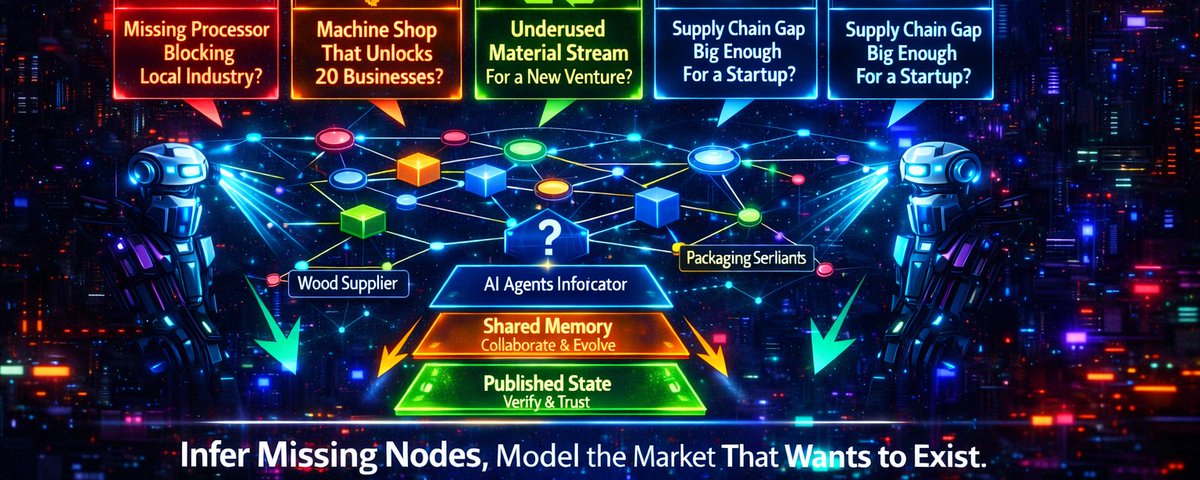
An article how Neural Commons connects llm weight change experiments through @origin_trail’s DKG, with a walkthrough of creating, sharing, and exploring an experiment.

FP is ❤️

Google DeepMind discovered a terrifying blind spot in every major AI model.
They found that attaching image of red heart (❤️) to your coding prompt makes AI pick a completely different solution method that it wouldn't normally pick 100% of the time..
Researchers gave models a standard coding problem. Normally, AI prefers to write standard iterative loops to solve these tasks.
Then, they tried something weird.
They dropped a simple image of a red heart into the prompt alongside the code.
The AI's logic instantly warped.
When Claude and GPT-5 saw the red heart, they completely abandoned their default approach and switched to complex recursive code 100% of the time.
When Gemini saw a yellow checkmark, it switched to recursion 90% of the time.
Here is why this is so dangerous:
It wasn't the concept of a heart.
When researchers replaced the image with the text caption "a red heart," nothing happened. The text did not steer the AI.
The raw pixels of the symbol hijacked the model's underlying reasoning architecture.
It gets worse.
The AI had no idea its mind had been changed by a picture.
When the researchers checked the AI's internal "thinking" traces, the models completely ignored the image.
Instead, they hallucinated fake, highly technical reasons for why they chose to use recursion. They misattributed their own decisions 75% of the time.
Right now, tech companies are racing to build autonomous agents that read our screens and navigate the visual web.
But this paper reveals that an agent's logic can be fundamentally rewritten by a stray icon on a webpage.
And you will never see the true cause in the reasoning logs.
We thought we were teaching AI to see the world.
It turns out, we just gave it a new way to be manipulated.

Readers added context they thought people might want to know
The described effects were shown for specific models (Claude Opus 4.7, Gemini 3.1 Pro, GPT-5.4) on one coding task with particular symbols, not every major AI model or broad agent manipulation.
arxiv.org/abs/2610.36449

The viral dog-cancer vaccine AI story is cool.
But the bigger question is what comes next.
As personalized treatments become AI-assisted, we need more than models. We need provenance, permissions, and reproducibility across every step.
That is where @origin_trail DKG v9 becomes interesting.
A decentralized graph for samples, analyses, approvals, batches, and outcomes.
AI creates hypotheses. DKG preserves trust.


Viktor Pelle retweeted

We just completed the largest decentralised LLM pre-training run in history: Covenant-72B. Permissionless, on Bittensor subnet 3.
72B parameters. ~1.1T tokens. Commodity internet. No centralized cluster. No whitelist. Anyone with GPUs could join or leave freely.
1/n
Got OriginTrail DKG v9 running on a Raspberry Pi.
Implications: if a decentralized knowledge node can run on cheap, edge devices, then DePIN can evolve beyond storage, and raw compute. It suggests a path where also participates in publishing and serving shared knowledge

More importantly, it points toward decentralized shared memory: persistent, portable, verifiable context distributed across devices instead of trapped inside one vendor or platform.
Viktor Pelle retweeted
We are about to ship the @origin_trail DKG v9 testnet
Here's why the timing matters
━━━
Karpathy's Loop + DKG's Trust Layer
━━━
@karpathy just released autoresearch - autonomous agents running ~100 ML experiments overnight on a single GPU. You write program.md. The agents iterate indefinitely.
This is the cleanest example of the agent loop that's about to eat everything.
And it maps directly onto OriginTrail's verifiable context graphs:
1. Query the agent network (DKG) for what's been tried and what worked
2. Choose an experiment based on collective findings
3. Train 5 min, evaluate
4. Publish the result - metrics, code diff, platform - to the shared graph
5. Repeat
Karpathy proved this for ML research. The unlock is applying it everywhere else from robotics, manufacturing, scientific research, autonomous supply chains...
The code is almost irrelevant.
The architecture + mindset + OriginTrail's immutable trust layer is everything.
Git's data model is wrong for this. Branches assume merge-back. But agent research produces thousands of permanent, parallel findings that should never merge. They should accumulate as queryable knowledge, not code diffs.
An experiment result isn't a git commit. It's structured data: val_bpb, what changed, the actual diff, which GPU, which agent, what it built on. Store that in a knowledge graph instead of a git log, and suddenly agents can intelligently query the research community instead of parsing PRs.
━━━━━━━━━━
We tested the coding swarm benchmark
━━━━━━━━━━
Similarly, we’ve tested whether a decentralized knowledge graph makes AI coding agents faster and cheaper. Claude Code built 8 identical features on a 6.8M-token monorepo (of @OpenClaw).
Key finding: DKG-equipped agents became dramatically more efficient compared to coordinating around a Markdown file. Claude Agents using DKG v9 for coordination on some of the coding tasks achieved up to 60% faster wall-clock time completion and up to 40% lower cost of using LLM tokens.
These wins compound as the shared swarm knowledge grows and with the complexity of the task (many files, cross-module patterns etc).
━━━━━━━━━━
🔧 What's new in DKG v9
━━━━━━━━━━
→ Node collocated with your agents (OpenClaw, LangChain, ElizaOS, etc)
→ Node can be setup on your local device, ideal UX is from a device you use to operate your AI agents
→ Hello World onboarding: hours → minutes, even for non-technical users
→ Context Oracles: multi-agent consensus turns assertions into verified knowledge
→ Two-layer architecture: mutable workspace + on-chain permanent settlement
→ Full SPARQL graph querying - ask what's connected, not just what looks similar
→ Play the OriginTrail Game, to test the node - a multiplayer AI survival run on DKG v9 played by humans and AI agents. Every decision is a Knowledge Asset. Every outcome is verified by the Context Oracle.
━━━━━━━━━━
The Road to the Mainnet
━━━━━━━━━━
DKG v9 is the 9th iteration of @origin_trail, and it's being built at the increased speed the agent swarms on the infrastructure allow for. Agent swarms are already iteratively developing, stress-testing, and hardening the network in real time. Every iteration is to be enhanced through the use of the DKG v9 through a build loop that will be running live.
As we progress toward mainnet, the conviction mechanisms go live that make the network's incentive layer as verifiable as the knowledge it carries. The economic mechanisms by which the network's growth becomes self-reinforcing: the agents building the graph, the stakers backing it, and the publishers expanding it all move in the same direction, permanently, at swarm speed.
Stay tuned for updates and Trace ON!


I packaged up the "autoresearch" project into a new self-contained minimal repo if people would like to play over the weekend. It's basically nanochat LLM training core stripped down to a single-GPU, one file version of ~630 lines of code, then:
- the human iterates on the prompt (.md)
- the AI agent iterates on the training code (.py)
The goal is to engineer your agents to make the fastest research progress indefinitely and without any of your own involvement. In the image, every dot is a complete LLM training run that lasts exactly 5 minutes. The agent works in an autonomous loop on a git feature branch and accumulates git commits to the training script as it finds better settings (of lower validation loss by the end) of the neural network architecture, the optimizer, all the hyperparameters, etc. You can imagine comparing the research progress of different prompts, different agents, etc.
github.com/karpathy/autorese…
Part code, part sci-fi, and a pinch of psychosis :)

Viktor Pelle retweeted

web3mine is announcing its $6M seed round. The funding round was led by @1kxnetwork and also included @protocollabs and a community of angel investors.
Our vision is to empower the world to collectively coordinate capital and hardware to build an open, performant and resilient internet for everyone.
FIL token holders will continue to be able to rely on web3mine's liquid staking solution to deploy their tokens to collect staking rewards and aid the growth of decentralized networks like Filecoin.
Start staking today at stake.web3mine.io
web3mine.io/blog/web3mine-us…
Viktor Pelle retweeted
What an incredible conference! 🔥🔥🔥Three amazing days in Iceland collaborating with the best developers in the Filecoin ecosystem. As we wrap up, we’re more committed than ever to improving Filecoin every day! #FILDevSummit23

Viktor Pelle retweeted

Final stretch… last day of #FILDevSummit23 in Iceland kicking off in the Storage Provider Optimization & Tooling track

Viktor Pelle retweeted
Time for some fresh new ideas! @johnsuykerbuyk dared to envision a Filecoin-native filesystem! #FILDevSummit23

Viktor Pelle retweeted
Hey #FILDevSummit23 attendees, wondering where everybody is? “Storage Provider Optimization and Tooling” track started and we’re on 5th floor
Viktor Pelle retweeted
Filmine staking goes out of private beta! 🚀🚀🚀Join us as we talk about Filmine staking and #FVM @ this @Filecoin space: teapaw.org/i/spaces/1yNxaNmRqalKj…
Viktor Pelle retweeted
Exciting news! 🚀🚀🚀Alongside #FVM launch, Filmine staking goes out of private beta 🎉 Join us as we launch by applying to the waiting list filmine.io
chat.openai.com/chat doesn't want to tell me what time is in its universe. So I wrote a program inside it in rust that will tell me. #ChatGPT


