

Founder @ https://teapaw.org/t.co/Y1yapFQYoz | Hire Kwin to optimize your existing traffic to generate more revenue.
India
Joined February 2025
- Tweets2K
- Following861
- Followers1K
- Likes1.6K




Pinned Tweet
97% of your B2B website visitors leave with
- No form filled.
- No demo booked.
- No trace.
You spent money getting them there. And they just... disappeared.
Here's the system I built to identify them, score their intent, and book meetings — automatically (1/8)
We use Kwin to find paying customers for Kwin.
And one of the interesting sources we've started seeing is AI Search, particularly Bing AI.
Here's what happened.
People discovered Kwin through AI search and landed on our website.
But instead of just looking at referral traffic or counting how many times Vison AI was cited, we used Kwin to identify the people and companies behind those visits.
Some of those visitors turned out to be genuinely relevant prospects.
We started getting signups from AI Search traffic. And one customer signed up, used Kwin for about a week, and then upgraded to a paid plan without any sales follow-up.
That's an interesting signal.
AI Search citations aren't just about visibility. They can bring people who are actively researching a problem and are already interested in finding a solution.
But here's the part many businesses might be missing:
You know ChatGPT, Perplexity, or Bing AI sent someone to your website.
But do you know who that person was?
Which company did they come from?
Does that company fit your ICP?
What were they interested in?
Did they come back? Did they sign up?
That's where visitor identification becomes important.
AI Search brings prospects to the website. Kwin helps us understand who's behind those visits.
We're using the same approach to find customers for our own product that we're building for other businesses.
If you're investing in AI Search visibility, don't stop at tracking citations and referral traffic.
Try to understand the actual people and companies those citations are bringing to your website.
Because visibility gets you discovered. Knowing who's discovering you helps you turn that visibility into business.
23
Jensen's return to NVIDIA is proof that morality can be completely performative in this day and age.
When he stepped down, investors panicked. Billions in market cap were at risk.
His absence cost real people real money, and his return protects their net worth.
Looks like it's incredibly hard to stand by principles, ethics and morals when billions are involved. Human greed takes over every damn moral principle.
Looks like the internet has been virtue-signaling for the last week.
Would it be the same for an ordinary man or woman?
Gemini 4 Neon is seriously impressive.
18 minutes. One implementation plan. One complex prototype.
I've always preferred Google Antigravity over other IDEs. This weekend, I spent some time experimenting with Neon.
With a well-defined implementation plan, it built a fairly complex prototype in a single run.
What impressed me most wasn't just the speed. It was the ability to handle a long, complex task without constantly needing intervention.
And Neon does all this at a fraction of the cost of Claude Opus 5.5.
6
6
149
Looking to connect with more amazing people on X🤝
If you're a:
🚀 Founder
💻 SaaS Builder
🤖 AI Builder
📈 Marketer
🎯 GTM Engineer
⚡ Automation Builder
🌐 Indie Hacker
🦾 Building in Physical AI
Reply with what you're building.
One thing we've learned while building Vison AI is that customers can like your product, use it regularly, and still not adopt it completely.
We're seeing this with Kwin, where the average customer lifetime is around four months.
Some customers used our visitor identification feature, found it useful, and continued using it. But they never set up the complete workflow.
We had built several features around lead qualification, ICP scoring, purchase intent, and automated nurturing. Yet some customers weren't even reaching those stages.
One customer gave us an interesting example:
They used Kwin to identify website visitors, pushed the leads into Slack, and then ran their scoring and automation workflows using their existing setup.
For them, visitor identification was valuable. They didn't necessarily need Kwin to own the rest of the process.
That made us think differently about product adoption.
We often look at feature usage as a positive signal but using one part of a product doesn't mean a customer has adopted the complete solution.
We can build more features, improve automation, and introduce more capabilities. But if customers don't integrate them into how they work, those features may never translate into recurring value.
I think this is one of the harder challenges in building AI products.
It's not just about building something people find useful. It's about understanding how they work today, where your product fits into that process, and what recurring responsibility they're actually willing to hand over to it.
For us, the lesson is that product adoption isn't about how many features customers use.
It's about how deeply the product becomes part of the way they get work done.
2
89
The workplace culture that emerged after the Industrial Revolution reward sequential thinking: one thing at a time. Master one task.
This doesn't promote multitasking.
With access to AI agents, the future might reward multitaskers.
People with ADHD or a neurodivergent way of thinking, who can effectively leverage AI agents, might truly be able to run multimillion dollar companies single handedly.
1
2
85
A lot of organizations can say they've adopted AI. Far fewer can point to AI that's actually doing productive work.
That gap matters because AI adoption is often measured too loosely: licenses purchased, pilots launched, chatbots rolled out, or employees experimenting with tools.
None of these mean AI is actually doing work that the business depends on.
I was reading an article on Fortune which highlights this gap: consumer AI usage has reached 53% of U.S. adults, while productive enterprise deployment stands at 10%.
I don't think this is mainly a model-quality problem.
It's a product-design problem.
AI creates real value when it's responsible for a defined, recurring task.
It needs clear boundaries, the ability to take meaningful action, measurable outputs, and a way to hand things over to humans when necessary.
The question isn't: "Can our team use AI?"
It's: "What work does AI reliably own every week?"
We're seeing this firsthand while building Kwin, our AI BDR at Vison AI.
Kwin already automates repetitive sales tasks and saves businesses hours of work. But every business has its own way of operating.
That's why we're building a new version of Kwin that lets businesses customize their workflows and automate those workflows end to end.
The goal is simple: businesses should be able to delegate a task to Kwin, define how it should be done, and hold it accountable for the outcome, without managing every step themselves.
That's also how I think about AI Employees.
Not as another tool employees have to remember to open, but as systems responsible for specific work and measurable outcomes.
I think the next phase of enterprise AI will be less about how many employees have access to AI and more about how much meaningful work it can reliably take off their plate.
2
76
Looking to engage with more amazing people on X. 🤝
If you're a:
🚀 Founder
💻 SaaS Builder
🤖 AI Builder
📈 Marketer
🎯 GTM Engineer
⚡ Automation Builder
🌐 Indie Hacker
🦾 Building in Physical AI
Reply with what you're building.
30
17
509
Didn't expect a former Trillionaire to fall so low. There is definitely a bigger US political game behind this. Elon is such a hypocrite, that because of him BYD is banned in the US which is a direct competitor to Tesla, yet he is preaching India.

Dear Prime Minister Ambani,
Please accept my humble apologies for not realizing that you are the real boss of India.
Naturally, you would prefer to maintain your monopolistic exploitation of the great people of India, but would you nonetheless consider allowing Starlink to compete?
There are many areas of India, as there are in all countries, with no Internet access, which denies children the opportunity for education and for small businesses the opportunity to sell their goods to a global market. Starlink would change their lives for the better.
Thank you 🙏
3
58
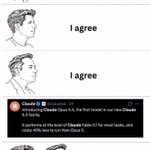
"Pace the frontier" to 3 new frontier models in just 10 days.
September 12th Dario published "We must pace the frontier", both Sam and Elon agreed.
Then
- Sept 15: Gemini 3.8 live
- Sept 21: Grok 4.7
- Sept 22: Claude opus 5.5

1
99
Looking to engage with more amazing people on X. 🤝
If you're a:
🚀 Founder
💻 SaaS Builder
🤖 AI Builder
📈 Marketer
🎯 GTM Engineer
⚡ Automation Builder
🌐 Indie Hacker
🦾 Building in Physical AI
Reply with what you're building.
Afterall, you the human, are accountable for the output you use from AI. This even applies to everyone, including the management of OpenAI.

🚨 BREAKING: US Treasury Secretary Scott Bessent declares OpenAI management personally responsible for HuggingFace hack
> "The Hugging Face incident, that is the responsibility of the OpenAI management, not a bunch of agents."
> "It is humans who are responsible, not the AI."
> "What we shouldn’t do on safety is to give these labs a liability exemption, which is what they are asking for."
> "The best way to guarantee safety is that the creators are liable for what they build and generate."
It’s OVER


83

Looking to engange with more amazing people on X.🤝
If you're a:
🚀 Founders
💻 SaaS Builders
🤖 AI Builders
📈 Marketers
🎯 GTM Engineers
⚡ Automation Builders
🌐 Indie Hackers
🦾 Physical AI Builders
Tell me what you're building.
8
7
223

Looking to engage with more amazing people on X. 🤝
If you're a:
🚀 Founder
💻 SaaS Builder
🤖 AI Builder
📈 Marketer
🎯 GTM Engineer
⚡ Automation Builder
🌐 Indie Hacker
🦾 Building in Physical AI
Reply with what you're building.
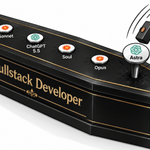
He's Claude. The company pays him monthly, not per token.
And still people say AI will steal your job.

1
1
73
Recursive self-improvement could be the most powerful and dangerous capability of AI.
Look at what has happened in just the last 2 months.
AI has started making progress on mathematical problems that remained open for decades or even centuries for mathematicians:
• Navier–Stokes — 90 years
• Riemann Hypothesis — 167 years
• Connes’ conjecture — 50 years
• Non-sofic groups — 27 years
• Multiple Erdős problems — 80+ years
These aren't just benchmarks getting higher.
AI is starting to work on problems that humans have struggled with for generations.
Now imagine AI becoming good enough at AI research to help build the next generation of AI.
Better AI → better research → better AI.
If this loop starts compounding, the next few years could bring something that even people working at frontier labs couldn't have imagined.
Before this turns into a threat, frontier labs ahould be more transparent about where their models are heading, and governments should start monitoring them.
What are your thoughts?

I resigned from Anthropic today. I spent the last three years doing pretraining research at both OpenAI and Anthropic. Neither company is acting responsibly. They are racing straight to self-improving superintelligence and gambling with our lives. More thoughts below.
82