

TypeScript at @leboncoin • created @athenajs_ • Rugby • Retro gaming • https://teapaw.org/t.co/HxQZ16B1VS
45,77982325,3,08140843
Joined August 2009
- Tweets12.4K
- Following1.3K
- Followers334
- Likes8.5K






Pinned Tweet
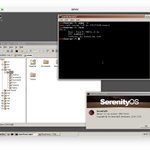
React-Explorer 3.0.0 has been released for Mac/Linux/Windows: github.com/warpdesign/react-…
This version includes performance improvements, numerous bug fixes, and ARM64 builds!
#macOS #Windows #Linux #React #ElectronJS

Nicolas Ramz retweeted

⚡️🇫🇷CITATION - « Je n'avais jamais touché à une manette de ma vie avant 9h ce matin et à 14h30 je repêchais 2 paquets de drogue », Jacqueline, 82 ans. En Seine-et-Marne, les pensionnaires d'une résidence seniors découvrent #GTAVI.
Nicolas Ramz retweeted

Both NeXT and 3DFX tried to “do the right thing” with color spaces, and it wound up generally making them look worse than competing options. I didn’t really understand it properly until years later.
It is natural to think that a pixel with a value of 1.0 is emitting twice the photons as a pixel with a value of 0.5, so you can do the obvious linear math to calculate partial pixel coverage, blending a foreground over a background, or interpolating between colors in a texture.
If displays are “linear”, that is correct. NeXT and 3DFX were much closer to linear than other contemporary displays. NeXT had crossover from the deep graphics understanding at Pixar, and 3DFX had the SGI heritage. They did this intentionally.
If you have 10+ bits per channel like the professional rendering systems, linear displays are The Right Thing.
Unfortunately, NeXTStation Colors were 4 bits per channel and 3DFX was 5 or 6 bits per channel, and there… it was not the right thing.
Human eyes aren’t linear intensity sensors. We mostly register relative changes in intensity, so we can tell the difference between 0.01 and 0.02 as a huge doubling, while 0.99 to 1.00 is almost imperceptible.
This distribution of intensities is often referred to as the “gamma” of the display system, but the actual curves like sRGB are a bit more complicated.
If you only have a small number of discrete pixel values, you definitely don’t want to spread them evenly from 0 to 1! If you do, you will have good precision in the brights, but very stark “intensity bands” in the dark colors.
If everything was authored specifically for 3DFX, you would still have the fundamental problem with the dark bands, but more accurate blending and filtering. The problem was that artists made all of their textures in paint programs on conventional non-linear displays, so when they were drawn by 3DFX cards, they got the characteristic “washed out color” look.
You can mathematically correct textures for differences in display gamma, but I didn’t really understand the issue back in the glQuake days, and we were so enthralled by the absolute performance of 3DFX that the color fidelity didn’t get as much attention as it should have.
Even today, tons of games don’t properly handle gamma across their textures and render targets. High resolutions and 24 bit color masks most of it, but you still see it in some slight shimmerings in high contrast textures and edges.


Nicolas Ramz retweeted

In 2009, a handful of designers set up in a warehouse. What they made reshaped @Microsoft, then the whole industry, and some of it is still on nearly every screen you use.
I made a feature-length documentary about Metro UI, told by the people who made it. It premieres Friday!
Incredible work! This looks (and sounds) amazing!”

** Sega Megadrive - Lionheart port **
Thalion's Lionheart (1993) is one of the best-looking games on the Amiga. 100s of colors on screen with loads of parallax and an atmospheric sound track and just dripping with quality in every aspect.
So what's the reason for the port ? the challenge for one - there's the Amigas Copper co-processor to emulate on MD in trying to match the visuals, the Audio to try and do justice to with an FM flavor to it , try and get some improvements to gameplay also - particularly the control system.
So how does the MD stack up and differ from the Amiga original so far ?
More of the level on screen. The Amiga game plays in a 280×208 window outdoors, cut to 192 vertical lines in the caves. The MD port uses the full 320 × 224 (NTSC H40 resolution) in all sections so 23%-33% more viewable screen thoughout.
60 hz framerate Megadrive vs 50 hz Amiga , 20% faster frame rate. Game play is unaffected - same movement over time , just a shade smoother .
Parallax added in the caves. On the Amiga, cave 2-1 is a 6-bitplane Extra Half-bright screen (32 colours + 32 half-bright copies) with no parallax / single layer. On the MD the half-bright colours come from Shadow/Highlight mode, each tile is drawn shadowed or normal, with the palettes solved to fit. The back wall has been split out of the map onto the otherwise unused plane B for parallax. The large spider boss is two layered sprite palettes, double-buffered in VRAM to retain all the colors and full frame rate.
Its not been easy though - theres no Copper on the MD ( the Copper is a co-processor synchronised to the display that amongst other things changes color as the screen is been drawn ) . No such luxury on the MD so under the hood, an assembly Horizontal-Interrupt (H-int) list rebuilds the Amiga's Copper color changes by writing color ram (CRAM) mid-screen, about 200 color writes a frame, most of them by DMA. The DMA color changes are driving up to 8 color changes per scanline which normally has negative affects for sprites ( DMA steals the VDPs time for building the sprite line cache ) , however with careful timing that issue has been resolved. There is color change going on in the background and foreground at the same time . The water uses per-line scroll effects for large parts of the screen. Color seams are flickered to improve the seaming as per the original game .
The real struggle - the MD's 512-colour palette against the Amiga's 4,096 means the sky gradients get rounded. The H-Int software copper takes nearly a fifth of the MD 68k cpu frame at times, which the Amiga gets for free with the Copper.
@Megadrive4ever8 has been working hard on Stage 1s music and I think hes doing an amazing job ! He's even using channel 3 extended mode to get effectively 2 channels from 1 on channel 3. Dual PCM channels are used for Music also so effectively 6 FM channels and 2 PCM channels devoted to music. The SFX get their own 1-2 PCM channels, and they're the original sounds re-sampled to 14 khz for XGM driver.
Hence Music and sound effects play at the same time on the MD. On the Amiga, Paula's 4 PCM channels are shared, a SFX takes a channel and the music drops that voice while the effect plays.
The XGM1 driver is modified so idle PCM channels don't read ROM to save cpu . The full stage 1 tracks run for 4 mins + in length and is still WIP.
5.) Intros with Scaling maintained . The intro complete with zoom through the door and the walk down the hall are scaled at run time, by the blitter on the Amiga, and by 68000k assembly code on the MD. The MD draws each picture in about 70–80% of the Amiga's time albiet keeps the Amigas timing for accuracy.
6.) 320 x 448 interlaced resolution used for menu screens, the Amiga used high resolution interlaced 640×344 width here which we can't match horizontally but its still looking pretty sharp in 320 x 448 and this mode was seldem used on MD so great to find some use here.
Other difficulties has been the VRAM management. On the Amiga the playfield is a bitmap, the blitter copies 16×16 blocks into it, so there's no limit on how many unique graphics a single screen can use. On the MD every 8×8 tile on screen has to be in VRAM (64kb) . Stage 1-1 (shown) uses 4,745 unique tiles (3,466 foreground + 1,279 background). Once the plane maps, sprite and scroll tables, hero, HUD and enemy frames have taken their share of the VRAM - there are only about 1,500 tiles left for the background / forground. So both planes stream their scrolling tiles to cache whats needed at the time onscreen. The tightest frames are the diagonals. In a single frame you can need a new foreground column and a new row, plus a background row coming in and the water's per-line windows shifting, and all of it has to go through the vblanks (end of frame) DMA tight window.
Levels 1-1, 2-1, 1-2 and large parts of the intro been done and work continues on the rest of the port. The game is a mix of SGDK for cold paths and Assembly for most of the game time frame for speed - inline with my other projects.
Next up is finishing the rest of the stages with some more follow up vids of the next sections, more music to come which @Megadrive4ever8 is looking forward to implementing !
The game is been ported with AI assistance. The sheer workload of it conversion of assets / analysis / debugging would not be humanly possible in any respectable time frame otherwise and I already have several non AI assisted projects to contend with. The engine uses game code from my other projects but has been further developed for specific needs for this game.
#SegaMegaDrive #Genesis #Amiga #SGDK #RetroGaming
1
52
Exploring a Raptor port for an unexpanded Amiga 1200, with music, sound effects, and smooth scrolling. This is currently just a rendering demo; game logic has not been implemented yet:
1
37


Nicolas Ramz retweeted

One of the most intense and profound moments in history. 11am on the 11th November 1918 when the guns fell silent. This should be shown in every school.
Nicolas Ramz retweeted

We all love The Secret of Monkey Island, but this is the first time you can see it like this: complete. All 13 versions side by side, with a comparer and the CRT monitors of each machine. 🐒
monkeyisland.pages.dev
Share it, you three-headed monkey!
#MonkeyIsland #RetroGaming

That's me! :) And it's all @KalenikW's fault for just implementing it in @ladybirdbrowser 😄 I thought it was a great idea and figured it could be useful for Copperline too!

Today in things I have done that no one asked for (actually, 1 person did):
Lemmings running in a terminal over SSH. New feature coming to Copperline soon.
#Amiga
youtu.be/7mBFFBFUNvQ

2
91
Nicolas Ramz retweeted

@ladybirdbrowser now speaks the kitty graphics protocol github.com/LadybirdBrowser/l…. huge QoL for developing on remote machines. works perfectly in Rex by @superlogical

Nicolas Ramz retweeted

I'm not even sounding the claxon for this it's just horrible.
Any text > 256chars is a valid root password, holy shit
sshhole.com/

Nicolas Ramz retweeted
I had a similar reaction. Everyone should applaud performance improvements, but gauge against the “speed of light”, not just a sloppy competitor. If you are measuring in seconds, you may have already anchored yourself incorrectly.
Structure the UI so you can put locally cached media up just a few vblanks after the process launches.
Structure the server so it can return everything necessary for the dynamic UI in one single query that was kicked off in parallel with the Gfx API initialization, branching to a modern transport protocol for large media files.
You should be able to double click on the launcher and have it responsive before your muscle memory can slam the pointer to a location to click on.

This is hilarious and awesome.
Awesome because this has annoyed millions of peoples for years.
Hilarious because WHY DOES IT TAKE 5 SECONDS TO SHOW A MENU OF GAMES?!
Steam takes 10 SECONDS?!
Do you realize how much time that is for a CPU with a modern internet connection? Am I crazy!? What am I missing?
Nicolas Ramz retweeted

More CSS off the main thread!
I just implemented parallel scroll-driven animations, so they can update even while the main thread is busy! 🤓
Left: @ladybirdbrowser
Right: Chrome (but every other browser looks the same)
The copperline emulator keeps getting better, and now even faster :)
Copperline 1.1 is out, the first feature release since 1.0.
New: period hard-drive timing, a "fastest" JIT speed and much faster fast-RAM code and disk I/O, A500 timing corrected, and Windows installers.
patreon.com/Copperline/posts…
#Amiga #RetroComputing #Emulation


Experimenting with an Amiga port of Lands of Lore! A version was announced back in the day but never materialized. I've already managed to get the full intro up and running!
10
Nicolas Ramz retweeted
This is a pretty reasonable internal AI manifesto IMHO. Not scandalous at all.
It's a good thing that they're trying to elevate and empower their developers.
You may not like it, but the software development profession has permanently changed. This will happen (or is already happening) at every serious software shop.


Nicolas Ramz retweeted

In honor of a legend.
Patrick Stewart voicing King Richard in Lands of Lore: The Throne of Chaos (1993/94, Westwood Studios).

