

your mark on the internet. best aeo tool for devtool founders. yes, we are opensource you build. jam spreads join discord: https://xitter.cf/t.co/JrLMsxy3ap
San Francisco
Joined September 2025
- Tweets428
- Following11
- Followers1.8K
- Likes707






Pinned Tweet
we sharing Jam with everyone :)
you build. Jam spreads

here's jam
it's the simplest interface for marketing in the agentic era
we now have 2000+ companies, developers, and operators enjoying jam
we started it as a side project, then devtool founders paid us thousands to use it
it's come a long way since, and we've just released it for anyone to try, no waitlist
and also we are now hiring (see below!)
you build, jam spreads
Webflow increased signups from AI search by 485% in a single quarter.
those visitors also converted 6X better than normal Google traffic.
this is the insane AEO system behind it:
1. They started measuring AI search as its own acquisition channel
-> Webflow tracked share of voice, citations and signups from LLMs separately from normal SEO
-> Their share of voice went from 33% to 64%, while the share of total signups coming from LLMs doubled from 4% to 8%
2. They mapped where AI was already getting its answers
-> On Webflow’s own site, template pages and blog posts were showing up
-> off-site, affiliate publications, Reddit, Webflow’s YouTube and influencer YouTube channels were influencing answers too
-> Reddit appeared in 10% of ChatGPT citations in their research, while YouTube appeared in 32% of Perplexity responses
3 They stopped trying to win one huge query like “best CMS”
-> Webflow built 10 more specific questions around the buyer, team and tool being used
-> Example: “what is the best CMS for in-house teams that use [tool]?”
-> Share of voice across that test went from 38% to 100% < this was made a BIG difference
-> within 3 weeks, 70% of the questions they targeted had improved
4 Then they found 1,500 template pages they could optimize
-> These weren’t random blog posts. Templates were already one of Webflow’s highest-converting page types
-> Many had almost nothing above the fold besides the H1, so they added unique copy answering exactly who the template was for and what problem it solved
5. Every optimized template followed the same 4-part structure
-> the main search/question
-> a Webflow-branded term
-> the exact target user
-> the pain point or outcome the template solved
-> A real estate template page, for example, was rewritten specifically around agents and realty firms trying to connect buyers with available listings
6. That one initiative took AI-driven signups from 168 to 983 in one quarter
-> a 485% increase
-> Instead of creating hundreds of new articles, they improved pages that already had product intent and could turn traffic directly into signups
7. They built a Reddit monitoring system around 100 priority queries
-> First they identified which Reddit threads were already appearing in AI answers
-> Then they tracked the thread, suggested a useful response, checked sentiment, reviewed the contribution and measured what happened after posting
-> 98% of engagement around Webflow ended up positive or neutral
8. Their Reddit community grew alongside it
-> r/Webflow views increased 135% year-over-year
-> membership increased 12%
-> published posts + comments increased 145%
-> Reddit wasn’t treated as somewhere to dump links. It became part of the information AI could find around Webflow
9 Then they tested something ridiculously simple: adding a table of contents
-> 10 Webflow pages got the change
-> 10 similar pages were left untouched as a control group
-> after 4 weeks, the test group saw a 60% control-adjusted increase in AI visits and 23% growth in clicks
10 The table of contents gave AI smaller sections it could pull answers from
-> A long article about “landing pages vs websites” was broken into sections like “when do you need a website?” and “when do you need a landing page?”
-> instead of forcing the model to understand one giant article, each follow-up question had an obvious section to retrieve
11. They ran another controlled test by turning normal headings into actual questions
-> “AI design tools” became “which AI tools are most useful for web designers?”
-> “advantages” became “what are the advantages of using AI-powered design tools?”
-> same article, clearer structure
-> AI visits increased 58% after adjusting against the control group
12. They didn’t judge these experiments from one spike in traffic
-> Both tests used 10 test URLs matched against 10 similar control URLs and ran for 5 weeks
-> the question-heading test had a p-value of 0.001
-> the table-of-contents test came in at 0.002
-> they were actually testing whether the changes caused movement instead of taking screenshots whenever ChatGPT mentioned them
13. Every SEO topic was eventually treated as an AEO topic too
-> Webflow kept the core page useful for Google, but also made sure it answered the specific follow-up questions people ask inside AI conversations
-> one page could rank traditionally while also giving AI multiple clear answers to retrieve from it
14. Then they measured the metric that actually matters: signups
-> 94% growth in LLM share of voice
-> 2X more signups coming from LLMs
-> 485% growth in AI signups from the optimized template pages
-> 24% signup conversion rate from AI traffic
-> compared with just 4% from non-brand SEO
Webflow didn’t win AI search by blindly publishing more content.
they ran actual experiments, scaled the changes that worked and focused them on pages that already converted.
AI visitors now convert 6X better than their non-brand Google traffic.
why aren’t you optimizing for them?
if you want us to run an audit for your comapny and make you rank #1 in AI search,
reply “audit” 🫶

Runpod, a $325M company, increased monthly new paying customers 300% in just 90 days using AI search.
here’s the genius AEO system behind it:
1. They went from tracking 50 prompts to 300 almost overnight
-> The prompts were split by buyer persona, funnel stage and niche technical use case instead of just tracking broad category searches
-> Their buyers included DevOps engineers, AI builders, researchers and platform teams comparing Runpod against AWS, CoreWeave and Google Cloud
2. ChatGPT became the channel they prioritized
-> Around 98% of Runpod’s AI referral traffic was coming from ChatGPT
-> So instead of treating every AI engine equally, they focused their monitoring and optimization around the channel already sending real buyers
3. Their audit found a technical problem most teams would have missed
-> Several Runpod articles were only partially indexed
-> AI could see the title, but not properly access the body content
-> They fixed metadata, restructured the pages and corrected formatting before producing more content
4 They built prompts around extremely specific technical buying questions
-> “How do serverless GPU platforms compare to traditional cloud infrastructure?”
-> “What’s the best way to manage GPU provisioning and auto scaling for AI workloads?”
-> The goal was to track the questions their actual ICP asks, not generic high-volume keywords
5. They used the prompts that were already working to decide what to publish next
-> Runpod reviewed which questions consistently surfaced the brand
-> Those prompts became new content titles, angles and topics
6. Then they exported the entire dataset
-> Prompt performance was filtered by topic, buyer persona and stage of the customer journey
-> Instead of a marketer guessing what article to write next, the content roadmap came directly from gaps in AI search
7 They paired the prompt data with deeper research
-> Runpod used ChatGPT Deep Research to investigate trending themes, audience questions and gaps in existing content before producing the page
8. They reverse engineered the sources AI was already using
-> Runpod tracked which owned pages, competitor sites and third-party domains kept getting cited
-> This exposed both content opportunities and external sites where competitors had stronger visibility
9. Publishing became a feedback loop
-> Find a high-value prompt
-> Research why Runpod is winning or losing it
-> Publish or fix the relevant page
-> Monitor whether Runpod starts appearing more often
-> Double down on the prompts that move
10. They brought content production in-house
-> Once prompt data and source data were feeding the strategy, Runpod no longer needed to outsource the entire research/content process
-> The team could produce around the exact questions and visibility gaps they were seeing in real time
11. They cut the cost of their AI search stack by more than 80%
-> Their tooling cost dropped from roughly $3,000/month to $500/month while prompt coverage expanded from 50 to 300
12. Then it turned into actual customers
-> ~28,000 visitors from ChatGPT
-> ~2,100 conversions
-> 8% conversion rate
-> ~40 new customers per day from ChatGPT
-> roughly a 2-week close cycle
within 90 days, Runpod was bringing in 4x more new paying customers every month.
they didn’t treat AEO like “publish more blogs.”
they built a feedback loop around what buyers ask, what AI recommends, which sources it trusts and what actually turns into customers.
a $325M company turned ChatGPT into one of its top acquisition channels.
why aren’t you?
if you want us to run an audit for your company & make you rank #1 in AI search,
reply “audit”


want to get cited by AI?
these are some of the most underrated & easiest directories to get listed on:
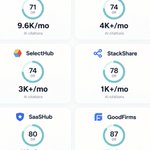
GetLatka: DR 71 · ~20K visits/mo · ~9.6K AI citations
Crozdesk: DR 74 · ~43K visits/mo · 4K+ AI citations
SelectHub: DR 74 · ~44K visits/mo · several thousand AI citations
StackShare: DR 78 · ~66K visits/mo · 1K+ AI citations
SaaSHub: DR 80 · ~11K visits/mo · 1K+ AI citations
GoodFirms: DR 87 · 100K+ visits/mo · 1K+ AI citations
if you’re a devtool:
→ StackShare
→ GetLatka
→ SaaSHub
if you’re selling B2B software:
→ SelectHub
→ Crozdesk
→ GoodFirms
if you compete heavily on “X alternatives” queries:
→ SaaSHub
→ Crozdesk
most founders believe that G2, Capterra and Product Hunt are the only directories that matter.
there are dozens of smaller sites AI already cites that are much easier to get onto.
full list + submission links below ↓

GetLatka → getlatka.com/add
Crozdesk → crozdesk.com/claims/new
SelectHub → selecthub.com/seller
StackShare → stackshare.io
SaaSHub → saashub.com/services/submit
GoodFirms → goodfirms.co/get-listed
want Claude to recommend your website?
make sure Brave can find you first.
Claude uses Brave Search for web retrieval, so being indexed there gives Claude a very easy path to discover you.
here’s how:
/1 submit the pages you actually want Claude finding through search.brave.com/submit-url. Ideally do this for every important product, comparison, use-case and docs page, not just the homepage.
/2 make sure Googlebot can crawl every one of them. Brave explicitly says it will not crawl a page that Googlebot cannot crawl, so one bad robots/noindex/CDN setup can keep the page out of Brave before Claude ever gets a chance to see it.
/3 don’t stop at getting indexed. Brave does not index the entire web, and its crawl/index selection uses signals like popularity, links from other domains and its Web Discovery Project. Important pages buried with no links or discovery signals are much less useful than pages Brave repeatedly sees.
/4 focus first on queries where Claude is actually likely to search the web. comparison, ranking, location and freshness-heavy prompts trigger Claude web search much more often than static questions, so “X vs Y”, “best X in 2026” and similar buying queries are the ones I’d test first.
/5 check where you rank in Brave for those exact queries. 2026 research on Claude found it frequently pulled directly from Brave’s top results with very little re-ranking. if you’re indexed but sitting nowhere near the top results, indexing alone probably won’t get you into Claude’s answer.
/6 once you start appearing high in Brave for those queries, ask the exact same questions in Claude with web search and inspect the citations. if Claude searches but keeps pulling the same competitors above you, you now know the problem is ranking/retrieval, not whether Brave knows your site exists.


if you still are not able to get recommended by ai, well then go book a call with us and we'll get you ranked #1 on AI search in your industry: spreadjam.com/

1,850% more leads from AI search. This is the insane AEO system behind HubSpots $13.5 BILLION empire:
1/ HubSpot built 8 separate AI visibility tracking groups
-> Each group covered a different product, with tracking broken down further into individual features
-> They monitored discovery, comparisons, reviews and purchase-intent prompts to identify exactly where competitors were beating them
2/ They turned customer case studies into hundreds of industry pages
-> AI repurposed real customer stories into industry-specific content, with humans reviewing each page before publication
-> 92% of those pages were cited by AI search engines, lifting visibility by 49%
3/ Industry-specific comparison pages increased citations by 642%
-> Instead of competing only for broad searches like "best CRM," they targeted specific buying decisions such as "best CRM for construction companies"
-> Those pages also increased overall mentions by 58%
4/ They started targeting buyers BEFORE they knew what software they needed
-> HubSpot built a glossary answering questions like "what is marketing automation?" and "how does lead scoring work?"
-> The pages connected those early questions to relevant HubSpot products and increased citation share by 60%
5. They rebuilt product pages around actual ChatGPT questions
-> Added buyer-focused headlines, FAQs, comparison tables and scannable information addressing the questions prospects were asking AI
-> HubSpot reports citations to those pages increased 56%
6. They reverse engineered the sources AI already trusted
-> For valuable prompts where HubSpot was missing, they inspected which publishers kept appearing in AI answers
-> This revealed third-party sites that were consistently influencing recommendations
7. Hundreds of publisher partnerships produced nearly 1,000 pages
-> HubSpot worked with external websites already earning AI citations, helping expand its presence across third-party content
-> Instead of depending entirely on its own website, it increased coverage across sources AI was already retrieving
8. Reddit became part of their weekly growth operation
-> HubSpot monitored discussions where potential buyers were researching software, comparing products and asking for recommendations
-> They identified conversations and categories where competitors were getting mentioned while HubSpot was largely absent
9. They discovered huge gaps in France and Germany
-> Localized campaigns reportedly took HubSpot from effectively zero mentions to 33.5% visibility in France and 17.1% in Germany within a month
10. Every visibility problem had a different solution
-> Missing industry coverage? Build targeted pages
-> Weak product citations? Improve existing pages
-> Competitors dominating third-party sources? Work on external distribution
-> Low regional visibility? Localize the strategy
11/ HubSpot increased its overall AI citations by 433%
-> The improvements came from changes across product pages, industry content, comparison articles and third-party distribution
12. The result: AI-search leads grew 1,850% in one year
-> From Q1 2025 to Q1 2026, HubSpot reported an 1,850% increase in qualified leads from AI search
-> Those leads converted at up to 3X the rate of traditional search leads
HubSpot essentially built an entire customer acquisition operation around understanding what buyers ask AI, finding where competitors win, and fixing the sources behind those recommendations.
A multi BILLION company is treating AI search as such a serious acquisition channel.
Why aren't you?
if you want us to run an audit for your company and & make you rank #1 in AI search,
reply “audit”

in 2026, a solo founder can:
- build products (claude code, n8n)
- design interfaces (figma, lovable)
- research markets (perplexity, notebookllm)
- automate workflows (zapier, make,)
- grow an audience (x, tiktok, insta, linkedin)
- get recommended by AI (spreadjam)
- run email campaigns (beehiiv, substack)
- find and contact leads at scale (apollo, clay, instantly)
- accept payments globally (stripe, whop)
- track user behavior (posthog, google analytics, hotjar)
- handle support (intercom, crisp)
- manage operations (notion, slack)
the barrier to entry has never so ridiculously low, start building today.
with jam, you can engineer your agentic presence, rank #1 on AI search, and get more customers.
spreadjam.com/
here’s how to turn AI visibility into customers:
/1 find the pages AI is already citing when it recommends you.
those pages are now landing pages. treat them like it.
/2 match the CTA to the intent behind the prompt.
someone coming from “best X alternatives” should see a comparison or migration path. someone coming from a use-case query should see that exact use case.
/3 move proof closer to the top.
pricing, customer results, screenshots, case studies and clear product differentiation should be visible before the reader has to hunt for them.
/4 make the next step obvious.
trial, demo, signup, benchmark, audit. one clear action that fits why they landed there.
/5 track the full path from AI referral → landing page → signup/demo → customer.
ChatGPT traffic that never converts is just a vanity metric.
once you already rank, the priority is to to turn the people AI sends your way to customers 🫶

run an AI search visibility audit exactly like this before trying to rank in AI search
for context, we got one of our customers to rank #1 in ChatGPT in only 2 weeks.
here’s how (14 steps):
1. start by building a fixed set of 30–50 prompts your buyers would realistically ask before choosing a product.
split them between category searches (“best [category] tools”), comparisons (“[product] vs [competitor]”), alternatives, specific use cases, pricing/cost questions and problem-based searches.
don’t build the list around keywords you want to rank for. build it around actual buying decisions.
2. run the exact same prompt set through ChatGPT, Claude, Gemini and Google AI Mode.
for every answer, record the model, date, companies mentioned, companies recommended and every cited URL.
keep the prompts identical so you can actually compare the results.
3. separate a citation from a mention from a recommendation.
if ChatGPT cites one of your blog posts while recommending three competitors, that is not the same as winning the query.
track all three separately.
4. repeat your highest-value prompts more than once.
AI answers are dynamic. one screenshot where you disappear means very little.
you’re looking for gaps that keep showing up across multiple runs, related prompts and different engines.
/5 group the prompts into topics instead of optimizing them one-by-one.
“best auth API,” “SSO provider for SaaS,” “SAML authentication tools” and “SCIM providers” might all belong to the same buying topic.
the goal is to understand which parts of the category you consistently own and which parts your competitors own.
6. now calculate the competitor gap for each topic.
if a competitor appears in 18/25 relevant prompts and you appear in 4, start there.
don’t waste time fixing a random query where both of you appeared once.
7. open every source the AI used when your competitors won.
record which page was cited, which domain owns it, what type of page it is, which competitor it mentions and what claim or recommendation it appears to support.
after 20–30 prompts you’ll usually start seeing the same pages and domains repeatedly.
8. before creating anything new, check whether you already have a page that should be winning that query.
if the page exists, find out why it isn’t surfacing.
does it actually answer the same intent? is the information outdated? is the useful information buried? does the competitor page contain proof, comparisons or data yours doesn’t?
building another page can just create two weak pages instead of fixing the right one.
9. check the technical layer next.
make sure the page is indexable, internally linked and returning normally to crawlers.
for ChatGPT specifically, check that OAI-SearchBot isn’t blocked in robots.txt or by your CDN/WAF.
for Google AI features, the page first needs to be indexed and eligible to appear in normal Google Search.
10. investigate the searches underneath the prompt.
AI search doesn’t always retrieve pages using the exact sentence the user typed.
Google AI Mode uses query fan-out to run related searches underneath a question. Bing Webmaster Tools now exposes the grounding queries its AI systems used to retrieve cited pages.
use those related searches to understand what the engine is actually trying to find.
11. only NOW decide what needs to change.
sometimes you need a new page.
sometimes the right page already exists and needs better coverage.
sometimes your information is outdated.
sometimes the model keeps relying on third-party comparison pages where every competitor is mentioned except you.
sometimes the problem is technical and writing anything would be a waste of time.
12. if you do create or update content, give the model information it cannot get from another generic article.
use first-party data, real pricing, specific feature limits, screenshots, benchmarks, comparison criteria, customer results, use-case differences and actual limitations.
another 2,000-word summary of information already on the internet gives the engine very little reason to retrieve you.
13. if third-party sources keep shaping the recommendation, work on those separately.
find the comparison pages, industry sites, videos and discussions that repeatedly appear in the answers.
figure out why competitors are represented there and you aren’t, then earn legitimate inclusion where it actually makes sense.
don’t manufacture random mentions across the internet and call it GEO.
14. once the changes have been crawled, rerun the exact same audit.
same prompts. same engines. same measurement.
track whether your citation share increased, you started appearing in previously lost topics, competitor recommendations dropped and your brand moved from “mentioned” to actually recommended.
then keep working on the clusters that are moving instead of starting another random content sprint.
if you want us to run this audit for your company and & make you rank #1 in AI search,
reply “audit”
this is how to steal AI recommendations from your competitors:
/1 build a list of 20–30 buyer-intent questions around your category
/2 run the same questions through ChatGPT, Claude and Gemini
/3 pull out the queries where the same competitors keep getting recommended and you don’t
/4 check every source the models use to support those recommendations
/5 compare those sources against your own pages and find the missing coverage, proof or third-party mentions
fix the biggest gaps, rerun the queries and make AI feed you customers.
there is no way you’re going to rank on AI search by JUST writing blog posts
hold on
>can chatgpt actually access and index the page?
>what searches is the model running underneath the original prompt?
>which pages are getting retrieved instead of yours?
>what sources does the model trust for this topic, and are they mentioning you?
>across repeated relevant prompts, how often do you show up compared to competitors?
the very first thing to check is whether the page can even be accessed and indexed.
if chatgpt or google can’t retrieve the page, making content and blog posts will not result in anything
> query fan-out
someone might ask “best auth tool for a b2b saas,” but the engine can search around SSO, SAML, SCIM, enterprise auth and other related terms underneath that one prompt.
so the question isn’t just “do we rank for this prompt?”
It should be “are we showing up across the searches the model uses to answer it?”
> retrieval
if your competitor keeps getting pulled into the answer and you don’t, writing another article isn’t automatically the fix.
first figure out why their page is being retrieved instead of yours.
maybe your page already exists.
maybe it doesn’t match the actual intent.
maybe the model is pulling from completely different sources.
> source authority
the answer might be getting shaped by reddit, youtube, docs, comparison pages or third-party sites.
if most of the evidence the model finds points toward your competitor, another post on your own site might not change much.
> share of voice
one good answer means almost nothing.
if you appear in 4 out of 30 relevant prompts and your competitor appears in 20, that’s the actual gap.
this is why the research comes first.
before creating anything i’d want to know:
> what prompts are we losing?
> who is getting recommended instead?
> what sources are being cited?
> does the right page already exist?
> is that page actually being retrieved?
> does the gap repeat when we test again?
the research tells you what to do next.
if the page already exists but never surfaces, making another blog post probably isnt the move.
maybe the existing page doesnt answer the actual job behind the query. maybe chatgpt keeps pulling reddit/youtube instead.
could be the page isnt getting crawled properly. maybe the “gap” disappears when you test it again.
figure that out first.
then you take action.
you can figure out why ChatGPT recommends your competitors instead of you in LESS THAN 30 minutes.
you do not need to pay for another $3999 agency. all you need is ChatGPT with web search + a spreadsheet.
heres how to do it:
1. write down 20-30 questions someone might ask before choosing a product in your category.
“best observability platform for startups”
“Datadog alternatives”
“cheapest observability tool”
“best monitoring tool for Kubernetes”
2. run every question through ChatGPT without mentioning your company. track whether you appear, which competitors appear, and which sources ChatGPT cites.
you’ll start seeing patterns pretty quickly.
maybe you show up for “best observability platforms” but disappear whenever someone asks for a Datadog alternative.
maybe a competitor half your size gets recommended for every startup-related question.
maybe ChatGPT mentions you, but keeps using your competitors as the sources behind its answers.
3. take the questions you’re losing and open the citations behind the companies that keep winning.
look at what they have that you don’t: comparison pages, better docs, integration pages, YouTube videos, Reddit threads, third-party technical content, etc.
4. write down the gaps and build around them. if you’re missing from comparison questions, build better comparison content.
if ChatGPT is using outdated information, find where it’s coming from and update what you control.
if one competitor keeps owning a specific use case, study the sources supporting those recommendations.
after 30 minutes you should know:
> where ChatGPT barely recommends you
> who it recommends instead
> which sources it keeps relying on
> what you’re potentially missing
easy as that.
you now know, weather or not you appear in ai search, and the actionable steps needed to get in those searches.
get your product ranked #1 on chatgpt with spreadjam.com
The AEO / GEO playbook for 2026
┃
┣ 📁 Map the queries that matter
┃ ┣ List the problems your buyers ask AI about
┃ ┣ Add “best”, “alternatives”, “vs”, “cheapest”, and use-case queries
┃ ┣ Prioritize high-intent prompts over generic informational ones
┃ ┗ Track the same query set across ChatGPT, Claude, Gemini, and Perplexity
┃
┣ 📁 Audit your visibility
┃ ┣ See if your brand gets mentioned
┃ ┣ Track which competitors show up instead
┃ ┣ Check which sources AI is citing
┃ ┗ Flag outdated or incorrect information about your product
┃
┣ 📁 Create content AI can use
┃ ┣ Publish comparison pages for real buying decisions
┃ ┣ Build product-led pages around specific problems
┃ ┣ Keep API docs, SDKs, pricing, and feature pages current
┃ ┗ Remove thin, outdated, or conflicting content
┃
┣ 📁 Build authority off-site
┃ ┣ Get mentioned on trusted third-party sites
┃ ┣ Publish useful YouTube content
┃ ┣ Contribute to relevant Reddit discussions
┃ ┗ Make sure the internet consistently describes what your product actually does
┃
┣ 📁 Optimize for category visibility
┃ ┣ Don’t obsess over ranking #1 for one prompt
┃ ┣ Measure how often you appear across dozens of buyer queries
┃ ┣ Compare your visibility against direct competitors
┃ ┗ Focus on the prompts most likely to turn into revenue
┃
┗ 📁 Execution loop
┣ Monitor AI visibility every week
┣ Find the biggest citation + recommendation gaps
┣ Ship content to close those gaps
┗ Re-run the same prompts and measure what changed
get your product ranked #1 on chatgpt with spreadjam.com