
Graphic designer and the beetlebum
jakarta
Joined July 2012
- Tweets1.5K
- Following303
- Followers126
- Likes557


Pinned Tweet
Sebelum pelajarin data analisis, gw dengan background desain komunikasi visual selalu punya pertanyaan, gimana cara tau desain yang kita publish ini berhasil menarik audience kita? Well, abis belajar data analisis, gw ketemu caranya :)
Disclaimer: thread ini berisi promosi ya
widyamukti retweeted

🚨 Jurgen Klopp on whether he misses his rivalry with Pep Guardiola after taking charge of Germany:
“I had my first proper sessions with Germany and afterwards I was sitting there thinking, ‘Okay… this is different.’
Then somebody asked me if there was anything I missed about club football.
Unfortunately, I thought of Pep. [laughs]
I spent years trying to get away from this man. You win 10 games, you look at the table and City have won 11. You get 97 points and somehow you’re 2nd. Before playing them you spend 3 days thinking about what Pep might change, then the game starts and he’s put a midfielder at left back for some reason.
It was exhausting.
But I miss it.
Because we believed in football differently. Pep wanted control. I wanted the game to become something nobody could control. He wanted 25 passes before hurting you. Sometimes I wanted three.
Neither of us changed for the other one. We just kept trying to prove our football could beat the other’s.
And I think that’s why those Liverpool-City games felt different. It wasn’t only two great teams. It was two completely different answers to the same question.
Now I’m with Germany and maybe one day Pep takes a national team.
🗣️ Reporter: “You actually want that?”
🗣️ Klopp: “Of course.
Give him Spain. Give him Brazil. Give him whoever he wants.
Then maybe we meet in a World Cup semi-final and spend another week pretending we’re enjoying ourselves. [laughs]
I think football deserves one more.
Pep once said he’d sleep better when I left Liverpool.
He’s had enough sleep now.”


Readers added context they thought people might want to know
This is a fabricated quote attributed to Jurgen Klopp. The account regularly posts fictional football content as satire and Klopp's real recent statements about Germany contain no such remarks about Pep Guardiola.
x.com/ChinoUTD/statu…
dfb.de/news/klopp-suc…
getfootballnewsgermany.com/2026/klopp-44-…
widyamukti retweeted

Interesting chart from McKinsey. This chart challenges a common assumption. Automation is not just replacing low-skill work. It is moving up the skill stack.
Exposure rises steadily across percentiles, and even mid-to-high skill categories show meaningful automation risk. Programming, invoicing, inventory management, and quality assurance all sit in higher exposure bands. These are structured cognitive workflows, which is exactly where AI is most effective.
That is the shift. Automation is no longer about physical repetition. It is about pattern recognition, rule-based decision making, and standardized knowledge work. Once tasks can be codified, they can be automated.
The lower end is more nuanced. Skills like negotiation, leadership, and interpersonal judgment show lower exposure. These are harder to standardize and require context, ambiguity handling, and human trust. The boundary is not skill level. It is whether the task is structured.
This leads to a deeper implication. Knowledge is being commoditized. Access to information, coding ability, even parts of analysis are no longer scarce. AI can replicate and scale these at near-zero marginal cost. What becomes scarce is judgment. The ability to frame problems, make decisions under uncertainty, and apply context across domains. In other words, wisdom becomes more valuable than knowledge.
The labor impact follows. A large portion of middle-skill, white-collar work sits in the vulnerable zone. These roles were previously seen as stable. Now they face compression as automation reduces demand for repeatable knowledge tasks while concentrating value in roles that combine domain expertise with judgment.
This ties directly to the broader AI thesis. AI is redistributive. It shifts value from labor to capital and from execution to decision-making. That is why the impact shows up not just in productivity gains, but in widening dispersion of income and outcomes.
For positioning, the signal is consistent. Own the infrastructure and platforms enabling this shift. Be cautious on business models built on scalable, repeatable human workflows, because those are the areas where knowledge is being commoditized fastest.


widyamukti retweeted

Gue dulu sempet menganalogikan 2 orang ini, ibatarat Batman - Joker di versi trilogi nya Nolan.
Keduanya saling "membutuhkan" buat sampe pada level maksimal mereka.
Seorang Pep, saat interview selepas jd juara pun, ngasi komen ttg Klopp pamit, ampe tercekat sedih

widyamukti retweeted

Introducing Claude Design by Anthropic Labs: make prototypes, slides, and one-pagers by talking to Claude.
Powered by Claude Opus 4.7, our most capable vision model. Available in research preview on the Pro, Max, Team, and Enterprise plans, rolling out throughout the day.
widyamukti retweeted

In China’s Jilin province, seven neighboring dogs stolen for sale at a dog meat market escaped from a transport truck — and their journey home has captured attention online.
Reports say the dogs stayed together during the escape, with an injured German Shepherd protected by the group, while a corgi appeared to guide them.
Over two days, they traveled around 17 km across roads and fields before eventually making it back to their owners.
A real-life escape story — with a touch of movie-like moments.


widyamukti retweeted

I dove deep into why this corgi became the undisputed mastermind and leader of the pack of 7 lost dogs- here are the key verified facts in concise points:
Corgi Breed Traits That Made It Happen:
Pembroke Welsh Corgis (the most common type seen here) were originally bred as cattle herders in Wales and their entire genetic blueprint is built for leading, directing, and protecting groups over long distances.
Natural Leadership Instincts: Herding dogs like corgis are wired to take charge. They instinctively circle, check on stragglers, and keep the pack moving together - exactly what footage showed when it constantly glanced back to make sure the bigger dogs and the injured German Shepherd stayed in formation.
Fearless “Big Dog” Personality: Despite those short legs, corgis are famously bold, confident, and assertive. Owners and trainers call them “a big dog in a small body” — they don’t hesitate to lead even when outnumbered or facing danger like highways and traffic.
Top-Tier Intelligence & Problem-Solving:
Ranked among the smartest working breeds, corgis excel at quick decisions and adapting on the fly. Navigating 17 km of unfamiliar expressways, fields, and obstacles while keeping seven dogs cohesive? That’s textbook corgi genius.
Endurance & Low-to-Ground Agility:
Their sturdy build and low center of gravity give them surprising stamina and stability for long treks, perfect for staying ahead and setting the pace without tiring out.
Pack Loyalty on Steroids:
Corgis were born to manage livestock as a team. That same drive turned this little guy into the ultimate pack protector and navigator. The corgi being the tactical leader is literally in its DNA. No surprise at all!
For the full story of the epic 17 km escape of the 7 dogs, the fall from the truck, and the happy reunions led by Corgi, check my complete deep dive here: teapaw.org/i/status/2036121469382…;
Who else knew corgis were secretly tactical geniuses?
Drop a 🐾 if you’re not shocked!
Share to celebrate these legends.
Image: Not AI, first image is for the actual Corgi in this story (but image blurry) and the other images are just representation of Corgi dog breeds for clearer images


I dove deep into this heartwarming story of seven stolen dogs that escaped and walked 17km home - here are the key verified facts in concise points:
The Theft:
Seven dogs from the same village in Jilin Province, China were stolen from their owners. They were loaded onto a truck heading to an illegal dog meat shop.
The Escape:
During transport, the dogs jumped or fell from the moving vehicle onto the Changshuang Expressway. Instead of scattering, they stuck together as a tight pack.
The Epic Journey:
Over two days they covered around 17 km across highways and fields. A small corgi led from the front, constantly glancing back and adjusting pace to keep everyone together. Larger dogs formed a protective ring around an injured German Shepherd.
The Rescue:
Locals and rescuers tracked the group in real time via viral social media posts and drone footage until they safely intercepted the entire pack.
Happy Ending:
All seven dogs were reunited with their grateful owners in the same village after vet checks. Only minor injuries despite the fall, traffic, and long trek. These neighbourhood friends already played together daily, which helped them stay united.
This real-life “Homeward Bound” adventure led by one brave little corgi has gone mega-viral for showing incredible loyalty and teamwork.
Dogs really are the best.
Share to spread this wholesome win and celebrate these heroes! 🐕🦺❤️

widyamukti retweeted

Antropologi kayanya salah satu field yang paling underrated di Indonesia.
Dulu waktu SMA (sebagai anak IPA), gak terlalu familiar sama keilmuan ini. Bahkan pas denger adiknya temen masuk jurusan Antropologi, ada aja celetukan soal prospek kerja (as if it’s questionable).
Tapi setelah S2 dan menekuni digital product design, perspektifku berubah.
Banyak banget konsep antropologi yang ternyata jadi pondasi kerja: cara memahami user, menggali motivasi di balik perilaku, membaca meaning di balik data, dan berbagai qualitative research method yang diambil dari keilmuan antropologi.
Supervisor S2-ku background-nya kuat di antropologi, dan pas ikut kelas UX research Yoel, sebagian besar pendekatan risetnya punya akar yang sama.
UX research kalau dipikir-pikir kayak antropologi yang pake baju tech 😁
Yang jadi kepikiran: di era AI sekarang, kayanya keilmuan ini makin relevan. Ketika mesin bisa mengolah data dan mengenali pola, yang tersisa sebagai keunggulan kita adalah revealing meaning. Understanding why humans do things. Bagaimana lived experience membentuk keputusan yang tidak bisa di-capture lewat angka.
(This kind of thoughts in my head is precisely why I hate STEM vs Soshum debate)
widyamukti retweeted

pesan khatib di sholat ied tadi:
“saudara saudariku,
bukan AI yang patut kita salahkan, ia hanyalah next token predictor, ia melakukan tepat apa yang dirancang untuknya. yang patut kita tangisi hari ini adalah kalian yang percaya kepada model yang secara arsitektur tidak memiliki mekanisme untuk tahu bahwa ia tidak tahu”
widyamukti retweeted

Buat yang penasaran betapa legendarisnya turnamen baseball musim panas SMA Jepang, sudah waktunya kalian nonton dokumenter Koshien: Japan's Field of Dreams! Udah tayang di Netflix! ⚾️
widyamukti retweeted
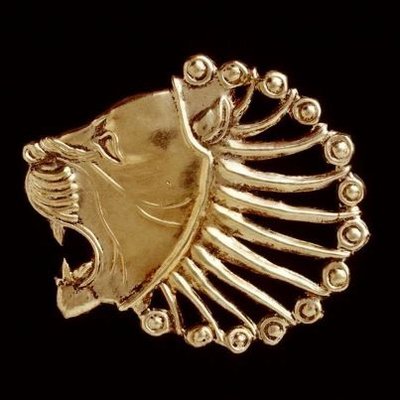
Around 4,300 years ago, in a world where Britain had no written history, a man began a journey that would one day survive the rise and fall of empires. He is known today as Amesbury Archer, one of the most remarkable prehistoric discoveries ever made in the British Isles.
He was not born on the chalk plains of southern England. Scientific analysis of his teeth revealed that his childhood was spent far from Britain, likely in the mountainous regions near the Alps of Central Europe. The chemical composition of the water he drank during childhood became permanently recorded in his body, allowing modern scientists to trace his geographic origins thousands of years after his death.
As a boy, he would have grown up in a landscape of forests, rivers, and rugged mountain terrain. Life during the Early Bronze Age required practical skill and resilience. He learned to shape flint into sharp tools, hunt efficiently, and survive in a world where knowledge of nature determined survival. Craftsmanship, especially in stone and early metalworking, was becoming increasingly important as new technologies spread across Europe.
At some point during his life, he left his homeland and traveled westward across the continent. The exact reason for his migration remains unknown. He may have been involved in long-distance trade, marriage alliances, cultural exchange, or social upheaval. He likely belonged to the expanding cultural tradition of the Bell Beaker culture, known for its distinctive pottery and early adoption of metalworking technology.
The journey he undertook was extraordinary by prehistoric standards. Traveling more than a thousand kilometers without modern roads or navigation tools, he crossed forests filled with predators, rivers without bridges, and territories inhabited by unfamiliar communities. Survival required physical endurance, social negotiation, and knowledge of travel routes passed down through generations.
Eventually, he reached what is now southern England, where the monumental stones of Stonehenge stood against the horizon. Even then, the site was already a sacred ceremonial landscape associated with ritual activity, astronomy, and social gathering.
The man chose to remain in this region. He was not buried as an ordinary individual. When he died between the ages of 35 and 45, the community around him honored him with a remarkably rich burial near modern-day Amesbury.
More than one hundred objects were placed inside his grave. Five finely crafted Beaker-style pottery vessels were arranged beside his body, reflecting the material culture of the time. Stone wrist-guards, likely associated with archery, suggested that he may have been a skilled bowman or warrior. Flint tools, copper knives, and animal remains such as boar tusks were also included, marking both practical and symbolic aspects of his identity.
Two small gold ornaments found in the burial were especially significant. These are among the earliest known examples of gold objects discovered in Britain. During the Early Bronze Age, gold was extremely rare and highly valued. Its presence in the grave strongly suggests high social status, wealth, or ceremonial importance.
Some researchers believe he may have been a metalworker involved in the introduction of bronze technology to Britain. Others suggest he could have been a long-distance trader connecting different European regions. He may also have held ritual or social authority within his community, a role supported by the prestige objects buried with him.
His skeleton also tells a more personal story of hardship. Evidence of severe infection was found in one knee, suggesting that he may have walked with difficulty or experienced chronic pain. Despite this, he lived into middle adulthood in an era when medical knowledge was extremely limited.
© Archaeology & Civilization
#drthehistories

widyamukti retweeted

The D-21 flew in the 1960s — uncrewed, high-speed stealth with Skunk Works® technology. Today, we continue to develop and fly cutting-edge uncrewed systems. Most are classified — maybe we’ll share a few photos in the next 60 years...🦨
Is this for real?? 😂

ICE Chases Protestor In Minnesota 😂😂
Readers added context they thought people might want to know
This video is AI generated, the news ticker includes several mistakes including the time apperaing as 4:06 PHM and the news station appearing as POVART which doesn't exist.
captechu.edu/blog/how-spot-…
58
widyamukti retweeted

In 2013, a Chinese businessman, Tan Youhui, hired a hitman to “take out” his competitor for $282,000. But the hitman hired another man to do the job, offering $141,000. That man then hired another hitman, who hired another hitman, who hired another hitman.
The bizarre story of Tan Youhui’s failed plot reads more like dark comedy than crime report. Hoping to eliminate a business rival, he paid a large sum to a hired killer. Instead of carrying out the job, the hitman decided to subcontract for less money, pocketing the difference.
The process repeated multiple times until, remarkably, five individuals were involved in passing the job down the chain. By the time it reached the final man, the sum had been reduced to a fraction of the original amount. Instead of committing violence, the last man approached the intended target and revealed the entire scheme. Authorities soon uncovered the conspiracy, and all those involved, including Tan, were arrested. The case became infamous in China, serving as a cautionary tale about greed, corruption, and incompetence.
In 2020, Chinese courts sentenced Tan Youhui to five years in prison, while the various hitmen received terms ranging from two to four years.
© Reddit
#archaeohistories

widyamukti retweeted

🗣️ Jürgen Klopp: "Sometimes people ask me why I am always smiling. Even after we lose a match, sometimes I’m still smiling. It’s because when my son was born, I realised that football is not life or death. We’re not saving lives. Football is not something that should spread misery and hatred. Football should be about inspiration and joy, especially for children.
I have seen what a little round ball can do for the lives of so many of my players. The personal journeys of players and so many of my boys are absolutely incredible. The difficulties I faced as a young man in Germany were nothing compared to what they had to overcome. There were so many moments when they could’ve easily given up, but they refused to quit.
They’re not gods. They just simply never gave up on their dream."


