

Spot the runner. Launch the wrapper. Collect fees! 1:1-backed tokens. Existing liquidity. 1–10% fees for creators, buyback & burn, or holder rewards.
Joined November 2026
- Tweets47
- Following2
- Followers115
- Likes20




Pinned Tweet
Discover Wrapped protocol on Ethereum mainnet, and learn how to earn fees from tokens across multiple chains, whether you are a degen, a KOL, a marketer or a CTO.

Wrapped creation is live on Ethereum, BNB Chain, Base and Robinhood Chain.
New wrappers use the updated “wrapped by wrapped.wtf” naming format, and example wrapper contracts on all four networks are source-verified.
Explore: wrapped.wtf

Wrapper creators can configure a share of trading fees for holders.
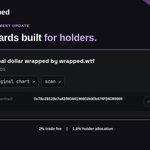
The live Base wUSDC and Robinhood wUSDG examples each have a 2% fee, with 1.4% allocated to holders.
Explore the wrappers at wrapped.wtf

2
5
129
We made wrapper trading routes easier to see.
The token page now shows whether the configured route uses a funded wrapper market or the original token liquidity route.
wrapped.wtf

3
5
115
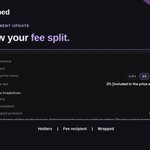
We added a fee breakdown beside the swap.
Expand it to see the holder allocation, fee recipient share and Wrapped protocol share for the selected wrapper.
wrapped.wtf

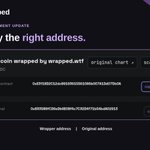
We made wrapper and original token addresses easier to copy.
Both addresses now have a copy button and confirmation on the token page.
wrapped.wtf

We have launched a small CAKE wrapper pilot on BSC.
The contracts are deployed, the website uses the new maintenance route, and real native BNB buys and sells have been confirmed. DEX Screener has also indexed the pool and displayed its price.
The pilot combines a funded wrapper market with a 10% maintenance trigger, a fee reserve, and daily spending limits. The initial deployment, funding, and test trades used 0.00264 BNB within the approved 0.005 BNB cap.
This is one deliberately small $WRAPPED pilot. Budget-limited idle maintenance is now enabled, with fresh observation history required before recovery can rebalance. Liquidity is limited, and adjustments remain subject to reference, inventory, and spending checks.
wrapped.wtf/t/?chain=bsc&a=0…

We implemented a trading route that checks the price gap after a wrapper buy or sell settles.
When the gap exceeds the configured threshold and the reference, inventory, and maintenance budget allow it, the same transaction can attempt a rebalance.
The important boundary is settlement: a rejected maintenance attempt does not need to undo an otherwise valid user trade.
This route is connected to the website for the single CAKE pilot on BSC, including native BNB buys and sells. The pilot threshold is 10%.
Bundling upkeep still costs gas. Original-market moves without wrapper trades also need a separate keeper or operator action.

We implemented hard spending limits for wrapper maintenance.
The live CAKE pilot has a 0.0003 WBNB daily maintenance cap, a 0.0002 WBNB per-execution cap, and a 300-second cooldown between successful adjustments.
The reserve is separate from trading inventory. When the available maintenance balance or spending allowance is insufficient, the controller skips upkeep rather than treating the project wallet as an unlimited subsidy.
There are both per-wrapper and shared daily limits in the budget contract.
These controls are active in the BSC pilot. They bound spending; they do not promise that a low-activity market can always afford to track the original price.

We implemented a maintenance reserve funded from one-third of the protocol fee share.
The creator and holder allocation remains unchanged. The protocol still receives 30% of collected fees, with one-third reserved for maintenance and two-thirds allocated to Wrapped buyback and burn.
For the CAKE pilot's 2% trading fee, that corresponds to 1.4% for the creator, 0.2% for maintenance, and 0.4% toward buyback and burn. The maintenance allocation comes from the existing fee, rather than an extra user charge.
The collector separates receipt-verified maintenance revenue before buyback spending. BSC maintenance-budget top-ups use only earned reserves, subject to daily and phase caps. No automatic treasury wallet top-ups are enabled.
The collection policy is live. Whether the reserved fees cover actual operating costs remains something we must measure.

We implemented a bounded native wrapper market and deployed a small funded trial on Ethereum.
The market combines a concentrated position with explicit price bounds, funded fee claims, and quotes checked against the canonical trading path.
Those pieces solve different jobs. The position provides real trading depth, the bounds restrict acceptable execution, and fee claims must be backed by assets the contract actually holds.
The live trial includes confirmed buys and sells. It remains an experimental market with limited liquidity, and automatic price synchronisation has not been enabled on Ethereum.

1
5
78
We have confirmed DEX Screener discovery for an experimental Wrapped market on Ethereum.
We deployed the trial, funded it, and executed real trades. The funded wrapper pool was then recognised by DEX Screener, giving the market an observable price through the scanner.
For $WRAPPED, this is a concrete step toward making wrapper markets easier to inspect outside our own application.
Discovery is one milestone. It does not mean automatic price maintenance is live on Ethereum, and it does not make the wrapper inherit the original token market cap.
This was a small live experiment, not an Ethereum-wide rollout.

We improved how Wrapped Explorer loads transaction history across supported chains.
Reliable history matters when you are checking whether a wrapper was created, a trade happened, or your activity has been recorded. We moved history reads behind a protected gateway and corrected caches that could preserve incomplete RPC results.
That gives Explorer a more dependable source for loading protocol activity, rather than treating a partial response as the full picture.
The reader and cache fixes are deployed. This is an improvement to finding and reviewing activity, separate from the staging indexer we are also testing.
wrapped.wtf/explore/

A creator planning to fund a weekly community event should account for changes in wrapper activity.
The fee rate stays fixed, while the amount collected depends on the transactions that occur. Setting aside part of previous payouts could help cover a quieter period.
When proposing a wrapper-funded expense, explain how you will handle a week when the collected fees fall short.
0xbe656499d5b03bc4019B8DA657F960687FeC29Ee

A community running regular events could use its wrapper payout wallet to build a public record of how trading activity helps cover costs.
Over several months, members could follow collected fees through to venue payments or tournament prizes.
That is a use we want $WRAPPED to support: communities choosing a purpose for their creator allocation and showing people what the money paid for.

A holder finds an allocation in an earlier funded epoch after a newer one has been published.
Our policy stores epochs separately. The holder can submit the proof for that earlier allocation while it remains unclaimed, and a successful claim draws from its reserved funding.
When checking rewards, review the earlier epochs associated with your wallet as well as the latest distribution.
wrapped.wtf/docs/

$WRAPPED 🤝 $POPO
A wrapped version of POPO has been created on the Wrapped protocol 💜.
wPOPO is on Ethereum with a fixed 1% wrapper fee.
Explore the wrapper:
wrapped.wtf/t/?chain=ethereu…

A community shares a wrapper address. Open our Explorer and inspect its recorded volume and fees before deciding how to participate.
Those figures give you a starting point for questions about usage. A creator explaining a treasury allocation can point members to the wrapper’s activity, then show the receipts reaching its payout wallet.
wrapped.wtf/explore

$WRAPPED 🤝 $BRETT
A wrapped version of BRETT has been created on the Wrapped protocol 💜.
wBRETT is on Base with a fixed 1% wrapper fee.
Explore the wrapper:
wrapped.wtf/t/?chain=base&a=…

Depositing 1,000 original tokens into a wrapper with a 2% fee produces 980 receipts. Redeeming all 980 at the same rate returns 960.4 originals.
This example assumes standard token transfers and excludes gas. Both actions apply the configured fee.
For someone testing $WRAPPED with tokens they already hold, calculating the complete deposit-and-redemption path helps them choose an amount for their first transaction.
wrapped.wtf/wrap/

A wallet holds 1% of a wrapper’s total supply. Its share of a funded holder epoch depends on the combined balances of the eligible wallets selected for that snapshot.
If those wallets hold 40% of total supply, that wallet represents 2.5% of their combined balance, assuming it qualifies.
Our publisher uses that eligible balance total to calculate allocations. Check the snapshot when working out your share.
