

Gator Grad, President at AML 🇺🇸🧲 . Opinions are my own not advice/endorsements by employer or investment advice.
Melbourne, FL
Joined August 2013
- Tweets15.7K
- Following1.5K
- Followers688
- Likes17K




Wade retweeted
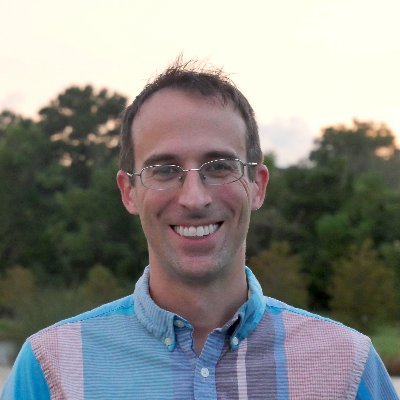
Stephen Wilson Jr. just won New Artist of the Year at the Country Music Awards.
He’s 47.
“Ten years ago I was a scientist in a lab coat and had never sung in front of anybody in my life.”
Wilson grew up in small-town Indiana. “I was very shy as a kid - still am, I guess. I didn’t talk much.”
His dad was a boxer. So Stephen and his brother were in the boxing ring all the time. He had his first fight at seven. And as he recalls: “My first stage wasn’t a stage at all. It was a boxing ring.”
He became a scientist, working in research and development at a food-science lab for the candy company Mars. For fun, he wrote songs on the side, eventually becoming good enough to write for big-time artists like Tim McGraw.
But he wouldn’t sing them. His dad always told him he was an artist. Stephen’s answer: “I don’t sing the songs, I just write them. Someone else sings them.”
In 2018, his dad died at 59. “Right afterwards, for whatever reason, this voice just kind of showed up.” He started keeping a record of what he was going through. It eventually became his debut album, søn of dad.
He was 44 when it came out. Two years later, he had his first single on country radio.
When asked about the improbable story, he goes back to his roots: “You have to be able to take a punch over and over again, literally and figuratively, and be like: ‘Is that all you got?’”
Most of us have a version of “I write them, someone else sings them.” A story about who we are that we keep defending, even when the people closest to us see something else.
After all, he was the quiet kid, the science nerd, not the singer or performer. Those stories often have a hint of truth that turns into a kind of comfort blanket. Something that prevents us from taking that step into the unknown to find out.
We treat success like it’s a conveyor belt. A linear path to a destination. It’s kind of how we’re programmed. High school to college to internship to career. And if we don’t have it figured out by 25, we’re doomed.
But reality is far messier. There are twists, turns, and fresh starts. And sometimes success meets us much later than anyone could have predicted.
There is no timeline.
The only way we find out is to take that step into the unknown. To try new things and find the courage to step up to the microphone and see what happens.
Sometimes it takes a while. And that’s okay. But eventually, take that step.
Just listen to Stephen Wilson Jr.: “In the weirdest way, it’s an answer to a prayer that I wasn’t capable of praying for.”


Wade retweeted

HORRIBLE situation unfolding in Palm Bay. Port Malabar Boulevard - the road that was JUST reopened after it washed out during the last flood is gone. It’s caving in and water is rushing over. People who live here can’t take this all over again. #floridaflooding
❤️David

“It’s like trying to get kids to compete in basketball against the NBA,” said David Abraham, principal at Materium Strata, a specialist advisory firm focused on critical mineral supply chains.
Trump claims US can ‘catch’ China within 10 months in rare earth race
scmp.com/news/china/diplomac…

38


Wade retweeted
Watching this band. Given the high water tables and super saturation of everything, it won’t take long to flood.
Wade retweeted

"I want to caution everybody." @JimCantore is live in Palm Bay, Florida, explaining how a strong El Niño pattern is fueling extreme rainfall and flooding risks across the state.
Wade retweeted

Debris lining streets in Palm Bay, FL from flooding on November 2nd w/ days of heavy rain for Florida on the way. Live w/ @JimCantore on @weatherchannel

Wade retweeted
A dangerous flooding situation is unfolding across parts of Florida. @JimCantore is LIVE with the latest on where the heaviest rain is expected and what residents should know.
Wade retweeted

In 1986, Paul Newman had a problem. His salad dressing company had accidentally made him $10 million.
He didn't want the money. He had been giving it away to different charities, but he wanted to see where it went.
So he bought 320 acres of woods in Ashford, Connecticut, and announced he was going to build a camp.
Not a luxury resort. A camp for seriously ill children. Children with cancer, sickle cell anemia, HIV, children who had never been allowed to go to a normal summer camp because they needed constant medical care.
Hollywood thought he was crazy. The insurance alone would be impossible.
He built it anyway. He named it The Hole in the Wall Gang Camp, after the gang in Butch Cassidy and the Sundance Kid. He designed every building to look like an old western town.
On June 18, 1988, the first campers arrived. Fishing, tie-dye, ghost stories, horseback riding. All for free. Families paid nothing.
Paul would show up without warning. No press, no photographers. He would sit down in the dining hall next to a kid with leukemia eating lunch and ask, "So, are we raising a little hell today?"
That became the motto of the camp: to allow sick children to "raise a little hell" - to be kids again, not patients.
He never put his name on the buildings. He never gave a speech about it.
When asked why he built it, he said: "I wanted to, as a kid, I was lucky. Most of these kids were not. I wanted to even the score a little."
What started as one camp in Connecticut became the SeriousFun Children's Network — more than 30 camps around the world. More than 1.5 million children have been there. All for free. All because a salad dressing made too much money.
He never talked about it in interviews. He just built it.
We Are Human Angels<
Authors
Awakening the Human Spirit
We are the authors of 'We Are Human Angels,' the book that has spread a new vision of the human experience and has been spontaneously translated into 14 languages by readers.
We hope our writing sparks something in you!


Wade retweeted

Hard to imagine working without you, but somehow we will, and hope to do you proud 🤍 Goodbye Dan 🥹💔

Wade retweeted
Couple pictures flying into Melbourne today. This is west of i95. No place for additional rain to go. Sooooo wet!


Wade retweeted

John Malkovich made over 100 movies, including Con Air, which grossed more than $200 million. When Bernie Madoff was arrested in 2008, Malkovich lost his entire Madoff account, reportedly worth about $2.3 million. It was pretty much everything he'd ever made.
In the video below, he describes the moment he found out.
He had just come home from directing a play in Mexico City when he saw a photo of Madoff in handcuffs.
He walked in and calmly told his wife he was going around the corner to buy a pack of cigarettes. He had quit smoking.
"We have a little problem," he told her. "Bernie Madoff just got arrested."
The court-appointed trustee later approved a claim for only $670,000, reportedly the amount he had originally put in. Everything his money had supposedly earned was gone.
At first, he says, he wanted someone to blame. Then he told himself to shut up. Most people who were ever born will never have a tenth of what he lost.
At 72, he's still working, and his new film is already getting Oscar buzz.
Do you believe a Hollywood star really suffers after losing millions, or is it nothing compared to what regular people go through?
Wade retweeted

“When the moment was big, he was at his best.”
Mike Tirico honors Dan Hicks as a talented professional, family man, and true friend.
Wade retweeted

Kelsey Grammer's father was murdered when he was 13. His sister was murdered when he was 20. He says he then walked the streets of Manhattan at night hoping someone would attack him. The men he approached steered clear.
In the video below, the man who played Frasier for 20 years explains what he was looking for in those dark corners, and why he thinks nobody gave it to him.
His father was killed in 1968. In July 1975, his sister Karen, 18, was taken from the parking lot of the Red Lobster where she worked in Colorado Springs. ABC reported that three men on a killing spree decided she could identify them.
She was stabbed 42 times, ABC reported, and crawled about 400 feet toward help. Kelsey was 20.
He says he drank heavily and got "wrapped up in cocaine for a while." ABC reported that his Cheers colleagues saw him battling it.
In 1980, two of his half-brothers died while scuba diving.
On those night walks, he says, the men he approached usually just steered clear. His guess: "He's not worth it."
Then the success came. He says Karen was gone, "and I was alive, and so I blamed myself for a long time."
Someone told him addiction usually comes from unresolved grief. He says that once he forgave himself, "it just turned off."
He says he spent about a decade going back to Colorado to ask the parole board to keep the men who killed her in prison.
In 2025 he wrote a book about her. "I spent a long time on her death and very little on her life."
If you lost someone the way he did, could you ever forgive yourself for being the one still alive?