





Bill Katz retweeted

We’re hiring an AI Engineer to scale up connectome reconstruction from expansion microscopy (ExM) datasets of fly, zebrafish and Danionella. You will work across the MIA and LICONN AI@HHMI projects at Janelia Research Campus, building high-throughput pipelines for the next generation of connectomes!
Apply here: hhmi.wd1.myworkdayjobs.com/e…

Bill Katz retweeted
(1/2) When Janelia set out to map every neuron in the fly brain in 2008, many thought it couldn’t be done. Nearly 20 years later, a complete wiring diagram of the 166,000+ neurons of the adult male fruit fly is helping to reveal the brain’s secrets: bit.ly/4zT7jPf.
Bill Katz retweeted

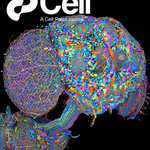
New issue is out👉cell.com/cell/current
On the cover: the complete connectome of the male adult D. melanogaster central nervous system. The cover depicts a single representative cell from each of the 11,710 neuron types in the dataset, which contains 166,700 neurons in total.

Bill Katz retweeted

Introducing a complete map of the male fruit fly brain and central nervous system, created in partnership with @HHMIJanelia. With over 166,000 neurons, this is the largest cellular brain map to date. Learn more: goo.gle/4qQTtIW

Bill Katz retweeted

Wouldn't it be great if we could not only image large connectomic volumes, but also completely reconstruct them? And if a whole mouse brain project didn't cost billions?
With the PATHFINDER preprint (biorxiv.org/content/10.1101/…), we preview a future where it doesn't have to.

Bill Katz retweeted

We built an AI model to simulate how a fruit fly walks, flies and behaves – in partnership with @HHMIJanelia. 🪰
Our computerized insect replicates realistic motion, and can even use its eyes to control its actions.
Here’s how we developed it – and what it means for science. 🧵
Bill Katz retweeted
📢Our latest preprint shows that learning global neuron shapes can help to automatically proofread connectomes and predict neuron types. biorxiv.org/content/10.1101/… Work done in collaboration with @HHMIJanelia, @srinituraga & @HarvardVCG #connectomics #AI 🧵(1/n)
Bill Katz retweeted

Our work simulating the fly visual system connectome with @jakhmack @lappalainenjk is now out in @Nature Paper (open access): nature.com/articles/d41586-0…
Research Briefing: nature.com/articles/d41586-0…


AI & the connectome are enabling scientists to do what they never thought possible: predict the activity of individual neurons without a single measurement in a living brain.
New research led by Janelia’s @srinituraga & @uni_tue’s @lappalainenjk @jakhmack janelia.org/news/researchers…


Bill Katz retweeted
HHMI is excited to announce the launch of AI@HHMI, an ambitious $500 million initiative to accelerate scientific discovery through AI-driven research.
Read more about this exciting new initiative at ai.hhmi.org.
#AIHHMI

Bill Katz retweeted

We're still rebuilding subscriptions (since Amazon abandoned them) and pushing back against the generated submissions on a daily basis. We'd like to keep doing so. The path forward requires us to keep shouting from the rooftops, so... clarkesworldmagazine.com/sub…
Thank you!

ALT Text reads Value Human Art and Writing. Subscribe. Includes the current cover of Clarkesworld. The art by by Ed Laag features a rust-colored circular waterfront building on stilts. A figure in the foreground is approaching the building in a red tripod vehicle. They are looking towards the building from the hatch on the roof.
Bill Katz retweeted

What happened last night is something that I thought was only a dream. The strongest aurora ever, above the Dutch windmills. I still can't believe this was real. Captured after midnight in The Netherlands.

Bill Katz retweeted

💡 A ‘crazy idea’ hatched by @janfunkey & colleagues during a walk in the woods & first tested by a high school student is now an innovative research tool used by scientists worldwide to predict neurotransmitters in fruit fly connectomes. 🧠
Read more 👇 janelia.org/news/high-school…

Bill Katz retweeted
🧠Janelia scientists have reached another milestone in connectomics: A wiring diagram of the fruit fly visual system.
With 50K+ neurons, the optic lobe connectome provides the fullest picture yet of one of the most important parts of the nervous system.
janelia.org/news/seeing-is-b…
Bill Katz retweeted
🦟 By infusing a virtual fruit fly with artificial intelligence, @HHMIJanelia and @GoogleDeepMind scientists have created a computerized insect that can walk and fly just like the real thing. 🤖
🔗janelia.org/news/artificial-…
Bill Katz retweeted

Have you ever done a dense grid search over neural network hyperparameters? Like a *really dense* grid search? It looks like this (!!). Blueish colors correspond to hyperparameters for which training converges, redish colors to hyperparameters for which training diverges.
Bill Katz retweeted

I thought Dune 2 was the best movie of 2024 until I watched this masterpiece (sound on).
Bill Katz retweeted

Ten months ago, we launched the Vesuvius Challenge to solve the ancient problem of the Herculaneum Papyri, a library of scrolls that were flash-fried by the eruption of Mount Vesuvius in 79 AD.
Today we are overjoyed to announce that our crazy project has succeeded. After 2000 years, we can finally read the scrolls:
This image was produced by @Youssef_M_Nader, @LukeFarritor, and @JuliSchillij, who have now won the Vesuvius Challenge Grand Prize of $700,000. Congratulations!!
These fifteen columns come from the very end of the first scroll we have been able to read and contain new text from the ancient world that has never been seen before. The author – probably Epicurean philosopher Philodemus – writes here about music, food, and how to enjoy life's pleasures. In the closing section, he throws shade at unnamed ideological adversaries – perhaps the stoics? – who "have nothing to say about pleasure, either in general or in particular."
This year, the Vesuvius Challenge continues. The text that we revealed so far represents just 5% of one scroll.
In 2024, our goal is to from reading a few passages of text to entire scrolls, and we're announcing a new $100,000 grand prize for the first team that is able to read at least 90% of all four scrolls that we have scanned.
The scrolls stored in Naples that remain to be read represent more than 16 megabytes of ancient text. But the villa where the scrolls were found was only partially excavated, and scholars tell us that there may be thousands more scrolls underground. Our hope is that the success of the Vesuvius Challenge catalyzes the excavation of the villa, that the main library is discovered, and that whatever we find there rewrites history and inspires all of us.
It's been a great joy to work on this strange and amazing project. Thanks to Brent Seales for laying the foundation for this work over so many years, thanks to the friends and Twitter users whose donations powered our effort, and thanks to the many contestants whose contributions have made the Vesuvius Challenge successful!
Read more in our announcement: scrollprize.org/grandprize

Bill Katz retweeted

Google Research is making exciting advances on understanding how our brains work & how we think. Learn about our efforts to map the brain’s neural connections in this Research@ NYC lighting talk hosted by Viren Jain, Sr Staff Research Scientist at Google →goo.gle/3SbSClk