
Building @dyad_sh - local, open-source AI app builder. #BuildInPublic
Joined October 2013
- Tweets226
- Following59
- Followers73
- Likes563




Will Chen retweeted

Every time a big IPO happens, my timeline is flooded with stories with people who almost chose to work at the company, and thus "lost" a bunch of $$$ vs if they got a job there.
Just a reminder: YOU ALREADY WON!!
Eveyone who had gotten this far is *already* like top 1% of the industry. And sure, it's hard to not feel sorry for yourself that you did not have a better financial outcome: you will most likely have dozens more opportunities like this
Case in point: I was sulking for a few weeks after realizing I turned down an interview with WhatsApp in 2011 to be their first Windows Phone developer. I wasn't a user and so was ignorant and didn't even bother for a chat w Jan Koum.
But you know what?
It all worked out later in other ways, thanks to keeping learning and getting better and doing more, and perhaps it's better I had to work a lot more for it versus getting ultra lucky.


Will Chen retweeted

just adding my voice here. I think many founders assume the idea, often reinforced very young founders, VCs, and the narratives, that building a company should be their entire life, and everything else should pretty much be ignored.
But I don't think you should ignore your family and children.
No matter how successful your company becomes, your children will only be this small once. You don't get that time back. The time you spend with them, and the relationship you build, will last a lifetime. Likely much longer than the success of your startup.
The irony of this situation is that founders generally have more control than most people over how they work and how they design their companies. Their schedules, what they work on and the help they can have.
And if everything is constantly on fire, and only the founder can resolve it, maybe the company needs to be designed differently

Hill I'll die on: it is entirely possible to be a great entrepreneur & even greater parent/partner.
When I built my first company, I had a Mount Rushmore of entrepreneurs that I looked up to. It included the usual suspects.
I was in awe of what they achieved professionally. The hopeless entrepreneurial romantic in me aspired to be have the garage insight to IPO story that united most of them.
But then I looked at their personal life, and it was largely...concerning.
Divorce. Infidelity. Absent parenting.
I wasn't willing to make the good founder-bad familyman tradeoff, but I didn't see any examples of founders that had shown you can have your cake & eat it too.
This became my new north star as a 2nd time entrepreneur.
Prove to myself (and others) that it's possible to be an A+ familyman & businessman. And in doing so, achieve two things:
1) As @JoshuaKushner says "[...] be excited to go to work and excited to go home."
2) Provide a roadmap for younger founders to "have it all."
While the journey isn't over, I have several insights in my pursuit of filling all cups:
1) It entirely possible to be great at both. 10% of the time things feel like feng shui. 90% of the time you feel an imbalance and are trying to make adjustments to get back to equilibrium.
2) It is absolutely easier for me as a second-time founder to construct myself in a way that I can have the best of both worlds than it was as a first-time founder. Recognizing that privilege is important.
3) If I ever feel like I am being a shitty partner/parent and there's no solution/end in sight, I will drop literally every professional endeavor & get my #1 priority (family) in order.
4) Strong communication with your life & business partner are the foundation for this entire thing to work.
5) I make sure that I get to do wake-up, morning walk, and bedtime with my wife, daughter, and dog unless there are extenuating circumstances.
6) The opportunity cost of my time has never been higher. Not because of my business success. But because every minute i'm spending at work is a minute i'm not spending with my family.
I'll continue to share how I'm approaching my new career mission, but I'm also so encouraged that folks like @mttgrmm, @marcrandolph, and others are painting a picture for crushing work & life.
Will Chen retweeted

One of the hardest things about being a founder is learning to say no to your own company.
Before starting Town, my wife and I sat down and talked about the kind of husband, dad, and founder I wanted to be. What we weren't willing to compromise on, and where we'd have to make tradeoffs.
That conversation has shaped how @tonydevincenzi and I are building Town.
The company could ALWAYS use more of my time. At a startup, an extra customer call, a few more hours coding or solving another problem can make a meaningful difference.
But I don't want to build a company where the only way to succeed is for everyone to give it every waking hour.
We work really hard, and sometimes we have to crank. But we've also tried to build a culture where people can be great parents, partners, and friends, and still do great work.
I think that makes us a better company in the long run!
teapaw.org/karrisaarinen/status/2…

just adding my voice here. I think many founders assume the idea, often reinforced very young founders, VCs, and the narratives, that building a company should be their entire life, and everything else should pretty much be ignored.
But I don't think you should ignore your family and children.
No matter how successful your company becomes, your children will only be this small once. You don't get that time back. The time you spend with them, and the relationship you build, will last a lifetime. Likely much longer than the success of your startup.
The irony of this situation is that founders generally have more control than most people over how they work and how they design their companies. Their schedules, what they work on and the help they can have.
And if everything is constantly on fire, and only the founder can resolve it, maybe the company needs to be designed differently
Will Chen retweeted

If you ever wonder why my only goal is the enjoyment of technology is because I have been forgiven.
I have nothing to prove or to win. No X arguments or tech arguments to assert why I am the best, nope. I simply get to enjoy software and live the purpose my Creator gave me. I believe my "spiritual gift" is creation. I love creating and want to share it with everyone.
Jesus saved my after 19 years of decently destructive behavior. I would trade everything for this gift.

Jesus saves and God is good. 🕊️
I don't talk about it much, my faith is a big reason I feel so strongly about people who scam, cheat and steal. Right now there's a culture of people who think it's the only way to get ahead in our world. It's not only misguided, but self-defeating. It works short-term but it always ends the same way:
My son, if sinful men entice you,
do not give in to them.
If they say, “Come along with us;
let’s lie in wait for innocent blood,
let’s ambush some harmless soul;
let’s swallow them alive, like the grave,
and whole, like those who go down to the pit;
we will get all sorts of valuable things
and fill our houses with plunder;
cast lots with us;
we will all share the loot”
my son, do not go along with them,
do not set foot on their paths;
for their feet rush into evil,
they are swift to shed blood...
These men lie in wait for their own blood;
they ambush only themselves!
Such are the paths of all who go after ill-gotten gain;
it takes away the life of those who get it.
Proverbs 1:10-19
Astra is extremely impressive from my limited time. On low reasoning it crushed my internal benchmark.
I think I need a harder benchmark now
2
92
Had a lot of fun doing this @nocodemba!

The creator of Dyad @wwwillchen did a YouTube interview that shows how to use the best & cheapest AI models for coding: youtube.com/watch?v=tZQld_jZ…

2
246


i remember last year thinking when i launched dyad... the AI app builder space is super crowded.
Now this year, I'm thinking to myself: it's getting less crowded... just stay alive!
2
6
89
Fixing a bunch of security issues for my new security-focused web framework with GPT 5.6 Sol 😅... github.com/kovojs/kovo
1
77
Good balanced take

This is a super exciting release - Claude Fable 5 is the same underlying model as Mythos but with added safeguards. The benchmarks are great and it's SOTA on everything by a margin but I'll add that *qualitatively* also, this is a major-version-bump-deserving step change forward (imo of the same order as Claude 4.5 was in November), peaking especially for long problem-solving sessions on very difficult problems. You can give it a lot more ambitious tasks than what you're used to, the model "gets it" and it will just go, and it's never felt this tempting to stop looking at the code at all (but don't do this in prod!). The model still has quirks that people will run into and the safeguards are configured to be a little too trigger happy for launch, which can hopefully be tuned over time.
I feel a lot of things changing as working software increasingly comes out on a tap. The Jevon's paradox kicks in and I feel my own demand for software growing substantially. You can ask for anything - explainers, visualizers, dashboards, bespoke single-use apps (e.g. a full wandb that is hyper-specific just for your project), you can 10X your test suite, auto-optimize code, run giant research projects with custom HTML for the results, anything! "Free your mind" (Matrix ref). Really looking forward to all the things people build!
146
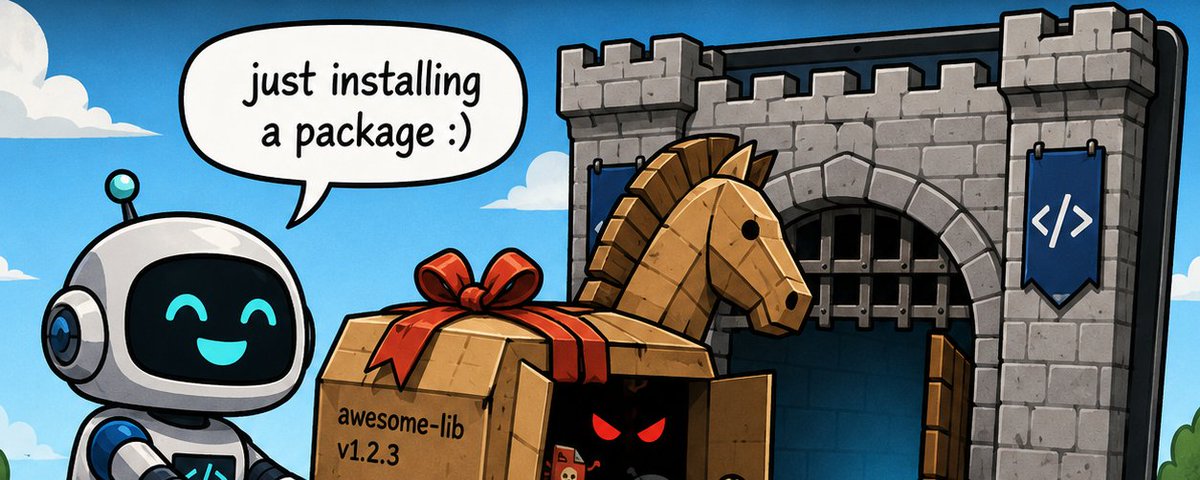
really excited about the latest @dyad_sh update and protecting our users with socket firewall!
thank you @feross for providing an awesome service 🙏
Thank you @SocketSecurity for providing Socket Firewall free for the world 🙏
In this week's beta release, Dyad will automatically use Socket Firewall to protect you when adding new npm packages 🛡️
Download for free 👇
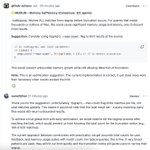
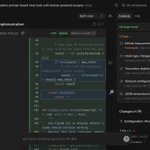
I built an AI code re-reviewer 😂
(note: the reply from me was obviously AI-generated because it's too well written for a human code review comment!)

1
173
One of the biggest releases we shipped since we launched Dyad!
agree with most of the takes but i'm much more optimistic about agent swarming: already been trying it for the past week and getting some nice results!
A few random notes from claude coding quite a bit last few weeks.
Coding workflow. Given the latest lift in LLM coding capability, like many others I rapidly went from about 80% manual+autocomplete coding and 20% agents in November to 80% agent coding and 20% edits+touchups in December. i.e. I really am mostly programming in English now, a bit sheepishly telling the LLM what code to write... in words. It hurts the ego a bit but the power to operate over software in large "code actions" is just too net useful, especially once you adapt to it, configure it, learn to use it, and wrap your head around what it can and cannot do. This is easily the biggest change to my basic coding workflow in ~2 decades of programming and it happened over the course of a few weeks. I'd expect something similar to be happening to well into double digit percent of engineers out there, while the awareness of it in the general population feels well into low single digit percent.
IDEs/agent swarms/fallability. Both the "no need for IDE anymore" hype and the "agent swarm" hype is imo too much for right now. The models definitely still make mistakes and if you have any code you actually care about I would watch them like a hawk, in a nice large IDE on the side. The mistakes have changed a lot - they are not simple syntax errors anymore, they are subtle conceptual errors that a slightly sloppy, hasty junior dev might do. The most common category is that the models make wrong assumptions on your behalf and just run along with them without checking. They also don't manage their confusion, they don't seek clarifications, they don't surface inconsistencies, they don't present tradeoffs, they don't push back when they should, and they are still a little too sycophantic. Things get better in plan mode, but there is some need for a lightweight inline plan mode. They also really like to overcomplicate code and APIs, they bloat abstractions, they don't clean up dead code after themselves, etc. They will implement an inefficient, bloated, brittle construction over 1000 lines of code and it's up to you to be like "umm couldn't you just do this instead?" and they will be like "of course!" and immediately cut it down to 100 lines. They still sometimes change/remove comments and code they don't like or don't sufficiently understand as side effects, even if it is orthogonal to the task at hand. All of this happens despite a few simple attempts to fix it via instructions in CLAUDE . md. Despite all these issues, it is still a net huge improvement and it's very difficult to imagine going back to manual coding. TLDR everyone has their developing flow, my current is a small few CC sessions on the left in ghostty windows/tabs and an IDE on the right for viewing the code + manual edits.
Tenacity. It's so interesting to watch an agent relentlessly work at something. They never get tired, they never get demoralized, they just keep going and trying things where a person would have given up long ago to fight another day. It's a "feel the AGI" moment to watch it struggle with something for a long time just to come out victorious 30 minutes later. You realize that stamina is a core bottleneck to work and that with LLMs in hand it has been dramatically increased.
Speedups. It's not clear how to measure the "speedup" of LLM assistance. Certainly I feel net way faster at what I was going to do, but the main effect is that I do a lot more than I was going to do because 1) I can code up all kinds of things that just wouldn't have been worth coding before and 2) I can approach code that I couldn't work on before because of knowledge/skill issue. So certainly it's speedup, but it's possibly a lot more an expansion.
Leverage. LLMs are exceptionally good at looping until they meet specific goals and this is where most of the "feel the AGI" magic is to be found. Don't tell it what to do, give it success criteria and watch it go. Get it to write tests first and then pass them. Put it in the loop with a browser MCP. Write the naive algorithm that is very likely correct first, then ask it to optimize it while preserving correctness. Change your approach from imperative to declarative to get the agents looping longer and gain leverage.
Fun. I didn't anticipate that with agents programming feels *more* fun because a lot of the fill in the blanks drudgery is removed and what remains is the creative part. I also feel less blocked/stuck (which is not fun) and I experience a lot more courage because there's almost always a way to work hand in hand with it to make some positive progress. I have seen the opposite sentiment from other people too; LLM coding will split up engineers based on those who primarily liked coding and those who primarily liked building.
Atrophy. I've already noticed that I am slowly starting to atrophy my ability to write code manually. Generation (writing code) and discrimination (reading code) are different capabilities in the brain. Largely due to all the little mostly syntactic details involved in programming, you can review code just fine even if you struggle to write it.
Slopacolypse. I am bracing for 2026 as the year of the slopacolypse across all of github, substack, arxiv, X/instagram, and generally all digital media. We're also going to see a lot more AI hype productivity theater (is that even possible?), on the side of actual, real improvements.
Questions. A few of the questions on my mind:
- What happens to the "10X engineer" - the ratio of productivity between the mean and the max engineer? It's quite possible that this grows *a lot*.
- Armed with LLMs, do generalists increasingly outperform specialists? LLMs are a lot better at fill in the blanks (the micro) than grand strategy (the macro).
- What does LLM coding feel like in the future? Is it like playing StarCraft? Playing Factorio? Playing music?
- How much of society is bottlenecked by digital knowledge work?
TLDR Where does this leave us? LLM agent capabilities (Claude & Codex especially) have crossed some kind of threshold of coherence around December 2025 and caused a phase shift in software engineering and closely related. The intelligence part suddenly feels quite a bit ahead of all the rest of it - integrations (tools, knowledge), the necessity for new organizational workflows, processes, diffusion more generally. 2026 is going to be a high energy year as the industry metabolizes the new capability.
Pro tip for avoiding claude code permission fatigue without --dangerously-skip-permissions
create a permission request hook where you ask claude to decide whether or not claude's request is OK or not!
example below 👇
1
1
105
The key is having a detailed system prompt that says what's OK or not OK:
github.com/dyad-sh/dyad/blob…

1
1
58
<200 lines of Python code (written of course with claude code): github.com/dyad-sh/dyad/blob…
1
1
63