

a.k.a. "shirty" ⚔️ لا اله الا الله 🗝️ Substack Link: https://xitter.cf/t.co/BL2uR7RL6m
From The Seat of the Empire
Joined November 2024
- Tweets1.5K
- Following59
- Followers468
- Likes2.1K



Alyasa' retweeted

🔹Does the Qur'an make a mistake in its two retellings of the good news of Yahya?🔹
An analysis by Dr Fadel Samarrai ... 🧵

✅ Challenge accepted.
The Quran, considered “perfect, divine, and free of contradictions” by Muslims, is nevertheless a contradictory work containing glaring human errors. Here is just ONE SINGLE EXAMPLE (which, incidentally, involves no fewer than three contradictions!), a more in-depth analysis of which can be found in my book 100 Contradictions and Scientific Errors in the Quran.
In the Quran, Allah sometimes recounts the same historical event twice, in two different surahs, as when He describes, in two different places in the Quran (Surah 3 and Surah 19), the moment when He has His angels announce to Zechariah that he will have a son: John. However, the human author hiding behind Allah's pen made the mistake, in each of these two surahs, of describing this event using verbatim quotations, that is, dialogues, and more specifically, statements made in the first person. Indeed, a perfect God who knows everything—and therefore knows the exact words spoken during a specific historical event—should not present TWO CONTRADICTORY VERSIONS OF ONE AND THE SAME FIRST-PERSON STATEMENT, which He should quote identically whenever He reproduces it in different surahs of the Quran.
So, what did Zechariah reply when Allah conveyed to him the announcement of John's birth? According to verse 40 of Surah 3, Allah states that Zechariah, surprised, replied: “My Lord, how will I have a boy when I have reached old age and my wife is barren?” Yet, in verse 8 of Surah 19, Allah states that Zechariah, at that very same moment, said: “My Lord, how will I have a boy when my wife is barren and I have reached extreme old age?” These two Quranic quotations, from Surahs 3 and 19, supposedly reproduce the same words spoken by Zechariah during one single, specific historical event. They should therefore have been identical, word for word. Yet these two quotations reverse the order of the two arguments, while also differing by an adjective that appears in one version but is absent from the other.
You must answer these three simple and binary questions to demonstrate that Allah does not contradict Himself in the Quran:
➜ 1. When Zechariah, surprised by the announcement Allah had conveyed to him, replied, did he say “I have reached old age” or “I have reached EXTREME old age”?
➜ 2. And did Zechariah mention his old age BEFORE or AFTER mentioning his wife's barrenness?
The factual and historical account presented in Surah 3 contradicts and invalidates the one presented in Surah 19, even though both are supposedly equally divine and truthful.
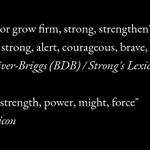
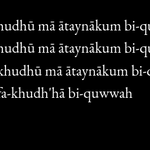
Furthermore, what answer did Zechariah receive to his request? Here again, there is a contradiction! The divine response that follows is not quite the same in the two accounts. For while, in verse 41 of Surah 3, Allah indicates that the response begins with “Your sign is that you will not be able to speak to the people for three days” (أَيَّامٍ / ayyāmin), the version of the beginning of the response in verse 10 of Surah 19 is “Your sign is that you will not be able to speak to the people for three nights” (لَيَالٍ / layālin). Did Allah therefore have two different recollections of the dialogue with Zechariah recorded in Surahs 3 and 19 of the Quran?
➜ 3. So which was the correct expression addressed to Zechariah: “three days” or “three nights”?
The issue is not whether “three days” and “three nights” are equivalent in duration. These are supposed to be verbatim quotations describing one and the same specific statement. We should therefore find exactly the same words in both versions, in Surah 3 and Surah 19. The human author of the Quran made the mistake of recounting the same historical event multiple times while including first-person dialogue. And I have found other contradictions of the same kind in the Quran: involving Moses, Abraham, Mary the mother of Jesus, and others. I analyze them all in the chapter of my book 100 Contradictions and Scientific Errors in the Quran devoted to narrative contradictions.
Allah, who “neither errs nor forgets” (Surah 20, verse 52), should be capable of remembering His exact words, word for word, and therefore reproducing them word for word. Allah should not be imprecise or have two different recollections of the exact words He heard or spoke during one and the same event.

Alyasa' retweeted

🚨Nov. 12th @iwiltrytobegood’s article on The Muhammadan Reality, exploring how creation reflects God’s Most Beautiful Names, how worship fulfills our purpose, and how the Prophet ﷺ represents the highest realization of what humanity was created to be.


Alyasa' retweeted

This is a gross misunderstanding. I think you should hold yourself accountable to the same standard you expect for Islamic theologians in dealing with Christianity and you should go learn about the distinction a bit more xitter.cf/orthodox22790/status/2…

Even when I was Muslim a couple of years ago, and my heart was gradually being drawn, by the Grace of God, towards the truth of Christianity, I was always astonished by the inherent ignorance displayed by the ʿUlamāʾ (Islamic scholars) regarding Orthodox Christian theology, an ignorance arguably rooted, at least in part, in the Qur’ān itself, particularly Sūrat al-Nisāʾ 4:171.
In their ignorant slander because of our belief as Christians in the Creator’s threeness [tathlīth], which with it preserves the doctrine of true unity [tawḥīd], falsely declare that the Christians profess three separate gods [thalāth āliha mutafarraqa] and three different lords [thalāthat arbāb mukhtalifa], or that we believe in more than one cause for creation [akthar min ʿilla wāḥida], & also falsely state that we believe they're multiple essences [kathīrat al-dhawāt] in God, without careful consideration, examination, & accuracy of their speculation & enquiry, & without reflecting on whether the argument given from their scholars is indeed correct or not, and then also not assuring themselves to care about going back to the people of the book to be informed of its contents, meaning & philosophical soundness.
It reminds me of a saying by "Shaykh Al Islam", & the so-called "proof of Islam" named "Uṣūl al-dīn" (Principles of Religion) by Shaykh Al-Ghazali written as thus :
"condemning doctrines before comprehending them is absurd, and finding fault with their proponents without expertise in their intentions is a sin and error."
It's because of such decietful arrogance that I decided to learn more-so in-depth what the Christians themselves actually believed, read their Church Fathers, to decide if it was true or not, & then became a Christian because of its soundness.
“"And declare, 'The truth has come and falsehood has vanished. Indeed, falsehood is bound to vanish” (Surah Al-Isra, 17:81).
Why is it so difficult for Christian apologists to understand the nuance between historical and scriptural data?


Alyasa' retweeted

"The Machine" has been activated ... a sophisticated cyborg sent back in time to ruin the lives of whose who have mis-transliterated measurement units and/or gotten narrators who shared every single name in common but who are actually different people mixed up...

You'll notice less hateful comments under descriptive posts like this one because Islamaphobes struggle to identify who the Prophet ﷺ truly is.

Alyasa' retweeted

He was born an orphan; lost his mother at the age of six; forced into exile; lost six of his seven children. He is still the most beloved to God, the best creation to ever walk this earth.
Alyasa' retweeted

The Quran Reveals the ORIGINAL Eucharist? (new vid out NOW) youtube.com/watch?v=6PHD3c_R…

Alyasa' retweeted
🧵 Radical Enlightenment thinkers were generally more receptive to rational Islamic philosophy and ethics than their moderate counterparts, they saw value in the Prophet Muhammad’s teachings that aided their battles against the authorities of European Christian orthodoxy. (1/25)


Alyasa' retweeted
I’d love to host a panel on Dhul Qarnayn with people representing all different opinions and perspectives on the subject. It’s a shame we haven’t done this yet, but I think a respectful discussion could be a genuinely fruitful step forward. Just not sure who’d be down lol.
Alyasa' retweeted

Re: Health Update
Worry & concern, I do in fact have another lung infection, it's the same lung I developed pneumonia in this year, which almost led to my death in January.
Struggling to breathe, constant coughing. inshaʾAllāh I'll pull through this, please keep me in your duʿāʾs.

Alyasa' retweeted
Interestingly, Islam has a very pragmatic political theory. The Rashidun caliphs very openly adopted Persian and Byzantine admin, tax, and military structures. Umar (RA)’s diwan came straight from the Sassanids. Taking what currently works and running with it is the tradition.

The majority of muslim nations rely heavily on western-dominated financial institutions like the IMF and World Bank and on Western consumer markets. So your Geopolitical manual intended to guarantee supreme political and economic success should theoretically prevent such systemic dependency 🤷🏽♂️. Bro, islamic nations can't even prevent western military interventions, regime changes or political hegemony. So it seems the Quran can't inherently provide material power required for modern deterrence
Alyasa' retweeted

Interestingly, Shaykh Ibn ʿUthaymīn held that we cannot categorically affirm that the Prophet is the best of all creation, since no explicit textual evidence establishes this. He does tawaqquf on this issue. Thanks to Sh. YQ for finding this for me.


Alyasa' retweeted

Wow so @InspiringPhilos basically lies about all the studies he screen shotted this week.

Without lies Christianity dies...
It seems that Inspiring Polytheism, did not read the study he shared properly.
Jonathan Fox explicitly states in his study: "The results show that there is INSUFFICENT evidence to support the stereotype of the Islamic militant." (Is Islam More Conflict Prone than Other Religions? A Cross-Sectional Study of Ethnoreligious Conflict, Jonathan Fox, p. 1.)
Fox also explains that similar stereotypes of religious violence can be applied to other religious groups. He specifically mentions Christian fundamentalists who violently oppose abortion, Jewish settlers, and the conflict between Catholics and Protestants in Northern Ireland. (Is Islam More Conflict Prone than Other Religions? A Cross-Sectional Study of Ethnoreligious Conflict, Jonathan Fox, p. 2.)
Although Fox finds that religion plays a more prominent role in conflicts involving Islamic ethnoreligious groups, he does not conclude that Muslims are inherently more militant or inclined towards violence. His findings distinguish the importance of religion in particular conflicts from the stereotype that Muslims are naturally more violent. (Is Islam More Conflict Prone than Other Religions? A Cross-Sectional Study of Ethnoreligious Conflict, Jonathan Fox, p. 1.)
As for Monica Duffy Toft's study, Getting Religion Right in Civil Wars, her research does not establish that Islam inherently causes violence. Her principal statistical finding concerns politically excluded Arab Muslim populations and a particular category of religious civil war. She explicitly states: "There is no evidence of Arab Muslim exceptionalism for other kinds of civil wars." (Getting Religion Right in Civil Wars, Monica Duffy Toft, p. 1624.)
Toft herself distinguishes this finding from a general association between Islam and religious warfare. Although she concludes that religion can motivate rebellion, her research does not show that Islamic teachings inherently encourage violence, as IP attempts to suggest. In fact, she explains that the findings concern Arab Muslim populations in particular, rather than Muslims generally. (Getting Religion Right in Civil Wars, Monica Duffy Toft, pp. 1624, 1626.)
She also discusses how political leaders and armed organisations compete to present themselves as the most credible defenders of religion, thereby gaining political support and resources. (Getting Religion Right in Civil Wars, Monica Duffy Toft, p. 1626.)
She provides two relevant examples.
Iraq, 2003: Following Saddam Hussein's removal, the armed opposition initially consisted largely of former members of the Ba'ath Party. Toft explains that militant religious organisations subsequently became increasingly influential within the insurgency. (Getting Religion Right in Civil Wars, Monica Duffy Toft, p. 1626.)
Libya, 2011 to 2014: Following Muammar Gaddafi's removal, political instability and competition created conditions in which several militant Islamist organisations emerged, including the Islamic State. (Getting Religion Right in Civil Wars, Monica Duffy Toft, p. 1626.)
Turning to Seung Whan Choi and Davis Brown's empirical study, the authors explicitly acknowledge: "Despite Islam itself not being necessarily violence-prone", before discussing how militant organisations may exploit religion to justify political objectives. (Islam and Suicide Terrorism: An Empirical Analysis, Seung-Whan Choi and Davis Brown, p. 4.)
They also conclude: "Our overall analysis suggests that Islam is more than epiphenomenal but less than causal." (Islam and Suicide Terrorism: An Empirical Analysis, Seung-Whan Choi and Davis Brown, p. 11.)
Furthermore, they explicitly acknowledge: "We cannot claim that Islam is a direct cause of the deadliest political violence." (Islam and Suicide Terrorism: An Empirical Analysis, Seung-Whan Choi and Davis Brown, p. 11.)
In other words, although the researchers find an association between Islam and particular patterns of suicide terrorism, they cannot demonstrate that Islam itself directly causes these attacks. Which is what IP tried to make it out to be.
Regarding Davis Brown's study, The Influence of Religion on Interstate Armed Conflict: Government Religious Preference and First Use of Force, 1946–2002, the research identifies relationships between government religious preferences and the likelihood of initiating armed conflict.
However, Brown acknowledges that the study does not establish why these relationships differ between religions. He explicitly states: "No explanation is offered for the different results herein", before discussing several possible explanations, including religious identity, religious commitment, political circumstances and religious teachings concerning warfare. (The Influence of Religion on Interstate Armed Conflict: Government Religious Preference and First Use of Force, 1946–2002, Davis Brown, p. 817.)
Consequently, these studies does not establish that Islamic teachings are responsible for the observed relationship.
This raises an important question: Why do countries with a Muslim majority account for a disproportionate share of armed conflict???
Nils Petter Gleditsch and Ida Rudolfsen address this question in their study Are Muslim Countries More Prone to Violence? (2016). They discuss several possible explanations for the greater concentration of armed conflict in Muslim countries.
Colonialism: European colonial powers imposed artificial borders that contributed to territorial disputes and subsequent conflicts. (Are Muslim Countries More Prone to Violence?, Nils Petter Gleditsch and Ida Rudolfsen, p. 5.)
Foreign interventions: Military interventions in Afghanistan, Iraq and Libya contributed to political instability and armed conflict. The authors suggest that the increase in conflicts after 2001 may partly reflect reactions to interventions by major powers. (Are Muslim Countries More Prone to Violence?, Nils Petter Gleditsch and Ida Rudolfsen, pp. 5, 6.)
Political repression: Authoritarian governments, state repression and political instability may contribute to the emergence and continuation of violence. (Are Muslim Countries More Prone to Violence?, Nils Petter Gleditsch and Ida Rudolfsen, p. 6.)
Economic conditions: Lower levels of economic development, dependence on oil revenues and large young populations are among the factors associated with greater conflict. (Are Muslim Countries More Prone to Violence?, Nils Petter Gleditsch and Ida Rudolfsen, p. 6.)
Sectarian conflicts: Fighting between Sunni and Shia groups contributes to violence in parts of the Muslim world. The authors also compare this phenomenon with historical conflicts between Catholics and Orthodox Christians. (Are Muslim Countries More Prone to Violence?, Nils Petter Gleditsch and Ida Rudolfsen, p. 6.)
Declining conflicts elsewhere: Muslim countries account for a greater proportion of global civil wars partly because the overall number of civil wars elsewhere declined considerably after the Cold War. Nils and Ida explain that this does not necessarily indicate a substantial increase in the absolute number of civil wars involving Muslim countries. (Are Muslim Countries More Prone to Violence?, Nils Petter Gleditsch and Ida Rudolfsen, pp. 1, 3.)
Most importantly, Gleditsch and Rudolfsen reference Karakaya's 2015 study, which found that the increased conflict proneness of Muslim countries disappeared after accounting for economic development, political repression, oil dependence and large young populations. (Are Muslim Countries More Prone to Violence?, Nils Petter Gleditsch and Ida Rudolfsen, p. 6.)
This is particularly significant because it demonstrates that the statistical association between Muslim countries and civil war can disappear when relevant political, economic and demographic variables are taken into account.
Conclusion
None of these studies proves that Islam itself causes violence. Although several identify statistical associations between religion and particular forms of conflict, these findings should not be confused with evidence that Islamic teachings inherently produce violence.
Choi and Brown explicitly acknowledge that they cannot establish Islam as a direct cause of the deadliest political violence. (Islam and Suicide Terrorism: An Empirical Analysis, Seung-Whan Choi and Davis Brown, p. 11.)
Furthermore, Gleditsch and Rudolfsen identify numerous political, historical and economic explanations for the concentration of armed conflict in Muslim countries. They also reference Karakaya's findings, which show that the association between Muslim countries and civil war disappears after controlling for several important factors. (Are Muslim Countries More Prone to Violence?, Nils Petter Gleditsch and Ida Rudolfsen, pp. 5, 6.)
Therefore, presenting these studies as proof that Islam itself is inherently violent MISREPRESENTS what their findings actually establish.


Alyasa' retweeted

The fact that Mike would attempt an argument this lame, connecting Dawah bickering to global conflict, shows any of his conclusions on academic research shouldn't be trusted.

Despite the fact that this is most likely AI-generated (which is hilarious), you should not be surprised that the Dawahbros are constantly at each other's throats. Whether it is Jake Brancatella fighting with Libyano, or Daniel Haqiqatjou fighting with Adnan Rashid, or the Warner fighting with Maleek, you must remember this is a result of Islam.
Multiple independent studies show Islam is conflict-prone. It produces more interstate armed conflicts, civil wars, persecutions, and terrorist attacks. The dawah bros constantly bickering and fighting is just another manifestation of Islam's conflict-prone nature. Imagine if these guys were fighting but had real power.
This is one among many reasons we have to prevent Islam from growing. Islam would cause so much more harm to the world if it were the dominant force today. Thank God that Western countries, which are heavily influenced by Christianity, are dominant.


Alyasa' retweeted

As a rule of thumb, when addressing Hadiths that appear to contradict empirical observation, well-attested history or sound rational principles, the scholars first emphasized a thorough textual analysis before drawing definitive conclusions.

ALT Sharh Mushkil al-Athar by Imam Tahawi (d.933 CE)