
Eats shoots and leaves, not necessarily in that order || Filmmaker/DP/Videographer from Hong Kong || Appalled by our response to Covid-19 & climate change
- Tweets31.4K
- Following3.6K
- Followers830
- Likes177K






ALT The patient was immunocompromised, which made them more vulnerable to infection and severe disease, and unfortunately died. My heartfelt condolences to their loved ones.


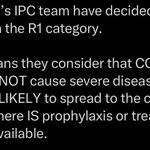
ALT Scotland’s IPC team have decided to place COVID in the R1 category. That means they consider that COVID: ▪️does NOT cause severe disease ▪️is UNLIKELY to spread to the community ▪️and there IS prophylaxis or treatment readily available.


ALT What motivated you to write Healthy Scepticism? I had a formative experience with healthcare personally after my brother died suddenly from a genetic heart condition. This led me on my own diagnostic odyssey to see if I had the same condition. Although I had a public health degree and had worked in research for several years, I found the experience challenging. I thought I was asking reasonable questions only to be told repeatedly, “No that’s not right”. It wasn’t that the doctors were bad people, it was more about how the system operates. That experience sparked my interest in scepticism as a historical phenomenon, and how it continues to shape healthcare today.

ALT When the covid-19 lockdowns began, I saw real world examples of dispossession, doubt, and distrust emerging, and I felt I had something to contribute to the conversation. I wondered what healthcare history would look like if it were told through the perspective of medicine’s critics—what they challenged, why they challenged it, and what that reveals about how healthcare functioned in their time. With funding from the Wellcome Trust, I developed these ideas into a research project, also called Healthy Scepticism, tracing healthcare sceptics from the early 20th century. That project eventually became this book, which looks at historical and contemporary examples of scepticism of medicine, why those beliefs have persisted over time, and what that reveals about some of the failures of our health systems.


ALT The Disconnect However, research suggests long COVID may be underdiagnosedopens in a new tab or window. Millions of Americans are thought to be sufferingopens in a new tab or window but not receiving appropriate clinical careopens in a new tab or window. Furthermore, even now, well after the acute phase of the COVID pandemic has passed, an estimated 30,000 Americansopens in a new tab or window are newly diagnosed with long COVID each year. But this is far fewer than expected, based on 2023 dataopens in a new tab or window. Thus, long COVID appears to have become a hidden cause of disease and disability.

ALT When research suggests that as many as one in six patientsopens in a new tab or window with COVID-19 may develop post-acute sequelae but those statistics are inconsistent with what doctors are reporting, many start to deny the seriousness of long COVID. This, in turn, lays the groundwork for an inadequate response from policymakers. In fact, in February 2025, the Trump administration endedopens in a new tab or window the Secretary's Advisory Committee on long COVID and closedopens in a new tab or window the Office of Long COVID Research and Practice.

ALT Why Understanding the Burden of Long COVID Matters More than $1.6 billionopens in a new tab or window has been invested in long COVID research in the U.S. Millions more have been invested to expand access to careopens in a new tab or window for patients with long COVID, including a few specialized clinics. Still, research has estimated that long COVID receives only a fraction of the fundingopens in a new tab or window warranted by the level of disability it causes. Advocates continue to call for substantially more fundingopens in a new tab or window, particularly given the $3 trillion estimated economic burden of the disease.

ALT We need to unite in how we diagnose long COVID, how we monitor its complications, and how we measure it at the population level. The CDC should launch a working group to address long COVID and provide evidence-based recommendations for a public health response and medical care. That working group should include public health experts, patient advocates and families, as well as the scientists working to find a cure. Until then, we run the risk of either inappropriately allocating precious health resources or abandoning millions of people who are suffering.

