
Blessings!
New York
Joined November 2009
- Tweets928
- Following1.9K
- Followers89
- Likes2.8K







SophieBarrett retweeted

“Come you masters of war.
You that build all the guns.
You that build the death planes.
You that build all the big bombs.
You that hide behind walls.
You that hide behind desks.
I just want you to know I can see through your masks.
Let me ask you one question, Is your money that good?
Will it buy you forgiveness, do you think that it could?
I think you will find, when your death takes its toll, all the money you made, will never buy back your soul.”
— Bob Dylan

SophieBarrett retweeted
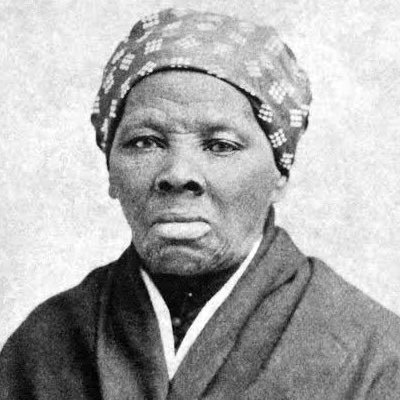
Sister Rosetta Tharpe is credited as the Godmother of Rock ‘N’ Roll. Before Elvis, Johnny Cash or Little Richard, there was Sister Tharpe- A Black woman who forged her own sound in a male dominated industry.
She does not get the credit she deserves.
—Sister Rosetta Tharpe (March 20, 1915 – October 9, 1973) was an innovative gospel singer widely recognized today as the godmother of rock and roll.
Tharpe is the first known artist not only to use an electric guitar in gospel music but to give the instrument a melodic role as important as the voice’s role.
During her musical bridges, Tharpe would give free reign to her formidable guitar playing talent, unfolding soaring melodic lines puncuated by deep chordal rips and the occasional jump and leg pump; in essence developing musical tropes in the 1930s that would later be adopted by rock and roll legends Chuck Berry, Elvis Presley, Little Richard, and Johnny Cash.
Tharpe’s innovation was not always well-received, with traditionalists regularly criticizing and devaluing her innovation.
Despite these attempts to derail her career or persuade her to adopt traditional approaches to gospel music, Tharpe remained deeply rooted in her religious beliefs and values and used her unique musical style to bring gospel music to audiences who would never have otherwise listened to it. Tharpe’s contribution to the development of the rock and roll idiom was finally recognized in 2018, when she was posthumously inducted into the Rock and Roll Hall of Fame.
SophieBarrett retweeted

This is Judge Loren AliKhan. She just blocked Donald Trump's unconstitutional attempt to freeze federal funding, including Medicaid.
RETWEET to thank Judge AliKhan for standing up for our democracy!


SophieBarrett retweeted

The study found that the most significant driver of the increase in infant deaths was babies who died of congenital anomalies. In other words, women were forced by Texas law to have babies everyone knew would suffer and die.

Infant mortality rate rose 8% in wake of Texas abortion ban, study shows apnews.com/article/abortion-…

SophieBarrett retweeted

Heat seems to trigger a sweep of changes in immune system molecules, although researchers disagree on what they might mean trib.al/lu00n8x

SophieBarrett retweeted

God, please give our parents long life so they can enjoy it when we start hitting it big

SophieBarrett retweeted

Day 1 of 24: Probability distributions are critical to data science and business decision-making. In 3 minutes, I'll unpack 3 years of mastering probability distributions for business and share how it led to a $15,000,000 business opportunity. Let's go.
1. Probability Distribution Basics: In statistics, a probability distribution is a mathematical function that provides the probabilities of occurrence of different possible outcomes in an experiment. It's a way to describe how likely different outcomes will occur. There are two main types of probability distributions: Discrete and Uniform.
2. Discrete: These are used when the set of possible outcomes is discrete (i.e., can be counted). For example, the number of customers that visit in a given period (which can only take on the values 1, 2, 3, 4, 5, 6, etc).
3. Continuous: These are used when the set of possible outcomes can take on any value in a range. For example, the conversion rate of customers in a given time period is N_conv / N_total, which divides customers (discrete) by the total number of website visits. The resulting conversion rate is continuous.
4. Probability Functions (PDF and PMF): This is how we calculate the probability of an event occurring. Discrete probabilities have a Probability Mass Function (PMF). Continuous probabilities have a Probability Density Function (PMF).
5. Expected Value (IMPORTANT, THIS IS WHAT I USE TO MAKE DECISIONS!): Arguably the most important concept in my opinion is the concept of Expected Value (EV). The expected value is like the long-run average or most typical outcome. I use this to make business decisions. Here's an example.
6. Lead Scoring Model Example: I made a basic logistic regression model that helped my team know which quotes to work on. The model predicted a class probability from 0 to 1, 0 being not likely to buy and 1 being 100% likely to buy. But to decide whether or not to spend days working on the time-intensive quote, I need to know the Expected Value.
7. Business Decision Making with Expected Value: The $15M question was, which quote (lead) to work on? A routine example:
Option 1: $3,000,000 Quote Value x 0.02 Predicted Probability of Buying = $60,000 EV
Option 2: $100,000 Quote Value x 0.90 Predicted Probability of Buying = $90,000 EV
The choice is easy: We work on the latter all day every day. We only work on the larger when EV exceeds the smaller higher probability quotes.
Doing this helped us grow revenue from $3M to $15,000,000 in under 2 years.
===
Ready to learn Data Science for Business?
I put together a free on-demand workshop that covers the 10 skills that helped me make the transition to Data Scientist: learn.business-science.io/fr…
And if you'd like to speed it up, I have a live workshop where I'll share how to use ChatGPT for Data Science: learn.business-science.io/re…
If you like this post, please reshare ♻️ it so others can get value.

SophieBarrett retweeted
@NYCDOE @DOEChancellor @UFT It is terrible! Senior teacher tries to connect to 65 Court Street for weeks - on hold for 2 hours - only to be
disconnected. She wants is find out who fills out her form for part B for retirement as her school refuses to do it. DISRESPECTFUL!!
SophieBarrett retweeted
Grasping the concept of P-Values is key to enhancing regression models. Discover in 2 minutes what I learned over 2 years.
1. Understanding the p-value: In statistics, the p-value is a crucial metric used to evaluate the evidence against a null hypothesis.
2. What is the Null Hypothesis (H0)?: It's a baseline assumption that there's no correlation between two observed phenomena or no link between groups. For instance, a specific regressor might not influence the outcome.
3. Exploring the Alternative Hypothesis (H1): This hypothesis is what you're testing against the null. It usually proposes the contrary of H0, like a regressor impacting the outcome.
4. How to Calculate the p-value: Calculating the p-value for each coefficient typically involves the t-test. Here are the key steps involved.
5. Estimating Coefficients: In any regression model, coefficients (β) are estimated for each predictor. These coefficients signify the variation in the dependent variable due to a one-unit change in the predictor, keeping other predictors constant.
6. The Standard Error of the Coefficient: This standard error measures how well a sample reflects a population. In regression, it's about the variability in the estimated coefficient.
7. The Test Statistic (T): For each coefficient in your model, the test statistic (t-value) is derived by dividing the Coefficient Estimate by its Standard Error.
8. Determining Degrees of Freedom: The degrees of freedom (df) for the test are calculated as the total number of observations minus the number of estimated parameters (including intercept).
9. Process of P-Value Calculation: This involves comparing the t-value against the t-distribution with the appropriate degrees of freedom. The p-value is then found from the area under the curve of the t-distribution, beyond your t-value.
10. Making Sense of the P-Value: Generally, a p-value ≤ 0.05 suggests a low likelihood of such data occurring if the null hypothesis were true, indicating a significant influence of the predictor in your model.
Now, there's a lot more to becoming a business data scientist. If interested, read on...
===
Ready to learn Data Science for Business?
I put together a free on-demand workshop that covers the 10 skills that helped me make the transition to Data Scientist: learn.business-science.io/fr…
And if you'd like to speed it up, I have a live workshop where I'll share how to use ChatGPT for Data Science: learn.business-science.io/re…
If you like this post, please reshare ♻️ it so others can get value.

SophieBarrett retweeted
In 1916, Ota Benga, an African native who suffered inhumane treatment by being kept in a zoo, committed suicide.
He had been kidnapped in 1904 from Congo, and taken to America and exhibited at the Bronx Zoo with monkeys.
A THREAD!


SophieBarrett retweeted

Data Science skills you must know👇👇
1. Process Mining: Data science in Action (Free Course)
🔗lnkd.in/dMwVqruF
2. Foundations of Data Science (Free PDF)
🔗lnkd.in/d4k74Up2
3. SQL for Data Science
🔗lnkd.in/dzsMH7zy
4. Python Project for Data Science
🔗lnkd.in/d_GJ6KtK
5. Foundations of Data Science: K-Means Clustering in Python (Free Course)
🔗lnkd.in/dqxfF-pM
6. Free Python and Statistics for Financial Analysis
🔗lnkd.in/d29SB3ev
7. Data Processing Using Python (Free Course)
🔗lnkd.in/dwc97Pbx
8. IBM: Python Basics for Data Science (Free Course)
🔗lnkd.in/dUm84NmE
9. Python Functions, Files, and Dictionaries (Free Course)
🔗lnkd.in/dnJEpazs
If you found this post helpful follow me @alifcoder
Subscribe to my daily newsletter.
Join here: devbytes.beehiiv.com/subscri…

SophieBarrett retweeted

The best linear algebra course you can take.
100% Free!
MIT's Professor Gilbert Strang.
Go through these videos, and you'll never have a problem with linear algebra again!
ocw.mit.edu/courses/mathemat…
Stay tuned! We have a lot of resources to share!

SophieBarrett retweeted

For all adults searching for gifts for children this #BlackFriday and holiday season, check out the Coding with Cornell series, which uses Dr. Seuss style rhyme to introduce #programming concepts, and can pique your child’s interest in tech 🚀 amazon.com/dp/B0CKF1SLW2?bin… #blackintech

SophieBarrett retweeted

Shoutout to @KZARCA, a brilliant mind behind the incredible rgho package in R that allows you to access over 2000 datasets from Global Health Observatory! Thanks to your groundbreaking work, I was able to create my latest tutorial
#RStats #DataScience #dataviz #maps #gischat

I have exciting news, people! 🎉 Just released my latest R tutorial on YouTube on inset graphs within maps using Global Health Observatory data
🔗youtu.be/p2YwfIreSoA
Like 👍 and retweet 🔁 to spread the knowledge!
#RStats #DataScience #dataviz #maps #gischat #tutorial

