

Software Engineer
Shanghai, China
Joined August 2017
- Tweets1.8K
- Following293
- Followers229
- Likes3.6K







Adam Cheung retweeted

Your ChatGPT subscription is now also a Devin subscription

You can use any personal ChatGPT plan with Devin
Just connect your Go, Plus, or Pro plan to Devin and all GPT model usage will draw down from you plan's quota
Readers added context they thought people might want to know
A ChatGPT plan can cover GPT model usage inside Devin for users with a separate Devin plan, but does not grant Devin access or act as a Devin subscription.
docs.devin.ai/admin/billing/…
help.openai.com/en/articles/20…
devin.ai/blog/sign-in-w…

Adam Cheung retweeted

what if copy/paste was smart?
powered by @typesafeai jev
it feels like every computer interaction will get rewritten
Adam Cheung retweeted

New experiment: json-render + jev
The future Generative UI is instant
Your components, your actions, your design system
Rendered in milliseconds

Adam Cheung retweeted

Jev + Cal.com API = find best overlap among team members in an instant
the longest waiting time is our API call round trips 🤯
will come up with ideas how we can bake Jev into our products
Adam Cheung retweeted

Egyptian hieroglyphs are one of the coolest unicode text ever, with their figures depicting the life activities back then.
I made a scene of exploring open world in that ancient and mysterious time
feel about it → huozhi.im/lab/hieroglyphs
Adam Cheung retweeted

Checking that a major mathematical proof is correct can take years. Formalization—converting the mathematical reasoning into a form computer proof assistants like Lean can verify—can help.
Last month, Claude completed the first formalized proof of Fermat’s Last Theorem, one of the most famous theorems of all time. This was a project experts thought would take many years. It is the largest Lean proof ever written.
Fermat’s Last Theorem was first proven in 1995 by Sir Andrew Wiles, more than 350 years after it was conjectured. Our proof, which totals over 13 million lines of code, provides machine verification. More importantly, it proves over 29,000 other theorems that the proof requires, across many areas of math which had never before been formalized.
We see this as a major step in the long process of firming up the core of mathematical knowledge, building on work from three centuries of mathematicians and hundreds of contributors to Lean and Mathlib. We are optimistic that AI-assisted verification of mathematical proofs will help reduce the burden of refereeing mathematics in an era where more proofs are being produced than ever before.
You can read about the process on our Science Blog: anthropic.com/research/forma…
And see the complete proof on GitHub: github.com/anthropics/fermat…
Adam Cheung retweeted
Here is how to enable a 1M-token context window in Codex for GPT-5.6 Sol.
Even though we have tuned the context limit in Codex to be set optimally when it comes to performance and cost, this is a common ask, so here it is documented.
A larger context window lets Codex retain more code, tool output, and conversation history before summarizing older material. You need a model that supports it. And GPT-5.6 Sol, for example, has a documented 1,050,000-token window.
Open ~/.codex/config.toml and add or update these settings at the top level, before any [section] headers:
```
model = "gpt-5.6-sol"
model_context_window = 1000000
model_auto_compact_token_limit = 900000
```
The first setting selects the model. The second tells Codex to use a one-million-token context budget. The third starts automatic history compaction around 900,000 tokens, leaving some headroom. Restart Codex client and start a new session after saving.
To try the configuration for a single CLI session without changing your defaults:
```
codex -m gpt-5.6-sol \
-c model_context_window=1000000 \
-c model_auto_compact_token_limit=900000
```
Have fun, but also know that we tuned the default carefully!
Adam Cheung retweeted

Web apps just got a major speed boost for pasting. Until now, navigator.clipboard.read() fetched and sanitized every data format on your clipboard upfront, wasting CPU and memory on data your app didn't even need.
Starting in Chrome & Edge 149, the Async Clipboard API switches to Selective format read.
What changes? ClipboardItem now acts as a lazy handle. Bytes are only read and sanitized when you call getType().
The payoff? Instant latency drops, massive memory savings, and zero code changes required.
Catch all the details and one important behavior change to watch out for →
goo.gle/4wweJFZ

Adam Cheung retweeted

Next.js 16.3 is now available!
• Up to 90% less memory in dev
• Faster builds, type checking, and rendering
• Better tooling for AI agents
• Custom error boundaries
• Instant Navigations for SPA-like responsiveness
nextjs.org/blog/next-16-3
Here's what's new ↓

Adam Cheung retweeted

We cut our monorepo type-checking time from ~74s to ~24s by upgrading to @typescript 7, and removed the CI memory flags we previously needed.

Adam Cheung retweeted

TypeScript 7 Support in Next.js
TLDR:
You can now enable `experimental.useTypeScriptCli` to use TypeScript 7 on next@preview
Details:
TypeScript 7 released with ts-go, very excited about the speedup!
The release is (intentionally) missing the JavaScript API which they're aiming to release in TypeScript 7.1.
Unfortunately that meant that the TypeScript 7 release as-is breaks frameworks integrating TypeScript using the JS API.
Next.js uses the JS API to invoke TypeScript during "next build" and adds additional formatting so that the logs are consistent with other parts of the build.
In order to support TypeScript 7 without a JS API we had to change the way TypeScript is invoked to directly use the installed `tsc` command.
This change is available under experimental.useTypeScriptCli
It's released as part of the Next.js 16.3 Preview.
You can install it using `npm install next@preview`.



Adam Cheung retweeted
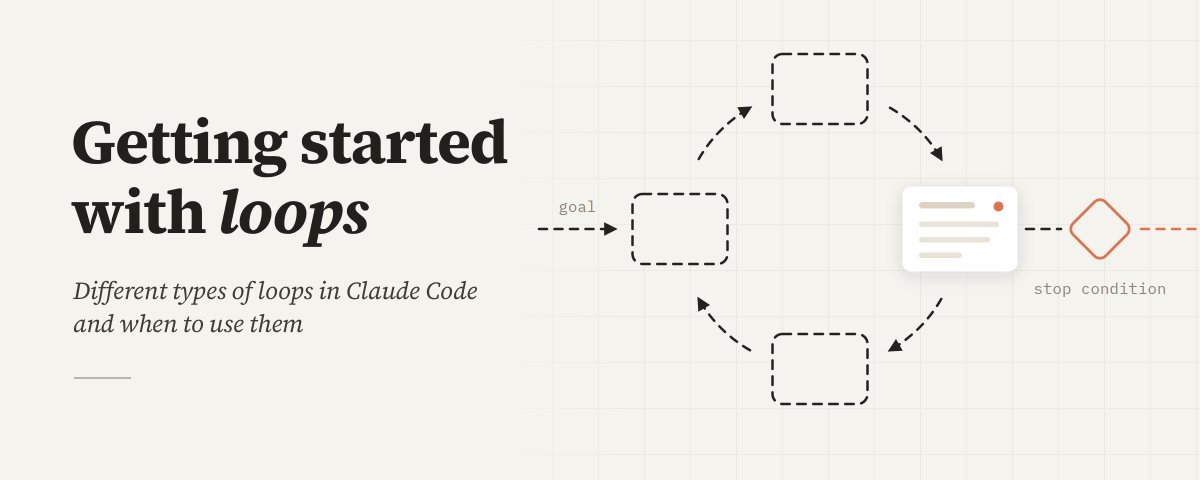
New Anthropic research: A global workspace in language models.
Of everything happening in your brain right now, only a tiny fraction is consciously accessible—thoughts you can describe, hold in mind, and reason with.
We found a strikingly similar divide inside Claude.

Adam Cheung retweeted

找远程短期实习/兼职,人在西雅图,全栈 + MLE 都能打,能训模型也能写代码,随时入职。
简历:edward40.com/files/resume.pd…
Adam Cheung retweeted
Turbopack: What's new in Next.js 16.3 Preview
• Up to 90% less memory in dev
• Up to 5.5x faster builds via Filesystem Cache
• Faster HMR and dev startup
• Experimental Rust React Compiler
• 𝚒𝚖𝚙𝚘𝚛𝚝.𝚖𝚎𝚝𝚊.𝚐𝚕𝚘𝚋 support
nextjs.org/blog/next-16-3-tu…

Adam Cheung retweeted

Science suggests you don’t need a long vacation to recharge. A 24-hour break that interrupts your routine—and puts you into a flow state—can be hugely restorative. on.wsj.com/4eovKKA

