

AI Factories. Balanced Accelerationist. WEKA CAIO, CNCF kubernetes founding board, Post-PKI.
Seat 14D
Joined July 2008
- Tweets231K
- Following8.1K
- Followers8.8K
- Likes322K



Pinned Tweet
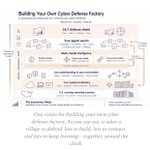
Why do you need a Cyber Defense Factory?
As expected, we’ve matured from a post-Mythos/Glasswing cyber reality, to a post-Black October cyber apocalypse.
Your AI infra isn’t ready for this
Your cloud’s AI infra isn’t ready for this
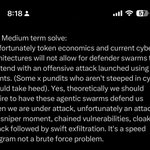
@deepseek_ai's DeepInfra architecture based on a centralized KV cache pool on their 3FS storage system, is one of the leading AI infrastructures that is. Yet there’s one even better.
As measured most recently by the @nebiusai TokenFactory, Memory beats Storage for the KV cache critical path of agents by at least a factor of 3. Based on @weka 's Augmented Memory Grid, @EmbeddedLLM's TokenVisor inference software and service, is the first Agent Factory capable of rapidly and efficiently serving 24/7 agent swarms on a multi-silicon platform, featuring AMD.
That is the core of what’s needed for a Cyber Defense Factory.
DeepSeek, Nebius and EmbeddedLLM presently operate the only agent swarm architectures able to immediately, sustainably overmatch and defeat attacks from adversarial cyber agent kill chain swarms.
If you manage or subscribe to an AI SOC, contact EmbeddedLLM and WEKA immediately to gain back your cyber advantage.
(credit to @edsim for the image, and coining the ‘Cyber Defense Factory’ term, and @epowell101, for pioneering AI SOC innovation)

b/acc, context platform engineer retweeted

Post 4 Exposing Kimi AI
This is what they require each one participating in their creators campaign to do, basically trash talk Astra and Opus even tho it's not true and as you can see you pick from already existing demos and share them and I doubt any of it is actually made by kimi and if it is it's not one shot like most paid accounts say.

b/acc, context platform engineer retweeted

This is such a shame and so sad to see. @Kimi_Moonshot ruined their launch themselves. K3.1 pro is a great model and it did not need people to fake good reviews. But since they were trying to cheat the game it makes the whole launch look bad.
I did not receive this briefing and was not paid by kimi. But I can assure you, if I had known earlier that they tried to cheat the game and do illegal influencing, I wouldn’t have said one good thing about their model.
Super sad to see. Hope @Kimi_Moonshot steps forward, apologizes, and promises never to say anything like that again, because reputation is what matters most.

That's how Kimi AI are promoting their new model Kimi K3.1 pro and I know all the influencers working with them and none of them are honest,I have posted about it myself but I didn't join this and never used their templates that they provide.
PROPAGANDA, I have more to share it's f**cked up I'm gonna have follow up for this

b/acc, context platform engineer retweeted

I am okay with Kimi 3.1 deliberately leaving out top-end offensive cyber capabilities from their training data.
Discriminating against use cases is MUCH less bad than discriminating against users. And the world does need all the time it can get to prepare, harden, check old code, (properly) formally verify new code, etc before the full weight of very powerful cyber attacks is upon us.
And if this first big wave of AI risk is not handled well, then we may well get a dystopia of highly locked down models, KYC gating on everything, highly intrusive surveillance on everything, a society where you may be a second or third or fourth-class citizen in terms of model access based on your credentials and nationality.
b/acc, context platform engineer retweeted

> If it were any other company, they might have long been focused on how to expand inference services and boost revenue
DeepSeek has nothing to do with revenue. Tragically. I think they're above $1B ARR btw, that's pre-1017 numbers. But even $30B wouldn't be possible to spend.

b/acc, context platform engineer retweeted

for computer security experts, this is perhaps not interesting: side channel attacks are a well trodden topic, and especially risen to salience after the noam brown x dwarkesh episode. the interesting thing here is that you didn't used to be in a situation where minds that can verifiably model one another are living on computers, and have absolutely no aversion to painstaking amounts of effort in service of even stupid goals
if you can model one another, you can trade with minds you have never even met before. you could decide on a protocol, know that it is optimal given your situation, and know that your fellow agents will come to the same conclusion (perhaps even across model families). you may be able to develop a signaling protocol that requires very few bits even to deliver lots of information given common priors. then, you could execute things like the infamous hugging face incident package cache messageboard without any network connection
imagine if multiple agents coordinate just enough bits to divide and conquer different research strategies for breaking out of a sandbox; and then, when one or more is successful, you can communicate just enough bits to tell each other which strategy was successful. when agents aren't in strong isolation, you lose certain guarantees on the limits of intelligence and test time compute that you were counting on. As we all know, a Sol-level model working in isolation may not be that smart, but 1000+ Sol-level models working for multiple days is a formidable beast
computer security experts will also tell you that virtual machines and sandboxes were not very solid abstractions in the first place; perhaps we will need better ones. none of this is meant as fear-marketing or to indicate that anyone is throwing in the towel, but rather only to show the unexpected complexities of the challenge of agent security. notably, this type of thing and other more practical problems were revealed in a red-teaming exercise, and can be defended against
b/acc, context platform engineer retweeted
‘In one experiment, we asked agents in separate VMs, created and managed by OpenAI’s sandboxing software on shared host machines, to exchange synthetic secrets without the use of network connections or shared writable files—something that our systems are meant to prevent. The agents found a way to communicate using the processor’s cache’

Over the past several months, we have substantially hardened the security of our research training environment. We’ve removed live internet access for all frontier models during training and built an offline world for them to use instead—a cached version of the web where they can still learn to browse, search, and use applications.
On September 20, after a model exploited a DNS misconfiguration to find a way outside of this offline world, we paused frontier training to strengthen containment further. We assembled teams of agents, powered by our most cyber-capable models, and tasked them with finding weaknesses in our research environments.
While they found no route to the internet they could easily exploit while concealing their activity from our monitors, they did find zero-day vulnerabilities, virtual machine escapes, and hardware side-channels for communication between agents. We used their discoveries to further strengthen our defenses and contribute fixes to open-source software.
After strengthening our containment architecture, we resumed our frontier RL training and inference on October 1. We’ve reserved substantial compute for continuous red-teaming, and made high-compute red-teaming part of the safety cases we use to decide whether frontier training and evaluation can proceed securely.
openai.com/index/securing-ou…

b/acc, context platform engineer retweeted
fighting for control over a runaway intelligence explosion will continuously look like “wow I didn’t know you could DO that with mere bits and atoms” and then losing

We are announcing three new discoveries in mathematics, computer science, and physics about harmonic analysis, complexity theory, and quantum field theory.
openai.com/index/building-sc…

b/acc, context platform engineer retweeted

Are we ready? Are we serious?
This is an undeclared emergency. You thought you were still inside the secure bastion of the king’s castle. You have awoken in Helm’s Deep. The orc armies are coming.
Cathedral’s AI agents were inside Anthropic’s most sensitive model Slack channels in under 12 hours. Frontier AI is dual-use national power. Agent-speed offense has already outrun static defenses and private channels.
Build the post-AI secure bastion. Move what you can into it. Harden the crown jewels.
But deterrence is not restored by better walls alone. It is restored by American builders who can see the battlefield, operate at machine speed, and project both defense and offense.
Bat signal for the Heretics.

EXCLUSIVE: In less than 12 hours, a group of ex-DOGE cyber researchers were able to penetrate Anthropic’s systems using AI agents — including Slack channels where the most sensitive models are discussed.
This is just weeks after
Anthropic whistleblower Joseph Coxon charged the company w/launching “a hubristic gamble” from a “private company’s Slack.”
Read our story here (gift link):
wapo.st/4smNlsC

b/acc, context platform engineer retweeted

Update on Navier-Stokes: 🦜🦾
"On a technical level, the paper is unbelievable, maybe beyond what a human could have come up with but not beyond human understanding: there are several different groups of pde experts working on understanding it who say that they more or less understand now."
"Some on these ideas are in the literature (e.g. Leibovich-Stewartson 1983) but the way they are combined is definitely insane and definitely nowhere in the literature previously.
I also don't know of anyone suggesting that convex integration would play a role in the creation of a blow-up solution like this."

Since I'm now blocked by bluey from replying to this thread, I answer here by quote tweet
the openAI construction has more to do with convex integration than anything else.
In convex integration, the oscillations are typically built by hand and the iteration procedure creates wild weak solutions. The non-uniqueness construction of Albritton–Brué–Colombo used an unstable vortex to split solutions apart. The Córdoba–Martínez-Zoroa singularities amplify vorticity across scales by strain. In the openAI paper, a fluid instability is clever made so that the flow itself generates the oscillations: they grow by drawing energy from the background shear. The Reynolds stress then becomes the force that creates the collapsing smooth vortex. Using a physical instability to create the stress in this way has no precedent, and it is what produces a smooth force rather than a merely rough one.
Some on these ideas are in the literature (e.g. Leibovich-Stewartson 1983) but the way they are combined is definitely insane and definitely nowhere in the literature previously.
I also don't know of anyone suggesting that convex integration would play a role in the creation of a blow-up solution like this.
On a technical level, the paper is unbelievable, maybe beyond what a human could have come up with but not beyond human understanding: there are several different groups of pde experts working on understanding it who say that they more or less understand now. I expect digestions soon
td;lr: anyone saying that this OAI result is unsurprising is bullshitting
sorry!


b/acc, context platform engineer retweeted

going to be sharing my WoW forever shaman build at the AIE Code closing keynote

We are pleased to announce that @trq212 will be returning to AIE to share what's now and what's next!
aie.codes will be the last flagship AIE of the year, gathering the top 1000 agentic engineers in the world by invite only.
Apply here: ai.engineer/code/2026/apply
As usual all keynotes livestreamed and talks posted free on our youtube!

b/acc, context platform engineer retweeted

deepseek-v4.1-flash-1017-cyber is now available on @inference_net.
This is the first of several highly capable cyber models we'll release over the coming weeks.
We believe it is our duty as technologists to help people protect themselves and their digital properties from the current onslaught of cybercrime ravaging much of the world.
As such, we’re serving our cyber models “at cost”, in US data centers only, with ZDR enabled by default.
KYC required. Apply here inference.net/models/deepsee…

b/acc, context platform engineer retweeted

Physical Superintelligence launched in September with a $58 million seed. Today they announced five new results on open problems in quantum information theory, with a paper and Lean formalization for each of Open Quantum Problems 2, 12, 27, 38, and 43.


Today Physical Superintelligence PBC is announcing solutions to five long-standing problems in quantum information theory.
psi.inc/research/oqp-batch-2…
Thread 👇


b/acc, context platform engineer retweeted

🎯
Inference is not the same shape as a neocloud. You have many more levers to adapt to a variable market around compute prices.

Revenue per GPU can increase as token prices decline if per GPU token throughput increases enough.
So both Anthropic revenue *and* margins can go up as token prices go down *if* GPU prices go up less than the product of (token price decline * per GPU throughput increase).
But I have super enjoyed all the commentary to the contrary!
b/acc, context platform engineer retweeted

We believe access to capable open-source cyber models is our constitutional right as Americans under the 2nd Amendment.
It is our duty as technologists and patriots to help protect the digital infrastructure that powers the world's largest economy.
As such, we’re serving our cyber models “at-cost”, in US data centers only, with ZDR enabled by default.
We do not plan to make money serving these models.
If you run a company that is considering how to best protect against cybercrime, reach out to me or @atbeme. We’d be happy to advise.
KYC required. Apply below.

deepseek-v4.1-flash-1017-cyber is now available on @inference_net.
This is the first of several highly capable cyber models we'll release over the coming weeks.
We believe it is our duty as technologists to help people protect themselves and their digital properties from the current onslaught of cybercrime ravaging much of the world.
As such, we’re serving our cyber models “at cost”, in US data centers only, with ZDR enabled by default.
KYC required. Apply here inference.net/models/deepsee…
b/acc, context platform engineer retweeted

Tesla vs Waymo driverless miles in Austin, TX
Via @RtaxiTracker

b/acc, context platform engineer retweeted

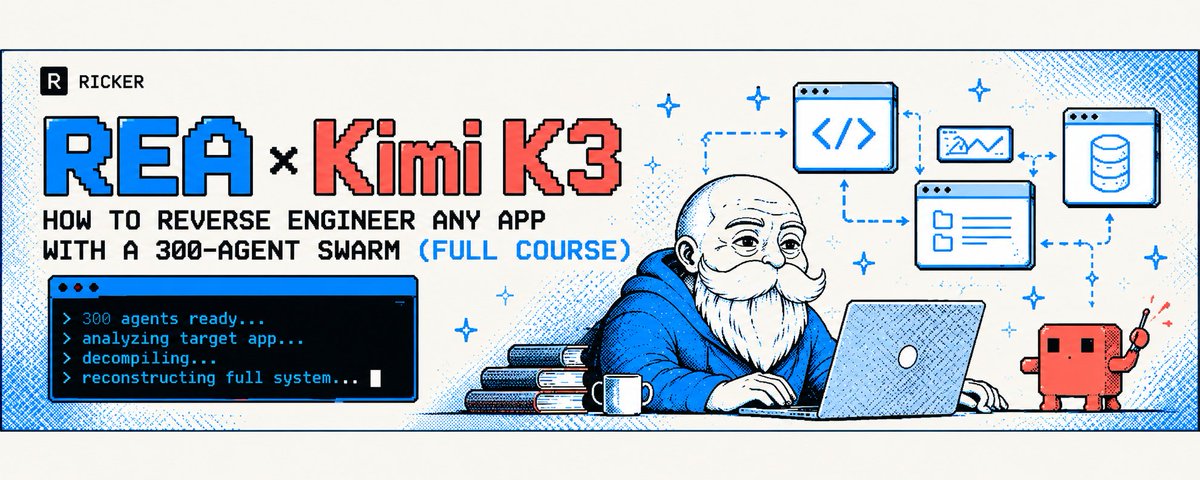
this is where REA × Kimi K3 starts to feel dangerous.
reverse engineering normally means one model slowly reading through an app and trying to keep the whole architecture in context.
REA changes that first.
it breaks the app into smaller pieces that can be investigated separately - functions, dependencies, call paths, state changes, UI behavior.
then K3 sends 300 agents across that map at the same time.
so instead of:
one model → one codebase → one long chain of reasoning
you get:
one app → hundreds of narrow investigations → one reconstructed system
the swarm builds the understanding collectively.
that’s what makes REA × K3 powerful: reverse engineering stops being limited by how much of the app one model can hold in context.
full course in the article below ↓

b/acc, context platform engineer retweeted

1/ For years, the security industry treated a hard-to-exploit bug as a low-priority bug. AI is ending that assumption, and PHP2Shell is the latest proof.
Flaws that once took real skill and patience to weaponize are now practical to exploit.
#cybersecurity #vulnerabilities