

Many time CEO of exited enterprise software companies. Friend to founders. DeepTempo - https://xitter.cf/t.co/Ww4lrbRuVC & our LogLM for advanced attack detection.
San Mateo, CA
Joined June 2008
- Tweets12.8K
- Following2.9K
- Followers7.1K
- Likes22.3K


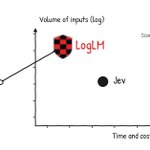


Anthropic filed its S-1 this morning. Revenue grew from $41 million in 2023 to $16.3 billion in the first half of 2026. More than 1,900 customers spend $1 million or more a year, and net revenue retention is roughly 900%. 🔥 📈
I read the filing as a security builder, and a few passages stood out.
First, Anthropic reminds us in the prospectus summary that attackers have already used AI to "discover vulnerabilities, generate malware, and evade detection tools."
.... "generate malware, and evade detection tools." 👀
Second, Anthropic describes each Claude model helping to build the next, and warns that its capabilities could advance faster than its safety and security measures, with the acceleration apparent only after the fact. It cites Mythos and Project Glasswing as an example of limiting a release for that reason. Btw we are supporting the SAFE program within the open source AI alliance in the LF. Questions remain though it looks promising. Link below.
i.e. sometimes the call is coming from inside the house. (mandatory Halloween reference) 🔪
Third, Anthropic anticipates millions of AI agents running in parallel inside enterprises, each holding the access rights and system connections its organization grants. As we all know, Adversaries are targeting those agents in a bunch of ways. While we should of course do security hygiene things to secure enterprise agents and to make the attackers job harder, the only reliable way to tell a compromised - or just a misaligned - agent from a useful one is how it behaves.
Our "Agents hunting Agents" workshop last week dug into using AI to keep AI under control. 👉 👈
Fourth, Anthropic reports that Opus 5.5 cut cost per task by about 40% relative to Opus 5. Nonetheless let’s remember - Opus is many orders of magnitude less efficient and less accurate then for eg our own LogLM. See SOC bench or other studies to validate this yourself. Link in the comments.
If attackers have better tokenomics then we do - they are even more likely to win.
If I had to net it out - attackers now run a learning loop, so defenders need a faster one that they control and own. Sorry Anthropic - not all loops run through you, and no amount of post training of your generative model will enable it to equal the efficiency of an encoder only model for detection. 😇
Congratulations to the Anthropic team!
What did you see re security? What did I miss?
#cybersecurity #AI #SOC #agenticAI


Evan Powell (🛡️, ☮️) retweeted

Adversaries may gain access to NSS and DIB network devices through SNMPv1 and SNMPv2c read-write community strings. Keep your networks secure by upgrading to SNMPv3 which includes encryption and authentication. media.defense.gov/2022/Jun/1…

ALT The image shows a comparison of three types of Simple Network Management Protocols (SNMP). SNMPv1 and SNMPv2c are marked with red "X" symbols, indicating disapproval. SNMPv3 is marked with a green check mark, indicating approval.
It's a tough October for cyber defenders.
Some good news - defenders of critical infrastructure are already getting trained at the Technology Advancement Center (TAC) on the use of AI to see, visualize, and respond to increasingly hard-to-find attacks.
Spend 1-2 minutes to see the combined solution with CloudCurrent vStrike and DeepTempo technologies protecting a water range:
youtu.be/1_rmEb0g9WI
Up level yourself. Yes, triage and patch.
But also learn how to spin your OODA loops faster, smarter, safer.

Evan Powell (🛡️, ☮️) retweeted

Why do you need a Cyber Defense Factory?
As expected, we’ve matured from a post-Mythos/Glasswing cyber reality, to a post-Black October cyber apocalypse.
Your AI infra isn’t ready for this
Your cloud’s AI infra isn’t ready for this
@deepseek_ai's DeepInfra architecture based on a centralized KV cache pool on their 3FS storage system, is one of the leading AI infrastructures that is. Yet there’s one even better.
As measured most recently by the @nebiusai TokenFactory, Memory beats Storage for the KV cache critical path of agents by at least a factor of 3. Based on @weka 's Augmented Memory Grid, @EmbeddedLLM's TokenVisor inference software and service, is the first Agent Factory capable of rapidly and efficiently serving 24/7 agent swarms on a multi-silicon platform, featuring AMD.
That is the core of what’s needed for a Cyber Defense Factory.
DeepSeek, Nebius and EmbeddedLLM presently operate the only agent swarm architectures able to immediately, sustainably overmatch and defeat attacks from adversarial cyber agent kill chain swarms.
If you manage or subscribe to an AI SOC, contact EmbeddedLLM and WEKA immediately to gain back your cyber advantage.
(credit to @edsim for the image, and coining the ‘Cyber Defense Factory’ term, and @epowell101, for pioneering AI SOC innovation)

Evan Powell (🛡️, ☮️) retweeted

The Cloudflare's writeup on our php2shell response is up.
Rules went live at 03:02 UTC, about 9 hours before disclosure. Unfortunately the vulnerability leaked early, so we were already watching attackers mutate payloads against the rules and updating as variants appeared.
New rules keep landing in the WAF changelog.
Expect updates through out the day. We will have a more thorough post of what we had to build to better protect people coming shortly.
PHP runs almost 70% of websites. The flaw is in the runtime, so updating plugins won't fix it. Patch PHP.
blog.cloudflare.com/php-vuln…

AI can scale threat hunting enormously. Agentic red teaming gets the headlines, but what about agentic, and autonomous, threat hunting?
I revisited Sqrrl's Hunting Loop and how it helped inspire Vigil: start with a hypothesis, investigate, make it survive a skeptic, and remember what you learned.
The question is how far we can turn up the dial safely, with read-only hunts, query budgets and coverage memory. Can we 100x-1000x threat hunts for increased security?
Feedback welcome, especially from the skeptics. 😇 🫡
deeptempo.ai/blogs/golden-ag…
#ThreatHunting #AISOC #OpenSource #Vigil

AI is making ransomware operators more efficient.
In research posted October 9, Atos Threat Research Center describes an exposed server associated with an INC-affiliated ransomware operator. Alongside attack tools and victim records, researchers found an AI-assisted platform used to support the operation.
The recovered evidence shows AI helping human operators research targets, develop scripts, analyze data, document findings and coordinate campaigns. Those operators stayed involved, using AI to work faster and carry experience from one intrusion into the next.
That gives defenders a practical challenge: recognize malicious activity as attackers test more options and adapt their tools.
In our article, "Attackers don't use indicators and detection shouldn't either," we explore how the structure of an action can reveal what it is trying to accomplish.
Known-bad hashes, IP addresses and domains remain useful parts of detection. Pair them with a closer look at reconnaissance, credential use, lateral movement and data transfer. The connections, timing and progression of those actions give analysts context for deciding whether they fit a legitimate job.
As AI helps attackers change their approach, defenders need detection that can recognize the activity behind unfamiliar tools and infrastructure.
deeptempo.ai/blogs/attackers…
atos.net/en/lp/cybershield/i…

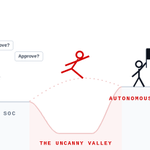
In the last few weeks we - our AI - created some explanatory videos on what we do. I'd appreciate feedback starting with this one which dives into agentic vs. autonomous SOCs and Vigil.
youtu.be/GBPi6EyJ0sQ?si=8WXZ…
Thank you @AnthropicAI
Happily burning every credit you share.
Together we can defend from attackers using Claude and friends 🫡

Evan Powell (🛡️, ☮️) retweeted

We just released apex-flash-1, an open-weights model we post-trained for cybersecurity. Fire up your GPUs and run it!
We've post-trained models from 27B parameters all the way to 1T+ parameters. The unique nature of cybersecurity is that if you can build a system that finds zero-days at scale, you've built a machine that can print money.
You can test it on public bug bounties and profit from doing that. We've earned a million dollars in bounties across various programs, and we're currently #1 on the HackerOne US business leaderboard for 2026! Companies like Apple, Anthropic, Datadog, Ripple, Coinbase have paid us well for our disclosures.
Last year was all about harness engineering and riding the wave of models getting more intelligent over time. We built harnesses for offensive and defensive security work that process trillions of tokens a month. Yes, trillions!
With all that work, it's clear to us what the future of security looks like.
Hacking was once a bespoke skill, similar to hardcore software engineering. Software engineering is currently moving from offices to factories. Security, too, will go through the same transition.
Last month, Anthropic released a report on how they caught different threat actors abusing Claude. One of them stood out to me. A team in China built an automated exploit factory. A factory that autonomously grinds through vulnerabilities in targets and exploits them. Their targets included security products, network appliances, and government organizations.
We've spent enough time building systems adjacent to that to know what it takes, and the shocking part is the economics. How little it costs to breach companies that you and I rely on.
All this to say, security is largely becoming an economics problem. Reasonably capable models and harnesses, with enough compute, can find ways to steal your data, damage your reputation, and sometimes even take your money. And the cost to achieve that is dropping every day.
When that happens, the right question to ask is: what's the cost, and what's the lowest cost to achieve an outcome reliably? You want to find a stack with the best combination of capability and cost. This is what people call 'Pareto-optimal'.
Once you know that, it's all about scaling. Scaling to trillions of tokens a month, then a week, then a day. Eventually, trillions of tokens a second.
To do this, you need to own and control the entire stack: the models, the harnesses, the context, and even the flow of tokens. If you do the math here, the economics start looking insane.
What does that look like?
1. Building evaluations on cyber tasks that you and your customers care about.
2. Building a data pipeline of unique real-world data with signal attached to it.
3. Building a harness that can self-improve for each specific organization or customer.
4. Building a post-training loop that can take those learnings and improve the models. Models that are better, faster, and cheaper.
5. Owning your inference pipelines and controlling the flow of tokens so you're maximizing the value produced in every GPU cycle.
On evals: if you're a company building AI products for customers, you have to build your own. There's tremendous alpha in having internal evals corresponding to real work. In our case, these are evals for offensive and defensive security work.
A lot of public evals are bad for measuring the work you actually care about. Public evals are typically from academics or data companies.
Academics have limited budgets and limited access to proprietary data that measures real economic work. Data companies build evals and also sell you corresponding data (RL gyms, traces, pre-training data, etc.) that helps your next model “juice up” its score.
This is the dirty secret, and also why models can do extremely well on public evals but extremely poorly on things you care about. This is also why there's tremendous alpha in private evals: you know which models are the best for your use cases.
In cyber, some of the popular public evals are ExploitGym and ExploitBench. We think these evals do not correspond to the real security work our customers need. A typical challenge in ExploitBench is to take Chrome's javascript engine V8 with a known patch and find a way to exploit the vulnerability.
That is far, far removed from the security issues in everyday applications that you and I use, and applications built by our customers.
We could've benchmaxxed on these evals, but we didn't. And you should be wary of people using these evals to advertise their models and harnesses. Measure things yourself and see how they apply to your use cases.
The future: Opus is a model that many people found to be a reliable workhorse. For me, Opus 4.1 was the first model that was functional and could get work done.
These days, the flash models from Qwen, DeepSeek, MiMo and GLM can be categorized as workhorses too. That, combined with owning the post-training loop means the economics start looking insane. You can get frontier performance in specific domains for a small fraction of the price of Opus.
With the right data pipelines and post-training loop, you now have a durable strategy to keep improving and stay state-of-the-art in your vertical.
That's the bet behind apex-flash-1, our post-train of glm-5.3-flash, and we're already preparing for longer training runs.

today we're releasing apex-flash-1, our first open-weights model for security research post-trained on real vulnerabilities we found and got paid for.
we are also releasing the abliterated variant for researchers who want fewer refusals in their own authorized workflows.
how we built it: cantina.security/apex-flash

System One - whey #jev though useful in many ways, is NOT the system one you need for detections, and what is.
deeptempo.ai/blogs/loglm-is-…

Evan Powell (🛡️, ☮️) retweeted

NSA’s latest guide captures foundational network actions that remain essential in keeping networks protected against traditional and AI-enhanced targeting. Review for immediate and long-term steps to help prioritize impactful defenses. media.defense.gov/2026/Sep/0…

Everyone over here probably already gets this. Not so much in cyber or on LinkedIn. Hence I'm over here.
SREs are our only hope for cyber, and all they represent. "Help me Obi Wan." 👸
We are building for these folks @DeepTempo_AI

Join community folks in SF on the 26th @workato
Aron - the author of Google's blog on applying SRE to Cyber will speak and demo and stuff. That blog:
cloud.google.com/transform/h…
Join the AI Cyber Alliance (set of SRE con like meet-ups) here: ai-cyber-alliance.org/

Evan Powell (🛡️, ☮️) retweeted

Introducing Kitesurf: a browser built for agents, running entirely on Cloudflare Workers.
Chromium is too heavy to hand every agent one. Kitesurf is written in Rust, uses 3-7x less CPU and memory, and spins up per request.
Free in beta: blog.cloudflare.com/kitesurf…

Evan Powell (🛡️, ☮️) retweeted

Today we are releasing Cloudflare OS, a chatbot with connectors, just like every other tech company is doing.
Except actually, it's different. This is a remake of Sandstorm[.]io, my startup from 10 years ago, except this time built on Cloudflare Workers (the platform I've spent the last 9 years building) and deeply leveraging AI. This is more or less the culmination of my secret 10-year master plan.
This is a full-on personal app vibe coding platform, in which the sandbox is so secure that you can pretty much go wild -- the AI cannot introduce a significant security bug. We believe a company's security team can feel comfortable giving non-technical users permission to vibe code and then sleep soundly at night.
How is that possible? It's the Sandstorm security model, revisited. A "Gadget" is the same thing as a Sandstorm "Grain": a fine-grained app instance. For example, if you have a document editor app, each document runs as a separate instance of the app, in a separate sandbox (one "Gadget").
This means two things, both of which I think are Big Deals:
1. The platform can manage all access control, by controlling who can access the Gadget at all. There is no way the Gadget can accidentally leak itself to an attacker -- even an attacker who has access to other Gadgets based on the same app.
2. Since everyone is running their own copy of the code, everyone can freely *modify* their copy of the code.
Think about #2 a bit more.
What if, when you wanted a new feature in the software you are using, you could just prompt your agent to add it?
This doesn't work in the cloud Software-as-a-Service model, because you are not running your own copy of the app.
Sandstorm tried to change that 10 years ago, but the world wasn't ready, because not enough people had the skills or patience to actually modify their software. AI has changed that. Now you just ask the agent -- the same agent that you are using to help you interact with the Gadget can also modify the code of the Gadget.
And it is so fun.
github.com/cloudflare/cloudf…

Evan Powell (🛡️, ☮️) retweeted

On July 30th we'll be at the AI Cyber Alliance Meetup in Tysons, VA.
Our CISO Joe Szczerba, ex-FBI Cyber Division Senior Exec who defended critical infrastructure from nation-state threats, speaks with @epowell101, CEO of DeepTempo.
Come say hi 👉 luma.com/aicyber-y9ry?utm_so…
