

PGY1 St. Joes PHX 🌵PGY2 CC OH 🌨️ Your fav girlie pop ER PharmD 💉
Joined March 2022
- Tweets193
- Following101
- Followers144
- Likes371









Amy Magdalany, PharmD, BCEMP retweeted

📍HECK-YES
Enterobacterales w mod/high risk for clinically significant AmpC production due to an inducible ampC gene:
🔺Hafnia alvei
🔺Enterobacter cloacae
🔺Citrobacter freundii
🔺Klebsiella aerogenes
🔺YErSinia enterocolitica #idxposts

Battle of the mnemonics, SPACE, SPICE Vs HECK-Yes!
🆕💥🟢Cross-sectional,nationwide survey of ID clinicians to evaluate clinical & microbiologic practice patterns for infections caused by Enterobacterales at risk of inducible AmpC production #idxposts academic.oup.com/jacamr/arti…

Amy Magdalany, PharmD, BCEMP retweeted
▶️UTI in patients with stones and stents: rocks and hard
LEITNERLorenz, Switzerland
Excellent talk by urology surgeon
🚫JJ stents mimic UTI
JJ stent # Infection
Enterococci👀 #ESCMIDGlobal2026


Amy Magdalany, PharmD, BCEMP retweeted
one fun thing about using phenobarbital for seizures in ICU is that you can be as precise as you want (PK is predictable & levels turnaround fast)
high precision usually isn't needed
but if the neuro team wants me to hit a specific phenobarbital level in brittle SE, I'm on it🫡

Amy Magdalany, PharmD, BCEMP retweeted

Looking to work in Toxicology?
We are officially starting a toxicology fellowship! We are recruiting for 2026-2027!
1 year if PGY2 trained
2 years if PGY1
Come train with me!
mcw.edu/departments/emergenc…
Amy Magdalany, PharmD, BCEMP retweeted
🚫If you’re still recommending routine ECGs before starting ciprofloxacin in all patients — please stop. This is outdated practice.🚫
QT risk is low in patients without risk factors, and blanket screening adds no value. ECG should be reserved for high-risk patients after proper risk assessment.
Do you routinely order a baseline ECG before starting ciprofloxacin?
🆕 ⚡Data suggests the answer is probably no — except in high-risk patients.
No clinically meaningful QT/QTc prolongation with conventional oral dosing.
📄 JAC 2026: academic.oup.com/jac/article…

Amy Magdalany, PharmD, BCEMP retweeted
Is piperacillin-tazobactam safe in patients with penicillin allergy?
🆕🔥🟢Piperacillin–tazobactam tolerability in patients with a labeled penicillin allergy (PIPPEN)
Of the 191 patients included, 98% were found to tolerate one or more doses of piperacillin–tazobactam.
This included 95 patients with “low risk delayed reactions,” 90 patients with “high risk anaphylactic reactions,” and 2 patients with “well-documented delayed reactions,” to penicillins. Only four patients out of 191 had documented intolerance to piperacillin-tazobactam post-exposure
All patients in the “anaphylactic allergy or anaphylactic like reaction” subgroup tolerated one or more doses of piperacillin–tazobactam.
cambridge.org/core/journals/…

Amy Magdalany, PharmD, BCEMP retweeted
The long awaited SSC 2026 is finally published #IDXposts
🔥Just published🔥
Surviving Sepsis Campaign: International Guidelines for Management of Sepsis and Septic Shock 2026 : Critical Care Medicine #IDXposts share.google/VN4AfbchzDiRr7e…


Amy Magdalany, PharmD, BCEMP retweeted

In this retrospective cohort study, dexmedetomidine (DEX) exposure was associated w a HIGHER risk of clinically significant supraventricular tachycardia. Interesting, because I have used DEX thousands of times & I never recall this phenomenon (it happens only after stopping it)🤷♂️

This

the surviving sepsis guidelines led CMS to weaponize a highly over-simplified approach to sepsis
maybe this helped a few underperforming hospitals, but I gaurentee that this didn’t improve patient care at high-performing hospitals
mandated mediocricy
emcrit.org/pulmcrit/ssc-peti…
103
Amy Magdalany, PharmD, BCEMP retweeted
new AHA/ACC guidelines on pulmonary embolism:
similiar to the Surviving Sepsis guidelines
- overall mediocre
- make some nice points
- most folks will accept them because they’re backed by so many societies
- will cause confusion & delay progress
(blog incoming soon)

A table from newly published AHA/ACC Pulmonary embolism guidelines
jacc.org/doi/10.1016/j.jacc.…
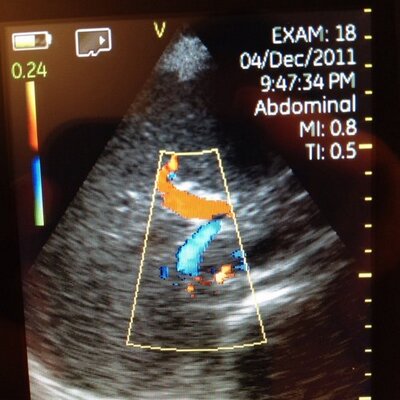
Any comments from echocardiography colleagues?


Amy Magdalany, PharmD, BCEMP retweeted

Ninety nine times out of 100 you can replace the phrase “let’s try push-dose epi” with “we should’ve ordered levo ten minutes ago.”
Amy Magdalany, PharmD, BCEMP retweeted
Documentation tip for new doctors and nurses:
ALWAYS find out the breed, color, and name of the dog or cat involved in your patient’s injury.
Not because it influences the science or medicine, but because these are the small windows of happiness that sustain our days.


Amy Magdalany, PharmD, BCEMP retweeted

Antibiotic duration for bacteremia is something most of us learned by habit, not by trial data. In the latest episode of Beyond Journal Club, a collaboration between @COREIMpodcast and NEJM Group, we walk through the BALANCE trial and use it as a lens to revisit how the factors of host, organism, and source should guide treatment; when is shorter really enough, and when isn’t it?
🎧 Listen to the full episode: nej.md/3XNgajK
📖 Further reading
Original Article by N. Daneman et al.: Antibiotic Treatment for 7 versus 14 Days in Patients with Bloodstream Infections nej.md/3Z5bTJD

ALT An illustration explaining the BALANCE trial


Amy Magdalany, PharmD, BCEMP retweeted

New EAST guideline for management of acute incarcerate or strangulated inguinal hernias! #EAST #Hernia #AcuteCareSurgery
@EAST_Trauma; @mfarrellmd; @jordanmkirsch; @notoriousRBGmd; @Alistair_MD; @ajperezmdmph
journals.lww.com/jtrauma/abs…

Amy Magdalany, PharmD, BCEMP retweeted
The 2025 AASLD/IDSA Practice Guideline on the treatment of chronic hepatitis B was released on their website on November 4, 2025.
Here’s what has changed compared to the previous 2018 guidelines, according to ChatGPT.
🔴Pregnancy — antiviral prophylaxis to prevent mother-to-child transmission (MTCT)
• 2018: Suggest antiviral therapy in the third trimester for women with HBV DNA >200,000 IU/mL; TDF preferred in pregnancy; antiviral prophylaxis could be stopped at delivery or up to 4 weeks postpartum.
• 2025: Strong recommendation to start TDF (preferred) or TAF for persons with HBV DNA >200,000 IU/mL, optimally at gestational week 28 (third trimester). Adds that TAF has accumulating safety data and that earlier start (week 16) may be considered when infant HBIG is not available; recommends that prophylaxis can be stopped at delivery if there is no ongoing maternal indication, and gives detailed monitoring after discontinuation.
🔴Drugs preferred in pregnancy
• 2018: TDF preferred (TAF was newly approved but data limited for pregnancy); lamivudine/telbivudine shown to reduce MTCT historically but TDF preferred.
• 2025: TDF (preferred) or TAF (safety data reviewed) — TAF specifically acknowledged as an option with data cited. Notes insufficient safety data to recommend entecavir in pregnancy.
🔴Timing of prophylaxis (earlier initiation / special circumstances)
• 2018: Recommended third-trimester (generally) for high viral load; postpartum monitoring advised.
• 2025: Keeps week-28 initiation as optimal but adds: consider starting at week 16 to control viremia when infant HBIG isn’t available (new RCT evidence cited); also suggests earlier initiation if invasive procedures (e.g., amniocentesis) are anticipated.
🔴High-risk transmission (HBsAg+ persons in settings with risk of infecting others)
• 2018: Emphasized counseling, vaccination of contacts, and reducing exposure; antiviral therapy for prevention considered in pregnancy/high-risk situations.
• 2025: For viremic persons not meeting disease-specific treatment criteria but in high-risk transmission scenarios, the guideline suggests shared decision-making about antiviral therapy (conditional, very low certainty). Implementation considerations expanded (vaccination status of contacts, immunocompromised contacts, etc.).
🔴Immune-tolerant phase (HBeAg+, very high HBV DNA, normal ALT)
• 2018: Generally did not recommend treatment for true immune-tolerant adults; treatment was recommended for immune-active disease; caution about treating children/adolescents — monitor for transition. (Third-trimester pregnancy guidance separate.)
• 2025: Refines the approach: suggests antiviral therapy for immune-tolerant persons >40 years or those with significant inflammation (≥G2) or fibrosis (≥F2); for persons <40 years without fibrosis/inflammation the guideline recommends shared decision-making and periodic monitoring. (So the 2025 guidance provides clearer age/fibrosis/inflammation thresholds.)
🔴Indeterminate phase (HBeAg-negative, non-cirrhotic with intermediate labs)
• 2018: Recommended individualized decisions; monitor and treat when meeting immune-active criteria.
• 2025: Explicitly recommends shared decision-making for these HBeAg-negative, indeterminate patients and emphasizes reassessment at each visit if treatment is deferred (conditional recommendation, very low certainty).
