

Combining frontier AI & frontier biology to help scientists cure or prevent disease
Joined June 2017
- Tweets6.1K
- Following617
- Followers32.3K
- Likes4.9K





Folding large biomolecular complexes takes models that can handle longer sequences without running out of compute and memory.
Join Biohub, @nvidia, and @AnthropicAI on Nov 18 at 1pm PT for a webinar on long-context structure prediction with ESMFold2.
Register: biohub.zoom.us/webinar/regis…

biohub retweeted

Zuckerberg’s Biohub Wants to Cure All Disease. Here’s What’s Missing
Can AI help cure all disease?
Alex Rives (@AlexRives), Head of Science at @Biohub, says the biggest holdup is likely not the AI but rather the data: we have barely measured how cells behave. In this conversation, he explains the $1.8 billion effort to generate the data needed to build a "virtual cell."
We talk about how a language model trained on proteins started revealing biology on its own, what a virtual cell actually is, and why so much of this money goes to measurement. We also get into zero-shot protein design, what could shorten the 10-year path to a new drug, what custom medicines for a single patient would require, why Alex says biorisk today comes down to the lab rather than the AI, and the idea of a universal immune system.
Biohub is a nonprofit founded by Mark Zuckerberg (@finkd) and Priscilla Chan, with a mission to cure or prevent all disease. It releases its main protein models openly, including the ESM family that Alex started at @Meta's fundamental AI research lab.
CHAPTERS
0:00 Preview
0:42 Introducing Alex Rives and Biohub
1:48 The $1.8 billion announcement
2:52 Alex on the effort to map the cell
3:37 What is a virtual cell?
4:58 The data gap: why proteins are ahead of cells
7:34 ESM: the first large language model for proteins
9:43 Proteins explained: a 20-letter alphabet
10:30 ESM vs. AlphaFold
13:14 How ESM learns biology by filling in the blanks
14:39 From proteins to cells
15:23 What data do we need to generate?
16:55 Transcriptomes and spatial transcriptomics explained
17:44 Why this needs wet labs
18:56 Will AI replace researchers?
21:01 Why drugs take 10 years, and how to shorten that
23:01 The future of custom medicines
23:40 Zero-shot protein design
25:20 A custom therapy for every patient
26:57 From discovery science to engineering science
29:05 What's missing for custom medicines?
30:22 N-of-one therapies and baby KJ
31:46 Do we need more wet labs?
33:42 Why wasn't anyone generating this data?
38:07 How serious is AI biorisk?
39:51 Gene synthesis screening explained
40:51 A universal immune system
43:37 A call to action
KEY TAKEAWAYS
- Alex calls the core problem a "fundamental data gap." AI for proteins was built on about half a century of data, and nothing comparable exists yet for cells.
- A virtual cell is a model that predicts what a cell will do if you change something. The test is whether its predictions match what happens in a real experiment.
- ESM learned by guessing hidden amino acids. Nobody told it about structure or function, but that information emerged in what it learned.
- Zero-shot design narrows hundreds of thousands of computer-generated candidates to about 100 to test in the lab. Alex describes it as 24 hours of computation and seven days of lab work.
- Custom medicines aren't here yet. Therapies still have to be safe and developable, and the infrastructure and regulatory rules weren't built for a drug only one person will take.
- On biorisk, Alex says "today it's not a risk" and that the key barrier is the experimental laboratory, not AI. He says we need gene synthesis screening, and that defensive applications need to stay ahead.
- Most of this isn't built yet. Alex expects a first dataset in about a year and useful models within five, and those are expectations rather than promises.
Biohub’s new Imaging Residency Program embeds 18 leading scientists from 10 institutions in our research teams to tackle hard problems in biological imaging, from cryo-electron tomography to advanced light microscopy and computational imaging.
Meet the Residents: biohub.org/blog/imaging-resi…
Biohub scientists built a model that recognizes sepsis from blood-cell images without being told what to look for.
Remo-ID, trained only on sample-level labels, got 43 of 47 samples right in an early study.
Led by Paul Lebel and team: biohub.org/blog/ai-sepsis-de…

biohub retweeted

The next frontier for AI reasoning could be understanding how human cells behave.
@biohub's @lorigoler explains why new biological datasets could help AI make scientific discoveries:
"The idea is to sort of create this almost an oracle that's sort of like a generalizable reasoning model for the cell and for biology."
400 million people live with a rare disease. Fewer than 5% have an approved therapy. Applications are open for Cycle 4 of Rare As One, funding patient-led organizations working on rare respiratory disorders, rare immune dysregulation disorders, and sarcomas. Apply by 12/15: bit.ly/RAO-cycle-4

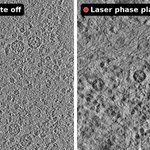
New on the cryoET Data Portal: three cryo-electron tomography datasets benchmarking the dual laser phase plate (xLPP). The microscope captured PP7 virus-like particles in an E. coli cell, and results confirm the unprecedented resolution enabled by the xLPP technology.
The portal puts the data in researchers’ hands to explore, evaluate, and build on. Check it out: cryoetdataportal.czscience.c…

After reconstructing a 3D volume of a sample from a series of images, Biohub scientists use an image processing technique called subtomogram averaging to determine structures of macromolecules (such as proteins) in situ. With the xLPP, structures approach atomic resolution.
Learn more about the laser phase plate:
biohub.org/news/laser-phase-…
🧵 The #zebrafish imaging data from @ZFINmod is immensely valuable to researchers, but users are limited to browsing it one gene at a time.
gene2fish, a new Biohub tool, lets you compare dozens of genes side by side, saving hours of time. Try it on Zebrahub: zebrahub.sf.czbiohub.org/gen…

The work was led by Biohub’s Vera Janssen and @loicaroyer, in collaboration with the software engineering team. 🐟
Read the preprint here: biorxiv.org/content/10.64898…

biohub retweeted

Some astute observers have noted that our @biohub API for ESMFold2 doesn't seem as accurate as some other API services. This is because we predict only in single sequence mode.
Now a max accuracy option exists for in the API to be able to quickly fold your favorite protein!

biohub retweeted

Single-cell atlases give us marker genes. Where are they expressed in the embryo? 🐟🧬🔬
gene2fish shows 53,595 in situ images of 8,263 zebrafish genes side by side, in one gene × stage grid. Free, in the browser. Led by Vera Janssen at @biohub 🧵
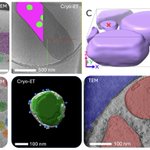
🧵 CryoET reveals molecular organization inside cells, but annotation limits analysis at scale. SABER (Segment Anything Based Electron Recognition) pairs a foundation video model with sparse expert labels to segment 3D cellular structures, thus reducing annotation time by 10x and addressing a major bottleneck in biomedical research.
Access the tool:
chanzuckerberg.github.io/sab…

Read the paper in @Patterns_CP:
cell.com/patterns/fulltext/S…

The Virtual Biology Initiative is a $1.8B commitment to generate the right data to make accurate predictive models of biology, unlocking a greater understanding of disease and opening new paths for cures.
@alexrives joined @labenz on The Cognitive Revolution podcast to discuss this coordinated international effort, and more.
Tune in: cognitiverevolution.ai/a-wor…

biohub retweeted

Biohub & partners just committed $1.8B to AI-ready biological data 🧬
The goal: a "world model of life" – give it a cell's state + inputs, get back a distribution of what happens next.
@alexrives, Head of Science at @biohub thinks that's attainable in ~5 years 👇
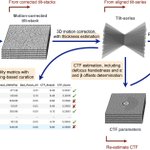
Shawn Zheng leads a computational group working to streamline cryo-electron tomography (cryoET), a cutting-edge technology that can image cellular structures in 3D at near-atomic resolution.
His team developed AreTomoLive, which automates cryoET reconstruction and denoising in real time and cuts processing from months to days.
“It feels like we’re on the eve of another revolution,” he says in this @SBGrid profile.
Read more:
sbgrid.org/software/tale/pro…

biohub retweeted

“Together, the organizations are investing $1.8B in funding, data, computation, and new measurement technology, the largest coordinated commitment to generating AI-ready biological data to date. The result will be an open resource for the research community that provides the foundation for greater understanding and ultimately treatment of human diseases.” 👏🏼👏🏼👏🏼
As drug design becomes better / faster / cheaper, knowing which targets to pursue will become even more important. Hope this resource helps our industry increase our collective probability of clinical success by picking the best disease targets
Thank you @biohub @NIH @ENERGY @GoogleDeepMind @IsomorphicLabs @Meta and all the contributing investigators and labs

🧵 Biohub, @ENERGY, @NIH, and new funding partners today announced a major expansion of an international effort to generate and make accessible the data enabling predictive AI models of biology. Together, the organizations are investing $1.8 billion in funding, data, computation and new measurement technology - largest coordinated commitment to map the biology of the cell to power development of digital models of biology. bit.ly/3UhjoxD
