

Professor & Research Leader. Interested in optimising training, the scientific process, & the future of sport & sport science. https://xitter.cf/t.co/8xIbT2Ra5t…
Melbourne on Boon wurrung land
Joined January 2014
- Tweets8.6K
- Following584
- Followers19.4K
- Likes5.6K


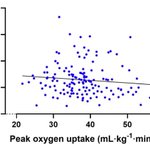
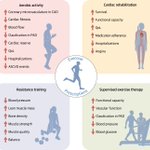
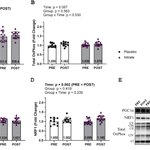
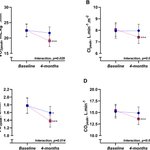
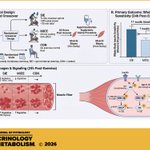
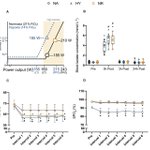

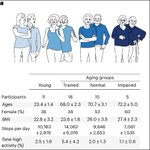
Our latest work in @natureComms, led by @javi_iup: Sprint exercise disrupts mitochondrial ultrastructure, driving a unique mito stress response & remodelling in men go.nature.com/48yZIbJ supports targeted exercise prescriptions to achieve specific mito adaptations.
Thread 🧵👇🏽

Fatmax is strongly influenced by fuel availability and upstream substrate delivery, limiting its validity as a stand-alone proxy for mitochondrial function buff.ly/6nJ8q4G

David Bishop (🦋 also bluespotscience.bsky.social) retweeted

Investigadores y profesionales del #deporte se reunirán en @inefmadrid @La_UPM para compartir avances científicos sobre el #entrenamiento de fuerza, el #rendimiento deportivo y la #salud.
🔝Ponentes internacionales:
David Bishop @BlueSpotScience
Henning Wackerhage @HeWaHippo
Recent articles in npj Exercise Medicine & Health: buff.ly/fzAWAUX
nicely display the scope and ambition of this new journal.

New article in npj Exercise Medicine & Health -
Maternal cardiorespiratory fitness is associated with metabolic hormone concentrations in human milk: buff.ly/UjZmQ6i

Exercise should be prescribed as a core component of cardiovascular prevention and disease management: buff.ly/Ffn2St3

Small increases in some mitochondrial proteins with resistance training in older adults
buff.ly/5pz5FPm

David Bishop (🦋 also bluespotscience.bsky.social) retweeted

After about 25 minutes of sitting, the muscles in your thighs are almost completely quiet. A new study in npj Exercise Medicine and Health tracked this in real life, and it may help explain why long sitting is so hard on metabolic health.
Prolonged sitting raises the risk of diabetes, heart disease, and some cancers. Most studies measure how long people sit, usually with accelerometers. That tells you nothing about what the muscles are doing. Not all sitting is the same, and muscle activity may be the missing piece.
Researchers from Australia, Finland, and the UK used shorts with electrodes woven into the fabric. This is electromyography, or EMG, which detects the electrical signals muscles produce when they switch on. They tracked 84 adults across three cohorts, including people with type 2 diabetes, during 7,684 sitting bouts in normal daily life.
Why muscle activity matters: muscles are a major site where your body clears sugar from the blood. When they contract, they pull in glucose with less need for insulin. When they go quiet for long stretches, that disposal system idles.
What they found:
• Muscle activity drops fast. Detectable activity fell to about 10% at 9 minutes, 5% at 12 minutes, and 1% at roughly 26 minutes into a sitting bout. The decline follows a power-law curve, steep early and then flattening out near zero.
• Long sitters were quieter overall. People who usually sat for 25 minutes or more at a time had about 6.5 minutes of muscle activity per hour of sitting. People who sat in shorter bouts had about 10.4 minutes.
• What you did before sitting mattered. Sitting bouts that followed longer (over 10 minutes) or more intense activity had more muscle activity. Bouts that followed only standing had the least.
• Breaking up sitting added up. More frequent and more intense interruptions meant about 5 extra minutes of muscle activity per hour of sitting.
The practical takeaway is that the first 10 to 25 minutes of a sitting bout is when your muscles switch off. Interrupting sitting before that window closes, and doing it with more than just standing, keeps them engaged.
There are limits. This was observational, so it shows how muscle activity behaves, not that boosting it directly improves blood sugar or disease outcomes. The sample was also small, and very long sitting bouts were rare, so estimates there are noisier.
But it shifts the question. Instead of asking how many hours you sit, it may be more useful to ask how long your muscles stay silent. That is a more specific target for the metabolic damage sitting seems to cause.
For longevity, the implications are practical but untested, since the study didn't test any intervention. Skeletal muscle is the largest site of glucose disposal, and it is also a tissue that declines with age. Hours of silent muscle each day may add up to a chronic reduction in glucose clearance and in the signals that keep muscle healthy. If so, a short walk, a set of squats, or a few calf raises every 20 minutes may matter more than one hard workout followed by eight hours in a chair. That second point is my inference, not something the study tested.
It also means exercise and sitting are not the same variable. You can train regularly and still spend most of your day with idle muscles. Daily habits in your 30s, 40s, and 50s shape insulin sensitivity and muscle quality in your 70s and 80s.

David Bishop (🦋 also bluespotscience.bsky.social) retweeted


A multicomponent physical activity intervention attenuated reductions in cardiorespiratory fitness & exercise cardiac function in adults undergoing Allogeneic Stem Cell Transplant buff.ly/S0KlbRn

Acute metabolic and molecular responses to sprint interval versus moderate-intensity continuous exercise in healthy young men buff.ly/B30zoCS

Higher Workload, not Hypoxia, Enhances Acute Mitochondrial Respiratory Responses to High-Intensity Interval Exercise in Men with Overweight or Obesity
buff.ly/LQKtM5n


Delayed molecular aging, preservation of energy metabolism and enhanced exercise response in exercise-trained human muscle
buff.ly/6978wPN

Sprint-interval training only increases mitochondrial content and respiration when combined with post-exercise blood flow restriction
buff.ly/Of42NxA

David Bishop (🦋 also bluespotscience.bsky.social) retweeted

The REDs study is back and recruiting! What happens when someone increases their training without increasing the amount of food they are eating? We are looking for men 18 to 40 who are cycling and/or running at least 3 hours per week to participate in this groundbreaking study.

Free access to my first editorial for npj Exercise Medicine & Health
buff.ly/d1GEaq6
Submissions tripled last month...exciting times for this new journal and the field!

David Bishop (🦋 also bluespotscience.bsky.social) retweeted

Insufficient sleep was significantly negatively correlated with life expectancy at the state-county level in the United States buff.ly/X2YvQ5p

David Bishop (🦋 also bluespotscience.bsky.social) retweeted
Preserved mitochondrial respiration in presence of oxidative stress and reduced mitochondrial mass after 10-day bed rest in older adults: buff.ly/u5aFISA
