

Market Strategist at AG Capital. Translator of global macro trends into actionable investment insights. Always asking "what if" to manage risk and cut noise.
Johannesburg, South Africa
Joined December 2025
- Tweets345
- Following229
- Followers444
- Likes291









Casey Sprake retweeted

[OPINION] Casey Sprake argues that Africa’s property opportunity will depend less on land or demand and more on reliable infrastructure, regulation, occupiers and access to patient capital.
#Moneyweb #RealEstate
ow.ly/MoRv50ZRjnt

Casey Sprake retweeted

AG Capital says rate cuts alone cannot fix growing demand for fixed-income capital.
@DieVisser shares insights from
AG Capital's Casey Sprake here.
#financenews #AI #investments
citywire.com/za/news/ai-borr…

Casey Sprake retweeted

The US housing market is in for a wild ride.
As rates rise to new highs, the average interest rate on a 30Y Mortgage is nearing 7%.
In other words, if you bought a home in 2021 at 3% interest, moving to a new home today would increase your rate by ~400 basis points.
Assuming you buy a $500,000 home with 20% down:
1. Monthly Payment at 3% Interest: $1,686/mo
2. Monthly Payment at 7% Interest: $2,661/mo
That's an increase of almost $1,000/mo, or +58%.
The already stagnant housing market is set to freeze.


Casey Sprake retweeted

It is inexcusable that South Africa is so dependent on donors when the epidemic is so serious, so old and so devastating.

Following growing calls for greater access to the HIV prevention injection lenacapavir, the government has revealed plans for local manufacturing. ewn.co.za/2026/07/31/health-…
Casey Sprake retweeted

That changes the usual argument for state intervention. Markets have already delivered access. What remains for the state is rule of law, competition policy and skills, the conditions that let productivity gains actually spread. Poland shows what is possible. Its income per person in 1992 matched South Africa's today. Twenty years later, its living standards had doubled.
Politics, not technology, is the constraint. Starlink remains unlicensed in South Africa over an ownership dispute, while Argentina moves to attract Al firms with new legal structures for Al-run companies.
Casey Sprake retweeted

Excluding any US-Iran talks about Hormuz, China remains the most important factor for oil prices for the next 60 days or so. All eyes on Beijing.
Ex-China Asian oil imports have recovered to normal levels (see 📈⤵️), within the 2023-2025 range. What China does next is crucial.

Casey Sprake retweeted
[PODCAST] Casey Sprake of AG Capital tells @SimonPB on #MoneywebNOW why rising short interest is exposing where investors see real balance sheet risk, with Spar standing out for its fundamentals.
#MoneywebPodcast
Catch all the insights here: ow.ly/hePL50ZlYNx

Casey Sprake retweeted
Remember this when voting in November.
Nobody would take this deal. So why do we?

Unbelievable @sarstax @CyrilRamaphosa South African taxpayers only get 5c value for every R1 they pay businesstech.co.za/news/fina…

Casey Sprake retweeted

Today’s @CoderaAnalytics post by Jurgens Fourie shows that the SARB's May MPC projections implies one of shortest tightening cycles since the adoption of inflation targeting.

Casey Sprake retweeted
Astonishing super profits. This is a big cycle, but it's a cycle.


Casey Sprake retweeted

In the midst of all the chaos, Larry the cat is proving to be one of the few constants in Downing Street as he prepares for a potential seventh new owner
Follow the latest updates 👇
telegraph.co.uk/politics/202…

Casey Sprake retweeted

this year’s Comrades Marathon broke the record for novice runners 🔥 🔥
across the country Hyrox events sell out, Pilates studios are full, cycling clubs are thriving & padel courts are booked
massively inspiring to see the investment into health & wellness!! 🦾🦾
Casey Sprake retweeted

What timeline are we on man.
There’s a $60 million UFC cage on the White House lawn for the president’s 80th birthday. 125,000 guests. 494 port-a-potties. He compared it to the Eiffel Tower and said maybe they’ll never take it down.
The world’s first trillionaire was minted yesterday. SpaceX IPO. One person now holds more wealth than the GDP of most countries.
The government is negotiating to own a piece of OpenAI. The CEO walked into the White House and pitched it himself. They’re calling it a Public Wealth Fund.
That same government killed OpenAI’s biggest competitor’s models on a Friday night. The reason? A verbal jailbreak claim from an unnamed company. The same jailbreak works on OpenAI’s models. Nobody touched them.
The competitor got blacklisted by the Pentagon four months ago. Their crime? Refusing to let the military use their AI for mass surveillance of American citizens. A judge called it retaliation. The Pentagon did it anyway.
Both AI companies filed to go public in the same two-week window. Both targeting trillion-dollar valuations. One has a government equity deal in progress. The other can’t keep its products online.
The engineers who built the banned models can’t use them anymore. Because of their passports.
And an AI company that spent thousands of hours cooperating with government safety testing got punished harder than any company that didn’t bother.
UFC on the White House lawn. A trillionaire. Government-owned AI. Export controls based on phone calls. Cage fights and trillion-dollar IPOs in the same news cycle.
Watch the film titled Idiocracy. That’s the timeline we’re on.

The US government, citing national security authorities, has issued an export control directive to suspend all access to Fable 5 and Mythos 5 by any foreign national, whether inside or outside the United States, including foreign national Anthropic employees.
The net effect of this order is that we must abruptly disable Fable 5 and Mythos 5 for all our customers to ensure compliance.
Access to all other Claude models is not affected.
We apologize for this disruption to our customers. We believe this is a misunderstanding and are working to restore access as soon as possible.
Read our full statement: anthropic.com/news/fable-myt…

Casey Sprake retweeted

Barbell strategy for killing it in an age of superhuman AI:
Simultaneously get as close to AND stay as far away from AI as humanly possible.
1. Get close — play with AI models, use them to help you think, ask them to teach you about the world, get them to help you create, work with them to write code, understand what makes them tick, embed them into your everyday life, have fun.
2. Stay far away — learn to tell stories, make eye contact, build a team, lead with courage, connect far-flung ideas, build lifelong friendships, debate persuasively, think forbidden thoughts, handwrite ideas, confess your fears, fall in love.
Spend less time trying to master mental transformations that are purely mechanical — building spreadsheets, analyzing trades, balancing accounts, writing code by hand, following playbooks, searching for needles in haystacks. These are the emerging no-man's land, squarely the domain of AI.
Venture to the extremes. That’s where all the fun is anyway.
Casey Sprake retweeted

The 12.5% tariffs the U.S. intends to levy on South African goods will be challenging. Still, it is far better than where we are coming from, where South Africa had to face a 30% tariff. In agriculture, some of our competitors, like Australia and New Zealand, will face a similar tariff level. The U.S. remains an important market for South Africa’s agriculture, accounting for around 4% of exports valued at US$15.1 billion in 2025. Citrus, raisins, table grapes, and wine are amongst the most exposed industries. Again, oranges, juices and nuts still have exemption from these tariffs, which helps a bit.
Casey Sprake retweeted

The MPC decided to increase the policy rate by 25 basis points, to 7%, effective from 29 May. #SARBMPCMay26

Casey Sprake retweeted

Johannesburg boasts more millionaires than anywhere else in Africa. So why can't it pay its bills? bloomberg.com/news/features/…

Casey Sprake retweeted
[POLL] @simonPB is chatting with @CaseySprake about food inflation risks due to a potential El Niño and higher energy input costs.
Do we need a rate hike next week to ensure the SARB is ahead of the curve on rates?
Livestream the #podcast: bit.ly/3fj3DO5
100%No, we’re struggling
0%Yes, get in early
0%We need cuts
2 votes • Final results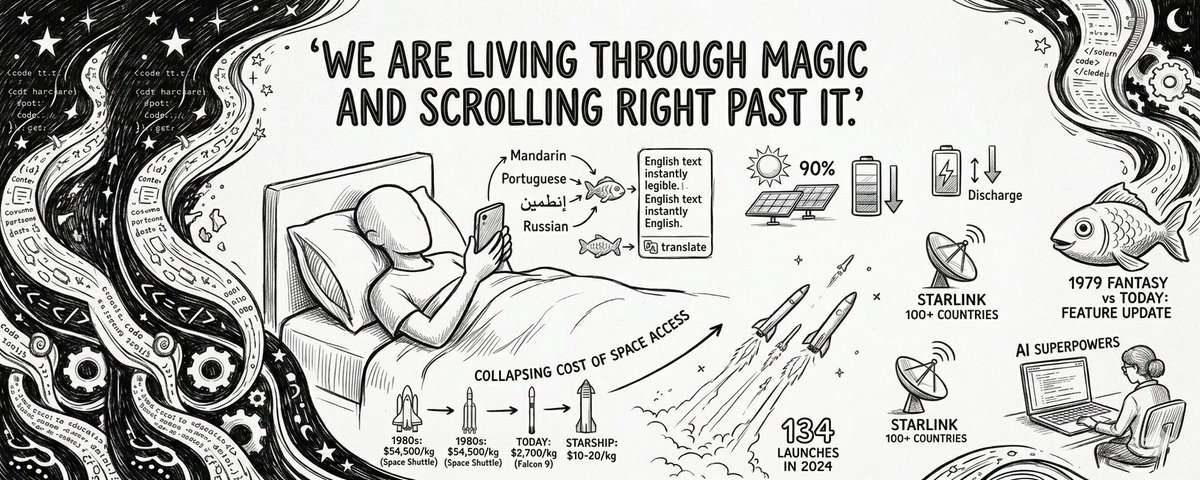
Casey Sprake retweeted

IMF Growth Forecast 2026:
🇺🇸 US: 2.3%
🇩🇪 Germany: 0.8%
🇫🇷 France: 0.9%
🇮🇹 Italy: 0.5%
🇪🇸 Spain: 2.1%
🇬🇧 UK: 0.8%
🇯🇵 Japan:0.7%
🇨🇦 Canada: 1.5%
🇨🇳 China: 4.4%
🇮🇳 India: 6.5%
🇷🇺 Russia: 1.1%
🇧🇷 Brazil: 1.9%
🇲🇽 Mexico: 1.6%
🇸🇦 Saudi Arabia: 3.1%
🇳🇬 Nigeria: 4.1%
🇿🇦 South Africa: 1.0%
imf.org/en/publications/weo/…
