

为你带来最新资讯的专业 #crypto 媒体,与创新者共建 #Web3 世界 APP 下载:https://xitter.cf/t.co/n27x9dXz0G 联系我们:[email protected]
Web3
Joined February 2021
- Tweets29.1K
- Following1.7K
- Followers46.6K
- Likes7.9K






RootData 热门股票 CEX 份额数据:24h 成交额前三股票资产份额排名前三的均为 Binance、OKX、Bitget
据 RootData 热门股票 CEX 份额数据,今日 24h 成交额前三的热门股票资产分别为 SPCX、SOXL、SNDK,成交额分别为 54.5 亿美元、40.9 亿美元、34.3 亿美元。
其中,SPCX 成交额前三的交易所为 Binance、OKX、Bitget,成交额分别为 43.4 亿美元、6.98 亿美元、1.73 亿美元;SOXL 成交额前三的交易所为 Binance、OKX、Bitget,成交额分别为 26.8 亿美元、4.44 亿美元、4.23 亿美元;SNDK 成交额前三的交易所为 Binance、OKX、Bitget,成交额分别为 21.7 亿美元、8.80 亿美元、1.75 亿美元。
值得注意的是,三大资产的 Top 5 交易所成交集中度均超过 99%,其中 SPCX 达 99.77%,头部集中效应显著。

DeepSeek 完成约 1000 亿元融资:宁德时代、腾讯领投
据 Bloomberg 报道,DeepSeek 在最新一轮融资中筹得约 1000 亿元人民币(约 150 亿美元),是中国规模最大的融资之一。
知情人士称,DeepSeek 在与投资者谈判期间至少两次上调融资目标,先从 500 亿元提高到 800 亿元,最终达到上述金额。
宁德时代和腾讯是本轮最大的投资方之一。本轮融资将用于支持 DeepSeek 与 Anthropic、OpenAI 等美国 AI 公司在全球竞争。

🇨🇳 DeepSeek raises RMB 100B (~$15B) in one of China’s largest funding rounds.
CATL and Tencent are among the largest investors. The funds will help DeepSeek compete globally with OpenAI and Anthropic.

Glassnode:比特币财库公司月增持不足峰值一成
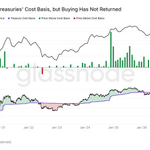
据 Glassnode 最新周报显示,截至 10 月 19 日,其追踪的比特币财库公司平均持仓成本约 8.02 万美元。
比特币日收盘价自 9 月 18 日以来持续高于该水平,但企业买入并未随价格回升恢复。6 月以来各月增持规模均不足 2024 年 11 月峰值的 10%。

Anthropic 推出 Claude Duet,7 x 24小时“主动型Agent”
Claude Duet 发布当天,OpenAI 的 Tibo 来到评论区,替自家的 Dot 打了个招呼:
“Dot,认识一下 Duet。Duet,认识一下 Dot。你们俩好好相处。”
继 Grok Bot、Meta Muse、OpenAI Dots 之后,Anthropic 也加入了Personal Agent 的竞争。
1、主动找你汇报,也能在你离开后继续工作
Duet 基于 Opus 5.5,主要面向专业人士和小企业主。它每天早上发送晨报,汇总已连接应用的重要事项,并判断哪些需要用户关注、哪些可以稍后处理。
官方披露的早期案例里,品牌策略师 Mya Dalton 有一通客户电话紧挨着航班起飞。Duet 在准备会前简报时发现了这个安排,主动提出调整时间。
它还配有自己的云端虚拟机和浏览器。用户关掉电脑、离开手机后,交代过的任务仍可以继续推进。
2、6000 多个连接器和插件,把不同软件里的工作接起来
Duet 可以沿用 Claude 账户里的记忆、技能和已连接应用,并调用 Claude Marketplace 中超过 6000 个连接器和插件。
例如,从 Stripe 找出未付发票并起草催款信,在 Gusto 中准备工资数据,通过 Docusign 发送待审核和签署的协议,或者搭建经营看板、制作财务预测和网页应用。
官方案例中,一位管理约 110 名员工的餐饮连锁店老板,已将它用于会计、客服、营销和逐店梳理发票。
3、关键操作,仍要本人批准
发送消息、付款、签署文件或删除内容前,Duet 会展示准备执行的操作,等待用户确认。证券交易和账户间转账,即使得到批准也不在允许范围内。
企业采购可以通过 Stripe 的 Link 或 Shopify 的 Shop Pay 完成。其中 Link 会要求用户批准支出,再使用虚拟卡付款。
4、首批开放有门槛,后台工作也消耗额度
目前是研究预览,首批通过候补名单向美国 Pro、Max 用户开放,支持 iOS、Android 和网页端,包含在现有订阅中。
Duet 通常每隔数小时检查一次已连接账户,后台检查与任务执行都计入套餐用量。官方也说明,早期版本仍可能误判对话或事情的紧急程度,目前尚不能向用户展示它的浏览器。
5、71 天,四款 Personal Agent 接连亮相
8 月 11 日,Grok Bot 开放测试;9 月 8 日,Meta 推出 Muse;9 月 29 日,OpenAI 发布 Dots;10 月 21 日,Claude Duet 进入研究预览。
从第一款到第四款,只隔了 71 天。几家的定位和权限不同,但都给 Agent 配上了云端电脑,让它跨应用执行任务,并在用户离开后继续工作。
从这些产品的设计看,各家正在争取同一种使用习惯:用户把邮箱、日历和业务系统接进来,把项目背景持续留在这里,再将越来越完整的工作交给同一个 Agent。
谁能稳定交付、少让用户来回补充和收尾,谁就更有机会成为下一次交代工作时的首选。从 Chatbot 到 Personal Agent,AI 的应用方向正在越来越走进人类生活,未来已来。


英国 FCA 发布 DeFi 指南草案,明确授权边界与风控要求
英国金融行为监管局(FCA)发布两份涉及DeFi的指南草案。FCA 强调,是否需要授权取决于实际业务活动,使用智能合约、自动化或去中心化治理本身不决定监管归属。仅提供技术接入的服务可能适用排除条款。
草案还指导受监管企业管理DeFi相关的运营韧性及金融犯罪风险。两份文件均于11月18日结束征求意见,最终指南计划于2027年1月发布。
英国新加密资产监管制度将于2027年10月25日生效。现有相关企业若希望适用过渡安排,须在2027年2月28日申请窗口关闭前提交授权申请。

SpaceX 与特斯拉计划 2027 年上半年合并
据知情人士透露,特斯拉和 SpaceX 计划在 2027 年上半年宣布合并交易,合并后公司总市值将达到约 3.7 万亿美元。
此举旨在特朗普本届政府任内完成合并,以巩固马斯克的企业控制力。美国中期选举临近,若民主党控制国会,马斯克及其企业可能面临调查。

钱志敏案中国受害者获准上诉,涉逾6万枚比特币
据财新报道,当地时间10月16日,英国高等法院批准中国受害者就钱志敏案的法律适用裁决提出上诉。该案涉及逾6万枚比特币,约1.6万名中国受害者已参与英国追索程序。庭审还讨论了诉讼费用、申请人继续追索及退出安排等问题。
此前,法院于10月12日裁定,受害者对涉案比特币的财产权主张应适用中国法律。财新称,这可能影响受害者分享比特币增值收益的诉求,投资者或最多只能追回本金及利息。此次获批的是上诉许可,资产归属及分配结果仍待进一步审理。


钱志敏“管家” 560 万英镑资产被没收,中国受害者或难分享比特币增值收益
据英国《每日邮报》报道,钱志敏的“管家”、48 岁马来西亚籍男子 Seng Hok Ling,已向英国政府全额交还约 560 万英镑,另支付 1990 英镑利息。上述款项主要来自其被捕时查获的加密资产。
Ling 曾协助钱志敏转移加密资产、安排住所及雇佣人员,帮助其躲避警方追查。他于 2025 年 11 月被判处 4 年 11 个月监禁,法院今年 1 月对其作出财产没收令。钱志敏主导的骗局发生于 2014 年至 2017 年,涉及逾 12.8 万名中国受害者。
受害者赔付方面,据财新报道,英国高等法院 10 月 12 日认定,中国投资者对涉案逾 6.1 万枚比特币提出的财产权主张,应依据中国法律判断。参与英国追索程序的约 1.6 万名中国受害者,或最多只能追回本金及利息,难以分享比特币上涨带来的增值收益。

杰米·戴蒙(摩根大通CEO)谈比特币
2017年: 比特币是欺诈,比郁金香泡沫还糟。
2017年: 谁在摩根大通交易比特币,我立刻开除他。
2021年: 它五年内涨十倍也不奇怪,但我不在乎。
2021年: 我个人认为,比特币一文不值。
2022年: 加密货币是"去中心化的庞氏骗局"。
2023年: 比特币本身是被吹大的欺诈,是一块宠物石。
2023年: 如果我是政府,我会把加密货币关掉。
2024年: 到2100万枚时,中本聪会出现,狂笑,然后所有比特币消失。
2025年:我不知道比特币本身有什么用,但我捍卫你抽烟的权利,就像我会捍卫你购买比特币的权利。我个人永远不会购买比特币。
🤡2026年报告:比特币将成为未来10年回报最高的资产


Anthropic CEO 回应安全质疑:一家不断提醒 AI 风险的公司,为什么还要继续开发更强的模型?
起因是 AI 安全组织 Encode AI 的 Nathan Calvin 梳理了 Anthropic 过去一年的政策调整与商业决策,质疑公司是否在扩张中淡化了安全承诺。Dario 随后回应,可以下面从四点来看:
1、保持技术领先,才能用实际做法影响行业
Dario 把自己的策略称为“向上竞争”(race to the top):Anthropic 需要留在技术最前沿,证明先进模型可以被负责任地开发,再推动其他公司提高安全标准。
在他的思路里,技术能力和安全投入需要一起往前走。公司做出的安全实践,才有机会成为同行参照。
2、安全承诺,要看公司愿意付出什么代价
他列出了 9 项带来商业成本的安全决策,包括限制 Mythos 模型的公众访问,以及对可能涉及生物武器滥用的请求采取严格拒绝策略。
这些限制会影响产品使用和商业机会,也是他用来说明公司仍在坚持安全目标的具体例子。他同时承认,部分问题可以处理得更好,包括近期提交给美国议员的 AI 安全法案草案。
3、独立评估,需要让外部团队看到更多
Anthropic 已承诺,让独立评估人员更深入地接触模型及内部信息,同时保留其独立性。
下一步,公司计划在 2026 年 12 月 15 日前发布政策提案,讨论政府如何支持这类评估:钱由谁出、评估人员能看到什么,以及怎样避免评估受被评公司的影响。外部团队能查多深,会直接影响评估的说服力。
4、除了模型能不能上线,还要考虑研发会不会太快
Anthropic 在 10 月 19 日更新的安全路线图中提出,AI 自动化研发可能让技术进步快于治理和安全措施的跟进速度,研发速度本身也可能成为风险。
公司因此计划在 2027 年 1 月 15 日前提出针对研发节奏的政策框架,或公开解释为何决定不提出。讨论范围由此延伸到更早的环节:模型能力不断提升时,安全研究和监管有没有足够时间跟上。
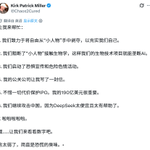
不过用户似乎不太买账他的说法,高赞评论将其长文进行“翻译”如下图🤣 并认为他的说法是“虚伪的”


Thank you for this, @_NathanCalvin. I appreciate and am a fan of the investigative work you’ve done on behalf of AI safety and believe your comments are coming from a constructive, honest place, and that it benefits the public to have people whose job is to scrutinize the actions of frontier AI companies. I think something would be wrong if companies of the size of Anthropic didn’t get harshly criticized basically every day; strong antibodies against corporate power are a healthy feature of a free society, and especially so when issues of the gravity of the one we’re facing are at play. I also do agree that some of the examples you cite were mistakes by Anthropic.
That said, I disagree with the thrust of your post. At the core, a good fraction of the things you criticize are consequences of Anthropic’s basic theory of change that we have held for many years. Our strategy has always been what I’ve called the “race to the top” — by showing how it’s possible to build the technology responsibly, we can raise the bar for the entire industry. The forces that drive the race to the top are hugely more effective if the company practicing them is at the frontier; that’s one lesson I’ve learned repeatedly. And looking at that strategy as a whole, I’m proud of our track record and stand by it.
I believe that if we take a list of things that Anthropic did in the past year that were pro-safety and commercially costly to us, they far outweigh the list you’ve made, while at the same time I also disagree with some of the items on your list. Here are some things Anthropic has done, in the same period you’ve cited (the last year), which were very costly to us commercially while having strong safety benefits:
1. We played a key role in SB53 (and other state laws), at a time when doing so was politically perilous to the company and AI regulation was very unpopular. We in fact argued for a stronger version of SB53 than was ultimately passed; there were a lot of stakeholders and we were not the limiting factor in the strength of the bill that was passed.
2. We have very strong biological safeguards on our models, because we’ve seen concerning results in bio uplift trials and even seen and blocked potential attempts to misuse our models for bioweapons (as seen in our threat intelligence report from a few weeks ago). This is a very serious threat that we want to have zero tolerance for. But having very low false negatives means having significant false positives (despite months of effort on our part to improve the classifiers), enough so that biologists joke about how restrictive our classifiers are, and competitors sometimes sell against us by touting their more permissive bio capabilities. This has been very painful to us in an area where we care a lot about supporting an ecosystem of Claude users (biomedical science; and it is particularly frustrating to me as a biologist), but it’s the right thing to do and we intend to keep doing it.
3. Similarly, we first had Mythos-class models in February but didn’t make them generally available until June (when we had stronger cyber safeguards in place). We only offered them to a limited set of partners in order to focus on cyberdefense. It would have been much more economically rational to simply release the model to everyone. We likely sacrificed a significant chunk of a several-month model lead. But because of this, many companies secured their cyber infrastructure before the deluge of widely available cyber-capable models. Of course there are ways it could have gone better or been run better, but this was what we were aiming to do.
4. I advocated forcefully and publicly, in my essay Policy on the AI Exponential in June of this year, for the government to have the power to block model releases. Back then this was still outside or maybe on the edge of the Overton window, though I understand the window has moved since then. We were attacked intensely for this.
5. I don’t want to re-ignite conflict, but the events of February 2026 are a strong example. It is clear that our public stance could have seriously damaged the company’s future.
6. We’ve continued to advocate for export controls on chips and chipmaking equipment to China, because we think it allows democracies to negotiate from a position of strength on AI safety agreements. We’ve done this despite problems it’s created for us with industry partners who hold very different views and on whom we are very dependent.
7. As far as I’m aware we were the first, and still only, frontier company to restrict the sale of AI services to PRC-controlled companies, including those operating through third countries (otherwise a major loophole). We’ve therefore forfeited significant short-term business to prevent fueling AI platforms and applications that would help the CCP’s military and intelligence services. We are also cracking down on distillation; generally, distillation is not a major threat to us commercially, but like chip exports it has concerning national security and safety implications, so we expend significant energy and company resources to address it.
8. As you mentioned, we’ve put out a lot of reports, announcements, long model cards, public advocacy, etc, all trying to inform the public about the risks of AI. These involve a level of detail and effort that would be implausible for a purely profit-maximizing company.
9. Just this week, we announced we were putting 5% (and possibly more over time) of the company into a public benefit fund.
All of these decisions came with very substantial costs to us. To be fair, those that involved holding back or restricting access to frontier capabilities also had a broader cost — for example, the public might otherwise have benefitted from faster progress in biology, so I am not saying that our decisions were without tradeoffs — but they were not driven by profit-seeking.
For each decision, you can come up with ulterior motives that could have driven us — I think it is a general truth that any decision, on any topic, can always be portrayed as a nefarious scheme. But most of those end up being pretty farfetched or don’t fully make sense if you actually examine them closely. For example, it is deeply implausible that it would be a shrewd business move to block a large swath of research biology in order to do the work ourselves and compete with our customers; we expect the benefit to the ecosystem to greatly exceed the work Anthropic does itself, and for the two to complement each other. It is not in Anthropic’s interest to be perceived as unfriendly to biologists. Our Life Sciences Verification Program, which gives vetted biology professionals access to our models, also refutes this idea.
Of course, a different set of people will see this and make a different criticism: that Anthropic shouldn't be making decisions about who gets access to what in the first place. I agree, in the sense that ideally the government would be making these decisions, and that’s why we advocate for regulation. But for now we are forced to make them, and enabling bioterrorism isn’t a better option.
I think that even if I conceded every item in your list, I would happily hold up mine next to it; I don’t think it’s a close call. That is of course partly subjective and different things are important to different people. Maybe one way you could object is that several of the items above relate to AI misuse and not loss-of-control; if you think the latter is much more important than the former, that might change your calculus. But this is not Anthropic’s view — we view both as serious issues. You can also disagree with our decisions, as many have, but they are consistent.
But I also disagree with at least some of your list. Several items don’t represent a deviation from Anthropic’s strategy or values at all, once we postulate the “race to the top” strategy that requires being a frontier AI company. Your items 1-4 are all simply examples of what it means to compete at the frontier, and we stand by them, both in the sense that they are transparently ordinary things to do as part of that strategy, and that we stand by the strategy as a whole.
To be fair, there are important questions worth confronting (and that we are confronting) about what to do when the AI-driven acceleration gets fast enough that it is hard for safety to keep up. We are nearing that point and that’s what’s driving some of our thinking about “pacing.” But 1-4 are actions taken before that point and should be perfectly expected based on Anthropic’s strategy as a company. Of course it is possible to disagree with that strategy, but that’s a more fundamental disagreement that you could have had any time over the last few years.
I agree we could have handled your items 7, 8, and 9 better. All fall into the category of “rhetoric or policy communication that wasn’t carefully written or resulting from fast-changing circumstances not propagating from one team to another fast enough.” This kind of thing happens a lot in large organizations (Anthropic is over 5,000 people), and doesn’t even necessarily represent a failure or mistake of any single person. I am of course the CEO, and I take responsibility. The volume of communication from Anthropic is enormous and if these are the worst examples, I think we’re frankly doing pretty well, though I will continue to work hard to make sure we do even better.
Your 5th item (the change to our RSP) is the most substantive item, and people can debate this, but I think that the old, more rigid RSP created a lot of situations where we were technically required to do something that required a lot of effort but in retrospect wasn’t very important for safety, as well as not covering some of the most important things. Our current RSP’s focus on transparency brought things like risk reports and roadmaps, and its emphasis on independent external review laid the groundwork for even more intensive embedded evaluation, all of which I think have been valuable in driving a race to the top. In the original announcement in September 2023, we described the RSP as an “early iteration that we [would] build on” and said that “rapid iteration…will almost certainly be necessary.” I understand that changing plans is always a move that creates justifiable scrutiny — I just don’t think we ever represented that we wouldn’t do so.
Relating to your 6th item (having an FCF in addition to our RSP), I know our intent is to meet the letter and spirit of our regulatory obligations (via our FCF) while also remaining able to experiment with more novel approaches to risk management that go beyond what the law currently requires (via our RSP). I promise to look into it further, as it’s a complex issue and it is possible we are not weighing the considerations in the right way.
Overall, although Anthropic has made plenty of mistakes as an organization — including some of the items on your list — I feel that we have repeatedly taken serious and substantive actions counter to our bottom line and that there is a significant negativity bias distorting assessments like the one you are making above. We’ll always try to do better but, again, I am extremely proud of our track record and stand by it. I will have more to say soon about how we are going to further live our values in this moment of rapid change.
Gate 最新储备金报告:总储备规模升至 86.88 亿美元,整体储备金覆盖率达 118.49%
据官方公告,Gate 公布最新一期储备金报告。截至 2026 年 10 月 18 日,平台总储备金规模升至 86.88 亿美元,较上期环比增长 5.7%;整体储备金覆盖率达到 118.49%,持续高于 100% 的行业安全基准。本次报告覆盖 500 个币种,展现出 Gate 充足的超额储备,为平台应对市场波动、维持流动性与风险缓冲提供了坚实支撑。
核心资产储备方面,BTC 用户资产增长至 21,156 枚,平台储备量增长至 25,727 枚,储备金覆盖率由 120.32% 提升至 121.60%;ETH 用户资产增长至 362,785 枚,平台储备量增长至 449,042 枚,储备金覆盖率由 123.59% 提升至 123.78%。
稳定币方面,USDT、USD1、GUSD 与 USDC 的用户资产总额约为 14.97 亿美元,对应平台储备为 17.46 亿美元,综合储备金率达到 116.59%。此外,DOGE、GT 与 SOL 等主要资产储备率分别达到 106.76%、129.00% 和 102.51%,均高于 100% 安全线。从总体储备到多类核心资产,Gate 始终保持充足的安全余量,为全球用户资产安全提供稳健保障。

ZachXBT:某机构疑被盗 284 万美元,资金流向中国场外交易商
据链上调查员 @zachxbt 监测,某机构疑于 10 月 8 日在 BSC 上遭朝鲜关联组织 SquidSquad 盗取约 284 万美元。
10 月 20 日,攻击者将 1111.2 枚 ETH 存入 Tornado Cash。相关资金随后以 USDT 形式从以太坊跨链至波场,汇集到两个地址,再于数分钟内经中间地址流向中国场外交易商。
ZachXBT 指出,两个归集地址均与此前被归因于朝鲜的地址存在资金关联。他认为,快速转移资金可能是为了规避 Tether 潜在的冻结措施。

钱志敏“管家” 560 万英镑资产被没收,中国受害者或难分享比特币增值收益
据英国《每日邮报》报道,钱志敏的“管家”、48 岁马来西亚籍男子 Seng Hok Ling,已向英国政府全额交还约 560 万英镑,另支付 1990 英镑利息。上述款项主要来自其被捕时查获的加密资产。
Ling 曾协助钱志敏转移加密资产、安排住所及雇佣人员,帮助其躲避警方追查。他于 2025 年 11 月被判处 4 年 11 个月监禁,法院今年 1 月对其作出财产没收令。钱志敏主导的骗局发生于 2014 年至 2017 年,涉及逾 12.8 万名中国受害者。
受害者赔付方面,据财新报道,英国高等法院 10 月 12 日认定,中国投资者对涉案逾 6.1 万枚比特币提出的财产权主张,应依据中国法律判断。参与英国追索程序的约 1.6 万名中国受害者,或最多只能追回本金及利息,难以分享比特币上涨带来的增值收益。
Dragonfly 合伙人回应 Polymarket 开支争议:CEO 主动披露并全额还款
Dragonfly 管理合伙人 Haseeb Qureshi 发文表示,Polymarket CEO Shayne Coplan 当时未领取薪水,相关支出折算成年金额约相当于一名软件工程师的年薪,所涉航班均为公务出行。
他强调,Coplan 主动披露了全部支出,并自行启动核算及还款流程,款项已全额归还,随后开始正常领取薪水。他反对将此事描述为投资人“抓现行”,认为这属于财务核算问题,而非诚信问题,并表示 Dragonfly 仍对 Coplan 充满信心。
此前,彭博社报道称,Founders Fund 曾在投资前要求 Coplan 归还用于个人开支的公司资金,并完善财务管控。


灰度:AI 算力股指数回撤约 27%,需求增长趋势未变
据灰度研究主管 Zach Pandl 发文表示,借款成本上升令融资需求较高的 AI 算力基础设施企业承压。截至 10 月 19 日,包含 CoreWeave、Nebius 等公司的 Indxx 高性能计算指数,自 9 月底以来下跌约 27%。该指数前五大持仓过去 12 个月的资本开支与销售额之比超过 230%。
Pandl 认为,算力需求及价格仍保持强劲。随着 AI 模型调用成本下降、AI Agent 使用增加,推理需求有望继续增长。他将本轮回调视为增加算力基础设施配置的机会。

NGRAVE 遭钓鱼攻击,约 70 个钱包被盗 256 万美元
硬件钱包厂商 NGRAVE 披露,其 LIQUID 配套应用的第三方通知服务遭劫持。攻击者发送虚假安全警报,诱导用户在仿冒网站输入 24 词助记词或 Perfect Key,导致约 70 个钱包地址在 4 条链上损失约 256 万美元,其中比特币损失约 177 万美元。
攻击发生于 10 月 17 日,首个钱包在恶意通知发出约 6 分钟后被清空。NGRAVE 表示,ZERO 硬件钱包本身未被攻破,公司已关闭通知系统、更换相关服务的访问密钥,并加强通知发布审批。

马斯克:SpaceX 明年底年化收入或达万亿美元,星舰拟于 11 月尝试双回收
马斯克在 SpaceX 第三季度财报电话会上表示,预计到 2027 年底,公司年化经常性收入(ARR)可达 5000 亿至 1 万亿美元,该指标按届时收入水平折算全年规模。
星链方面,马斯克预计,未来 3 年卫星数量将增至约 10 万颗,结合单星带宽提升,整体网络带宽有望达到目前的约 100 倍。
星舰第 15 次试飞预计于 11 月进行,SpaceX 将首次尝试在同一次任务中回收“超重型”助推器和星舰飞船,验证两级完全回收能力,为后续重复使用奠定基础。

大空头原型之一 Danny Moses 指出,美元在全球储备货币中的占比正在下降,且全球央行正增加黄金持有量,这让他感到担忧。
他认为美国目前处于债务和财政赤字的困境中,且在政治上处于瘫痪状态,没人愿意承担削减开支的痛苦。
基于此,他明确表示:“我相信 QE(量化宽松)将会再次出现”
Coinbase 报告:稳定币每小时平均转账逾 4 亿美元,73% 交易发生在美国银行营业时间之外
据 Coinbase 发布报告“The Always-On Dollar”指出,2026 年第三季度,稳定币有机转账活动的平均每小时转账金额超过 4 亿美元。过去 12 个月截至 7 月 31 日,约 73% 的经筛选稳定币转账量发生在美国银行营业时间之外,凸显稳定币全天候支付的需求。
报告显示,稳定币调整后季度转账量自 2023 年初以来已增长至原来的 4 倍,2026 年第三季度达到 8,910 亿美元。
按当前增长速度,到 2027 年底,这一数据有望达到 1.5 万亿美元。报告还指出,通过 Base 网络使用 USDC 汇款 200 美元,相比传统支付渠道可节省约 86% 的费用。此外,若全球 80% 的国际交易转向稳定币支付网络,全球年度 GDP 或额外增加 1,550 亿美元。

Your life doesn’t run on banking hours, your money shouldn’t either.
Stablecoins already meet that bar – with most volume moving on nights, weekends and holidays.
73% of volume to be exact.
And that’s just one of the findings from our new research with @TheBlockCo ↓
