
Research Scientist @Netflix | D.Phil. in Computer Science @UniofOxford
Joined October 2020
- Tweets55
- Following260
- Followers190
- Likes267




Ta-Ying Cheng retweeted

Netflix just released VOID on Hugging Face
A video inpainting model that removes objects and their physical interactions
Not just shadows, but things like objects falling when a person is removed

Ta-Ying Cheng retweeted

Netflix dropped some useful stuff. VOID -video object and interaction deletion.
- removes objects while realistically simulating physical consequences;
- beats Runway/ProPainter;
- CogVideoX-5B + SAM 2;
looks good, no smudges/artifacts
void-model.github.io/
Ta-Ying Cheng retweeted

VOID
Video Object and Interaction Deletion
paper: huggingface.co/papers/2604.0…
model: huggingface.co/netflix/void-…
app: huggingface.co/spaces/sam-mo…


Ta-Ying Cheng retweeted

Slides from my talk on "Language as a Visual Format" at the Visual Generative Modeling workshop at CVPR (mostly derived from slides made by @hyojinbahng and @carolinemchan): dropbox.com/scl/fi/5ok46ted0…

Ta-Ying Cheng retweeted

🚀 Glad to see our All-Angles Bench (github.com/Chenyu-Wang567/Al…) being adopted to evaluate 3D spatial understanding in Seed-1.5-VL-thinking along with OpenAI (o1) and Gemini 2.5 Pro..!


Introducing Seed-1.5-VL-thinking, the model achieves SOTA on 38 out of 60 VLM benchmarks🥳🥳🥳
github.com/ByteDance-Seed/Se…

Ta-Ying Cheng retweeted

It seems there is still a long way to go for multi-modal large models to truly understand space and scene.

❗️❗️ Can MLLMs understand scenes from multiple camera viewpoints — like humans?
🧭 We introduce All-Angles Bench — 2,100+ QA pairs on multi-view scenes.
📊 We evaluate 27 top MLLMs, including Gemini-2.0-Flash, Claude-3.7-Sonnet, and GPT-4o.
🌐 Project: danielchyeh.github.io/All-An…

Ta-Ying Cheng retweeted
❗️❗️ Can MLLMs understand scenes from multiple camera viewpoints — like humans?
🧭 We introduce All-Angles Bench — 2,100+ QA pairs on multi-view scenes.
📊 We evaluate 27 top MLLMs, including Gemini-2.0-Flash, Claude-3.7-Sonnet, and GPT-4o.
🌐 Project: danielchyeh.github.io/All-An…
Ta-Ying Cheng retweeted

BREAKING NEWS
The Royal Swedish Academy of Sciences has decided to award the 2024 #NobelPrize in Physics to John J. Hopfield and Geoffrey E. Hinton “for foundational discoveries and inventions that enable machine learning with artificial neural networks.”

Ta-Ying Cheng retweeted

🎥 Today we’re premiering Meta Movie Gen: the most advanced media foundation models to-date.
Developed by AI research teams at Meta, Movie Gen delivers state-of-the-art results across a range of capabilities. We’re excited for the potential of this line of research to usher in entirely new possibilities for casual creators and creative professionals alike.
More details and examples of what Movie Gen can do ➡️ go.fb.me/kx1nqm
🛠️ Movie Gen models and capabilities
Movie Gen Video: 30B parameter transformer model that can generate high-quality and high-definition images and videos from a single text prompt.
Movie Gen Audio: A 13B parameter transformer model that can take a video input along with optional text prompts for controllability to generate high-fidelity audio synced to the video. It can generate ambient sound, instrumental background music and foley sound — delivering state-of-the-art results in audio quality, video-to-audio alignment and text-to-audio alignment.
Precise video editing: Using a generated or existing video and accompanying text instructions as an input it can perform localized edits such as adding, removing or replacing elements — or global changes like background or style changes.
Personalized videos: Using an image of a person and a text prompt, the model can generate a video with state-of-the-art results on character preservation and natural movement in video.
We’re continuing to work closely with creative professionals from across the field to integrate their feedback as we work towards a potential release. We look forward to sharing more on this work and the creative possibilities it will enable in the future.
Ta-Ying Cheng retweeted

Looking forward to sharing the work soon at #CHI2024!

🧩Introducing Jigsaw -- chain multimodal AI models together using AI puzzle pieces.
@chuanenlin will present the work at #CHI2024
🕒Monday 11am
📍AI and Interaction Design Session, 320 'Emalani Theater
🌐jigsaw.to
📄arxiv.org/pdf/2310.08574
(1/6)
Ta-Ying Cheng retweeted
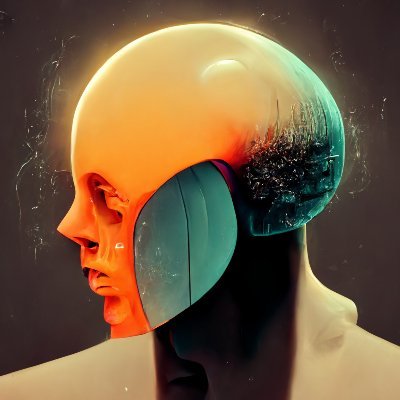
AI can transfer material of an object in an image to match a material from an example image!
The method is called ZeST and it can also perform multiple material edits in a single image and perform implicit lighting-aware edits on the rendering of a textured mesh.
Links ⬇️
Ta-Ying Cheng retweeted
ZeST 🍋 Material Transfer demo is featured this week ! 🤟
Explore @huggingface Spaces of the Week
—> hf.co/spaces

Ta-Ying Cheng retweeted

📜 With my collaborators, @Papagina_Yi, @gadelha_m, @leo_zhy , @zexiangxu (Adobe), and advisor, Ming C. Lin (UMD), we introduce our new paper, DMesh! It formulates existence probability of faces in a mesh to make it differentiable. (1/9)
🔗 Project page: sonsang.github.io/dmesh-proj…

Ta-Ying Cheng retweeted
MeshLRM
Large Reconstruction Model for High-Quality Mesh
We propose MeshLRM, a novel LRM-based approach that can reconstruct a high-quality mesh from merely four input images in less than one second. Different from previous large reconstruction models (LRMs) that focus on
Ta-Ying Cheng retweeted

🔄 ZeST: Zero-Shot Material Transfer from a Single Image 💫 Jupyter Notebook + @replicate 🥳
Thanks to @ChengTim0708 ❤ @prafull7 ❤ Andrew Markham ❤ Niki Trigoni ❤ @jampani_varun ❤
🌐page: ttchengab.github.io/zest/
📄paper: arxiv.org/abs/2404.06425
🧬code: github.com/ttchengab/zest_co…
🍊jupyter by modelslab.com: github.com/camenduru/zest-ju…
🕸replicate: please try it 🐣 replicate.com/camenduru/zest

Today, with my collaborators @prafull7 (MIT CSAIL), @jampani_varun (@StabilityAI ), and my supervisors Niki Trigoni and Andrew Markham, we share with you ZeST, a zero-shot, training free method for image-to-image material transfer!
Project Page: ttchengab.github.io/zest/
1/8
Ta-Ying Cheng retweeted

The first project of my PhD, Generative Rendering, will be presented at #CVPR2024!
Generative Rendering is a framework that directly renders low-fidelity animated meshes to animations, enabling a creator to seamlessly create very basic geometry and motion modeling in Blender within minutes, and then hallucinate the other parts of the rendering process using generative models. Inspired by Deferred Rendering, we perform UV-space feature & noise unification and use only the 2D Stable Diffusion model without any further tuning/distillation or additional video/3D data.
🌐 Website: primecai.github.io/generativ…
📄 Paper: arxiv.org/abs/2312.01409
I had a long philosophical conversation with @Michael_J_Black in early 2023, and since then have been wanting to do some research targeting animation, and bring some blocks from the very polished traditional CG pipeline into generative AI. With the amazing opportunity provided at @AdobeResearch by @guerrera_desesp, we were able to put some thoughts together! A huge thanks to my mentors: @guerrera_desesp, @gadelha_m, @paulchhuang, Tuanfeng Wang, and @GordonWetzstein.

Generative Rendering: Controllable 4D-Guided Video Generation with 2D Diffusion Models
paper page: huggingface.co/papers/2312.0…
Traditional 3D content creation tools empower users to bring their imagination to life by giving them direct control over a scene's geometry, appearance, motion, and camera path. Creating computer-generated videos, however, is a tedious manual process, which can be automated by emerging text-to-video diffusion models. Despite great promise, video diffusion models are difficult to control, hindering a user to apply their own creativity rather than amplifying it. To address this challenge, we present a novel approach that combines the controllability of dynamic 3D meshes with the expressivity and editability of emerging diffusion models. For this purpose, our approach takes an animated, low-fidelity rendered mesh as input and injects the ground truth correspondence information obtained from the dynamic mesh into various stages of a pre-trained text-to-image generation model to output high-quality and temporally consistent frames. We demonstrate our approach on various examples where motion can be obtained by animating rigged assets or changing the camera path.

Ta-Ying Cheng retweeted

Humans can see the present and imagine the future beyond (e.g., seeing a fallen chair triggers a mental rehearsal to upright it).
Our new work mirrors this ability. From single image, our model identifies possible tasks and creates a vivid narrative of their execution as videos.
Ta-Ying Cheng retweeted

Today, we are releasing Stable Video 3D, a generative model based on Stable Video Diffusion. This new model advances the field of 3D technology, delivering greatly improved quality and multi-view.
The model is available now for commercial and non-commercial use with a Stability AI Membership.
Learn more and read the research paper here: bit.ly/3THno7J (1/3)