

Timely updates info on advanced technology and scientific progress in China. Run by @PDChina, the largest newspaper group in China
Beijing, China
Joined August 2019
- Tweets16.5K
- Following10
- Followers2M
- Likes3

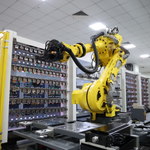







By the end of September, China's smart computing power reached 2,592 EFLOPS, up 146% YoY, according to the Ministry of Industry and Information Technology (MIIT).
EFLOPS refers to a unit measuring computing performance, with each unit representing 1 quintillion floating-point operations per second.

China is drafting policies for next-generation smart manufacturing to integrate AI across the entire manufacturing chain and develop new manufacturing models that help firms cut costs, raise efficiency and better meet diverse market demands, the Ministry of Industry and Information Technology (MIIT) said Tuesday.
A tiered approach will be taken to build smart factories and upgrade equipment, with basic and advanced factories expanding digital systems and AI use while top-tier plants explore next-generation architectures and future manufacturing models. Support will also target smarter machine tools, robots, inspection and control equipment, as well as industry-specific models and industrial AI agents.
Beyond domestic efforts, China will expand international cooperation in smart manufacturing, leveraging mechanisms such as BRICS to share standards and experience, and help partners build smart factories.
China has already built over 13,000 advanced-level smart factories, and more than 1,000 application scenarios have been formed across 20 industries including steel, automobiles and pharmaceuticals.


A group of Chinese scientists has uncovered the mystery behind how an ancient gene regulates the development of brain folds, shedding new light on the evolution of the human brain. The findings were recently published in Nature Genetics.
The traditional view holds that the expansion of the primate cerebral cortex was primarily driven by newly evolved genes. However, Chinese researchers proposed an alternative possibility: certain ancient and highly conserved genes could also play a key role in human brain evolution by reshaping their expression levels through changes in regulatory elements.
The team compared transcriptomic data from different layers of the embryonic cerebral cortex of mice, tree shrews, marmosets, macaques and humans. They found that an ancient gene called "CCNB1IP1" was already expressed in the brain of the tree shrew, a close relative of primates, long before primates emerged but at relatively low expression levels.
The team further discovered that during the following course of evolution, the expression level of this ancient gene showed a clear stepwise increase among tree shrews, marmosets, macaques and humans, reaching its highest level in the human brain.

China's commercial reusable rocket Nebula-2 is on track, its developer said, with structure, propulsion, recovery, navigation and ground control all advancing on schedule.
Highlights include:
-Carrying up to 25 tonnes to low Earth orbit.
-An 11-engine first stage producing 12,446 kilonewtons of liftoff thrust; a single vacuum-optimized Thunder-RS engine on the second stage.
-Designed for more than 20 reuses, with a "chopstick-style" system that catches the rocket at the launch site rather than landing it elsewhere, cutting turnaround time.

The Shenzhou-23 crew aboard China's Tiangong space station has made new progress in the country's first multi-generational rice cultivation in orbit, completing a new round of sample collection, sowing and storage for the groundbreaking space rice research project.
Chinese scientists have successfully developed a 1-gram wireless mesoscopic microscope called Airscope, billed as the world's lightest megapixel device of its kind. It enables large-scale, high-resolution wireless imaging of neural activity in the brains of naturally behaving animals, offering a new tool for neuroscience research and brain-computer interface (BCI) development.
In terms of imaging capabilities, Airscope can simultaneously record more than 8,500 cortical neurons in a single mouse, 25 times the capacity of existing wireless devices. It can also maintain stable recordings from the same brain region for more than 200 days, with signal quality comparable to that of conventional benchtop microscopes.


Chinese scientists have found genetic evidence that early millet-farming populations in northern China originated locally rather than emerging from a major influx of migrant agricultural groups, according to research published in the journal Science Advances.
The research analyzed genome-wide data from seven ancient individuals at the Donghulin site in Beijing and the Dengcaogouliang and Sitai sites in Zhangjiakou, North China's Hebei Province, combined with carbon-14 dating and stable isotope evidence. It covers a period from about 11,000 to 7,300 years ago. Combining ancient genomics, archaeological remains and dietary evidence, it has revealed the genetic continuity and local origin of millet-related populations in the region.


China launched the CERES-1 Y8 carrier rocket from the ocean waters near the city of Rizhao in east China's Shandong Province on Wednesday, placing a new satellite into planned orbit.
China National Data Group Co., Ltd., a new state-owned enterprise (SOE) directly administered by the central government, was officially inaugurated at a ceremony in Xiongan New Area, north China's Hebei Province, on Tuesday.
Headquartered in Xiongan New Area, the newly established enterprise is tasked with specializing in the development and utilization of data resources, bringing the total number of SOEs directly administered by the central government to 100.
It is positioned as a national team for data services, a leader in data infrastructure connectivity and a strategic force for national data sci-tech innovation.

Earliest flightless bird discovered: Chinese scientists have found a 150-million-year-old fossil of a new Jurassic bird, Yuezhuornis yangyuanensis, which exhibits combined features typical of birds and meat-eating dinosaurs, challenging the long-held view that early birds evolved mainly to improve their ability to fly.
The bird had unusually short forelimbs, even shorter than those of some running dinosaurs, making it poorly suited for flight. Yet its close relationship to Zhengheornis, another early bird discovered by the team at the same fossil site, confirms that it was a bird.
The discovery suggests that early birds explored a wider range of lifestyles and habitats than previously thought, including life on the ground as predators.


The China Spallation Neutron Source (CSNS), a major facility for studying the structure of the microscopic world, will be able to run at least 1,500 experiments a year once its second phase is complete, the project's director said.
Now under construction in Dongguan, south China's Guangdong Province, the expansion adds 11 neutron instruments along with experimental terminals and user laboratories.


From functional to indispensable: How China's robots are evolving beyond basic utility
Once showcased in competitive arenas, Chinese robots are now operating seamlessly across factory floors worldwide. This rapid evolution marks a significant leap in the country's robotics sector, which has seen steadily growing exports and increasingly widespread deployment in both industrial and everyday applications globally.
According to data released by China's General Administration of Customs, industrial robot exports surpassed imports for the first time in 2025, marking the country's transition into a net exporter of industrial robots.
The next frontier lies in making these machines not just functional, but genuinely indispensable. How can they better assist human workers? How can they take over tasks that are dirty, dull, dangerous, or demanding -- the so-called "4D" jobs that are hazardous, monotonous, or highly repetitive? Answering these questions has become a central priority for robotics developers across China.
Read full: en.people.cn/n3/2026/1012/c9…


A new moth species, Sarcinodes absimilis, has been discovered in the Ailaoshan National Nature Reserve in southwest China's Yunnan Province. The species appears to be endemic to the reserve, adding to the region's rich insect diversity.

China consistently opposes overstretching the concept of national security and politicizing science, technology, economic and trade issues, Chinese foreign ministry spokesperson Mao Ning said on Tuesday.
Mao made the remarks at a regular news briefing after the U.S. government on Monday ordered its agencies to stop using artificial intelligence (AI) tools from Chinese startup DeepSeek.
"We will resolutely safeguard the legitimate rights and interests of Chinese companies," Mao said.

In pics: China's manned deep-sea submersible Jiaolong successfully completed its 470th dive on Oct. 15. Photos captured the exploration of the mysterious underwater world. China's research vessel Deep Sea No. 1, carrying Jiaolong, is currently on the western Pacific Ocean for deep-sea scientific research.


China leverages electric vehicles to stabilize the power grid
A global energy revolution is underway, centered on replacing fossil fuels with renewable energy and gasoline and diesel vehicles with electric vehicles (EVs). China is spearheading this shift, and developing a new power system integrating source, grid, load, and storage is an inevitable path forward.
As the stock of new energy vehicles climbs toward the 100-million mark, massive numbers of EVs will transcend their traditional role as transportation tools. They are emerging as a critical component of the next-generation power infrastructure.
Read Full: en.people.cn/n3/2026/1013/c9…


The 16th China International Aviation and Aerospace Exhibition, also known as Airshow China, is scheduled from Dec 7 to 13 in south China's Zhuhai, attracting more than 1,100 companies from nearly 50 countries and regions registered so far, with over 3,000 pieces of equipment to be exhibited.
This year's airshow will use three exhibition areas for the first time, namely a main central exhibition area, an unmanned equipment display area and a maritime equipment display area.

A new study from the Hefei Institutes of Physical Science of the Chinese Academy of Sciences offers a new solution to one of agriculture's most persistent problems: pesticides that wash off crop leaves before they can do their job.
The study, published in the Journal of Controlled Release, drew inspiration from the tiny, hair-like structures that help bacteria cling to the human gut. By mimicking this natural adhesion trick, the research team built rough-surfaced silica nanoparticles that grip leaf surfaces far better than conventional formulations, potentially cutting pesticide waste and reducing the need for repeated spraying.
The research team tested the new formulation on cotton, soybean and tomato leaves. After simulated rainfall, the amount of pesticide left on the leaves was more than 4.8 times higher than with a commercial imidacloprid product. (file pic)

China has decided to optimize and adjust its export control measures on certain drone-related items, with the new rules taking effect on Nov. 18, 2026, according to a government announcement on Monday.
Items with specified characteristics cannot be exported without a license, said the announcement, which was jointly issued by the Ministry of Commerce, the General Administration of Customs, and the Equipment Development Department of the Central Military Commission.
These items include autopilots specially designed for unmanned aircraft, some technologies for developing, producing or using unmanned aircraft, some unmanned aircraft or unmanned airships meeting specified characteristics, and engines specially designed for unmanned aircraft or unmanned airships, among others, the announcement noted.
The drone-related items involved have a clear dual-use nature that can be applied for both military and civilian purposes, a spokesperson for the commerce ministry said.
China's move to optimize and adjust the measures in accordance with related laws and regulations aims to safeguard national security and interests, and fulfill international obligations such as non-proliferation, the spokesperson explained.
China is committed to maintaining the security and stability of global industrial and supply chains, and will review relevant export license applications in accordance with laws and regulations. Applications that meet requirements will be approved, the spokesperson said. (file pic)

China's equipment manufacturing and high-tech manufacturing sectors provided strong support for industrial growth in the first three quarters of 2026, with output of industrial robots, 3D printing equipment and lithium-ion batteries rising 29.1%, 62.5% and 39.5% YoY, respectively, according to the National Bureau of Statistics on Monday.


