

Beyond dates and headlines. People, power, and the stories behind history. Drawing on historical records, eyewitness accounts, and archival images.
Joined August 2026
- Tweets2.9K
- Following3.2K
- Followers3.5K
- Likes13.4K






Pinned Tweet
China Called It the “Pacified South.” Vietnam Remembers Northern Domination.
In 679, the Tang dynasty established the Protectorate of Annan in what is now northern Vietnam.
Annan meant “Pacified South.”
The name reflected the imperial court’s view. Vietnamese history remembers the broader era as Bắc thuộc—northern domination.
It began centuries earlier. In 111 BC, the Han empire conquered Nanyue and brought the Red River region under its authority.
For local people, imperial rule meant taxes, compulsory labor and tribute. Pearls and ivory flowed toward the court. Households supported the officials and soldiers who governed them.
Chinese institutions, customs and education spread. Classical Chinese became a language of government and elite learning.
But local speech and customs endured. So did resistance.
In AD 40, the Trưng sisters expelled Han officials and established their own rule. Other periods of independence and autonomy interrupted the centuries of domination.
Control varied across dynasties. This history chiefly concerned northern Vietnam, not the whole modern country.
Yet who held the power to demand its wealth, labor and allegiance?
Calling a land “pacified” speaks for its conquerors.
As a Korean, I feel a complicated mix of emotions looking at this history.
What would the people paying the taxes and supplying the labor have called it?


Các triều đại Trung Hoa gọi vùng đất ấy là “An Nam”. Việt Nam nhớ về thời kỳ ấy với tên gọi “Bắc thuộc”.
Năm 679, nhà Đường lập An Nam đô hộ phủ trên vùng đất thuộc miền Bắc Việt Nam ngày nay.
“An Nam” mang nghĩa “bình định phương Nam”.
Tên gọi ấy phản ánh góc nhìn của triều đình đế quốc. Trong lịch sử Việt Nam, thời kỳ bị các triều đại phương Bắc cai trị được gọi là Bắc thuộc.
Thời kỳ này bắt đầu từ nhiều thế kỷ trước. Năm 111 trước Công nguyên, nhà Hán chinh phục Nam Việt, đưa vùng châu thổ sông Hồng vào phạm vi cai trị.
Với người dân địa phương, sự cai trị ấy đồng nghĩa với thuế khóa, lao dịch và cống nạp. Ngọc trai, ngà voi được đưa về triều đình. Người dân còn phải nuôi bộ máy quan lại và quân đội cai trị mình.
Thể chế, phong tục và giáo dục Trung Hoa lan rộng. Chữ Hán trở thành ngôn ngữ của hành chính và học thuật trong giới tinh hoa.
Nhưng tiếng nói và phong tục bản địa vẫn tồn tại. Sự phản kháng cũng vậy.
Năm 40, Hai Bà Trưng đánh đuổi quan lại nhà Hán và giành quyền tự chủ. Những giai đoạn độc lập và tự chủ khác cũng xen giữa các thế kỷ bị đô hộ.
Mức độ kiểm soát thay đổi qua từng triều đại. Phạm vi ấy chủ yếu là miền Bắc Việt Nam ngày nay, không phải toàn bộ lãnh thổ Việt Nam hiện đại.
Nhưng ai nắm quyền đòi hỏi của cải, sức lao động và lòng trung thành của người dân?
Gọi một vùng đất là đã được “bình định” là nói từ phía người chinh phục.
Là một người Hàn Quốc, tôi có những cảm xúc đan xen, khó diễn tả khi nhìn lại lịch sử này.
Vậy những người phải nộp thuế và đi lao dịch sẽ gọi thời kỳ ấy là gì?
The Mongols Took Vietnam’s Capital. Trần Hưng Đạo Took Their Fleet.
The Yuan fleet was heading home through Vietnam’s Bạch Đằng River. Beneath the rising water, sharpened wooden stakes waited.
Trần Hưng Đạo had prepared the river for their arrival.
Kublai Khan’s forces had captured Thăng Long, now Hanoi, during their third invasion of Đại Việt. But the Trần rulers and their army had escaped, and a Yuan supply fleet had been destroyed near Vân Đồn.
The invaders held the capital. They could not feed their troops.
When they withdrew in 1288, Trần Hưng Đạo was ready. His men planted stakes in the tidal channels and concealed troops along the banks.
On April 9, Vietnamese boats engaged the retreating fleet, then drew it toward the trap.
As the tide fell, stakes and shallows restricted the Yuan ships. Vietnamese forces attacked from the river and shore. Fireboats struck the crowded fleet.
The route home became a killing ground.
Omar, the Yuan commander, was captured. Vietnam’s military encyclopedia records more than 400 enemy vessels seized. Kublai’s third invasion ended in defeat.
What stays with me is how Trần Hưng Đạo turned the invaders’ retreat into disaster, using the tides, the terrain and a carefully prepared ambush.
Looking at his victories, why do I keep thinking of Admiral Yi Sun-sin, the legendary naval commander of Korea’s Joseon dynasty?
What do you think of my view that Trần Hưng Đạo and Admiral Yi Sun-sin have much in common?


JOHAN retweeted

ช่วงนี้มีบทความเรื่องสงครามเกาหลี ที่เขียนเล่าประวัติศาสตร์สงคราม และประวัติศาสตร์น้ำใจประเทศไทยเยอะมาก
ช่วงระหว่าง 23 ตุลาคม – 11 พฤศจิกายนของทุกปี
เกาหลีใต้จัดกิจกรรมUN Weeks in Busan
เป็นสัปดาห์สหประชาชาติ ณ เมืองปูซาน
มันเป็นช่วงเวลารำลึกถึงทหารผ่านศึกและผู้เสียชีวิตในสงครามเกาหลี
( จริงๆช่วงนี้สถานการณ์บริเวณเขตปลอดทหาร DMZ ชายแดนสองฝั่งตึงเครียดขึ้นอยู่นะ เมนฉันก็เข้าหรมกันเยอะ ใจฉันก็ไม่ดี)
บทความนนี้เขียนเล่าเรื่องทหารไทยไว้ว่า
" มีทหารไทยผู้จุดชนวนระเบิดคลังเเสงในเปียงยาง
นายบรรจบ โตนวล ในวัย25 ปี ได้เดินทางจากประเทศไทยสู่สมรภูมิสงครามเกาหลี และการเดินทางในครั้งนั้นนำพาเขาไปไกลจนถึงกรุงเปียงยาง
ตามคำบอกเล่า ในช่วงเดือนพฤศจิกายน ปี ค.ศ. 1950 บรรจบและเพื่อนทหารในหน่วยต้องใช้เวลาถึงสิบวันบนขบวนรถไฟที่มุ่งหน้าจากแทกูสู่เมืองหลวงของเกาหลีเหนือ
ขณะนั้นกองกำลังสหประชาชาติสามารถเข้ายึดครองเมืองไว้ได้ ทว่าเมื่อกองทัพจีนก้าวเข้าสู่สงคราม การบุกจึงต้องปรับถอยร่นเพื่อดูสถานการณ์
ยามที่กองทัพจีนรุกคืบเข้าใกล้กรุงเปียงยาง บรรจบเป็นหนึ่งในทหารสิบคนที่ได้รับมอบหมายภารกิจสำคัญ นั่นคือการทำลายอาวุธยุทโธปกรณ์และเสบียงอาหาร ณ คลังแสงแห่งนั้น
และตัวเขาเองที่เป็นผู้จุดชนวนระเบิดลูดนั้นด้วยตัวเอง
แรงระเบิดนั้นมหาศาล กึกก้อง ทำลายล้างทุกอย่าง
หลังจากนั้น บรรจบและเพื่อนทหารจึงเริ่มออกเดินทางมุ่งหน้าลงใต้
เขาเดินทางไกลหลายพันกิโลเมตรจากประเทศไทยเพื่อมาร่วมรบในเกาหลี และในยามนี้ เขาจำต้องทิ้งเมืองหลวงของเกาหลีเหนือไว้เบื้องหลัง ท่ามกลางการถอนกำลังของกองกำลังสหประชาชาติ
บรรจบมีชีวิตรอดผ่านพ้นสงคราม และในเวลาต่อมาเขาได้เติบโตจนเป็นนายทหาร แม้เวลาจะล่วงเลยไปหลายทศวรรษ เขายังคงจดจำภาพความย่อยยับอับปางที่ได้ประจักษ์แก่สายตา ตลอดจนความอดทนอันทรหดของชาวเกาหลีได้ไม่เคยลืม
จากหัวใจชาวเกาหลีใต้ ข้าพเจ้าขอแสดงความซาบซึ้งใจอย่างที่สุดต่อเหล่าเหล่านักรบผ่านศึกสงครามเกาหลีของไทย และต่อประชาชนชาวไทยทุกคน
แต่ใครเล่าจะรู้ว่า
ความโหดร้ายทารุณของสงครามแบบใดกันแน่...
ที่เขาได้เคยพบเห็น "
พันโทบรรจบ โตนวล ไม่ได้เคยผ่านแค่สงครมเกาหลีนะ ตามประวัติสัมภาษณ์ท่านได้รับการยกย่องว่า วีรบุรุษ 3 สมรภูมิ (สงครามเกาหลี, สงครามทุ่งช้าง จนถึงสงครามเวียดนาม )
กองกำลังทหารไทยในเกาหลีชื่อ กรมผสมที่ 21 ทำการรบอย่างห้าวหาญทุกผลัด จนต่อมา ปี 2495 ทหารอเมริกันตั้งฉายาให้ว่า “พยัคฆ์น้อย” (Little Tiger)
สมัยนั้นส.ท.บรรจบ โตนวล กับเพื่อน บัญชาการลูกน้อง 9 คนอยู่ที่เปียงยาง
ทหารอเมริกันสั่งให้ถอยเป็นหน่วยๆ ส่วนทหารชาติอื่นที่ยังอยู่คือ ฟิลิปปินส์ อังกฤษ ตุรกี เกาหลีใต้ อยู่เป็นทหารส่วนรั้งท้าย
สท.บรรจบทำหน้าที่ทหารไทยส่วนรั้งท้าย มีรถจี๊ป 2 คัน คันละ 5 คน ประจำที่เปียงยาง
เมื่อทหารไทยถอยไปแล้ว 3 วัน ทหารไทยส่วนรั้งท้ายได้รับหน้าที่ให้ทำลายกระสุนปืนของอเมริกันที่เหลือจำนวนมาก กองสุมขนาดใหญ่ประมาณสนามหลวง สท.บรรจบวางชนวนด้วยรถจี๊ป จุดทำลายไม่ให้ทหารจีนมาใช้ประโยชน์ มีทหารอังกฤษมาตรวจการวางระเบิดทำลายกระสุนครั้งนั้น
การรบคราวนั้น ถอยมาจากแม่น้ำยาลู สท.บรรจบพอทำลายอาวุธเสร็จก็หนีมาที่เมืองเคซอง (ตรงเส้นขนานที่ 38) เป็นเมืองของเกาหลีใต้ การเดินทางใช้การติดต่อทางวิทยุ วิ่งตามแผนที่มาเคซอง มารวมตัวกับหน่วยเดิมที่เมืองนี้
จากเคซอง ถอยหนีมาเรื่อยๆ พร้อมกับทหารอเมริกัน มาถึงเมืองอินชอน แล้วทหารไทยกับทหารทุกประเทศ กองกำลังสหประชาชาติและทหารอเมริกันตีกลับ ยึดเคซองกลับคืน
การรบดำเนินต่อไป
ทหารไทยที่อยู่แนวหน้าได้พัก สท.บรรจบได้พัก 7 วัน บินไปพักผ่อนที่โตเกียว
แล้วบินกลับจากโตเกียว มารบต่อที่เคซองจนทหารผลัด 1 ครบเทอมได้กลับบ้าน
ส.ท.บรรจบอยู่ที่เกาหลี 11 เดือน 21วัน ทหารไทยผลัดที่ 2 มารับหน้าที่ที่เมืองเคซอง คุณพ่อส่งต่อหน้าที่ให้ ส.ท.ชาญ กำหนดแน่ ทำการรบต่อไป
ส.ท.บรรจบ โตนวล เดินทางกลับประเทศไทยด้วยเรืออานนท์เม็กซ์ จากท่าเรือปูซาน นั่งเรือสินค้าไปไต้หวัน 2 วัน เปลี่ยนเรือกลับไทย ถึงเมืองไทยปลายปี 2494
รวมการปฏิบัติราชการเกาหลีก็หนึ่งปีเต็มเลย


A Thai Soldier Blew Up an Ammunition Depot in North Korea’s Capital.
“I was the one who ignited the explosion.”
Banjop Tonuan was 25 when he left Thailand for the Korean War. His journey took him all the way to Pyongyang.
In November 1950, he and his unit spent ten days on a train from Daegu to the North Korean capital, according to his later account.
UN forces had taken the city. Then Chinese forces entered the war, and the advance turned into a retreat.
As Chinese troops approached Pyongyang, Tonuan was one of ten soldiers assigned to destroy ammunition and supplies at a depot.
He lit the explosives.
The blast was enormous. Afterward, he and the others headed south.
He had traveled thousands of kilometers from Thailand to fight in Korea. Now he was leaving a North Korean city behind as the UN forces withdrew.
Tonuan survived the war and later became an officer. Decades later, he still remembered the destruction he had witnessed and the patience of the Korean people.
From South Korea, I offer my deepest gratitude to Thailand’s Korean War veterans and to the Thai people.
What horrors of war did he witness?


삼국지의 손권은 고구려와 손잡으려 했지만 동천왕은 그 사신의 목을 위나라에 보냈다.
“왕은 그 사신을 잡아두었다가 목을 베어 위나라에 보냈다.”
『삼국사기』에 기록된 오나라 사신의 최후다.
처음부터 고구려와 오나라의 관계가 나빴던 것은 아니다. 손권은 위나라를 견제할 동맹과 군마를 얻기 위해 바다 건너 요동의 공손연에게 사신을 보냈다.
하지만 233년, 공손연은 태도를 바꿔 사신들의 목을 베고 그 머리를 위나라에 보냈다.
사절단 일부는 가까스로 고구려로 도망쳤다.
동천왕은 이들을 받아들여 호위병까지 붙여 오나라로 돌려보냈다.
손권은 고구려에 다시 사절단을 보내 왕에게 작위와 선물을 전하려 했다.
그러나 위나라도 고구려에 접근해 오나라 사신을 붙잡으라고 권하고 있었다.
동천왕은 직접 나가는 대신 자기 관리들을 보내 오나라 사신을 만나게 했다.
그러자 사신 사굉은 고구려 측 일행 30여 명을 붙잡아 인질로 삼았다.
왕은 사과하며 말 수백 필을 보냈다. 사굉은 그중 80필을 배에 싣고 오나라로 돌아갔다.
그 뒤인 236년, 손권은 다시 사신 호위를 보내 고구려와 사이좋게 지내기를 청했다.
이번에는 동천왕이 사신을 붙잡았다. 몇 달 뒤 호위를 처형한 그는 그 머리를 위나라에 보냈다.
고구려는 오나라 대신 위나라를 택했고, 238년에는 위나라가 공손연을 공격할 때 군사까지 보내 도왔다.
그러나 그 관계도 오래가지 않았다. 242년 고구려가 위나라의 서안평을 공격한 뒤 위군이 침공했고, 수도 환도성이 함락되자 동천왕은 피신해야 했다.
손권의 사신의 머리를 받았던 위나라가 이제 고구려의 적이 된 것이다.
오늘의 동맹이 내일의 적이 될 수 있는 상황에서, 고구려는 어떻게 살아남아야 했을까?

A Thai Soldier Blew Up an Ammunition Depot in North Korea’s Capital.
“I was the one who ignited the explosion.”
Banjop Tonuan was 25 when he left Thailand for the Korean War. His journey took him all the way to Pyongyang.
In November 1950, he and his unit spent ten days on a train from Daegu to the North Korean capital, according to his later account.
UN forces had taken the city. Then Chinese forces entered the war, and the advance turned into a retreat.
As Chinese troops approached Pyongyang, Tonuan was one of ten soldiers assigned to destroy ammunition and supplies at a depot.
He lit the explosives.
The blast was enormous. Afterward, he and the others headed south.
He had traveled thousands of kilometers from Thailand to fight in Korea. Now he was leaving a North Korean city behind as the UN forces withdrew.
Tonuan survived the war and later became an officer. Decades later, he still remembered the destruction he had witnessed and the patience of the Korean people.
From South Korea, I offer my deepest gratitude to Thailand’s Korean War veterans and to the Thai people.
What horrors of war did he witness?
작은 나라가 백제의 장군들을 회의장 아래에 남겨두었다.
바다 건너 왜에서 온 사신이 높은 건물로 안내되자 안라의 왕이 그 뒤를 따라 올라갔다. 그러나 백제에서 보낸 장군들은 아래에 남겨졌다.
“장군들은 뜰에 있는 것을 한스럽게 여겼다.”
일본의 역사서 『일본서기』에 기록된 이 회의가 열린 곳은 한반도 남부의 가야 여러 나라 가운데 하나인 안라였다. 주변 나라들이 점점 강해지는 가운데, 안라는 살아남을 길을 찾고 있었다.
6세기 백제와 신라는 가야에 대한 영향력을 놓고 경쟁했고, 바다 건너 오늘날 일본에 있던 왜도 이 문제에 관여했다.
안라는 높은 건물을 새로 짓고 왜의 사신과 백제·신라의 대표들을 맞이했다. 『일본서기』에 따르면 여러 달에 걸쳐 두세 차례 논의가 이어졌는데, 안라의 왕과 왜의 사신이 건물 위에 있는 동안 백제 장군들은 아래에 남아 있었다.
회의가 끝난 뒤에도 가야를 둘러싼 각축은 계속됐다.
541년에는 가야 7개 나라의 대표들이 백제의 수도 사비에서 백제 왕을 만났다. 이들은 세력을 넓혀가는 신라에 맞설 도움을 구했지만, 백제 역시 가야에 대한 영향력을 원했다.
544년에도 사비에서 두 번째 회의가 열렸지만, 가야의 미래를 둘러싼 경쟁은 끝나지 않았다.
결국 외교는 신라의 팽창을 막지 못했다. 562년 신라가 대가야를 정복하면서 가야의 마지막 주요 국가 가운데 하나가 무너졌다.
안라에 모였던 이들은 강한 이웃 나라들 사이에서 살아남을 길을 찾으려 했다.
가야의 나라들은 외교만으로 독립을 지켜낼 수 있었을까?


Two Vietnamese Sisters Challenged an Empire. Sixty-Five Strongholds Fell.
“Some sixty-five strongholds were taken. She proclaimed herself ruler.”
A Chinese history recorded what happened when Trưng Trắc and her younger sister, Trưng Nhị, rose against Han rule.
In AD 40, the sisters launched their rebellion in what is now northern Vietnam. Communities across several commanderies joined them. Han officials struggled to hold their remaining positions.
Trưng Trắc became queen and ruled from Mê Linh.
The emperor prepared a campaign to retake the region. Roads and bridges were repaired, ships and carts assembled, and grain stockpiled. General Ma Yuan was sent south.
In AD 42, his army reached Lãng Bạc. The sisters’ forces fought but lost ground and withdrew toward Cấm Khê. Ma Yuan pursued them.
The resistance continued into AD 43. That year, the sisters died.
The Chinese Book of the Later Han says they were beheaded and their heads sent to Luoyang. Vietnamese tradition remembers them throwing themselves into a river.
Even after their defeat, resistance continued in other areas. Han forces pursued the remaining fighters, and hundreds of local leaders were deported.
Their rule had lasted roughly three years.
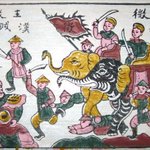
Nearly 2,000 years later, Vietnam still honors the sisters in temples, festivals and images of them riding elephants.
If an empire calls them rebels, does that make their fight for self-rule any less legitimate?


They Came from Thailand, the Land of Smiles. In Korea, They Became “Little Tigers.”
On a Korean hill under Chinese attack, a mortar shell destroyed a Thai soldier’s bunker, disabled his machine gun and wounded him.
The Thai soldier returned to the position with a carbine.
Then he found another heavy machine gun, took it apart and carried it forward in several trips. He reassembled it on a destroyed bunker and fired at the advancing attackers.
This was Pork Chop Hill, Korea, on 1 November 1952.
The soldier was Private Chuerak Kichprachoom. His Silver Star citation records those actions.
He belonged to the Thai battalion attached to the U.S. 9th Infantry Regiment, 2nd Infantry Division.
That November, Chinese troops repeatedly attacked the hill. Bombardments damaged the defenses. The fighting reached close quarters.
The Thais fought back with American artillery support, counterattacks and hand-to-hand combat.
They held the position.
South Korea’s veterans ministry remembers this defense as the battle that earned the Thai soldiers their nickname: “Little Tigers.”
Thailand sent 6,326 personnel to the Korean War. South Korean records list 129 killed, 1,139 wounded and five missing across the war—not this battle alone.
Behind the nickname were men who had crossed the sea to fight in another country, and families waiting for them to return.
From South Korea, I offer my deepest gratitude to Thailand’s Korean War veterans and to the Thai people.
How many people remember that Thai soldiers stood against Chinese attacks on Korea’s hills?


China Trained Its Troops Here. More Than 4,000 Vietnamese Soldiers Died.
“Training troops through rotational combat.”
A Chinese participant later described this as one purpose of operations on the Vietnam border.
Across that front, Vietnamese soldier Nguyễn Viết Ninh had carved a different message into his rifle stock:
“Alive, cling to the rocks. Dead, turn to stone. Become immortal.”
The border war had continued after China’s 1979 invasion. In April 1984, Chinese troops attacked and seized hilltop positions in northern Vietnam.
Vietnamese troops tried to take them back. On 12 July, their counterattack failed. Hundreds died.
The survivors faced years of artillery fire and fighting over rock, trench and cave. Water had to be carried up to the positions. At some points, opposing troops were only tens of metres apart.
China rotated units through the front so successive formations could gain combat experience.
Ninh fought on Hill 685 in January 1985. He was wounded repeatedly, continued fighting and died.
His rifle survived. Vietnamese reporting later placed it in the Military Region 2 Museum, still bearing its inscription.
According to a Vietnamese veterans’ association, more than 4,000 Vietnamese troops died across the Vị Xuyên front between 1984 and 1989.
Chinese units came away with combat experience. Vietnamese families were still searching for their sons’ remains decades later.
Who gave China the right to use Vietnam’s border as a classroom for war?


P1. Chinese assault-team leader Ma Quanbin reports to headquarters by radio during fighting on the Sino-Vietnamese border. (Colorized.)
P2. Chinese officers and soldiers watch live footage of Operation Lan Jian B, 14 October 1986.
P3. Vietnamese soldiers carry water to frontline positions at Vị Xuyên. (Colorized.)
P4. A relative mourns as the remains of Vietnamese soldier Nguyễn Viết Ninh are brought home decades after his death, 2014.
대한제국이 무너진 뒤, 황족들은 어떻게 살았을까?
고종의 아들 가운데 한 사람은 일본군 장군이 됐고, 다른 한 사람은 독립운동가들과 함께 해외로 탈출하려다 붙잡혔다. 막내딸은 일본에서 오랜 세월을 보낸 끝에 해방 후에도 한참이 지나서야 고국으로 돌아올 수 있었다.
황태자였던 영친왕 이은은 나라가 망하기 전인 1907년 일본으로 보내졌다. 그곳에서 군사교육을 받고 일본 육군 중장까지 올랐으나, 영구 귀국한 1963년에는 중병으로 의식을 잃은 상태였다.
형인 의친왕 이강은 1919년 독립운동가들의 도움을 받아 상하이 대한민국임시정부로 향하려 했다. 그러나 만주 안둥에서 일본 경찰에 붙잡히면서 망명은 실패했고, 그는 서울로 압송됐다.
덕혜옹주 역시 1925년 일본으로 보내졌으며, 그곳에서 조현병을 앓게 됐다. 이후 일본 귀족과 결혼했으나 병세는 계속됐고, 한동안 정신병원에서 지내야 했다. 1945년 해방을 맞고도 곧바로 귀국하지 못했던 그녀가 고국으로 돌아온 것은 1962년이었다.
제국이 사라진 뒤에도 황족으로 불렸지만, 정작 살 곳과 돌아올 때조차 마음대로 정하기 어려웠던 이들에게 그 이름은 어떤 의미였을까?


Take the City Tonight—or Die Together.
In June 1767, Siam—in present-day Thailand—had lost its capital, Ayutthaya, to a Burmese invasion two months earlier.
“Tomorrow morning we will take our breakfast inside the city.”
A royal chronicle records Taksin’s order before the assault on Chanthaburi.
First, his soldiers were to finish dinner.
Then throw away the remaining food.
Then smash their cooking pots.
Taksin had escaped before the capital fell. He was gathering an army in the east. But Chanthaburi’s local ruler refused to join him and shut the city gates.
Now Taksin committed his men to taking the city that night. Their next breakfast was behind its walls.
Thai and Chinese soldiers moved into position.
They waited for the signal.
Then the assault began.
The chronicle describes Taksin riding an elephant toward the gate under gunfire.
The gate broke.
His soldiers rushed through.
The ruler fled.
Chanthaburi became his base for gathering troops, provisions and ships.
By November, his forces had returned to defeat the Burmese garrison near Ayutthaya—about seven months after the capital’s fall.
He established a new capital at Thonburi and became King Taksin, remembered in Thailand for restoring Siam’s independence.
Their capital had fallen.
Their resistance had not ended.
Who could say a country was finished while people were still willing to fight for it?


JOHAN retweeted

백제 풍납토성(風納土城).
'풍납'이라는 이름이 붙은 이유는, 토성의 위치가 오늘날 서울특별시 송파구 풍납동에 있어서라고 합니다. 즉 당대에 실제로 사용된 명칭은 아닙니다.
오늘날에는 백제 초기의 수도인 '위례성(慰禮城)'이 바로 풍납토성을 가리키는 것으로 추정되며, 몽촌토성과 함께 수도의 중요한 지역으로 운영된 듯합니다.
정확한 건설 연도는 알 수 없지만, 대략 3세기 중반 정도로 보고 있는 것 같습니다.
이곳이 남하하는 고구려에 의해 함락되고, 백제가 수도를 남쪽으로 옮기면서 역사가 크게 바뀌기 시작하죠.
이렇게 모형으로 구현된 모습을 보니, 단순히 글로만 역사를 볼 때보다 훨씬 상상도 잘되고 이야기가 다채롭게 느껴지네요.
저 곳에서 백제와 고구려가 치열한 전쟁을 했을 것이라고 상상하니 가슴이 웅장해집니다🤣
사진 속의 모형은 서울 한성백제박물관에서 보실 수 있습니다.
저도 직접 가봤는데 모형도 엄청 크게 잘 구현되어 있어서 좋았습니다😆


A Thai Pilot Survived Being Shot Down. He Blamed His Own Side’s Plan.
“They were already waiting.”
Thai OV-10 pilot Pairoj was shot down and captured during the 1987–1988 border war with Laos.
Years later, he challenged the military’s explanation of his loss. He blamed planners for repeating the previous day’s attack plan.
On the ground, Thai troops were trying to take Hill 1428.
Thailand and Laos both claimed the border area around Ban Rom Klao. Disputes over the boundary and logging had escalated into artillery fire, ground assaults and air strikes.
Thailand had superior equipment. The defenders had prepared positions, mines and the advantage of higher ground.
Thai troops advanced around the hill. They could not take its summit by assault before the ceasefire.
Even the Royal Thai Air Force’s own magazine later acknowledged that better equipment had not overcome the Lao advantage in terrain.
A Thai ranger’s recollection raised another question: supplies often failed to reach the front, and artillery support was poor, he said.
These were criticisms from men who had fought there.
Thailand’s announced death toll was 147 soldiers across the conflict. It also lost an F-5 and an OV-10.
On 19 February 1988, both sides agreed to stop firing and withdraw three kilometres from the line of contact.
Readers: how were you taught to remember Ban Rom Klao—as a defence of the country, a failure of command, or both?


They Came to See Korea’s Emperor. They Were Told to Carry Japan’s Flag.
“You must carry a Japanese flag to enter.”
The students had come to greet their own emperor.
Japanese police stood in their way.
It was 1909. Sunjong, Korea’s last emperor, was touring the northwest of his country.
Korea was already under Japan’s protectorate rule. The Japanese authorities had helped arrange the tour to soften hostility toward their rule. Resident-General Itō Hirobumi accompanied the emperor.
The train carried Sunjong through Pyongyang, Sinuiju and other cities on an eight-day journey.
But greeting the Korean emperor came with a demand: display Japan’s flag alongside Korea’s.
Students from Daeseong School and Christian schools in Pyongyang refused.
According to the Daehan Maeil Sinbo newspaper, police blocked them from entering the emperor’s temporary residence. When they pressed forward, a policeman told them to lower the Korean flag.
The students walked away in anger.
Another group of students from Samhwa was told to attach even a small Japanese flag emblem to their heads.
They refused and left too.
Police summoned Daeseong’s headmaster, Ahn Chang-ho, and questioned his refusal.
His answer challenged the ceremony’s entire logic: Itō was accompanying the emperor. Why should Koreans display a foreign flag for a member of their own emperor’s entourage?
The newspaper reported the confrontations on 4 and 5 February.
Japan had tried to use loyalty to Korea’s emperor to make its own domination more acceptable.
The students’ loyalty had not made them obedient to Japan.
The following year, Japan annexed Korea. Sunjong lost his imperial title.
Why did Koreans have to carry Japan’s flag to greet their own emperor?


JOHAN retweeted

1909年10月26日の義挙より、117年。
安重根義士の放った『義人の魂弾』が“巨悪”伊藤博文を討つ。
初代韓国統監・伊藤博文の韓半島の民衆に対する残忍な圧政支配。
高宗退位、軍解散、外交権剥奪、義兵虐殺を主導した国権強奪の元凶。
伊藤在任中の4年間で韓国の主権はほぼ消滅し、多くの韓国人に経済的・社会的苦難をもたらした。後の占領支配の基盤は伊藤の策謀によって作り出された。
『歴史修正主義者』がしたり顔で言うことだが、『伊藤博文暗殺が“日韓併合”を現実にさせたから安重根は愚かだ』というのは、大嘘である。
伊藤が韓国侵略の急先鋒である事に疑いの余地はない。
『売国奴』李完用と結託して詔勅を偽造し、軍隊を強制的に解散させただけでなく、朝鮮王朝26代王の高宗を強制的に退位させ、大韓帝国の軍事・司法権を無力化させたのは他ならぬ伊藤なのだ。安重根義士が、民族の尊厳を踏み躙り、自主独立や自由を奪った伊藤を討った事に、なんら恥ずべき誤りはない。
安重根義士は日本や日本人を憎んでいたのではない。アジアを蹂躙しようとした『帝国主義』を憎んでいたのだ。世界中の誰もが『自分達の利』『自国の国益』しか考えなかった時代、安重根義士の“東洋平和論”は日本を含めた『アジアの安寧』を規定していた。この事実を日本人はよく知っておくべき。


He Shot the President. The Investigator Became President.
South Korea’s president sat down to dinner with his intelligence chief.
He would not leave alive.
On 26 October 1979, Kim Jae-gyu drew a pistol inside a KCIA safe house in Seoul. He shot President Park Chung-hee and presidential security chief Cha Ji-cheol.
Kim’s men also killed members of the presidential security detail.
Park had ruled for 18 years. His intelligence chief had ended that rule with a gun.
Ten days earlier, protests had erupted in Busan and spread to Masan. The government sent in troops. Kim and Cha had clashed over how to confront the unrest.
Now both the president and his security chief were dead.
Kim went to army headquarters with Army Chief of Staff Chung Seung-hwa, hiding his own role in the killing.
Within hours, the assassin was under arrest.
In court, Kim would claim:
“For liberal democracy, His Excellency had to be sacrificed.”
But killing Park did not put power in the people’s hands.
The investigation was entrusted to Major General Chun Doo-hwan. With the KCIA and presidential security service crippled, the investigator’s power grew.
On 12 December, Chun and allied officers launched a military rebellion.
In 1980, Chun became president.
The assassin had ended one man’s dictatorship. The investigator helped build another.
Was removing the dictator ever enough to dismantle the dictatorship?


