

Daily tweets about computer science and related stuff @JohnDCook.
Joined November 2010
- Tweets13.4K
- Following17
- Followers25K
- Likes270



Computer Science retweeted

It's Halloween season again and as a mathematician I'm obliged to post this. I don't make the rules

Computer Science retweeted

Cryptography: turning every problem into a key management problem, since 1400 BC.
Computer Science retweeted

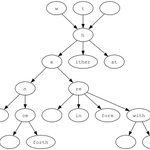
“Combinators … continue to seem exotic and abstruse—and somehow fundamentally unsuitable for human consumption.” — Stephen Wolfram



Computer Science retweeted

"Java is pass-by-value."
"But when I pass an object, it modifies the original object!"
"Yes, because the value being passed is the pointer to the object."
"So it's pass-by-reference?"
"No, the pointer is passed by value."
[C programmer laughing in the distance]
Computer Science retweeted

“My main point, however, is that I don't believe that the equality P=NP will turn out to be helpful even if it is proved, because such a proof will almost surely be nonconstructive.”
— Donald Knuth


Computer Science retweeted

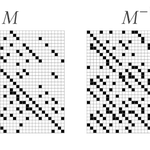
How NASA used Hadamard matrices to transmit photos from Mars.
johndcook.com/blog/2026/08/1…

Computer Science retweeted
Constructing Hadamard matrices
Bootstrapping yesterday's announcement
johndcook.com/blog/2026/08/1…
Computer Science retweeted

References to Unix and Linux over time, according to Google's ngram viewer

Computer Science retweeted

New post: A simple range reduction algorithm
johndcook.com/blog/2026/08/0…
Computer Science retweeted
Someday I’d like to teach a short course in retro computing, doing scientific calculations with a slide rule and set of tables.
It’s not as easy as it sounds, and students would learn things applicable to modern computing.

Suppose it’s 1964. You don’t have a computer, or even a calculator, but you do have a book of math tables.
How would you compute the natural log of 1000 factorial?
johndcook.com/blog/2026/08/0…
Computer Science retweeted

the year is 2036
C++36 has just been released
it's now considered a dialect of APL


Computer Science retweeted

Deleting a file looks weightless.
No smoke. No sound.
No visible wound in the universe.
But physics says something stranger: when information is truly erased, the world must pay a small thermodynamic price.
This is Landauer’s principle.
In 1961, Rolf Landauer, working at IBM, asked a question that sounded almost too philosophical for engineering:
What is the physical cost of computation?
The answer was not hidden in the screen. It was hidden in the word erase.
A bit can be 0 or 1. If you reset it to 0, regardless of whether it began as 0 or 1, you have destroyed information about its past state. Two possible histories have been compressed into one final result.
That is not just a logical operation.
It is a physical act.
Landauer’s insight was that logical irreversibility becomes physical irreversibility. If a computation throws away information, the missing distinction does not simply vanish into nothing. The entropy has to go somewhere.
Usually, it goes into the environment as heat.
The famous bound is:
E ≥ kBT ln 2
Here, kB is Boltzmann’s constant, T is temperature, and ln 2 appears because one bit has two possible states.
At room temperature, this energy is incredibly tiny, around 3 × 10⁻²¹ joules per erased bit. Your laptop wastes vastly more energy than this for practical reasons: resistance, imperfect circuits, speed, error control, architecture.
But the principle is not about today’s inefficient machines.
It is about the basement floor of physics.
Landauer’s principle tells us that information is not an abstract ghost. A bit must live somewhere: in a voltage, a magnetic domain, a trapped particle, a quantum state, ink on paper, or neurons in a brain.
To change information, you must change a physical system.
To erase information, you must erase a physical distinction.
This also helped clarify Maxwell’s demon, the imaginary creature that seemed able to beat the second law of thermodynamics by sorting fast and slow molecules.
The demon’s trick depends on information. It measures molecules, remembers results, and uses that knowledge to extract work. But to keep operating, the demon must reset its memory.
That erasure has a cost.
The demon does not defeat thermodynamics.
It becomes part of thermodynamics.
This is why Landauer’s principle is so beautiful. It does not make physics more mystical. It makes information less mystical.
The lesson is not that thoughts create reality or that the universe is magically made of data.
The lesson is more disciplined:
Knowledge needs a body.
Memory needs a medium.
Forgetting leaves a trace.
In ordinary life, deleting something feels like making it disappear.
In physics, disappearance is never so innocent.
Even a lost bit has to go somewhere.

Computer Science retweeted

Engineer Karen Leadlay programming the analog computers in the space division of General Dynamics, 1964.


Computer Science retweeted
"We're surrounded by the passion projects of the optimists of the past." -- Kevin Kelly
Computer Science retweeted

"We found that resurrecting the ancient practice of logarithm tables to be useful" -- Terry Tao @ICERM


