

Vallum Capital Advisors Private Limited SEBI Registered Portfolio Manager Reg. No. INP000007650
Mumbai
Joined September 2025
- Tweets49
- Following35
- Followers48
- Likes4
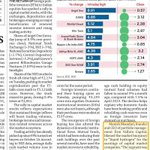




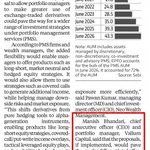


India’s capital market ecosystem is evolving beyond traditional financial services.
Our Founder & CEO, Manish Bhandari, shared his views with The Financial Express on how exchanges, depositories and tech-led brokerages are widening investment opportunities.
financialexpress.com/market/…
#VallumCapital #CapitalMarkets #IndianEquities

20
India ETFs Among Global Winners as the AI Trade Faces a Sharp Reversal
We are pleased to share that The Hindu BusinessLine has featured insights from Vallum Capital Advisors' Cross-Asset Macro Grid in its latest coverage of global ETF performance.
October 2026 witnessed a striking divergence across global markets. While Indian equity ETFs emerged among the strongest performers, AI hardware and semiconductor-linked ETFs faced significant corrections.
A few notable observations from our research:
• Indian ETFs delivered gains of up to 14%, with the iShares MSCI India ETF rising 9% during October.
• Taiwan and South Korea ETFs declined approximately 14%, while several semiconductor and AI-linked ETFs fell between 20% and 31%.
• The divergence highlights how changing global capital flows, sector concentration, and market positioning can produce vastly different outcomes across geographies.
At Vallum, we believe understanding these cross-asset relationships is essential to navigating an increasingly interconnected global investment landscape.
Read the full article in The Hindu BusinessLine:
thehindubusinessline.com/mar…
#VallumCapital #GlobalMarkets #ETF #AssetAllocation #IndiaMarkets #InvestmentResearch

31
The recent correction in AI and semiconductor stocks has brought an important investment risk into focus: Diversification across geographies does not necessarily mean diversification across underlying investments.
Our Founder & CEO, Manish Bhandari, recently shared his perspectives with Business Standard on the risks of chasing market momentum, concentration in global technology stocks, and the importance of disciplined asset allocation.
As investors navigate shifting global markets, the emphasis should remain on building diversified portfolios, managing thematic exposure, and maintaining a long-term investment approach rather than reacting to short-term market movements.
Read the full article here:
business-standard.com/financ…
#VallumCapital #BusinessStandard #GlobalInvesting #PortfolioDiversification #AssetAllocation

1
23
Hiring is getting an AI makeover. But is the future of recruitment really just about algorithms? 🤖
Artificial Intelligence is changing the way organisations discover talent, evaluate candidates and approach recruitment. From smarter screening to data-driven decision-making, the hiring landscape is evolving faster than ever.
But amidst all this technological transformation, one question remains: Can AI truly replace the human element in hiring, or is its real potential in making human decisions smarter?
This evolving conversation has been explored in Financial Express, featuring insights from Vallum Capital Advisors.
As AI continues to reshape industries, understanding its impact on the workforce, talent acquisition and the future of work becomes increasingly important.
At Vallum Capital, we are keen to follow and contribute to conversations shaping the future of business and technology.
📖 Read the full article here: financialexpress.com/jobs-ca…
#VallumCapital #FinancialExpress #ArtificialIntelligence #AI #FutureOfWork #HiringTrends #Technology #TalentAcquisition

1
26
China's AI Wave: What Opportunities Lie Ahead for Indian IT Companies?
As China accelerates its AI development, new opportunities are emerging for India's IT services industry.
In a recent feature by Global Times, Manish Bhandari, Founder of Vallum Capital Advisors, shares his perspective on how India's strong IT services ecosystem can leverage China's advancements in AI.
While China is making strides in AI model development, India's strengths in enterprise integration, technical talent and IT services could create a compelling opportunity for collaboration and growth.
The bigger opportunity lies in turning AI innovation into scalable, real-world business solutions.
Read the full article: globaltimes.cn/page/202610/1…
Published by Global Times | Article by Tu Lei and Li Xuanmin
#VallumCapital #ArtificialIntelligence #IndiaIT #China #AITechnology #InvestmentInsights
23
AI is being tested. India is quietly compounding.
In his latest moneycontrol.com conversation, our CEO and Portfolio Manager, Manish Bhandari, shared where he sees the next big opportunities.
Three themes stood out:
1. CDMO and precision engineering: the quiet winners of the global supply-chain shift: Global companies are spreading production beyond China, and India’s specialised manufacturers are picking up the work.
2. Global markets: the AI trade is being tested: Heavy debt-funded AI spending is raising questions, and global capital is looking for more durable growth.
3. Small and mid-caps in India: earnings are leading: Domestic demand, capex and consumption are driving profit growth ahead of large-caps.
At Vallum Capital, we stay anchored to disciplined, valuation-driven investing, because the price you pay matters as much as the story you buy.
Watch the full conversation: lnkd.in/diWPv5j2
Read the article: lnkd.in/dBgz4F8Y
Which of the three would you back first?
#VallumCapital #PMS #IndianEquities #CDMO #PrecisionEngineering #SmallCaps #MidCaps

1
36
Vallum Capital Advisors retweeted

“Study microeconomics, game theory, psychology, persuasion, ethics, mathematics, and computers.”
— Naval Ravikant

FCNR Swaps vs. Fed Hikes: How India Pre-Funded Its FX Defense
Vallum Capital Global Research | 5 October 2026
Start with the number that has the market nervous. India's real policy rate is about +0.4%: a 5.25% repo against 4.82% CPI. America's is about +0.5%: a 3.75–4.00% fed funds rate against 3.4% CPI. The Fed hiked on 16 September, its first increase since 2023. Since then the nominal gap between the two policy rates has narrowed to roughly 125–140bp. In real terms the gap has closed, and America is now slightly ahead.
By the textbook, that invites capital flight, and the RBI should hike on 7 October to restore the carry. At Vallum, we believe India does not need a rate hike. The real-rate gap only matters if the dollars can leave, and the dollars that matter are already locked in.
The FCNR trade: the hike India already paid for
India dealt with this problem in June. The RBI opened a special swap window on 8 June. Through it, banks raised FCNR(B) deposits from NRIs and swapped the dollars to the RBI at a hedging cost of roughly 3% a year. By 18 September the window had drawn $143.5 billion. Of that, $133 billion was FCNR(B), locked in for one to five years. That is nearly a fifth of India's $740.8 billion reserves, a backstop for the rupee that no 25bp hike could buy.
This is a carry trade, not a subsidy. Invest $100 billion at about 4% for five years and it earns roughly $20 billion. Hedging across one-, three- and five-year deposits costs about $15 billion, and the rest is surplus. India bought a record $15.2 billion of US Treasuries in July alone, taking its holdings to $202.6 billion. Every Fed hike raises the yield on those holdings. In effect, the shrinking rate gap is quietly paying for India's hedge.
Governor Sanjay Malhotra put it plainly: "We have a foolproof system of insuring ourselves."
One central bank has missed its target. It isn't the RBI.
The RBI targets 4% CPI within a 2–6% band. Quarterly inflation has stayed under the 6% ceiling for 11 straight quarters since Q3 2023. The Fed targets 2% and has overshot for 22 consecutive quarters, since Q2 2021. One central bank is fighting a credibility deficit. The other is protecting a surplus.
Yes, CPI may cross 6.5% in October–November because of a weak monsoon and $107 Brent. But under the RBI's framework, failure means three consecutive quarters outside the band. Most forecasts see inflation back below 6% by early 2027. A supply shock with a known end date is no reason to raise the cost of credit for the whole country.
Global capital has noticed
Japan is the largest foreign holder of US debt. On 2 September its leading rating agency upgraded India to A-. The US lost its last AAA rating in 2025. Since the Fed moved, no major emerging market has hiked, and Brazil cut. The earlier hikers, Indonesia (+100bp) and the Philippines (+75bp), were defending weak currencies. India's defence is already paid for.
The domestic numbers say wait
GDP grew 7.8% in Q1 FY27. The current account deficit is 0.5% of GDP, helped by a 29% jump in remittances. The Centre has cut FY27 borrowing by ₹1.2 lakh crore and will raise only ₹7.86 lakh crore in H2, keeping the fiscal deficit at 4.3% of GDP. A government that is borrowing less does not need higher yields. Diwali is five weeks away, and a hike now would make festive credit dearer just as demand peaks.
Mr. Malhotra again: "We cannot afford to become complacent, as the economic and financial costs of allowing vulnerabilities to build are simply too high."
Risk
The thesis breaks if Brent stays above $110 and the price spike spreads into core inflation and wage expectations. Core inflation surprised on the upside in August, and the last MPC minutes read hawkish. If that happens, December becomes the meeting to watch.
The Read
Vallum's view is clear: India does not need a rate hike in October. A closed real-rate gap is only a problem for a country that has to pay capital to stay, and India has already locked $143.5 billion in place. Expect a hold on 7 October, delivered in a firm tone: "neither dovish nor hawkish," in the Governor's words. India already hiked in June. It just did it in dollars.
🤖 Made with AI

1
190
Everyone's watching the grey market. The smarter question is how many NSE shares can actually trade.
NSE's ₹22,561 crore IPO, the largest of 2026, was subscribed 5.71x. Yet the grey market premium has shrunk from 14–17% to roughly 2–5%.
On the surface, that reads as "muted listing." Look at the share structure and the picture changes:
2,475 million total shares outstanding
94.9% of them are pre-issue capital, locked in for six months
37.8 million anchor shares, also locked in
Only about 88.6 million shares free to trade on Day 1
That's a thin float for an exchange valued at ₹4.42 lakh crore at the IPO price, more than 3x BSE's market cap. It also puts NSE straight among India's most valuable listed companies.
Our founder & CEO, Manish Bhandari, shared his view with The Economic Times: GMP may hint at a modest premium, but "the real story lies in its tight initial supply."
When demand for 505 million shares meets a float of 88.6 million, and most large holders can't sell for six months, grey market pricing becomes a less reliable guide. The listing-day pop may be quiet. What follows could be far more interesting.
At Vallum Capital Advisors, we look past the headline number to the structure underneath it.
Will NSE's real move come on listing day or after the lock-ins? Share your view below. 👇
#NSEIPO #NSE #IPO #IndianMarkets #CapitalMarkets #Investing #VallumCapital #PMS

284
One-third of Nifty 100 largecaps are trading near their 52-week lows — and Manish Bhandari of Vallum Capital thinks that's the wrong place to be looking.
A recent Business Standard report (Pravin Palande) flags a striking data point: 29 of the 100 largest listed companies by market cap are within 10% of their 52-week lows, and the Nifty 100 now trades at just 19x earnings — a three-year low. Cheap doesn't always mean compelling, though.
Manish Bhandari, CEO & Portfolio Manager at Vallum Capital, cautions against chasing this apparent value in the largecap space:
"The real opportunity lies in identifying midcap and smallcap businesses capable of compounding earnings materially faster than the market."
His view: valuation without superior earnings growth can turn into a value trap. As India's manufacturing, capex, financialisation and defence themes play out, midcaps and smallcaps stand to see disproportionately higher profit growth as the economy scales.
Worth remembering as everyone eyes "cheap" largecaps — sometimes the more interesting opportunity is one rung down.
📰 Source: Business Standard, Pravin Palande
#Investing #IndianMarkets #Midcaps #Smallcaps #VallumCapital #EquityResearch #ValueInvesting
47
China and India aren't just neighbors — they might be about to become each other's best investment thesis.
In a recent conversation with Global Times, our founder and portfolio manager Manish Bhandari shared why Vallum's multi-asset book has been building a China allocation well before it became consensus — and why the timing has paid off, with those bets contributing meaningfully to the strategy's recent double-digit returns.
His view on the AI race is the part worth sitting with: China currently leads on frontier models — DeepSeek, Qwen, Kimi have all matched or beaten Western systems in parts. But an open-weight model only solves the hardest part of the problem. What's left — fine-tuning, compliance, wiring it into a client's actual infrastructure — is exactly the capability Indian IT services and global capacity centers have spent two decades building.
That reframes China and India from rivals to complements. Mahendra Swarup (VG Capital, former president of IVCA) echoed this in the same piece — India's edge in software and engineering talent, paired with China's strength in AI applications, hardware and manufacturing at scale.
The read for investors: if bilateral relations keep improving, this isn't just a geopolitical story — it's a capital flows story.
🔗 Full interview: Global Times, reported by Li Xuanmin — globaltimes.cn/page/202609/1…
#India #China #AI #Investing #Vallum #EmergingMarkets

48
While most investors read about China's tech boom from research reports, Manish Bhandari decided to go see it for himself.
Our founder and portfolio manager just wrapped up a week-long deep dive across Shenzhen, Hangzhou, Shanghai and Beijing — visiting the labs and factory floors of Alibaba, Geely, SenseTime, Horizon Robotics, Hesai and Sharpa, and sitting down with the people actually building China's AI, robotics and autonomous-driving stack.
Two things stood out to him: Alibaba's AI-scale data centers, and a robotic hand from Sharpa that's cracked real tactile sensing — enough to watch a robot serve ice cream and realize how far the gap has closed in just a few years.
His takeaway for Indian investors: China builds hardware and software together; India is still mostly software. That gap is exactly where the next set of opportunities — and complementarities — will show up.
The trip made it into Global Times, in a piece on the growing wave of global fund managers and executives visiting China firsthand to "feel the pulse" of its homegrown innovation.
🔗 Full story: Global Times, reported by Li Xuanmin and Chen Qingrui — globaltimes.cn/page/202609/1…
#Vallum #China #Investing #DeepTech #PortfolioManagement

3
63
The prospect of a Tata Sons listing has brought renewed focus on the value embedded in listed Tata Group companies holding stakes in the holding company.
Speaking to The Economic Times, Manish Bhandari, CEO & Portfolio Manager, Vallum Capital Advisors, noted that a listing could help unlock value by establishing a clearer valuation benchmark for these holdings. As he highlighted, while this may enhance visibility of the embedded value, it does not necessarily imply that group companies would immediately monetise their stakes in the open market.
An interesting development to watch from the perspective of holding-company valuations, capital allocation and shareholder value creation.
#VallumCapital #TataSons #TataGroup #CapitalMarkets #Valuation #Investing #IndianMarkets

34
An interesting shift is taking shape in the economic conversation between India and China.
In a recent Global Times article, our CIO, Manish Bhandari, shared his perspective on the growing interest among Indian investors in Chinese assets and, importantly, the potential for India and China to collaborate rather than simply compete in the emerging AI ecosystem.
China’s capabilities across AI models, hardware and manufacturing, combined with India’s strength in technology services, digital infrastructure and enterprise implementation, point to areas of natural complementarity.
This is also a theme Manish has been exploring for some time.
In his earlier article for The Economic Times, “India’s digital edge, China’s manufacturing, Russia’s energy: A new axis of global growth,” he examined the broader possibility of India’s digital and services capabilities, China’s manufacturing scale and Russia’s energy strength creating a new economic geometry across Eurasia.
The geopolitical landscape will continue to evolve, and challenges remain. But beneath the headlines, changes in capital flows, technology, trade and supply chains deserve close attention.
Thank you to Global Times and journalist Li Xuanmin for including our CIO Manish Bhandari’s perspective in the discussion.
Read the Global Times article here:
globaltimes.cn/page/202609/1…
Also revisiting Manish’s earlier perspective in The Economic Times:
economictimes.indiatimes.com…
#India #China #Russia #ArtificialIntelligence #GlobalMarkets #Investing #Geopolitics #EmergingMarkets
19
₹38,000 crore. 29 companies. One ticking clock. 🕐
India's primary market is heading into what could be its most consequential September in nearly three decades and the pressure is real.
As SEBI's extended approval deadline looms, 29 companies are scrambling to decide whether to list now or walk away. The pipeline? A staggering ₹37,580 crore. And that's before NSE's own ₹30,000 crore IPO enters the picture.
But here's what most headlines miss:
It's not just about appetite. It's about timing, staleness, and institutional bandwidth.
Manish Bhandari, CEO & Portfolio Manager at Vallum Capital, cuts through the noise with a sharp observation, SEBI approvals lapse after 12 months because the financials in the offer document go "stale." For smaller companies watching NSE dominate institutional allocations and investor attention, the math gets uncomfortable fast.
The BSE IPO index is up 35% in FY27. The SME IPO index, 55%. The bar for what qualifies as a "good listing" has never been higher, and that's exactly why the muted post-listing performance of recent issues is quietly worrying the Street.
September 2026 may well be the strongest IPO month since January 1997. But strength and wisdom aren't always the same thing.
Worth asking: In a market this crowded, does timing your IPO for now signal confidence or desperation?
Insightful piece by Suresh P Iyengar, do give it a read for the full picture on India's IPO pipeline.
#IPO #IndiaMarkets #PrimaryMarket #VallumCapital #ManishBhandari #SEBI #CapitalMarkets #Investing

29
Are foreign investors finally changing their view on India?
After four consecutive months of heavy selling, FPIs have turned net buyers for the second straight month, with ₹30,919 crore flowing into Indian equities in August.
But the bigger question is: Is this merely a short-term reversal, or the beginning of a larger shift in global capital allocation?
In the latest NDTV Profit article, Manish Bhandari, CEO & Portfolio Manager at Vallum Capital, shares his perspective on what the recent FPI flows could be signalling and why the trend deserves closer attention.
A fascinating read for anyone watching Indian equities, global flows and the next phase of the market cycle.
Read the full article 👇
lnkd.in/dm46fKKZ
#VallumCapital #ManishBhandari #IndianEquities #FPI #IndianMarkets #Investing
#CapitalMarkets #MarketOutlook
21
N Chandrasekaran's exit from Tata Sons is not just a leadership change, it's a reminder that markets ultimately price governance, not just growth.
Under Chandra's tenure, Tata Group's listed market cap nearly tripled. Trent delivered 18x. TCS became a global powerhouse. And yet, on the day his departure was confirmed, TCS fell over 4% in a single session.
Because capital allocation, board alignment, and succession clarity are not footnotes, they are the load-bearing walls of any great conglomerate.
Manish Bhandari, CEO & Portfolio Manager at Vallum Capital Advisors, shared his perspective on exactly this in Livemint, what Chandrasekaran's departure means for Tata Group stocks and for investors navigating leadership transitions.
At Vallum, we look for stewards, not just builders.
🔗 lnkd.in/drUjtYyi
90
India’s Rate Cut Opportunity and the Coming Midcap Surge: A Macro Insight
Are we on the verge of a significant market shift? A new article by The Economic Times analyzes the evolving macro landscape, from oil prices to inflation dynamics.
Amidst this volatility, Manish Bhandari, CEO and Portfolio Manager at Vallum Capital, provides a crucial strategic lens. He notes that the retreat of Brent crude oil prices from recent highs is effectively easing India's twin vulnerabilities: a widening current account deficit and CPI inflation (recorded at 4.38% in June).
“It gives the RBI (Reserve Bank of India), which had revised FY27 inflation to 5.1% on energy costs, meaningful room to cut rates. The real opportunity, however, lies in Indian midcaps, the winners of the next cycle.”
This quote powerfully captures the interconnectedness of global energy prices, domestic monetary policy, and specific, actionable sector opportunity. While a potential rate cut is on the horizon, Vallum Capital is already focused on positioning for the next phase of market leadership.
What sectors are you watching for the next market cycle?

47
Expanding Horizons for Portfolio Management Services 📈
SEBI’s proposed flexibility around exchange-traded derivatives marks a potential watershed moment for the PMS industry.
As highlighted in a recent article by Business Standard, allowing up to 125% derivative exposure opens up a whole new playbook for customized, sophisticated portfolio construction.
Sharing his perspective on this regulatory shift, Manish Bhandari, CEO & Portfolio Manager at Vallum Capital, noted:
"The proposals, if implemented, would pave the way for differentiated offerings such as covered-call overlays, protective puts, and market-neutral strategies. This additional flexibility will enable portfolio managers to design products that are currently unavailable to investors through any of the asset management structures."
This evolution could bridge key gaps between PMS, AIFs, and SIFs giving investors access to true alpha generation and robust downside protection.
🤖 Made with AI

33
India’s next market winners may emerge from structural shifts not short-term sentiment.
In a recent Bloomberg News feature, @TweetManishbh, Founder & CEO of Vallum Capital, shares his perspective on how India's evolving policy landscape, protectionist measures, and renewed focus on domestic manufacturing are creating new opportunities across the equity markets.
At a time when investors are navigating a rapidly changing global environment, identifying businesses with durable competitive advantages requires deep research, patience, and a long-term perspective.
At Vallum Capital, the investment philosophy remains rooted in uncovering high-quality businesses positioned to benefit from India’s structural growth themes.
Read the full Bloomberg News story here:
economictimes.indiatimes.com…
Credit: Bloomberg News (published via The Economic Times).
#VallumCapital #ManishBhandari #BloombergNews #Investing #IndianMarkets #EquityResearch #LongTermInvesting #IndiaGrowthStory #CapitalMarkets #MarketInsights

29