

Investment Manager | Falafal Lover | Novice Pianist | Failed Photographer | Thought provoking views on Investing Landscape
Mumbai
Joined June 2013
- Tweets724
- Following125
- Followers11.4K
- Likes9


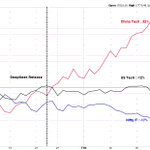


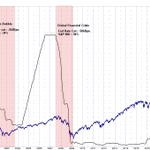
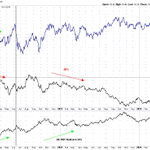

We are releasing our Q1-FY27 Quarterly Letter to VIMAS stakeholders and we're opening with gold, because what just happened there should unsettle every portfolio out there.
For a year, gold felt untouchable. Central banks hoarded it like insurance against a broken system. Markets convinced themselves of a story too good to question a captured Fed, doves in charge, rate cuts on the way, inflation left to run wild. The "debasement trade." Conviction so strong it dragged gold to $5,600.
Then, in a single meeting, the story collapsed.
Kevin Warsh the most hawkish Fed pick on the table took the chair. His first FOMC meeting tore out every rate cut the market had bet on. And almost in the same breath, Hormuz shut down, oil ripped to $115, the dollar surged, yields climbed. The same central banks that bought gold as their safety net suddenly needed dollars more than they needed safety and turned around and sold it. Turkey. Russia. Gold got gutted down 26% from its peak, one of only ten falls this brutal in fifty years.
Let that sink in. It wasn't that gold was wrong. It's that nothing is safe when the world runs out of dollars faster than conviction can hold. Even the "sure thing" trade can be forced to its knees overnight.
This is the regime we're all living in now a hawkish Fed, a dollar that refuses to stay down, oil lurching violently, every asset class scrambling to reprice around it.
Read Full letter here:
Vallum Multi Activa Q1 FY 27 Letter : linkedin.com/posts/manish-bh…
One line before you go, and it's the one that should keep you up tonight:
The same dislocation that broke gold is quietly building the most asymmetric point for Indian equities in years the full breakdown is inside the letter.
#VallumCapital #VIMAS #Macro #Gold #India #EmergingMarkets #Rupee #PortfolioManagement #WealthManagement

2
9
1,867
Sometime in 2001–02, as a 24-year-old research analyst, I took one of the most daunting plunges of my early career.
I walked into Ramon House to present a stock idea to the legendary Sanjoy Bhattacharyya, then CIO of HDFC Mutual Fund.
The stock was a recently listed media company — a market darling of that era. I carried the confidence, perhaps overconfidence, of youth. A close friend had warned me not to attempt the pitch. But I was excited to have earned the opportunity to present before one of India’s finest investment minds.
Sanjoy listened patiently for nearly 20–25 minutes. Then, in less than 25 seconds, he dismantled my entire thesis. It was blunt. It was unfiltered. And it was unforgettable. There are moments in life that do not merely teach you; they take your breath away. For many of us who lived through the first decade of the 2000s as sell-side analysts, such encounters were our real classrooms. That meeting was not just a lesson in stock picking. It was a trial by fire. It permanently raised my standard for research, sharpened my respect for intellectual honesty, and shaped the very DNA of my journey as an investor. As my career progressed, our interactions became limited. But the impact of that one meeting stayed with me for 25 years.
Recently, in Kolkata, I had the profound honour of reuniting with him — this time to moderate the CFA Society India session, Winning Investment Habits | 5th Masters At Work.
In this conversation, we moved away from the noise of markets and the false comfort of 60-page Excel models. We discussed the timeless principles of investing in an age of disruption: the role of luck, the importance of temperament, the limits of technique, and why parts of the AI investment frenzy may eventually meet their nemesis.
Three ideas from the discussion stayed with me deeply:
1. Risk is ignorance: True risk is not merely volatility. It is not understanding what you own. You do not need to be an expert in every sector. But the businesses you choose to own, you must understand exceptionally well.
2. Know thyself: Too many investors try to become the next Warren Buffett. The more important challenge is to understand who you are — your temperament, your biases, your time horizon — and then build an investment framework that is honest to your own nature.
3. The ultimate scorecard: Investing driven purely by greed rarely ends well. Money is only a way of keeping score. The deeper joy of investing lies in continuous learning, intellectual humility, and becoming a better version of oneself.
I invite you to watch the full conversation here:
Instagram link: instagram.com/reel/DZo3YOus2…
Youtube link: youtube.com/watch?v=RLYrMmcg…
I hope it adds as much value to your investment journey as Sanjoy has added to mine.

" There are decades when nothing happens ; There are weeks when decade happens" Silver plunge is unparallel. My team was getting uncomfortable a week back.


In the high-stakes theatre of international diplomacy, silence is rarely just silence. When U.S. Commerce Secretary Howard Lutnick announced this January that a landmark trade deal with India had stalled because Prime Minister Narendra Modi "did not call" President Trump to finalize the terms, the explanation was as convenient as it was implausible.
To the casual observer, it painted a picture of bureaucratic hesitation. But to those watching the flow of global capital, the silence on the phone line masked a thunderous shift in the global economic order. While Washington focused on tariffs and trade deficits, New Delhi quietly engineered a financial mechanism that the United States has historically treated as a red line: the ability to buy oil without the dollar.
A rigorous analysis of regulatory filings, central bank data, and geopolitical signalling reveals that the trade impasse of early 2026 is not about almonds or steel. It is the first major casualty of the "Petro-Rupee," a strategy that has placed the world’s oldest democracy and its largest democracy on a collision course over the future of financial sovereignty.
The "Red Line" and the Greenback
To understand the gravity of the rift, one must look past the current headlines to the foundation of American power. Since 1974, when the Nixon administration struck a pact with Saudi Arabia, the global oil trade has been denominated effectively exclusively in U.S. dollars. This "Petrodollar" system forces nations to hold vast dollar reserves, which are recycled back into U.S. Treasury bonds, financing American deficits and cementing the dollar's global supremacy. History has been unkind to those who challenge this arrangement. When Saddam Hussein switched Iraqi oil sales to the Euro in 2000, or when Muammar Gaddafi proposed a gold-backed African currency in 2011, the geopolitical consequences were severe. As former Federal Reserve Chairman Alan Greenspan candidly noted in his memoirs, the Iraq war was "largely about oil"—a resource inseparable from the currency used to buy it. So is the case with Venenzula and Iran today, which are pricing their oil outside the US dollar system.
For decades, this was a line no ally would cross. But in the shifting landscape of 2026, India has done just that.
The Smoking Gun: August 2025
Picture tells thousand words. The deterioration of economic relations can be traced precisely to mid-2025. While public attention was fixed on diplomatic pleasantries, the Reserve Bank of India (RBI) was dismantling the "Rupee Trap" that had hindered its trade with Russia in Rupee.
For months, Moscow had been accumulating billions in Indian Rupees from oil sales that it couldn't spend. Then, on August 12, 2025, the RBI issued a quiet but revolutionary circular. It authorized foreign holders of "Special Rupee Vostro Accounts" (SRVAs) to invest their surplus balances into Indian Government Securities and Treasury Bills. In a move that alarmed U.S. strategists even more, India and the UAE—two key American partners—began operationalizing a Local Currency Settlement system. The Indian Oil Corporation paid for a million barrels of Abu Dhabi crude in rupees, proving the concept worked. By 2025, this corridor had deepened, with the UAE pumping $22.84 billion in foreign direct investment into India to balance the currency flows, and the Abu Dhabi Investment Authority setting up shop in Gujarat's GIFT City.
This was the smoking gun. By allowing Russia to recycle its oil revenue directly into Indian sovereign debt, New Delhi created a closed-loop financial system. Russian oil profits were no longer chasing U.S. Treasuries; they were funding Indian infrastructure. The reaction from Washington was swift. Within weeks, the U.S. imposed tariffs of up to 50 percent on select Indian goods—a punitive strike that signal the partnership was in jeopardy.
By late 2025, this alternative financial architecture had expanded far beyond a wartime necessity for Russian oil. The RBI had permitted 123 correspondent banks from 30 countries—including the United Kingdom, Germany, Israel, and Singapore—to open 156 Special Rupee accounts.
The Last Straw: India Takes the Wheel at BRICS
While the "Petro-Rupee" laid the kindling, the spark that finally burned the bridge was India’s bold assumption of leadership within the BRICS currency project. As the host of the 2026 BRICS Summit, New Delhi has moved beyond passive participation to active architecture. The Reserve Bank of India has formally proposed linking the Central Bank Digital Currencies (CBDCs) of member nations—a project dubbed the "BRICS Bridge."
Building on the 2025 Rio de Janeiro declaration, India is pushing for a proprietary, interoperable payment rail that would allow Russia, China, India, other BRICS members to settle trade instantly in digital local currencies, completely bypassing the U.S. banking system. This is not merely a theoretical exercise; with the RBI actively pilot-testing the e-Rupee’s cross-border capabilities, India is effectively building a "digital SWIFT" immune to Western sanctions. For the Trump administration, this was the final provocation. It wasn't just evasion; it was replacement.
Conclusion: A Monetary Mutiny
This aggressive push for a parallel financial system became the veritable last straw on the camel's back for the stalled trade deal. In December 2024, President-elect Trump issued a blunt ultimatum: any move by BRICS nations to create a new currency or back an alternative to the dollar would be met with 100 percent tariffs.
Washington views India’s 2026 agenda not as economic modernization, but as a "monetary mutiny." The sages who studied the rise and fall of kingdoms would chuckle today, for the lesson is ancient: money is the hard-earned fruit of labor, while currency is merely the paper promise that it still tastes good. Money—like gold and silver—is the crystallized effort of real work. Currency, however, is its excitable younger cousin: useful for trade, but spoiled the moment rulers discover the printing press.
India has chosen to bear the cost of tariffs rather than surrender the sovereignty of its "crystallized effort." The trade deal may be officially "stalled" due to a missed phone call, but in reality, it lies buried under the foundation of the new BRICS financial architecture—a foundation India is now actively pouring concrete for better future.
Manish Bhandari, CIIA, founder of Vallum Capital Advisors, a Portfolio Management firm managing equity investments Based in Mumbai.
Full Article & Research Document Available Below
economictimes.indiatimes.com…
#Geopolitics #Macroeconomics #USIndiaTrade #BRICS2026 #GlobalEconomy #ForeignPolicy #TradeWar #DeDollarization #InternationalRelations

The Global Sectoral Rotation from AI to Biotech has begun linkedin.com/pulse/global-se…
#nvdia #nasdaq_mynz #TechStocks #Biotech #USStocks #Investing #biotechnologyassets #Stocks #elonmusk2025

Check out my latest article: The Sacred Trust: Forty Years of Institutional Longevity, A Lesson in Trusteeship and Patient Capital.
@udaykotak @KotakBankLtd @jaykotak
linkedin.com/pulse/sacred-tr… via @LinkedIn

10
2,355
I’m excited to share the edition of Vallum’s Weekly Insights. Do take a look and tell us which theme resonated most with you.
Follow @VallumCapital for future editions.
#WhatVallumRead #VallumCapital #WeekendReading
📚 Weekly Insights from Vallum Capital:
OpenAI’s consulting playbook, AI ethics & synthetic content, global sanitation, the psychology of time, and gold’s quiet resilience. Five eclectic reads on tech, responsibility & markets.
zc.vg/T5WIx?m=0 #WhatVallumRead #Gold
3
2,354


यदा यदा हि धर्मस्य ग्लानिर्भवति भारत।
अभ्युत्थानमधर्मस्य तदात्मानं सृजाम्यहम्॥ Chapter 4 verse 7
Has IEX stock this week finally decoupled from Market coupling? |
We said this - linkedin.com/posts/manish-bh…
Finally, the order is out - sebi.gov.in/sebi_data/attach…

5
1,188
Donald J. Trump, President of the US, has questioned the need for quarterly reporting.
While the EU, UK, Japan & Singapore have already moved away, India still clings to this short-term ritual — at the cost of innovation & R&D.
Full analysis: linkedin.com/posts/manish-bh…
#QuarterlyEarnings #IndiaEconomy #Innovation

Weekly insights from Vallum Capital Advisors : This week’s edition explores storytelling in cinema, real-time trust in business, and reflections on cosmic meaning—three standout reads (and one pizza tracker) that blend emotion, transparency, and scale. – September 06, 2025
From lead character deaths to galaxies beyond sight, these pieces remind us how narrative shapes experience—across screens, brands, and the universe itself.
🔗 zc.vg/zNA1L?m=0
#WhatVallumRead #Storytelling #Transparency #CustomerExperience #CosmicPerspective #Cinema #Dominos #BigThink #VallumCapital #WeekendReading #StrategicThinking
9
1,873
Weekly insights from Vallum Capital Advisors : This week’s reading list navigates platform monopolies, ancient Indian ethics, compounding edge, industrial consolidation, and the power of detachment—five reflections that cut across time, markets, and mindset. – August 16, 2025
From Chanakya to Charlie Munger, this curation maps enduring truths in a rapidly shifting world.
🔗 zc.vg/iSZ7y?m=0
#WhatVallumRead #PlatformPower #IndianPhilosophy #Compounding #Consolidation #MentalModels #ChanakyaNeeti #CharlieMunger #VallumCapital #LongTermThinking #StrategicInsight
5
1,895
THE GREAT GAME REIMAGINED: When Three Ancient Titans Forge the Future
Modi's first China visit in 7 years isn’t just diplomacy — it’s the birth of a $54 TRILLION economic powerhouse that will reshape global trade forever.
While the West debates tariffs, three ancient civilizations are quietly building the future:
🇨🇳 CHINA – Manufacturing dominance
🇷🇺 RUSSIA – Energy supremacy
🇮🇳 INDIA – Service economy & untapped markets
THE NUMBERS ARE STAGGERING:
$53.9 trillion combined GDP (33% of global output)
$5.09 trillion in exports (20% of world trade)
$4.7 trillion in foreign reserves (38% of global reserves)
3.1 billion citizens (37.8% of world population)
WHAT’S REALLY HAPPENING:
✅ Modi–Putin meeting → Rupee–Ruble settlements launched
✅ India resumes Chinese tourist visas after 4 years
✅ Cross-border QR payments with Russia–China pilot
✅ Russian oil now 36% of India’s imports ($67.2B vs <2% before)
THE GAME CHANGER: India’s potential BRI participation could slash logistics costs by 30%, cut transit times from 60 to 25 days, and unlock Central Asia’s $300B+ market.
This isn’t just about trade — it’s about the “servicification revolution” where India’s digital infrastructure meets China’s manufacturing scale and Russia’s energy depth.
The narrative is shifting from “China+1” to “India+2”.
Are we witnessing the birth of a new world order where Eurasian powers rewrite the rules of global commerce?
The multipolar world isn’t coming — it’s already here.
Full Article & Research Document Available Below
Link: economictimes.indiatimes.com…
#GlobalTrade #Geopolitics #India #China #Russia #SCO #BeltAndRoad #Economy #Trade #Geostrategy #Eurasia #Modi #XiJinping #Putin #InternationalRelations #SupplyChain #Energy #Manufacturing #Services #DigitalIndia #TradeWars #Diplomacy #EmergingMarkets #GlobalEconomy #WorldOrder #BRICS #Multipolarity #TradeRoutes #Innovation #FutureOfTrade

3
17
2,944
Manish Bhandari, Vallum Capital in Conversation with Vivek Bajaj, StockEdge on financialization, Emerging New World Order between India-Russia-China, India to gain significantly due to this Axis and other things.
Full video on YouTube → youtube.com/watch?v=C3LN9Xqf…
#Investing #India #China #Russia #Finance #StockMarket #WealthCreation #ManishBhandari #VivekBajaj #MoneyMatters #LouisVincentGave #MarketInsights #GlobalEconomy #InvestmentStrategies #EconomicTrends #Moneycontrol
Weekly insights from Vallum Capital Advisors : This week’s selection explores financial first principles, social capital, growth mindsets, luxury dynamics, and the science of simplicity—five powerful reads that blend behavioral depth with strategic clarity. – August 2, 2025
From Buffett to Berggruen, this set is a reminder that long-term advantage often lies in how we think, not just what we know.
🔗 zc.vg/VigHE?m=0
#WhatVallumRead #ThinkingClearly #InvestorMindset #LuxuryBrands #GrowthMindset #BuffettWisdom #MentalModels #VallumCapital #GlobalTrends #StrategicThinking
2
9
1,439
Weekly Insights from Vallum Capital Advisors: This week’s curation spans DIY innovation, biotech disruption, cognitive frameworks, chess-inspired strategy, and human-centered leadership—five engaging reads that blend repair, resilience, and reinvention. – July 19, 2025
From frugal tech to strategic intuition, these pieces reflect the evolving toolkit for navigating complexity.
🔗 zc.vg/Z7Psc?m=0
#WhatVallumRead #Innovation #AIinBiotech #NetworkThinking #Leadership #WomenInLeadership #GarryKasparov #HumanSkills #VallumCapital #GlobalTrends #StrategicThinking
What Vallum Read this Week | July 19, 2025
ypefia-zgpvh.campaign-view.c…
4
1,554
Weekly Insights from Vallum Capital Advisors: This week’s edition features a wide-angle lens on leadership, moral philosophy, cognitive tools, Arctic geopolitics, and media power—five sharp reads that cut across ethics, strategy, climate, and social change. – July 5, 2025
zc.vg/XeYSx?m=0
#WhatVallumRead #Leadership #Ethics #Metacognition #Geopolitics #MediaAndDemocracy #VallumCapital #GlobalTrends #StrategicThinking #IntellectualCuriosity
4
1,713
𝐌𝐚𝐫𝐤𝐞𝐭𝐬 𝐫𝐞𝐚𝐝 𝐢𝐧𝐭𝐞𝐧𝐭, 𝐧𝐨𝐭 𝐧𝐨𝐢𝐬𝐞.
A sharp take on how the June 2025 Israel-Iran tensions unfolded — and why oil markets didn't panic.
From India's silent crude strategy to OPEC+ signals and global supply buffers — this is a masterclass in energy geopolitics meets market psychology.
Click here for detailed report attached for deeper insights.
Link - linkedin.com/posts/manish-bh…
#OilMarkets #Geopolitics #EnergySecurity #MarketInsights #VallumCapital #InvestmentStrategy
Weekly Insights from Vallum Capital Advisors: This week’s curation spans from neurons to rare earths — four fascinating reads that stretch across the human body, technology, and linguistics -June 27, 2025
zc.vg/SwXc9?m=0
#WhatVallumRead #Neuroscience #ExerciseScience #RareEarths #Linguistics #ScienceOfPain #VallumCapital #GlobalTrends #HumanBehavior #IntellectualCuriosity