

Postdoc, Cambridge Political Psychology Lab. https://teapaw.org/t.co/MeZqSmjjDs
Cambridge, UK
Joined July 2017
- Tweets272
- Following1.6K
- Followers330
- Likes399



Pinned Tweet
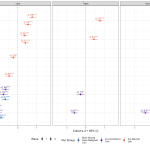
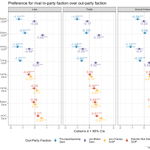
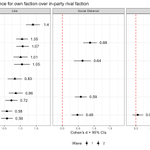
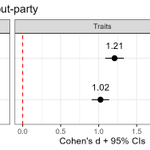
Delighted my **first paper**, with @leedewit, has now been published in Political Psychology! onlinelibrary.wiley.com/doi/… We explore the scale of affective polarization between *factions within parties* - which turns out to be pretty big! For a no-paywall version head to... (1/2)

David Young retweeted

White nationalism has become more visible in American life, especially online. Yet we know surprisingly little about how many white Americans explicitly endorse it. In a new @Nature paper with Patrick Egan and Joshua Tucker, we examine its prevalence and predictors.
David Young retweeted

So honoured to share our new paper in
@Nature. Across 12 countries in eastern and southern Africa and Southeast Asia, 1 in 6 internet-using children had experienced technology-facilitated child sexual exploitation and abuse.
nature.com/articles/s41586-0…


Nature research paper: Technology mediation in child sexual exploitation and abuse in Africa and Asia
go.nature.com/4nPl7EI

David Young retweeted

Next Wednesday (May 6th) we look forward to hosting
@David_JYoung , who will talk about novel Bayesian perspectives and the "Inference - Influence" cycle of belief polarisation (full details: tinyurl.com/ucl-ljdm). All are welcome, in person at UCL IoE or Zoom!

🚨New paper from me and @leedewit, out now, Open Access in Cognitive Science!🚨doi.org/10.1111/cogs.70141 If you are interested in trust, source effects, or belief updating in politics, this is for you, particularly if you are into computational models! ... (1/6)

1
1
76
which is that when people take a stance which *conflicts* with their presumed bias, their persuasiveness is boosted. Super looking forward to more empirical and simulation-based work using this model coming out soon! Particularly, rational accounts of belief polarisation …
1
32
and if you like the sound of that, check out my Cognition paper with Lee and
@jenskoedmadsen
that has another new computational model of source effects in politics, with direct applications to polarisation, from earlier this year! doi-org.ezp.lib.cam.ac.uk/10… More to come soon! (6/6)
34
David Young retweeted

Really enjoyed my chat with Raf Behr @politicsonthe and producer Phil Berman discussing how to change minds on immigration podcasts.apple.com/gb/podcas… Many thanks to my co-authors
@leedewit, @James__ackland, @alanjrenwick and
@David_JYoung, and also @Cambridge_Uni press office.

David Young retweeted

🚨 New preprint 🚨
Across 3 experiments (n = 3,285), we found that interacting with sycophantic (or overly agreeable) AI chatbots entrenched attitudes and led to inflated self-perceptions.
Yet, people preferred sycophantic chatbots and viewed them as unbiased!
Thread 🧵

David Young retweeted

An authoritarianism-compatible text changes British attitudes towards EU immigration, from @T_M_Buchanan, @David_JYoung, @James__ackland, @alanjrenwick, and @leedewit
go.nature.com/4pBFQw7

David Young retweeted
Reading a 400-word text can make British attitudes towards EU immigration more positive by 20 percentage points. New paper out today in @SciReports. Many thanks to my co-authors @leedewit, @James__ackland, @alanjrenwick and @David_JYoung. rdcu.be/eFOFm

David Young retweeted
While out-group animosity often goes viral on social media, this new paper by @TheMaliaMarks, @YaraKyrychenko, Johan Gärdebo & Jon Roozenbeek finds that in-group solidarity drives engagement after political crises: pnas.org/doi/10.1073/pnas.25…
Interesting illustration of how different things go viral in different contexts!

David Young retweeted
🚨New paper in @TrendsCognSci 🚨
Why do some ideas spread widely, while others fail to catch on?
@Jayvanbavel and I review the “psychology of virality,” or the psychological and structural factors that shape information spread online and offline.
Thread 🧵(1/n)


David Young retweeted

Last year, we published a paper showing that AI models can "debunk" conspiracy theories via personalized conversations. That paper raised a major question: WHY are the human<>AI convos so effective? In a new working paper, we have some answers.
Co-authors: @GordPennycook @DG_Rand
TLDR: facts

David Young retweeted

New WP!
The illusory truth effect (repetition -> belief) is core to psych of beliefs, & thought to be a deep bias impacting misinfo, persuasion & advertising
Why would cognition include such a flaw? We argue it is a rational adaptation to high-quality info environments 🧵1/

ALT https://osf.io/preprints/psyarxiv/qvwdy_v2
David Young retweeted

📢 Our new paper in Political Analysis explains how to use LLMs like GPT-4o, Llama or Mistral to estimate the ideological and policy position of political texts. Our approach is fast, reliable, and reproducible and works with texts written in different languages 📷 1/7
David Young retweeted

🥳 My first publication ever in Personality and Individual Differences, with @EdgarDubourg
and @hugoreasoning.
Insight can arise from a wide range of experiences, from making groundbreaking discoveries to reading a whodunit. Are some people more interested in this feeling?